
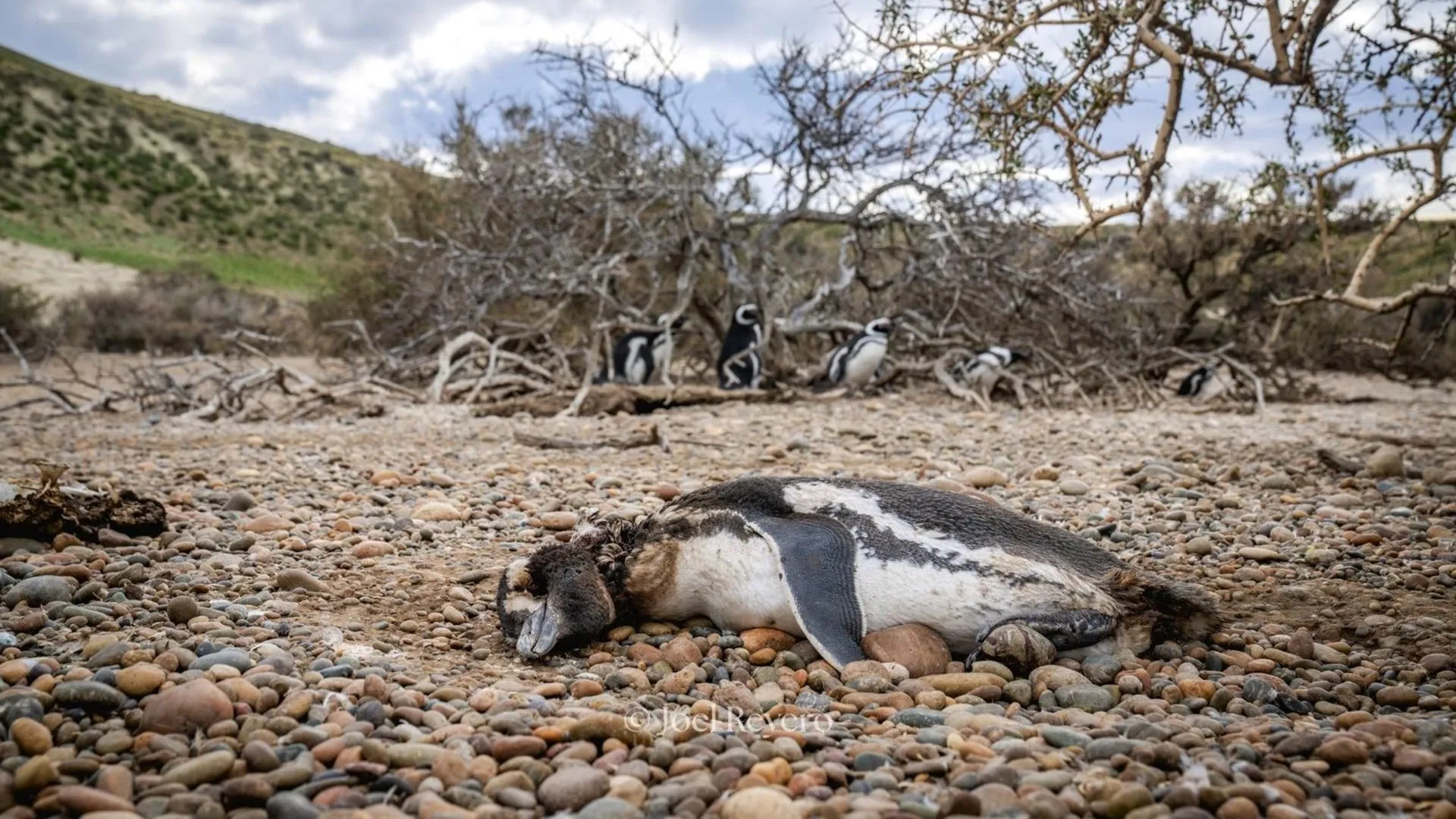
Should conservation efforts focus on protecting one iconic species if that protection may harm another, especially in landscapes still recovering from human activity? This profound question lies at the center of a growing conservation challenge at Monte Leon National Park on Argentina’s Patagonian coast, where the successful return of pumas is creating unexpected pressures on a vulnerable Magellanic penguin colony. The unfolding situation in this pristine yet complex ecosystem highlights the intricate dance of ecological restoration, the unforeseen consequences of historical human intervention, and the escalating influence of global climate change on local wildlife dynamics.
A Pristine Coastline with a Troubled Past: The Genesis of Monte Leon
Monte Leon National Park, established in 2004, stands as a testament to Argentina’s commitment to preserving its natural heritage. Located along the Santa Cruz province coastline, it was Argentina’s first coastal-marine national park, encompassing an area of approximately 62,169 hectares, including 36 km of coastline and a significant marine component. This breathtaking landscape of dramatic cliffs, expansive beaches, and offshore islands is a critical habitat for a rich diversity of marine and terrestrial life. However, its seemingly untouched appearance belies a history of human exploitation that profoundly reshaped its ecology for over a century.
Before its designation as a national park, the area was primarily used for extensive sheep and cattle ranching. This practice, widespread across Patagonia, led to significant habitat degradation, including overgrazing, soil erosion, and the deliberate eradication of native predators, most notably the puma ( Puma concolor). For decades, these majestic big cats, once integral to the Patagonian food web, were systematically hunted to protect livestock, effectively removing them from vast swathes of their ancestral territories. The absence of these apex predators created an ecological vacuum, setting the stage for subsequent shifts in prey behavior and distribution.
Pumas Reclaim Their Ancestral Lands: A Triumph of Rewilding
The late 20th century saw a paradigm shift in land use in southern Argentina. With the decline of traditional ranching operations, particularly after 1990, vast tracts of land began to recover naturally. This period marked a gradual but significant ecological restoration. Crucially, it allowed for the slow but steady return of pumas to their historic range. These highly adaptable carnivores, known for their stealth and hunting prowess, began to recolonize areas where they had been absent for generations. Their return was hailed by many conservationists as a success story, indicative of a recovering ecosystem and the potential for rewilding initiatives. Pumas play a vital role in maintaining ecosystem health by regulating herbivore populations and influencing prey distribution, contributing to overall biodiversity. Their presence signals a return to a more complete and functional ecosystem.
However, this triumphant return brought an unforeseen challenge to Monte Leon. The Magellanic penguins (Spheniscus magellanicus), a charismatic and globally significant seabird, had, in the absence of land predators, capitalized on the mainland’s safety. Historically, penguins predominantly nested on offshore islands to evade terrestrial threats. But with pumas gone, the mainland offered abundant nesting sites, closer proximity to food sources, and potentially reduced competition. The penguins had moved ashore, establishing large, thriving colonies along the Patagonian coast, including at Monte Leon, completely unaccustomed to the presence of large terrestrial carnivores. This ecological novelty – an apex predator encountering a naïve prey species on its home ground for the first time in modern history – set the stage for a dramatic conflict.
The Emergence of a Novel Threat: Penguins Face a New Predator
The Magellanic penguin is a medium-sized penguin species endemic to the coasts of South America. While not currently listed as endangered by the IUCN, their populations are under increasing pressure from a multitude of threats, including climate change, overfishing, and oil pollution. Their vulnerability to land predators stems from their evolutionary history; adapted for life at sea and for avoiding avian or marine predators, they possess few effective defenses against large, agile land mammals. Once pumas arrived, these flightless birds, waddling on land and nesting in burrows, became relatively easy prey.
For a period, the extent of this new interaction and its impact on penguin populations remained largely unknown. Conservationists and park rangers observed occasional predation events, but the overall ecological significance was unclear. The question became critical: how much was this novel predator-prey dynamic affecting the long-term viability of the Monte Leon penguin colony, one of the most important on the Patagonian coast?
Long-Term Monitoring Unveils the Scale of Predation
To address this pressing question, a dedicated and collaborative research effort was launched. Since Monte Leon National Park’s establishment in 2004, its resident penguin colonies have been under close scrutiny by researchers from the Centro de Investigaciones de Puerto Deseado of the Universidad Nacional de la Patagonia Austral. These local scientists, working in tandem with the experienced rangers of Monte Leon National Park, initiated a meticulous monitoring program. Over a focused four-year period, from 2007 to 2010, they systematically recorded penguin carcasses exhibiting clear signs of puma attacks. This foundational data collection provided the empirical basis for understanding the emerging threat.
For the most recent and comprehensive study, the Argentinian team broadened its collaboration, partnering with researchers from Oxford University’s prestigious Wildlife Conservation Research Unit (WildCRU). This international partnership brought advanced analytical capabilities to bear on the extensive dataset. The goal was to rigorously analyze the long-term implications of puma predation for the Monte Leon penguin colony, applying sophisticated ecological models to interpret the collected evidence.
Thousands of Penguins Killed: The Phenomenon of Surplus Killing
The findings were stark. Using the meticulous carcass counts, researchers estimated that an astonishing figure of more than 7,000 adult Magellanic penguins were killed by pumas during the four-year study period alone. This number represents approximately 7.6% of the adult population within the colony, which is estimated to be around 93,000 breeding individuals. The sheer volume of predation was a cause for concern, prompting deeper investigation into the nature of these attacks.
A particularly striking observation was that many of the killed birds were only partially eaten or, in numerous cases, not eaten at all. This pattern led researchers to identify the phenomenon as "surplus killing," a behavior well-documented in various carnivores when prey is abundant, easily accessible, or particularly vulnerable. Lead author Melisa Lera, a postgraduate student at WildCRU, Oxford University, articulated this concern: "The number of carcasses showing signs of predation we found in the colony is overwhelming, and the fact that they were left uneaten means pumas were killing more penguins than they required for food. This is consistent with what ecologists describe as ‘surplus killing.’ It is comparable to what is seen in domestic cats when prey are abundant and/or vulnerable: ease of capture can lead to cats hunting more birds, even when they do not end up actually eating them. We needed to understand if the penguin colony’s persistence could be threatened due to this behavior."
This observation raised critical questions about the ecological stability of the colony and whether this novel interaction could lead to a significant decline or even localized extinction of the Magellanic penguins at Monte Leon.
Beyond Predation: Population Models Reveal Deeper Vulnerabilities
To answer the question of the colony’s long-term viability, the research team applied advanced population models to the collected data. These models are crucial tools in conservation biology, allowing scientists to project population trends under various scenarios and identify the most influential demographic parameters. The results offered a nuanced perspective: while the scale of puma predation was substantial, the models indicated that it was unlikely to be the sole or primary factor driving the Monte Leon penguin colony to extinction.
Instead, the models pointed to other, more pervasive factors as far more influential in determining the colony’s fate. Foremost among these were breeding success – the number of chicks successfully fledged per pair – and the survival rates of juvenile penguins. Extinction of the Monte Leon colony was projected only in hypothetical, extreme scenarios where juvenile survival was exceptionally low (e.g., around 20% failing to reach adulthood), combined with severely poor reproductive output, limited to a maximum of one chick per pair. In these dire hypothetical conditions, high levels of puma predation did indeed exacerbate the situation, accelerating decline, but they were not the primary cause of the projected collapse.
Dr. Jorgelina Marino, a co-author of the study also from WildCRU, Oxford University, emphasized the broader implications of these findings: "This study captures an emerging conservation challenge, where recovering carnivores are encountering novel prey. Understanding how these dietary shifts affect both predators and prey is essential to inform conservation." Her statement underscores the complexity of ecological restoration in anthropogenically altered landscapes, where the return of one species can create unexpected dynamics with others.
The Shadow of Climate Change and Broader Environmental Pressures
The findings regarding breeding success and juvenile mortality immediately shifted the focus towards environmental conditions. These demographic parameters are notoriously sensitive to external factors, and the researchers highlighted the urgent need to understand how climate change and other environmental stressors might be influencing penguin reproduction and survival.
Magellanic penguins are particularly susceptible to changes in marine ecosystems. Factors such as nutrient availability, the abundance and distribution of their primary food sources (small schooling fish like anchovies and sardines), and ocean temperatures are critical for their survival and reproductive success. All of these factors are known to be significantly influenced by climate change. For instance, shifts in ocean currents, increased frequency and intensity of El Niño events, and rising sea temperatures can drastically alter fish populations, forcing penguins to travel farther for food, increasing energetic costs, and reducing provisioning rates for chicks. This can lead to lower chick survival and reduced overall breeding success.
The Patagonian coast is already experiencing the effects of a changing climate. Warmer waters, altered wind patterns, and ocean acidification threaten the delicate balance of the marine food web upon which the penguins depend. A colony struggling with reduced food availability and higher energetic demands due to climate change would be far more vulnerable to any additional pressure, including predation. Thus, while pumas are a direct and visible threat, climate change represents an insidious, overarching challenge that weakens the colony from within, making it less resilient to any form of disturbance. This underscores the intricate web of challenges facing wildlife in the Anthropocene.
A Global Pattern: Novel Predator-Prey Interactions in Coastal Zones
The situation at Monte Leon is not an isolated incident but rather a striking example of a broader global phenomenon. As human activities reshape landscapes and climate change alters habitats, many ecosystems are witnessing the emergence of novel predator-prey interactions, particularly in vulnerable coastal environments. The original article highlights a few compelling parallels:
- Feral Hogs and Sea Turtles in Georgia, USA: Non-native feral hogs (Sus scrofa) have become a major invasive predator of loggerhead sea turtle (Caretta caretta) eggs along the Georgia coast. These highly destructive omnivores root through nesting beaches, decimating clutches of eggs, posing a significant threat to an already endangered species.
- Coyotes and Coastal Ecosystems in Eastern North America: Coyotes (Canis latrans), having expanded their range eastward in North America, are increasingly colonizing coastal barrier islands. Their presence alters these sensitive ecosystems, preying on various ground-nesting birds, small mammals, and even sea turtle hatchlings, disrupting long-established ecological dynamics.
Beyond these examples, other instances abound:
- Arctic Foxes and Seabirds: In some Arctic regions, climate change-induced changes in sea ice extent are altering the foraging patterns of Arctic foxes (Vulpes lagopus), pushing them to coastal areas where they increasingly prey on vulnerable seabird colonies.
- Domestic Animals and Native Wildlife: Globally, free-ranging domestic cats and dogs exert immense predatory pressure on native birds, mammals, and reptiles, particularly in areas where human settlements abut natural habitats.
These examples collectively illustrate the immense challenge of managing ecosystems in an era of rapid environmental change and human-driven alterations. The return of a native predator, while a sign of ecological health, can still create unforeseen complications when it encounters a prey population that has evolved in its absence or is already under stress from other sources.
The Path Forward: Adaptive Management and Continuous Vigilance
The findings from Monte Leon National Park provide critical insights for conservation management, not just for this specific site but for broader rewilding and ecosystem restoration efforts worldwide. The authors of the study stress that ongoing, rigorous monitoring is absolutely essential. This includes tracking both puma and penguin populations, understanding their demography, behavior, and interactions. Continuous data collection is crucial to detect early signs of population decline in penguins or significant shifts in puma behavior, allowing park authorities to implement adaptive management decisions before serious ecological damage becomes irreversible.
For Monte Leon, this means a multi-faceted approach. While direct intervention to reduce puma numbers is not currently indicated as the primary solution for penguin survival, management efforts must focus on mitigating the more critical threats identified by the population models. This includes:
- Climate Change Mitigation and Adaptation: Supporting global efforts to reduce greenhouse gas emissions and developing local strategies to enhance the resilience of the marine ecosystem to climate change impacts. This might involve advocating for sustainable fishing practices to ensure adequate food supply for penguins and monitoring oceanographic conditions.
- Habitat Protection and Enhancement: Ensuring the integrity of nesting habitats, protecting them from human disturbance, and potentially exploring ways to enhance their resilience to environmental changes.
- Continued Research: Further studies are needed to understand the specific impacts of climate change on Magellanic penguin breeding success and juvenile survival in the Monte Leon area. This could involve detailed studies on foraging ecology, chick growth rates, and the health status of the birds.
- Community Engagement: Engaging local communities and stakeholders in conservation efforts, fostering a shared understanding of the challenges, and building support for sustainable practices.
Park authorities at Monte Leon National Park, in collaboration with scientific partners, remain committed to closely tracking both puma and penguin populations. Their goal is to navigate the complex consequences of ecosystem recovery, aiming to achieve a delicate balance where both the returning apex predator and the vulnerable seabird can thrive. This ongoing effort embodies the intricate and often paradoxical nature of modern conservation, where success in one area can unexpectedly lead to new challenges in another, demanding constant vigilance, scientific rigor, and adaptive strategies.
Conclusion: A Delicate Balance in Patagonia’s Wild Frontier
The story unfolding at Monte Leon National Park is a powerful narrative of resilience, recovery, and the inherent complexities of nature. The return of the puma signifies a triumph of rewilding, a restoration of a vital component of Patagonia’s ecological fabric. Yet, this success has inadvertently exposed the vulnerabilities of a penguin colony that had adapted to an artificially predator-free environment. The scientific findings underscore that while the immediate interactions are dramatic, the deeper, more insidious threats lie in the broader environmental pressures, particularly those driven by climate change, which compromise the penguins’ ability to reproduce and survive.
Monte Leon serves as a living laboratory, offering invaluable lessons on the challenges of managing dynamic ecosystems in an era of profound global change. It teaches us that conservation is rarely about simple solutions but rather about understanding intricate interdependencies, embracing scientific inquiry, and fostering adaptive strategies to ensure that the wonders of the natural world can persist for generations to come. The Patagonian coast remains a wild frontier, where the future of its iconic species hinges on our ability to comprehend and respond to its delicate, ever-shifting ecological balance.
