
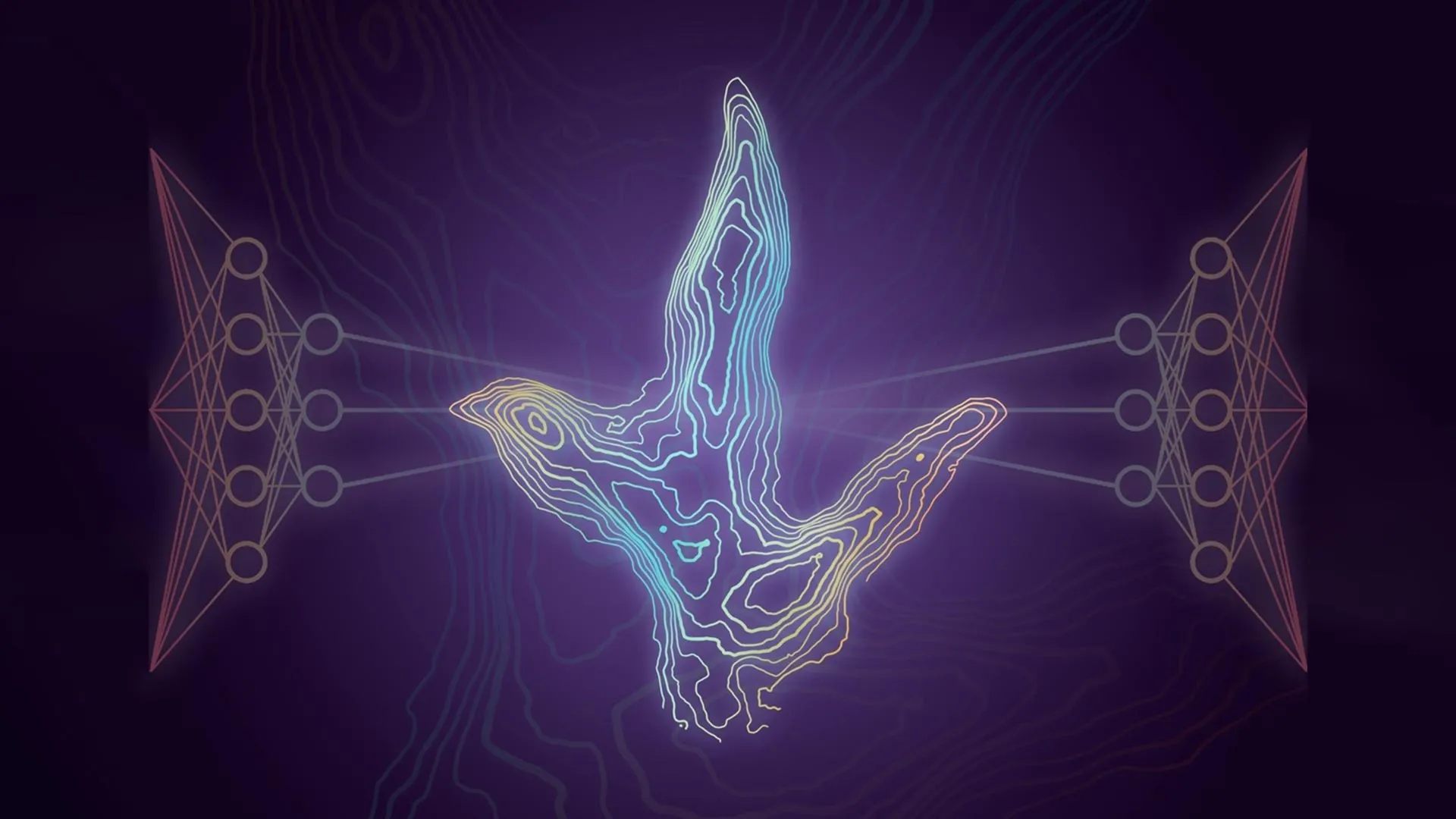
A groundbreaking application powered by artificial intelligence (AI) is transforming the field of ichnology, the study of fossil footprints, by offering scientists and the public an unprecedented tool to identify dinosaur tracks left millions of years ago. This innovative technology, detailed in a recent study, aims to resolve long-standing debates and complexities surrounding fossil tracks that have historically challenged paleontological researchers worldwide.
The Enduring Enigma of Fossil Tracks
For centuries, the discovery of ancient footprints has captivated human curiosity, providing tangible links to life forms that roamed the Earth eons ago. Paleontologists have meticulously studied these trace fossils, or ichnofossils, as they are formally known, to glean insights into prehistoric ecosystems. Unlike skeletal remains, which primarily inform about anatomy, footprints offer a unique window into an animal’s locomotion, gait, speed, weight distribution, and even social behaviors, such as herding or predator-prey interactions. The very act of walking leaves behind a dynamic record of movement that bones alone cannot convey.
However, interpreting these fossilized imprints has always been fraught with challenges. The process of fossilization itself, known as taphonomy, can significantly alter the original shape of a footprint. Factors such as the type of sediment (mud, sand, volcanic ash), the amount of water present, the weight and speed of the animal, subsequent erosion, and compaction over geological time can distort a track, making it difficult to confidently link it to a specific dinosaur species or even a broader group. A single dinosaur species might produce a variety of track morphologies depending on these variables, while different species might leave surprisingly similar imprints under certain conditions.
For many years, paleontologists have grappled with identifying the creators of these ancient marks. Debates have raged over whether certain tracks belonged to agile, meat-eating theropods, ponderous, plant-eating sauropods or ornithischians, or even the ancestors of modern birds. Traditional methods often involved painstaking manual comparisons, expert consensus based on morphological features, and the construction of subjective computer databases that linked specific footprint types (ichnotaxa) to known dinosaur groups (osteological taxa). This approach, while foundational, was susceptible to human bias, particularly when confronted with ambiguous or controversial tracks where expert opinions diverged. The lack of a standardized, objective framework often led to prolonged disputes and hindered definitive classifications.
DinoTracker: A Paradigm Shift in Ichnological Analysis
The newly developed DinoTracker app represents a significant leap forward, moving beyond these traditional, often subjective, methods. It empowers both seasoned researchers and amateur dinosaur enthusiasts to upload a photograph or even a drawing of a footprint using a mobile phone and receive an immediate, data-driven analysis. The app’s underlying AI evaluates the intricate shape and structural characteristics of the track, providing an estimate of the dinosaur type most likely responsible for its creation.
This revolutionary system was born from a collaborative effort between a research team led by the Helmholtz-Zentrum research centre in Berlin and the University of Edinburgh. To address the inherent challenges and biases of past methods, they developed advanced algorithms that enable computers to "learn" independently how dinosaur footprints vary in shape. This machine learning approach bypasses the need for manually curated rules, instead allowing the AI to discern complex patterns from vast datasets.
The training of this sophisticated AI system was comprehensive and meticulously designed. It involved nearly 2,000 real fossil footprints, collected from various sites around the world, representing a diverse array of dinosaur groups and geological periods. Crucially, this real-world data was augmented with millions of additional simulated examples. These computationally generated variations were not mere duplicates but were specifically engineered to reflect the realistic changes that occur as footprints are preserved over time. This included simulating factors like compression due to overburden, edge displacement caused by sediment plasticity, erosion of track margins, and partial infilling. By exposing the AI to such a vast and varied dataset, including both perfectly preserved and heavily distorted tracks, the researchers ensured the model’s robustness and its ability to accurately interpret even challenging or incomplete imprints. This extensive training regimen equipped the AI with an unparalleled understanding of the morphological spectrum of dinosaur trackways.
What the AI Looks For: Discerning Key Features
During its intensive training, the AI model learned to recognize eight key morphological features that are critical for distinguishing one footprint from another. These intricate details, often subtle to the human eye, include:
- Digit Spread: The angular divergence between the toes, indicative of the foot’s flexibility and the animal’s splay-footedness.
- Heel Position: The precise placement and prominence of the heel impression, which varies significantly between bipedal and quadrupedal dinosaurs, as well as between different types of foot architecture.
- Surface Area Contacted: The total area of the foot that made contact with the ground, providing clues about the animal’s weight and the substrate’s consistency.
- Weight Distribution: How pressure was distributed across different parts of the foot, revealing aspects of gait and posture.
- Digit Morphology: The individual shape, length, and width of each toe impression, including the presence or absence of claw marks.
- Overall Track Shape: The general outline and symmetry of the footprint.
- Depth Variation: Differences in the depth of various parts of the impression, indicating pressure points and potential substrate properties.
- Pace and Stride Length Indicators: While not directly part of a single footprint, the AI’s understanding of foot morphology can contribute to inferences about an animal’s locomotion patterns when multiple tracks are considered.
By analyzing these intricate variations, the AI system could compare new, unidentified footprints with its vast knowledge base of known fossil examples, ultimately predicting with high confidence which dinosaur group most likely made the tracks. When subjected to rigorous evaluation, the algorithm achieved an impressive classification accuracy, matching the determinations made by human experts about 90 percent of the time. This remarkable performance extended even to species that are considered particularly controversial or notoriously difficult to identify through traditional means, underscoring the AI’s ability to discern subtle patterns that might elude human observation.
Unearthing Surprising Revelations: Challenging Evolutionary Timelines
Beyond its impressive accuracy, DinoTracker has already yielded astonishing insights, particularly concerning some of the most enduring mysteries in paleontology.
One of the most surprising findings emerged from the analysis of tracks dating back more than 200 million years, placing them in the Late Triassic or Early Jurassic periods. The AI detected striking and unexpected similarities between some of these ancient dinosaur footprints and the feet of both extinct bird species and even modern avian forms. This revelation has profound implications for understanding avian evolution. Current scientific consensus generally places the definitive emergence of birds, exemplified by iconic fossils like Archaeopteryx, in the Late Jurassic, around 150 million years ago. If these 200-million-year-old tracks are indeed attributable to early bird species or their immediate ancestors, it would mean that birds emerged tens of millions of years earlier than scientists have previously believed, pushing back their evolutionary timeline significantly into the Triassic.
The research team, however, prudently offers another possibility: that some early dinosaur species, unrelated to the direct lineage of birds, happened to possess feet that closely resembled avian feet due to convergent evolution. This phenomenon, where unrelated species evolve similar traits independently, is common in nature. Regardless of the definitive answer, the AI’s finding opens a critical new avenue for research into the origins and early diversification of birds, prompting paleontologists to re-examine existing fossil records with a fresh perspective.
New Insights From Scotland’s Ancient Lagoons
The AI system also offered crucial new clues regarding mysterious footprints discovered on the Isle of Skye in Scotland. These enigmatic tracks, preserved in the muddy edge of a lagoon approximately 170 million years ago during the Middle Jurassic period, have puzzled scientists for decades. The Isle of Skye is a renowned hotspot for dinosaur discoveries in the UK, but these particular footprints had resisted definitive classification.
The AI’s advanced analysis suggests that these footprints may have been left by some of the oldest known relatives of duck-billed dinosaurs, scientifically known as hadrosaurs. Hadrosaurs are typically associated with the Late Cretaceous period, flourishing around 80-66 million years ago, and are characterized by their distinctive dental batteries and often large size. The identification of their early relatives in Middle Jurassic Scotland would make these among the earliest examples of this highly successful ornithopod group identified anywhere in the world. This finding significantly extends the known evolutionary history of hadrosaurs, indicating that their lineage diverged and began to diversify much earlier than previously understood, altering our comprehension of ornithopod evolution and their paleobiogeographical distribution across the globe.
Opening Paleontology to Everyone: The Promise of Citizen Science
Beyond its direct scientific contributions, researchers emphasize that this technology creates unprecedented opportunities to study how dinosaurs lived, moved, and interacted across the Earth’s ancient landscapes. The ability to quickly and accurately classify footprints in the field or from photographic records will accelerate research, allowing for larger datasets and more comprehensive analyses of dinosaur behavior and ecology.
Crucially, the DinoTracker app also democratizes fossil research, giving the public a tangible chance to participate in scientific discovery. By analyzing footprints themselves, amateur enthusiasts, students, and citizen scientists can contribute to a global understanding of prehistoric life. This approach can foster a new generation of paleontologists and engage the public in STEM fields, transforming passive observation into active participation. Imagine a hiker discovering a footprint and, with a simple photo upload, instantly receiving an expert-level analysis, potentially contributing to a new scientific discovery. This bridges the gap between professional science and public interest, creating a collaborative global network for ichnological exploration.
Expert Perspectives and Future Horizons
The study, published in the prestigious journal PNAS, received funding from a consortium of scientific bodies, including the innovations pool of the BMBF-Project: Data-X, the Helmholtz project ROCK-IT, the Helmholtz-AI project NorMImag, the National Geographic Society, and the Leverhulme Trust, highlighting the broad scientific interest and investment in this groundbreaking work.
Dr. Gregor Hartmann of the Helmholtz-Zentrum research centre underscored the methodological significance: "Our method provides an unbiased way to recognize variation in footprints and test hypotheses about their makers. It’s an excellent tool for research, education, and even fieldwork." This emphasizes the AI’s role in standardizing interpretation and removing subjective elements from a field often reliant on expert judgment.
Professor Steve Brusatte, Personal Chair of Palaeontology and Evolution at the University of Edinburgh’s School of GeoSciences, articulated the broader impact with enthusiasm: "This study is an exciting contribution for paleontology and an objective, data-driven way to classify dinosaur footprints – something that has stumped experts for over a century." He further elaborated on the implications, stating, "It opens up exciting new possibilities for understanding how these incredible animals lived and moved, and when major groups like birds first evolved. This computer network might have identified the world’s oldest birds, which I think is a fantastic and fruitful use for AI."
Looking ahead, the DinoTracker project paves the way for integrating AI more deeply into paleontological research. Future developments could involve expanding the AI’s capabilities to analyze other types of trace fossils, such as burrows or bite marks, or to integrate geological and environmental data to provide even richer contextual analyses. The success of DinoTracker serves as a compelling testament to the power of artificial intelligence as a scientific accelerator, capable of unraveling mysteries that have long eluded human experts and, in doing so, rewriting chapters of Earth’s ancient history.
