
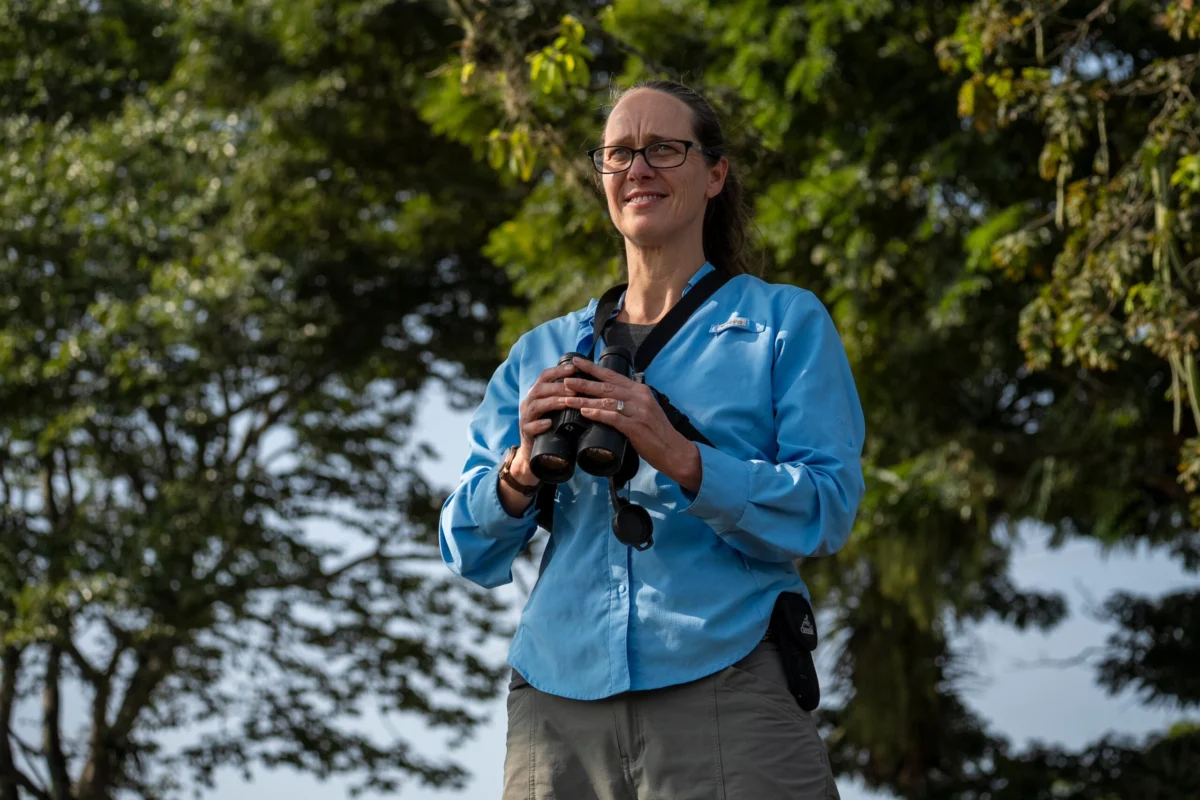
After nearly a decade of unparalleled dedication and transformative leadership, River Gates, Audubon’s esteemed Shorebird Conservation Manager, has announced her departure, effective immediately. Her tenure, marked by an unwavering commitment to the preservation of shorebirds across vast continental and international landscapes, has profoundly shaped conservation efforts throughout the Pacific Americas Flyway. Gates’ departure signals the end of a significant chapter for Audubon, yet her influence is widely expected to resonate for years to come through the robust partnerships she cultivated, the scientific advancements she championed, and the countless individuals she inspired and mentored.
A Career Dedicated to Migratory Birds: Before Audubon
River Gates brought to Audubon an exceptional depth of experience, cultivated over more than two decades devoted to the study and conservation of migratory birds. Prior to joining Audubon in 2017, her career path was as expansive and migratory as the birds she dedicated her life to protecting. Her early work saw her traversing some of the most remote and ecologically vital regions on Earth, from the stark beauty of Alaska’s Arctic tundra and the rich biodiversity of the Copper River Delta, to the distant shores of Taiwan and numerous critical habitats throughout Central and South America. This extensive fieldwork imbued her with a profound, firsthand understanding that the survival of migratory birds hinges entirely on the health and interconnectedness of habitats spanning entire hemispheres. She recognized early on that conservation efforts could not be siloed by political borders but required an integrated, international approach. Her foundational experience laid the groundwork for the comprehensive, cross-continental strategies she would later implement at Audubon, underscoring her holistic perspective on ecological preservation.
Shaping Conservation Efforts Across the Pacific Americas Flyway
Upon joining Audubon in 2017, River Gates quickly became an indispensable force within the organization, particularly through her roles with Audubon Alaska and Audubon Americas. Her strategic vision and collaborative spirit were instrumental in shaping conservation efforts that transcended geographical boundaries, effectively linking people, science, and communities across the vast Pacific Americas Flyway. This flyway, a crucial migratory corridor, stretches from the Arctic breeding grounds of North America to the southernmost tips of South America, serving as a vital pathway for millions of migratory birds each year. It encompasses a diverse array of ecosystems, from coastal wetlands and mudflats to alpine tundras, all of which are essential stopover and breeding sites.
A cornerstone of her work was coordinating the Pacific Shorebird Conservation Initiative. This ambitious program was designed to unite a diverse coalition of stakeholders, including leading scientists, respected Indigenous leaders, dedicated land managers, various government agencies, and numerous nonprofit partners. Their shared, overarching goal was singular and urgent: to ensure that shorebirds possess the necessary habitats throughout their extraordinary and often perilous annual migrations. Under Gates’ guidance, this initiative fostered unprecedented levels of collaboration, transforming disparate efforts into a cohesive, impactful strategy.
Further solidifying international cooperation, Gates also played a pivotal role in co-creating the Pacific Americas Shorebird Conservation Strategy. This strategic framework was developed at a critical juncture, recognizing the escalating threats faced by migratory birds, primarily from pervasive habitat loss and the accelerating impacts of climate change. The strategy aimed to provide a blueprint for coordinated action, emphasizing shared responsibilities and integrated solutions across national boundaries. Her commitment to strengthening these international bonds was also evident in her service on the board of the Alaska Shorebird Group, an organization dedicated to advancing shorebird conservation through research, education, and partnerships within Alaska. These efforts collectively underscored her belief in the power of unified action against shared environmental challenges.
The Science of Survival: From Arctic Tundra to International Collaboration
River Gates’ contribution to shorebird conservation was never confined to theoretical discussions or administrative tasks; it was deeply rooted in hands-on, rigorous scientific fieldwork. She spent countless seasons immersed in some of Alaska’s most remote and challenging landscapes, dedicating herself to studying breeding shorebirds. Her fieldwork locations included ecologically sensitive areas such as Cape Krusenstern, a national monument on the Chukchi Sea coast known for its archaeological and natural significance; Utqiaġvik, the northernmost city in the United States, offering unique insights into Arctic ecosystems; and the Teshekpuk Lake Special Area, a critical habitat for migratory birds and caribou.
In these demanding environments, Gates employed advanced scientific methodologies to gather crucial data. She was instrumental in deploying GPS transmitters on species like the American Golden-Plover, a medium-sized shorebird renowned for its epic trans-hemispheric migrations. The data collected from these transmitters provided invaluable insights into specific migration routes, stopover sites, and the timing of movements, enabling conservationists to identify critical habitats and potential threats more precisely. Beyond tracking, she also conducted long-term population surveys, meticulously monitoring shorebird numbers and trends. This longitudinal data is essential for understanding population dynamics, assessing the effectiveness of conservation interventions, and predicting future challenges. By helping partners better understand these complex migration routes and ecological dependencies, Gates significantly advanced the scientific foundation that informs conservation strategies across the entire hemisphere. Her work effectively bridged the gap between raw scientific data and actionable conservation policies, translating field observations into strategic interventions.
Building Bridges: The Power of Partnerships and Public Engagement
Perhaps River Gates’ most profound and lasting legacy lies in the intricate network of relationships she meticulously helped build and sustain. Conservation, at its core, is a collaborative endeavor, and Gates was widely recognized for her exceptional ability to bring diverse stakeholders to the table. Her approach was consistently characterized by generosity, profound humility, and an unwavering collaborative spirit, fostering an environment where mutual respect and shared goals could flourish. She understood that effective conservation transcended scientific data, requiring robust human connections and a shared sense of purpose.
Her leadership extended to executive councils of prominent international bodies, significantly strengthening conservation efforts far beyond the geographical confines of Alaska. She played a crucial role in the U.S. Shorebird Conservation Partnership, a national coalition dedicated to advancing shorebird conservation through coordinated research, management, and outreach. Furthermore, her involvement with the Western Hemisphere Shorebird Reserve Network (WHSRN) was instrumental. WHSRN is a voluntary, non-regulatory coalition that identifies and protects key sites for shorebirds throughout the Americas, establishing a network of critical habitats. Under her influence, these partnerships thrived, enabling more effective resource sharing, knowledge exchange, and coordinated action across a vast geographical expanse.
Beyond her strategic leadership, River Gates possessed a remarkable gift for communicating complex scientific information to the broader public, making the often-abstract world of shorebird ecology accessible and engaging. Many Alaskans, and indeed others across the flyway, came to know her through her passionate public outreach efforts. She inspired countless birders at festivals, led enlightening educational bird walks that brought participants closer to nature, and served as a thoughtful judge at local elementary school science fairs, sparking curiosity in the next generation of scientists and conservationists. Through these interactions, she consistently reinforced a crucial message: shorebirds are far more than just remarkable migrants; they serve as critical indicators of the health and integrity of ecosystems stretching thousands of miles, from the Arctic reaches of Alaska to the diverse landscapes of South America. Her ability to translate scientific urgency into public understanding was further highlighted by her starring role in the fourth and final episode of Audubon’s Birds on the Move series, which focused on the Andean Valleys, showcasing her expertise and passion to a global audience.
The Critical Landscape of Shorebird Conservation: Challenges and Progress
The "mounting challenges" faced by migratory birds, particularly shorebirds, are stark and urgent. Global shorebird populations are among the most imperiled avian groups, with numerous scientific studies reporting significant declines. For instance, reports from organizations like the Cornell Lab of Ornithology and the National Audubon Society indicate that shorebird populations in North America have, on average, declined by over 30% since 1970, with some species experiencing even more precipitous drops. These declines are primarily driven by rampant habitat loss and degradation, particularly in coastal wetlands, agricultural lands, and stopover sites that are crucial for refueling during epic migrations. Development, pollution, and unsustainable land use practices continually erode these vital habitats.
Furthermore, climate change presents an existential threat, altering breeding grounds in the Arctic, shifting migratory patterns, and increasing the frequency and intensity of extreme weather events that impact survival. Rising sea levels threaten coastal nesting and foraging areas, while changes in food availability disrupt critical energy reserves needed for long-distance flights. River Gates’ work directly confronted these challenges by identifying and protecting critical habitats, fostering international cooperation to address transboundary threats, and advocating for policies that mitigate human impacts. The Pacific Americas Shorebird Conservation Strategy, which she helped co-create, serves as a testament to the comprehensive approach needed to tackle these multifaceted issues. Her efforts underscored the vital role of international collaboration in safeguarding species that do not recognize political boundaries, ensuring that conservation gains in one region are not undermined by losses in another.
Statements and Tributes: Reflecting on River Gates’ Impact
River Gates’ departure has elicited a wave of gratitude and recognition from within Audubon and among its partners. Frank Carbone, Executive Director of Audubon Alaska, reflected on her tenure, stating, "River’s unwavering commitment and profound expertise have been foundational to our shorebird conservation efforts for the past decade. Her ability to bridge scientific rigor with collaborative action has left an indelible mark on Audubon Alaska and indeed, across the entire flyway. We are incredibly grateful for her leadership and the robust framework she leaves behind."
Similarly, Dr. Christine Elder, Vice President of Audubon Americas, emphasized Gates’ impact on international relations: "River’s vision for a truly hemispheric approach to conservation transformed how we operate. She brought together diverse cultures and perspectives with a rare generosity and humility, forging partnerships that are essential for the survival of migratory birds. Her legacy is not just in the science she advanced, but in the trust and collaboration she inspired." Indigenous leaders and scientific colleagues, who worked closely with Gates, often highlighted her ability to listen, learn, and integrate traditional ecological knowledge with modern scientific methods, fostering true co-stewardship of vital lands. "River understood that protecting these birds meant respecting the land and the people who have stewarded it for generations," commented a representative from a partner Indigenous community, who wished to remain anonymous. "Her collaborative spirit was genuine and empowering."
Looking Forward: The Enduring Influence and Future of Conservation
While the physical presence of River Gates will be missed in Audubon Alaska’s Anchorage office, on the expansive tundra, and at vibrant shorebird festivals across the state, her profound influence is assured to persist. The partnerships she meticulously nurtured, the critical science she tirelessly advanced, and the many individuals she thoughtfully mentored along her journey form an enduring legacy that will continue to drive shorebird conservation forward. Her departure does not signify an end to the initiatives she spearheaded, but rather a transition, where the seeds she planted are poised to blossom under the continued stewardship of Audubon and its vast network of collaborators.
The strategic frameworks she helped establish, such as the Pacific Shorebird Conservation Initiative and the Pacific Americas Shorebird Conservation Strategy, will remain central to Audubon’s ongoing efforts. The collaborative spirit she embodied will serve as a guiding principle for future conservation leaders, emphasizing that collective action is the most potent force against environmental challenges. The detailed scientific data she helped collect and interpret will continue to inform targeted conservation interventions, ensuring that resources are deployed effectively to protect critical habitats and mitigate threats.
River Gates’ career serves as a powerful testament to the impact one dedicated individual can have on a global scale. On behalf of everyone at Audubon Alaska and the broader Audubon network, a heartfelt thank you is extended for her years of unwavering dedication to Alaska’s birds and the indispensable places they depend upon. As she embarks on her next chapter, Audubon wishes her a joyful journey filled with new adventures, cherished time with family, and, undoubtedly, abundant opportunities to continue enjoying and connecting with the remarkable shorebirds she has spent a lifetime protecting. Her work has laid a formidable foundation upon which future generations will build, ensuring that the skies continue to be graced by the incredible spectacle of migratory shorebirds for years to come.
