
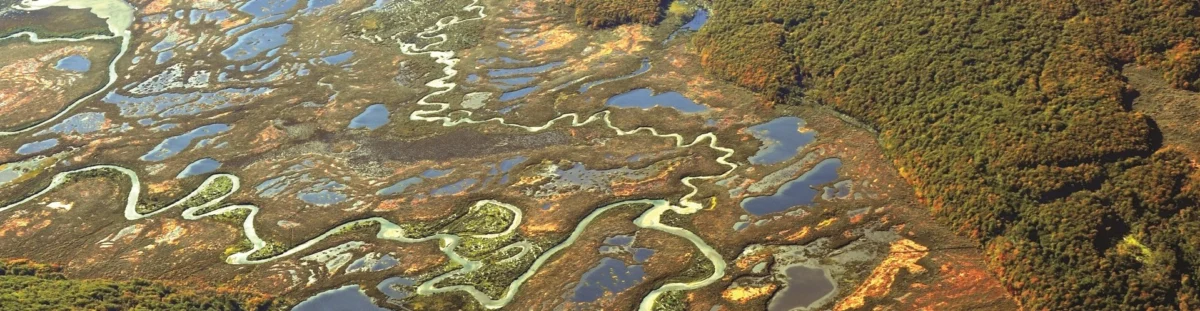
An international consortium of scientists, including Dr. Ritesh Kumar, Director of Wetlands International South Asia, has meticulously charted the most pressing unanswered research questions concerning peatland ecosystems. This comprehensive global roadmap is poised to guide future scientific endeavors and policy decisions aimed at preserving these vital yet increasingly threatened natural environments. The groundbreaking study, published in the esteemed journal Communications Earth & Environment, synthesized input from an impressive 467 participants spanning 54 countries, definitively pinpointing the research questions most crucial for understanding and protecting peatlands. By meticulously surveying and analyzing the expert opinions of peatland specialists worldwide, the research illuminates critical knowledge gaps and identifies areas where new information could yield the most significant impact on climate change mitigation, biodiversity conservation, and sustainable land management.
The Crucial Role of Peatlands in a Changing Climate
Peatlands, despite occupying a mere three percent of the Earth’s land surface, harbor an astonishing amount of carbon – more than all the planet’s forests combined. When functioning optimally, these unique ecosystems act as long-term carbon sinks, sequestering carbon for millennia. However, this crucial role is under severe threat. Drainage for agriculture and development, widespread fires, peat extraction for fuel and horticultural use, and ongoing land-use changes can rapidly transform these carbon reservoirs into significant sources of potent greenhouse gases. This alarming shift contributes directly to global warming. While their importance is increasingly recognized, critical knowledge gaps persist regarding how peatlands will respond to escalating climate change, the most effective methods for their restoration, and how to safeguard them while simultaneously supporting the livelihoods of the local and Indigenous communities who depend on them.
Dr. Ritesh Kumar, Director of Wetlands International South Asia, underscored the imperative for a robust connection between scientific inquiry and practical management. "An effective science-management interface is crucial for nurturing evidence-based policy and programming for nature conservation," he stated. "These 50 research questions are a guide to the science needed to conserve peatlands of the world and mobilise action."
A Collaborative Effort to Define Research Frontiers
The extensive research effort involved a global survey that engaged peatland scientists, practitioners, and policy experts from every continent. Participants were invited to articulate what they considered the most urgent and unresolved questions within peatland research. These inquiries spanned a broad spectrum, encompassing ecology, hydrology, biogeochemistry, climate science, and social sciences. The selected questions represent a consensus on priorities across diverse peatland types, including those found in boreal, temperate, and tropical regions.
Eva Hernandez, Global Peatlands Lead at Wetlands International, highlighted the study’s role in galvanizing action. "While there is plenty of knowledge to act in favour of peatlands, these 50 questions can help do more, better and quicker, and respond to the new questions that come up in a fast evolving world," she remarked. Hernandez further elaborated on the significance of this collaborative undertaking, stating, "This exercise is a great example of what we can do when we bring our brains together, and these questions will become a very relevant guide for the work of the Peatland Breakthrough – an ambitious global initiative to bring partners together to rally political will, accelerate action and mobilise money for healthy peatlands."
Key Research Priorities: A Deeper Dive
While the specific list of 50 questions is extensive, the research identified several overarching themes that emerged as critical for future investigation. These include:
- Climate Change Impacts and Feedbacks: Understanding how rising global temperatures, altered precipitation patterns, and increased frequency of extreme weather events will affect peatland carbon balance, hydrology, and biodiversity. This also involves investigating potential feedback loops where peatland degradation could exacerbate climate change.
- Restoration Ecology and Techniques: Developing and refining cost-effective and scalable methods for peatland restoration. This includes research into appropriate rewetting strategies, vegetation establishment, and the long-term monitoring of restoration success across different climates and peatland types.
- Carbon Cycling Dynamics: Improving the accuracy of quantifying carbon stocks and fluxes in peatlands, particularly under different management scenarios and in response to environmental changes. This is vital for refining global carbon budgets and assessing the climate mitigation potential of peatlands.
- Biodiversity and Ecosystem Function: Investigating the unique biodiversity harbored by peatlands and how it is impacted by degradation and restoration efforts. Understanding the relationship between biodiversity and key ecosystem functions, such as water regulation and nutrient cycling, is crucial.
- Socio-Economic Dimensions and Indigenous Knowledge: Exploring the complex interactions between peatlands and human communities. This includes research on sustainable land-use practices, the role of traditional and Indigenous knowledge in peatland management, and equitable benefit-sharing mechanisms for local populations.
- Hydrological Processes and Water Management: Delving deeper into the intricate hydrological systems of peatlands, understanding how water flow, water table depth, and connectivity influence ecosystem health and carbon storage, especially in the context of surrounding land-use changes and water resource management.
- Peatland-Atmosphere Interactions: Quantifying the exchange of greenhouse gases (CO2, CH4, N2O) between peatlands and the atmosphere under various conditions, and understanding the role of peatlands in regional and global atmospheric chemistry.
Voices from the Scientific Community
Dr. Alice Milner, Associate Professor at Royal Holloway University of London, UK, and lead author of the study, emphasized the critical need for focused research. "Peatlands are increasingly recognised as critical ecosystems for climate action, but we still don’t have all the answers we need to manage them effectively," she stated. "By identifying the most urgent research questions, this work helps focus global effort."
Dr. Julie Loisel, Associate Professor at the University of Nevada, Reno, USA, and a co-author, highlighted the consensus achieved through the collaborative process. "This global survey revealed how much common ground exists among people working with peatlands around the world," she explained. "Bringing these voices together has allowed us to focus our collective effort on the questions that matter most, and to begin tackling them together."
The growing recognition of peatlands as natural climate solutions has spurred increased interest from governments and international bodies. Countries like the UK, Ireland, Indonesia, Canada, and Finland are increasingly incorporating peatland protection and restoration into their national climate strategies. Furthermore, peatlands are now a recognized component of international climate and biodiversity frameworks. However, the study’s authors caution that without clearly defined research priorities, investment in peatland conservation could become fragmented and short-sighted, potentially undermining long-term conservation goals.
Dr. Michelle McKeown, Lecturer in Environmental Geography at University College Cork, Ireland, and a co-author, stressed the complexity of peatland restoration. "Restoring peatlands is not as simple as just ‘rewetting’," she pointed out. "There are important trade-offs, uncertainties, and regional differences that we still don’t fully understand. These priority questions help ensure that peatland management is helping, not harming, climate and biodiversity goals."
Expanding the Research Agenda Beyond Biophysical Science
A significant finding of the study is that the identified priority questions extend beyond traditional biophysical sciences. A substantial number of these questions delve into crucial areas of governance, land-use decision-making processes, and the vital role of Indigenous and local knowledge in effective peatland management. These aspects have historically received less emphasis in global research agendas, highlighting a crucial shift towards a more holistic and inclusive approach to peatland conservation.
Professor Angela Gallego-Sala from the University of Exeter, UK, also a co-author, emphasized the human dimension of peatland landscapes. "Peatlands are not empty landscapes. They are lived-in, worked landscapes with deep cultural significance," she observed. "This is particularly true in the tropics, where peatlands can be a resource – sometimes the only one – that provides livelihoods, so it is important that as researchers we acknowledge this and provide answers that are useful to these communities too."
Dr. Monika Ruwaimana, a co-author and Lecturer at Universitas Atma Jaya Yogyakarta, Indonesia, shared her perspective from a tropical peatland context. "As someone who grew up in tropical peatland landscapes, it is encouraging to see the global research community paying attention to these ecosystems," she stated. "This progress reflects a collective effort that has developed over decades, gradually shifting perspectives on the importance of peatlands in the global carbon cycle, from local communities working in the field to international researchers and policymakers."
Bridging the Gap from Research to Tangible Action
The researchers expressed their hope that this prioritized list of research questions will serve as an indispensable tool for the peatland research community, funding agencies, research institutions, and policymakers. By providing a clear framework, it is intended to guide international collaboration, direct investment, and shape future research trajectories effectively.
Dr. McKeown concluded with a stark reminder of the stakes involved. "Peatlands can either help stabilize the climate or accelerate its change," she warned. "Which path we take depends on the knowledge we build, and how quickly we act on it." The establishment of these research priorities marks a pivotal moment, offering a much-needed compass for navigating the complex challenges and immense opportunities presented by the world’s peatland ecosystems.
