
In the verdant landscapes of Amenia, New York, a transformative ecological endeavor is unfolding on a private property known as Perry Hill. Spearheaded by young steward Joshua Harkness, this initiative demonstrates how meticulous, hands-on land management can dramatically reverse habitat degradation and foster a vibrant return of native wildlife, particularly avian species. Through a strategic blend of invasive species removal, selective mowing, and innovative forest management techniques, Harkness has cultivated a dynamic mosaic of meadows, shrublands, and forests, turning his family’s land into a thriving sanctuary for a diverse array of birds and other wildlife. This localized effort serves as a compelling case study for private landowners seeking to contribute to broader conservation goals amidst the ongoing challenges faced by northeastern ecosystems.
The American Woodcock’s Return: A Catalyst for Change
The genesis of Harkness’s focused conservation efforts can be traced back to the elusive American Woodcock (Scolopax minor), a peculiar shorebird known for its distinctive "sky dance" courtship ritual. For years, Joshua and his family observed these migratory birds on their Perry Hill property, specifically in open meadows and grassy expanses of an old cow pasture. However, their presence was strictly seasonal, limited to the tail-end of winter, typically arriving in March. The woodcocks would utilize these open areas for their aerial displays, spiraling skyward before plunging back down to impress potential mates. Yet, after these flamboyant performances, the birds would vanish, failing to establish breeding territories on the property.
This recurring pattern prompted Harkness to delve deeper into the specific habitat requirements of the American Woodcock. He discovered that while open fields were crucial for courtship displays, dense, shrubby cover was absolutely essential for nesting and raising chicks. The absence of such suitable nesting habitat explained the birds’ transient visits. This realization became a pivotal moment, shifting his management strategy from general maintenance to targeted ecological restoration.
Habitat Specificity: The Woodcock’s Unique Needs
The American Woodcock, often referred to as a "timberdoodle" due to its long bill and woodland habitat, is a species of conservation concern across much of its range. Its unique life cycle necessitates a combination of open areas for courtship and feeding (probing for earthworms in moist soil) and dense, young forest or shrubland for nesting and roosting. Historically, natural disturbances like wildfires, beaver activity, and strong winds created this mosaic of habitats. However, modern land management practices, including fire suppression and conversion of shrublands to agriculture or development, have led to a significant decline in suitable woodcock habitat. The species’ population has shown a consistent downward trend over recent decades, making efforts like Harkness’s particularly vital.
Prior to his intervention, Harkness had maintained the old cow pasture by routine mowing, inadvertently suppressing not only invasive species like multiflora rose but also nascent native shrub growth. Multiflora rose (Rosa multiflora), an aggressive invasive shrub introduced to the U.S. in the 19th century, can form impenetrable thickets, outcompeting native vegetation and reducing biodiversity. While mowing initially seemed like a practical control method, Harkness recognized its collateral damage to beneficial native plants. He pivoted to a more nuanced approach, beginning a meticulous process of selective invasive shrub removal using hand pruners and pick mattocks to ensure root eradication. This labor-intensive but highly effective method allowed indigenous species to reclaim their rightful place. As a direct result, the pasture experienced an ecological resurgence, erupting with native willow (Salix spp.), winterberry (Ilex verticillata), silky dogwood (Cornus amomum), and various goldenrod species (Solidago spp.). These plants provided the critical dense, shrubby cover that the American Woodcocks had been lacking. The success was undeniable: in June, Harkness observed an American Woodcock utilizing the newly established dense willow thickets for nesting, marking a significant milestone in the property’s ecological recovery.
Strategic Woodland Management: Beyond the Meadow
Harkness’s stewardship extends beyond the open meadows into the predominantly forested areas of Perry Hill. His philosophy is rooted in the understanding that forest-breeding birds do not adhere to rigid habitat boundaries; many species, such as the Wood Thrush (Hylocichla mustelina) and Scarlet Tanager (Piranga olivacea), utilize a range of habitat types for different life stages—from courtship to nesting and chick-rearing. This ecological flexibility underscores the importance of creating diverse, interconnected habitats rather than isolated patches.
Mimicking Nature’s Design: The Role of Disturbance
The health of northeastern forests, however, has been compromised over centuries. Once vast and biodiverse, these woodlands have suffered from extensive logging, agricultural conversion, and the introduction of invasive species, leading to a decline in structural and species diversity. This loss of complexity directly impacts forest-dependent bird populations, many of which are experiencing significant declines. Recognizing birds as critical "indicator species"—their presence or absence signaling the health of an ecosystem—Harkness adopted a monitoring strategy centered on avian vocalizations. Each June, he conducts bird counts at predefined points across the property, meticulously recording the species he hears singing. Any shift in species composition serves as an immediate indicator of habitat change, guiding his subsequent management decisions.
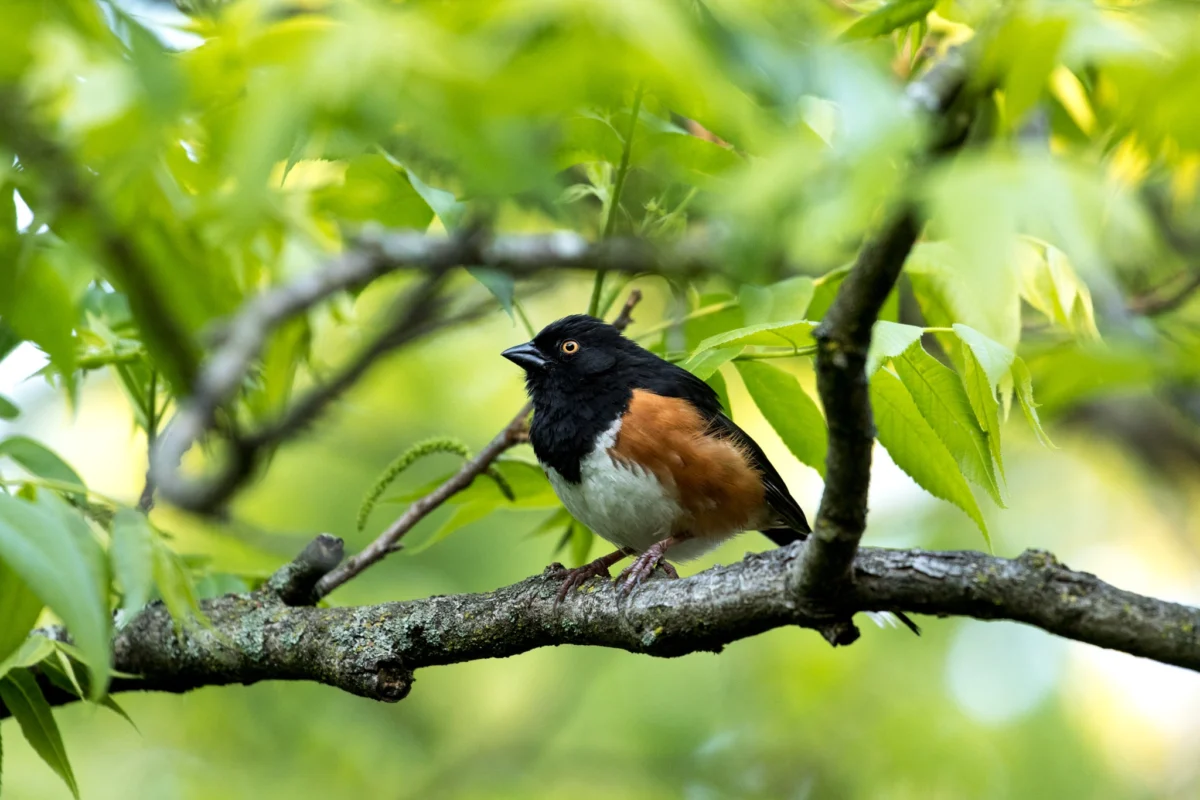
Sometimes, nature itself initiates these changes. Following a severe storm that felled numerous trees on the property, Harkness made a deliberate decision to leave the downed timber in place. This seemingly simple act has profound ecological benefits. The branching treetops created natural barriers, effectively protecting young sugar maple (Acer saccharum) saplings from browsing deer, a significant impediment to forest regeneration in many northeastern landscapes. Deer overpopulation, a common issue in suburban and rural areas, can decimate forest understories, preventing the establishment of young trees and shrubs vital for many bird species. The resulting thicker understory quickly attracted new avian residents: Harkness identified Eastern Towhees (Pipilo erythrophthalmus) and noted an increase in Veeries (Catharus fuscescens) nesting in the newly protected, denser growth the following spring. This demonstrated the power of mimicking natural disturbance patterns, such as the creation of "patch cuts" or leaving standing deadwood, to foster forest regeneration and enhance biodiversity.
Reclaiming the Understory: Combating Invasive Species and Deer Pressure
The challenges to forest health extend beyond past land use and include the ongoing threat of invasive insects and pathogens. Two winters ago, Harkness faced a significant issue in a section of his forest where numerous oak trees had been severely damaged or killed by defoliation from the Spongy Moth (Lymantria dispar dispar, formerly Gypsy Moth) and by a subsequent ice storm. The Spongy Moth, an invasive insect introduced to North America in the late 19th century, is notorious for its voracious appetite for oak leaves, leading to widespread defoliation and tree mortality, especially in consecutive years. The combination of insect damage and ice storm stress created an opportunity for a more intensive intervention: a one-acre "patch cut."
This patch cut, designed to mimic a natural disturbance event, involved felling damaged trees. Some of the harvested wood was utilized sustainably, serving as firewood for maple syrup production—a traditional activity that connects the family to the land’s resources. Crucially, other cut trees were left on the ground to decompose, enriching the soil, providing shelter for small mammals and insects, and creating new microhabitats. This practice is vital for nutrient cycling and soil health, forming the foundation of a resilient ecosystem.
The Perry Hill Patch Cut: A Blueprint for Young Forest Creation
The intervention at the one-acre patch cut was not merely about removal; it was about strategic restoration and future-proofing. In the following spring, Harkness embarked on a significant planting initiative: American Chestnut (Castanea dentata) seeds were introduced to the site. This effort is part of a broader, critical mission to restore a native tree species that was once a dominant component of eastern North American forests before being decimated by the Chestnut Blight (Cryphonectria parasitica) in the early 20th century. The American Chestnut’s ecological role was immense, providing abundant mast for wildlife and highly durable timber. Its reintroduction is a cornerstone of forest restoration projects across the Northeast. To protect these vulnerable young chestnuts and other emerging plants from deer browse, Harkness installed a deer exclusion fence around the patch cut, ensuring the long-term success of the restoration.
Restoring a Native Icon: The American Chestnut
The American Chestnut’s near-extinction represents one of the most tragic ecological losses in North American history. From being a towering forest giant, covering an estimated 200 million acres and constituting up to 25% of the eastern hardwood forest, it was reduced to a functionally extinct species within a few decades. Restoration efforts, often involving breeding blight-resistant hybrids or genetic engineering, are complex and long-term. Harkness’s planting of American Chestnut seeds is a small but meaningful contribution to this monumental task, aiming to bring back a keystone species that once supported a vast array of wildlife.
Biodiversity Boom: Avian Response to Habitat Renewal
The impact of the patch cut and subsequent restoration efforts on avian biodiversity has been remarkable and immediate. Prior to establishing this area of young forest, Harkness had observed no more than nine species of native forest birds at this particular site during the breeding season. However, following the intervention, the number of breeding species soared to as many as eighteen. This dramatic increase highlights the critical importance of early successional habitats—young forests and shrublands—which are often overlooked or actively suppressed in conventional forest management. Species such as the Indigo Bunting (Passerina cyanea), Eastern Towhee, and Common Yellowthroat (Geothlypis trichas), all birds that thrive in brushy, regenerating areas, have readily nested in this newly created habitat. Their presence confirms the ecological value of intentional disturbance and restoration in diversifying forest structure and supporting a wider range of avian life.
Monitoring Success: Following the Songs of the Forest
Joshua Harkness’s methodical approach to monitoring is a cornerstone of his land stewardship. By consistently counting singing birds at fixed points each June, he gathers crucial data on the ecological health of his property. This citizen science approach, combined with his deep understanding of local flora and fauna, allows for adaptive management. If, for instance, a species like the Wood Thrush, which prefers a dense understory and mid-story, declines in a particular area, it might indicate a thinning understory due to deer browse or competition from invasive plants. Conversely, an increase in species like the Indigo Bunting or Common Yellowthroat signals the successful establishment of shrubby, early successional habitat. This continuous feedback loop ensures that his management decisions are data-driven and responsive to the evolving needs of the ecosystem.
Citizen Science and Ecological Insight
The methodology employed by Harkness mirrors protocols used in professional ornithological surveys, such as point counts. These systematic observations are invaluable, especially on private lands where detailed ecological data might otherwise be lacking. His work underscores the power of individual landowners to contribute meaningfully to regional conservation knowledge and action. The data he collects, though specific to Perry Hill, provides tangible evidence of successful habitat restoration and can inspire similar efforts elsewhere.
The Broader Ecological Imperative: Northeastern Forests in Transition
Harkness’s work at Perry Hill is not an isolated phenomenon but rather a microcosm of a larger, urgent need for ecological restoration across the northeastern United States. The region’s forests, while seemingly resilient, are grappling with a legacy of human impact and a suite of contemporary threats. European settlement brought widespread deforestation for agriculture and timber, drastically altering the landscape. While much of the land has reforested over the past century as farms were abandoned, these "new" forests often lack the structural complexity and species diversity of their old-growth predecessors. They are also frequently plagued by invasive plants (like multiflora rose, Japanese barberry, and oriental bittersweet) and invasive insects (such as Spongy Moth, Emerald Ash Borer, and Hemlock Woolly Adelgid), which disrupt food webs and alter forest composition. Compounding these issues is the pervasive impact of white-tailed deer overpopulation, which suppresses regeneration of native trees and shrubs, creating "empty" understories devoid of the dense cover needed by many ground-nesting birds.
Challenges Facing Avian Populations
The cumulative effect of these pressures is a significant decline in avian populations. Reports from organizations like the National Audubon Society and Cornell Lab of Ornithology highlight that North America has lost nearly 3 billion birds since 1970, with forest birds being particularly hard hit. Species like the Wood Thrush, once common, are now listed as vulnerable due to habitat loss and fragmentation. Proactive, hands-on stewardship, as demonstrated by Harkness, is therefore not merely beneficial but essential for buffering these declines and creating refugia for vulnerable species.
A Model for Private Land Stewardship and Conservation
Joshua Harkness’s endeavors at Perry Hill offer a powerful model for private land stewardship and demonstrate that significant ecological restoration can be achieved at a local scale. His work illustrates that a deep understanding of ecological principles, combined with diligent effort, can transform degraded landscapes into thriving ecosystems. By actively creating diverse habitats—from open meadows to dense shrublands and multi-aged forests—he is addressing the specific needs of various bird species, acknowledging that a healthy ecosystem requires a mosaic of interconnected environments.
Collaboration and Community Engagement
While the Perry Hill project is a family initiative, its success aligns with the goals of numerous conservation organizations. Local land trusts, state environmental agencies, and groups like Audubon often provide resources, expertise, and sometimes funding for private landowners engaged in habitat restoration. Harkness’s methodical approach, including monitoring and documentation, provides valuable data that could inform broader regional conservation strategies and potentially attract support from such organizations. His work could inspire other landowners in the Hudson Valley and beyond to adopt similar practices, fostering a network of privately managed conservation lands.
Long-Term Vision for a Resilient Ecosystem
Ultimately, Harkness’s vision for his family’s farm is to cultivate a more dynamic, complex, and resilient environment. This holistic approach supports not only birds and botanical plants but also larger mammals, including black bears (Ursus americanus), a few of which he has observed foraging for insects in the downed trees left from the storm. This exemplifies the cascading benefits of restoring ecological processes: healthy insect populations support birds and bears, diverse plant communities stabilize soil and water, and structural complexity provides shelter and food for a wide array of life. In an era of accelerating climate change, creating resilient, biodiverse ecosystems is paramount. Varied habitats and species diversity enhance an ecosystem’s ability to withstand and adapt to environmental shifts, making Harkness’s work not just about restoring the past but also about preparing for the future.
Conclusion: A Testament to Proactive Conservation
The ongoing transformation of Perry Hill under Joshua Harkness’s stewardship stands as a testament to the profound impact that dedicated individual action can have on biodiversity. From the strategic removal of invasive multiflora rose to the innovative use of patch cuts and the reintroduction of the American Chestnut, his methods are rooted in a deep respect for ecological processes and a commitment to fostering a vibrant, self-sustaining ecosystem. By "following the songs" of the forest birds, Harkness is not only monitoring success but also actively shaping a more biodiverse and resilient landscape, demonstrating that proactive, informed land management on private property is an indispensable component of regional and national conservation efforts. His work offers a hopeful blueprint for how human ingenuity, when aligned with natural principles, can lead to remarkable ecological revival.
