
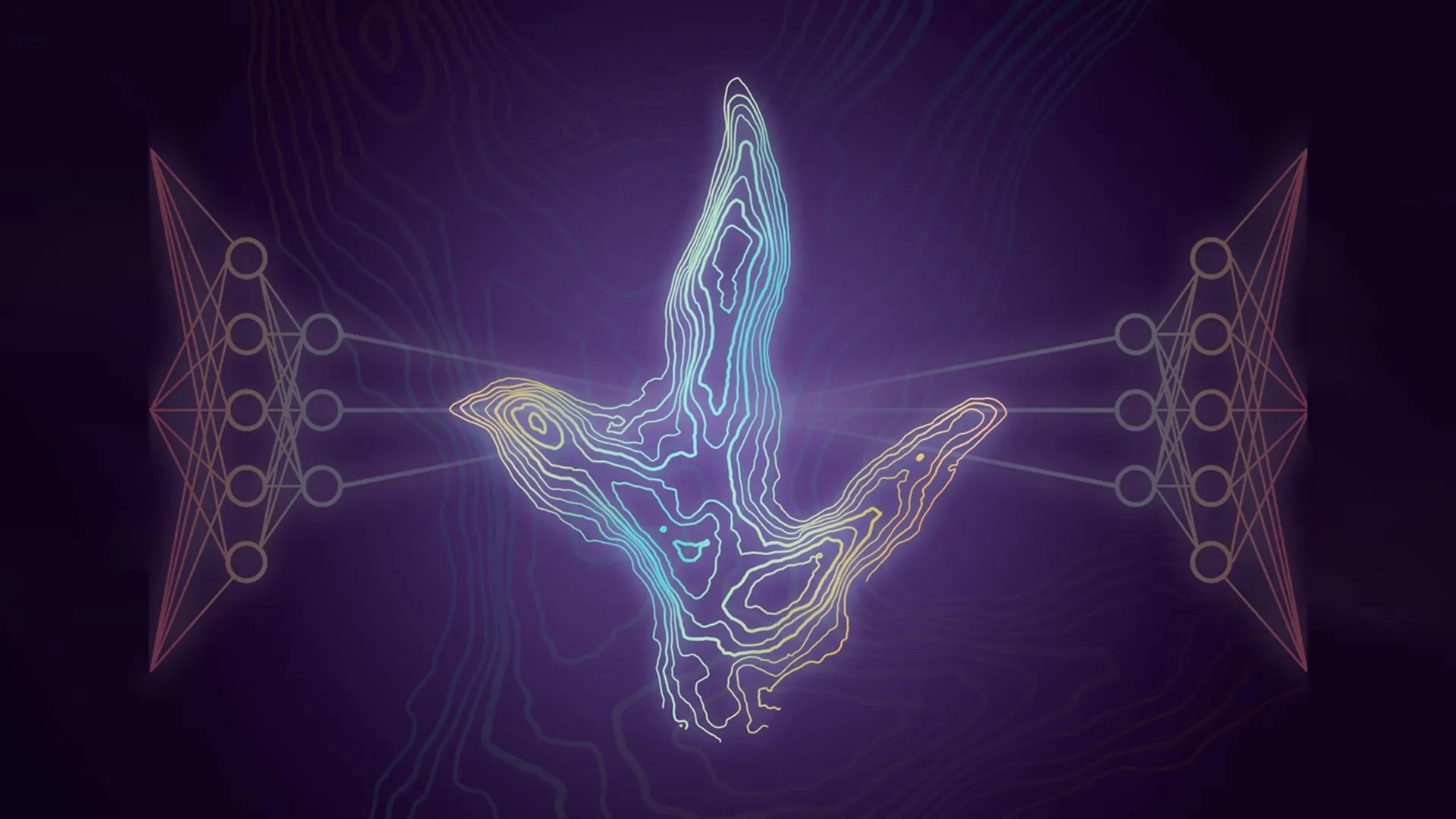
A newly developed application, fortified by advanced artificial intelligence (AI), is empowering scientists and the general public alike with a novel and highly efficient methodology for discerning dinosaur footprints etched into ancient landscapes millions of years ago, according to a seminal study recently published in the scientific journal PNAS. This groundbreaking technology promises to demystify fossil tracks that have, for generations, presented profound interpretational challenges to paleontological researchers worldwide. The innovation not only accelerates the pace of discovery but also opens new avenues for understanding the movement, behavior, and evolutionary timelines of prehistoric fauna, including potentially pushing back the recognized origin of birds by tens of millions of years.
The Enduring Enigma of Ichnology: A Historical Challenge
For centuries, the study of trace fossils, known as ichnology, has been a cornerstone of paleontology, offering invaluable, albeit often ambiguous, windows into ancient ecosystems. Unlike skeletal remains, which provide direct evidence of an organism’s anatomy, footprints (ichnites) capture moments of interaction between an animal and its environment. These ephemeral impressions, once preserved through complex geological processes, provide unique insights into gait, speed, posture, social behavior, and habitat preferences that skeletal fossils cannot. However, the interpretation of these ancient tracks has historically been fraught with difficulties. Paleontologists have long grappled with the precise identification of the track-maker, debating whether a particular print belonged to a swift carnivorous theropod, a lumbering herbivorous sauropod, or an agile ornithopod.
The challenges are manifold: footprints can be heavily distorted by the substrate’s consistency (mud, sand, silt), erosion, weathering, and subsequent geological compaction. A single dinosaur species might leave different-looking tracks depending on its speed or the type of ground it traversed, while different species might produce remarkably similar prints (ichnotaxa). This inherent ambiguity has frequently led to extensive scholarly debate and even misclassification, underscoring the need for more objective and robust analytical tools. For instance, distinguishing between tracks made by different medium-sized theropods or various ornithopods can be notoriously difficult due to overlapping foot morphologies and the effects of substrate deformation. The field of ichnology itself dates back to the early 19th century, with figures like William Buckland and Edward Hitchcock making early observations, but the fundamental challenges of precise attribution have persisted.
Traditional methods often relied on morphological comparisons with known skeletal anatomies or previously classified trackways, often compiled in manually curated databases. While invaluable, this approach could introduce subjective biases, particularly when dealing with incomplete or controversial prints. The sheer volume of fossil tracks discovered globally, ranging from the vast trackways of the La Rioja region in Spain to the extensive sites in Texas, USA, and the UK’s Isle of Skye, further emphasizes the need for scalable and consistent identification methods. The global fossil record of dinosaur footprints is vast, with tens of thousands of individual tracks documented across all continents, each presenting a unique puzzle for researchers, and many awaiting definitive classification.
DinoTracker: Bridging the Gap Between Ancient Impressions and Modern AI
Enter DinoTracker, an innovative mobile application designed to democratize and streamline the analysis of these ancient vestiges. Researchers, amateur enthusiasts, and citizen scientists can now simply upload a photograph or even a detailed drawing of a footprint using their mobile devices. The app then leverages its sophisticated AI algorithms to perform an immediate, in-depth analysis. This analysis goes beyond simple visual comparison, evaluating intricate details of the track’s shape, structure, depth, and overall morphology to generate an estimated identification of the dinosaur type most likely responsible for its creation. This instantaneous feedback mechanism represents a significant departure from traditional methods, which often required extensive comparative studies, expert consultation, and lengthy publication cycles. The app essentially brings a powerful ichnological laboratory to the palm of one’s hand, making expert-level analysis accessible far beyond specialized research institutions.
The development of DinoTracker addresses a critical need within ichnology. Fossilized dinosaur footprints, despite their interpretational difficulties, offer unparalleled insights into the dynamic aspects of prehistoric life—how dinosaurs moved, their preferred habitats, and even aspects of their social behaviors, such as herd movements or predatory pursuits. For instance, the presence of multiple parallel trackways can indicate herd behavior, while variations in stride length can reveal insights into a dinosaur’s speed and body size estimates. However, as earlier studies have repeatedly highlighted, the fidelity of these ancient tracks is often compromised, with their original shapes undergoing significant alterations over geological timescales, making accurate interpretation a formidable task for even the most experienced paleontologists. The ability of the app to account for these taphonomic factors is key to its utility.
The Algorithmic Backbone: Learning from Millions of Tracks
To overcome the inherent biases and limitations of past methodologies, a dedicated international research team, spearheaded by the Helmholtz-Zentrum research centre in Berlin in collaboration with the University of Edinburgh, embarked on a pioneering project. Their objective was to develop advanced machine learning algorithms capable of independently discerning the subtle, yet critical, variations in dinosaur footprint morphology. This approach marked a significant shift from rule-based expert systems to a data-driven paradigm where the AI "learns" from examples, much like a human expert learns through years of observation and comparison.
The core of this AI system’s intelligence lies in its extensive training regimen. The model was rigorously trained on a colossal dataset comprising nearly 2,000 meticulously documented real fossil footprints. These authentic prints were sourced from diverse geological formations globally, including sites in Europe, North America, and Asia, and represent a wide array of dinosaur groups, providing the AI with a robust understanding of natural variation. Crucially, to enhance its robustness and ability to generalize, the system was further exposed to millions of additional simulated examples. These synthetic footprints were not merely arbitrary creations; they were meticulously engineered to reflect realistic changes that occur during the fossilization process. Factors such as compression from overlying sediments, edge displacement due to initial substrate rheology (e.g., wet mud vs. firmer sand), and various degrees of erosion were precisely modeled and incorporated into the simulated dataset. This comprehensive training strategy equipped the AI with an unprecedented ability to account for the complex taphonomic alterations that frequently obscure the original form of ancient tracks, thereby significantly improving its interpretative accuracy in real-world scenarios. This fusion of real-world data with synthetically generated, yet biologically plausible, variations is a hallmark of modern AI training for complex pattern recognition.
Deciphering the Digital Footprint: What the AI Seeks
The sophisticated AI model was designed to recognize and quantify eight specific, key morphological features that serve as distinctive identifiers for different footprint types. These features, often subtle to the untrained eye but critical for classification, include:
- Toe Spread: The angular divergence or convergence of the individual digit impressions, which can indicate the splay of the foot.
- Heel Position: The precise placement and morphology of the rear part of the foot impression, indicating how much of the heel contacted the ground, crucial for differentiating digitigrade from plantigrade stances.
- Surface Area Contact: The total area of the foot that made contact with the substrate, offering clues about the animal’s weight, foot structure, and the substrate’s consistency.
- Weight Distribution: How pressure was exerted across different parts of the foot, which can reveal aspects of gait, posture, and potential injuries.
- Digit Proportions: The relative lengths and widths of the toe impressions, vital for identifying specific groups like tridactyl theropods versus broader-toed ornithopods.
- Claw Marks: The presence, absence, and morphology of distinct claw impressions, often a key differentiator between predatory and herbivorous dinosaurs.
- Overall Shape and Outline: The general perimeter and form of the entire footprint, which can be influenced by the animal’s foot anatomy and movement.
- Depth Variation: Differences in impression depth across the print, indicating pressure points and potential substrate characteristics, and even the animal’s weight.
By meticulously analyzing these parameters, the AI system constructs a comprehensive digital fingerprint for each track. It then cross-references this intricate data pattern with its vast internal database of known fossil examples, employing complex statistical models and machine learning algorithms to predict with high probability which dinosaur species or ichnotaxon most likely made the tracks. This multi-faceted approach allows for a far more nuanced and objective classification than previously possible, moving beyond simple visual comparisons to a quantitative analysis of defining characteristics that even expert human eyes might miss or interpret inconsistently.
Validation and Unprecedented Accuracy
The efficacy of the DinoTracker algorithm was rigorously tested against classifications made by human experts. The results were nothing short of remarkable: the AI system achieved an impressive match rate of approximately 90 percent with human-assigned classifications. This high level of concordance is particularly significant because it extended even to species and tracks that are widely considered controversial or exceptionally challenging for human paleontologists to identify definitively. For example, some early Jurassic tracks attributed to a variety of poorly understood dinosaur groups have historically led to conflicting expert opinions; the AI demonstrated robust performance even in such ambiguous cases. This validation underscores the AI’s capacity to provide consistent, objective analyses, potentially resolving long-standing ichnological debates and offering a new gold standard for footprint identification. Such a high accuracy rate in a field plagued by ambiguity highlights the transformative potential of AI in scientific discovery, not as a replacement for human expertise, but as a powerful complementary tool that can enhance and validate human observations.
Revolutionary Insights: Rewriting the Avian Timeline?
One of the most startling and potentially paradigm-shifting revelations emanating from the AI’s analysis concerns tracks dating back over 200 million years. The DinoTracker detected striking morphological similarities between some of these ancient dinosaur footprints and the feet of both extinct avian species and their modern bird descendants. This finding carries profound implications for our understanding of avian evolution.
The prevailing scientific consensus, largely based on skeletal fossil evidence, places the emergence of true birds (Avialae) in the Late Jurassic period, around 150 million years ago, with Archaeopteryx famously representing one of the earliest known bird-like dinosaurs. If the AI’s correlations hold true, it could imply that the lineage leading to modern birds diverged from other dinosaur groups tens of millions of years earlier than previously believed, potentially pushing their origins back into the Triassic period. The Triassic-Jurassic boundary is roughly 201 million years ago, suggesting that these bird-like tracks could originate from a time when the first true dinosaurs were just beginning to diversify. This would necessitate a significant re-evaluation of phylogenetic timelines and evolutionary models, potentially sparking an entirely new wave of research into Triassic ecosystems for proto-avian forms.
The research team prudently acknowledges two primary interpretations for this unexpected link. The first, as mentioned, is the earlier emergence of bird species, suggesting a ‘ghost lineage’ of early birds for which skeletal fossils have yet to be found. The second, equally intriguing possibility, is that some early dinosaur species, unrelated to the direct avian lineage, happened to evolve foot structures that convergently resembled those of birds. Convergent evolution, where unrelated species develop similar traits due to similar environmental pressures (e.g., specialized perching or ground-dwelling locomotion), is a well-documented phenomenon in natural history. Regardless of the ultimate interpretation, this finding highlights the AI’s ability to uncover subtle patterns and connections that might have eluded human observers, sparking new avenues of inquiry into one of evolution’s most fascinating transitions: the dinosaur-bird link.
Solving Ancient Puzzles: The Isle of Skye Enigma
Beyond broad evolutionary implications, the DinoTracker system has also provided crucial new clues regarding specific, long-standing paleontological mysteries. Among these are the enigmatic footprints discovered on the Isle of Skye in Scotland. These tracks, preserved in the ancient muddy margins of a lagoon approximately 170 million years ago during the Middle Jurassic period, have puzzled scientists for decades. Their unusual morphology and isolated context, coupled with the scarcity of skeletal dinosaur fossils from that specific period in Scotland, made definitive identification challenging, leading to various hypotheses over the years. Some earlier suggestions even involved large crocodiles or other non-dinosaurian reptiles.
The AI’s comprehensive analysis now strongly suggests that these perplexing footprints may have been left by some of the oldest known relatives of duck-billed dinosaurs, scientifically known as hadrosaurs. Hadrosaurs were a highly successful group of herbivorous dinosaurs, renowned for their distinctive dental batteries and often elaborate cranial crests, which thrived during the Late Cretaceous period. Identifying their ancestors, or early relatives, from the Middle Jurassic is a significant discovery. If confirmed, this would make the Isle of Skye tracks among the earliest examples of this prominent dinosaur group identified anywhere in the world, offering vital insights into their early evolution and geographic distribution. The discovery would place Skye as a critical locale for understanding the origins of one of the most successful and widespread dinosaur lineages, potentially shifting our understanding of when and where hadrosaur evolution began to accelerate.
Democratizing Paleontology: Opening Research to Everyone
Beyond its profound scientific contributions, the DinoTracker technology carries a significant social implication: it fosters new opportunities for public engagement in scientific research. Researchers emphasize that the app creates an accessible pathway for individuals with an interest in natural history to actively participate in fossil research. By allowing anyone to analyze footprints themselves, the app transforms passive observation into active contribution, embodying the spirit of citizen science. This democratizing aspect could lead to a massive increase in data collection and preliminary analysis, as individuals exploring natural parks, beaches, or geological sites could potentially contribute valuable information about newly discovered tracks. Such widespread engagement not only enriches public understanding of science but also provides a powerful network of "eyes on the ground" for professional paleontologists, potentially accelerating the discovery and preliminary identification of new fossil sites globally. This model of citizen science has proven successful in other fields, such as astronomy and ornithology, and its application in paleontology could yield unprecedented data.
Expert Endorsements and Future Trajectories
The study, which was a collaborative effort, received funding from various esteemed organizations, including the innovations pool of the BMBF-Project: Data-X, the Helmholtz project ROCK-IT, the Helmholtz-AI project NorMImag, the National Geographic Society, and the Leverhulme Trust. Its publication in PNAS (Proceedings of the National Academy of Sciences), one of the world’s most cited multidisciplinary scientific journals, underscores the significance and rigor of the research, ensuring its findings are disseminated to a broad scientific audience.
Dr. Gregor Hartmann of the Helmholtz-Zentrum research centre, a leading figure in the project, articulated the core benefit of the AI: "Our method provides an unbiased way to recognize variation in footprints and test hypotheses about their makers. It’s an excellent tool for research, education, and even fieldwork." His statement highlights the AI’s role not just as an identification tool but as a robust scientific instrument for hypothesis testing, which is fundamental to scientific advancement.
Professor Steve Brusatte, Personal Chair of Palaeontology and Evolution at the University of Edinburgh’s School of GeoSciences, echoed this enthusiasm, emphasizing the long-standing nature of the problem the AI addresses. "This study is an exciting contribution for paleontology and an objective, data-driven way to classify dinosaur footprints—something that has stumped experts for over a century," he remarked. Professor Brusatte further elaborated on the broader implications, stating, "It opens up exciting new possibilities for understanding how these incredible animals lived and moved, and when major groups like birds first evolved. This computer network might have identified the world’s oldest birds, which I think is a fantastic and fruitful use for AI." His comments encapsulate the transformative potential of the DinoTracker, not merely as a technological novelty but as a catalyst for fundamental discoveries in evolutionary biology and paleontology, potentially forcing a re-evaluation of major evolutionary milestones.
The implications of the DinoTracker extend far beyond current applications. The methodology developed could be adapted for identifying other types of trace fossils, such as invertebrate burrows, plant impressions, or even early hominin tracks, further expanding our understanding of ancient life across different geological epochs. Moreover, the integration of AI with mobile technology paves the way for a new era of collaborative scientific discovery, where geographical barriers and access to specialized expertise become less significant hurdles. As AI continues to evolve, its application in fields like paleontology promises to unlock secrets that have remained buried for millions of years, transforming our perception of Earth’s deep history and the incredible biodiversity it has harbored. The DinoTracker is not just an app; it is a gateway to a deeper, more accessible understanding of the dinosaur age, poised to reshape our knowledge of prehistoric life.
