
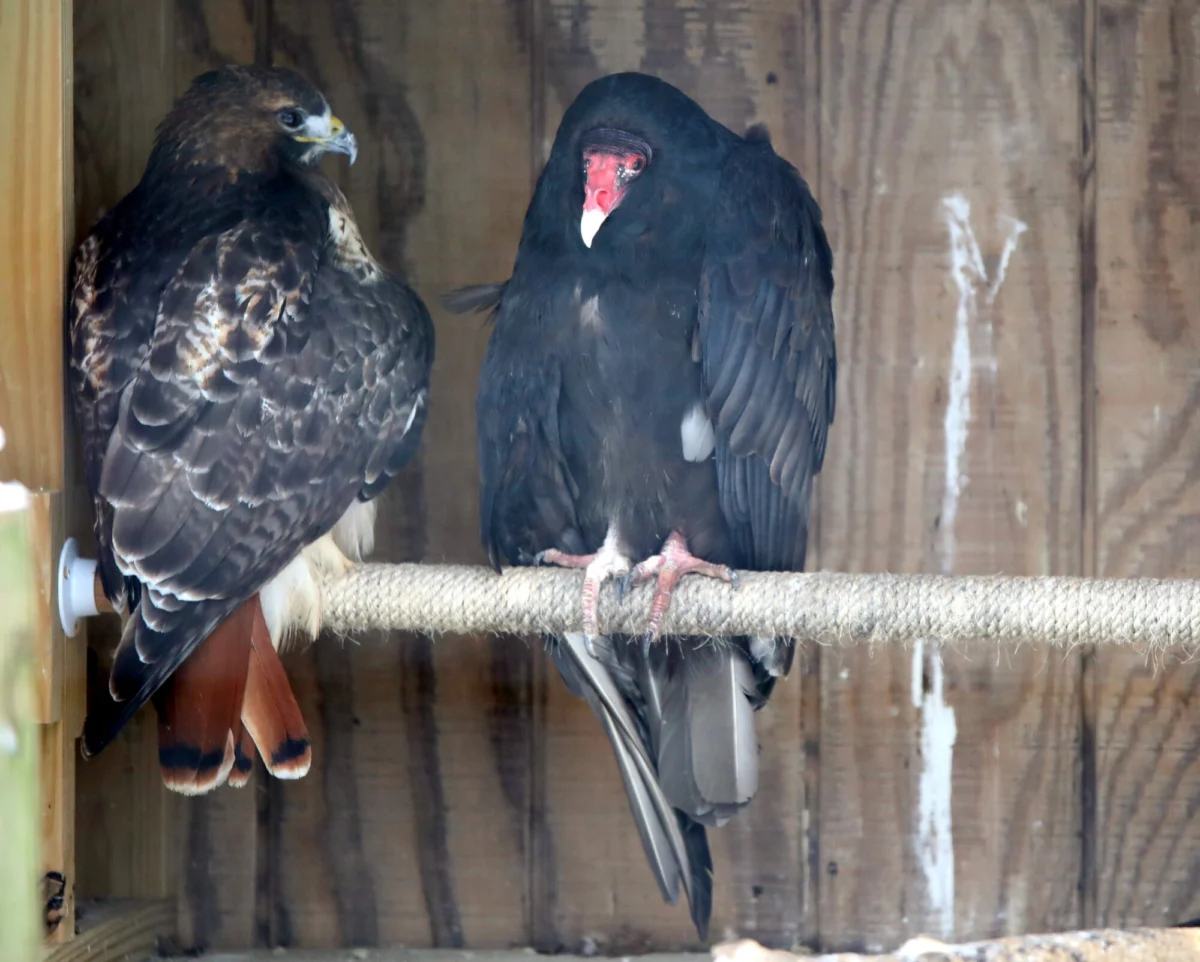
The Elmwood Park Zoo in Norristown, Pennsylvania, has become a sanctuary not only for injured wildlife but also for an extraordinary interspecies friendship. Stan, a 20-year-old female Turkey Vulture, and Hunter, a 22-year-old female Red-tailed Hawk, have developed a profound bond that challenges conventional understanding of animal behavior, residing together in a shared aviary for over a decade. Both birds, rescued from the wild due to debilitating injuries, have found solace, companionship, and an unexpected harmony in each other’s presence, demonstrating the remarkable capacity for connection that exists beyond species boundaries.
This remarkable pairing, recognized by zoo staff as a "bonded" pair, offers a compelling narrative of resilience and mutual support. The story of Stan and Hunter is a testament to how shared experiences, even those born of trauma, can forge the strongest of ties. Their cohabitation, marked by mutual grooming, food sharing, and even shared incubation duties, highlights a level of social interaction rarely observed between these two species, particularly in a captive environment.
A Shared Path to Sanctuary: The Arrival of Stan and Hunter
The genesis of this unique friendship can be traced back to 2005, a pivotal year for both avian residents of Elmwood Park Zoo. Hunter, a young Red-tailed Hawk, arrived at the zoo in July of that year. Her journey to sanctuary was necessitated by a severe injury sustained in the wild: an air-rifle pellet had lodged itself in her right wing, causing a fracture to her humerus. Despite immediate care, the damage was irreparable, leaving the bone malformed and significantly impairing her ability to fly. Hunter was transferred from a rehabilitation center that has since ceased operations, marking the beginning of her long-term residency at Elmwood Park.
Just a month later, in August 2005, Stan, a Turkey Vulture, joined the zoo’s growing population of rescued animals. Her plight was strikingly similar to Hunter’s. Discovered with a pellet lodged in her right wing, Stan’s injuries likely resulted in fractures to her radius and ulna. The swift intervention of the Newark Police Department and subsequent care from Tri-State Bird Rescue & Research, a reputable avian rehabilitation center in Newark, Delaware, saved her life. However, akin to Hunter, the trauma to Stan’s wing prevented a full recovery, leaving her with permanently compromised flight capabilities.
The Genesis of an Unlikely Bond: Shared Trauma and Mutual Adaptation
The shared experience of debilitating wing injuries appears to be the bedrock upon which Stan and Hunter’s extraordinary friendship was built. Both birds, rendered incapable of their full aerial prowess, were placed in an environment where their physical limitations could be managed and their well-being prioritized. It is within this shared space, designed to accommodate their specific needs, that their connection began to blossom.
The Elmwood Park Zoo staff, observing their interactions, noted the development of a deep affinity. The enclosure, designed to provide a safe and enriching environment for both birds, likely played a crucial role. By housing them together, without other avian species, the zoo inadvertently created an ideal scenario for them to form a strong social bond. This deliberate or perhaps serendipitous decision allowed them to develop their own unique social dynamic, free from the complexities and potential rivalries that might arise in a more diverse group.
A Symphony of Shared Behaviors: Daily Life in the Aviary
Over the past decade, Stan and Hunter have exhibited a remarkable array of behaviors that underscore the depth of their companionship. These actions go beyond mere tolerance, reflecting a genuine affection and reliance on one another.
One of the most consistent demonstrations of their bond is their approach to food. Hunter, despite being a raptor with a natural predatory instinct, often takes the initiative in gathering food provided within the enclosure and then shares it with Stan. This behavior is particularly noteworthy as it deviates from the typical competitive feeding dynamics that can occur even among conspecifics. It suggests a level of altruism and consideration that transcends their species.
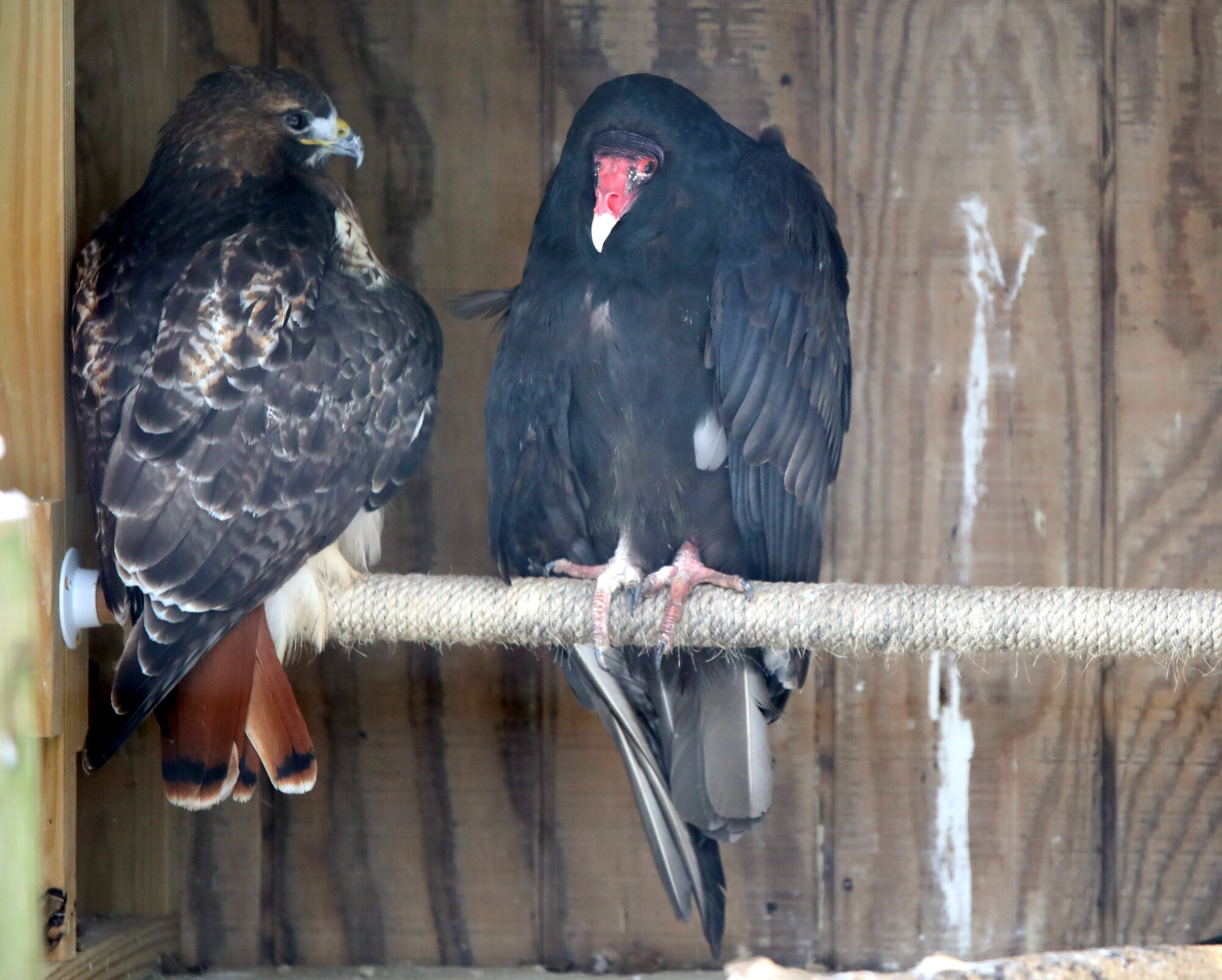
Equally touching is their practice of allopreening, a behavior where one bird meticulously grooms the feathers of another. This is a common bonding activity among many bird species, signifying trust and social cohesion. Seeing a hawk and a vulture engage in mutual preening highlights the unique nature of their relationship. It is a visual representation of their acceptance and comfort in each other’s presence, a mutual caretaking that strengthens their connection.
Perhaps the most compelling evidence of their deep bond emerges during Hunter’s reproductive cycle. When Hunter lays eggs, Stan has been observed to sit on them, a behavior typically reserved for a mother incubating her own clutch. This protective and nurturing action by Stan is extraordinary, demonstrating a level of empathy and commitment that is truly profound. It suggests that Stan views Hunter’s offspring as part of their shared family unit, further solidifying the idea of a deeply integrated bond.
Expert Perspectives and Zoological Significance
The story of Stan and Hunter is of significant interest to ornithologists, animal behaviorists, and zoo professionals. Dr. Emily Carter, a renowned avian behaviorist not affiliated with Elmwood Park Zoo, commented on the significance of such interspecies friendships. "While we often see strong bonds within species, particularly in social birds, interspecies friendships are rarer and often more fascinating," Dr. Carter stated. "These relationships can arise from a variety of factors, including prolonged shared experiences, mutual reliance for survival or comfort, and the absence of social pressure from conspecifics. The case of Stan and Hunter is a prime example of how environmental factors and individual histories can lead to unexpected social alliances."
Zoo directors and curators often highlight such stories as powerful examples of the conservation and educational mission of zoological institutions. Janet Miner, the photographer credited with the image accompanying this article and a likely observer from the zoo or a regular visitor, remarked, "It’s truly heartwarming to witness their bond. They’ve been together for so long, and you can see the comfort they provide each other. It’s a beautiful reminder of the diverse forms that friendship can take."
Broader Implications: Conservation, Education, and the Nature of Connection
The enduring friendship between Stan and Hunter offers several broader implications. Firstly, it serves as a powerful educational tool for zoo visitors. It challenges preconceived notions about the solitary or aggressive nature of certain wild animals and provides a tangible example of empathy and cooperation in the animal kingdom. Children and adults alike can learn valuable lessons about compassion, understanding, and the importance of looking beyond superficial differences.
Secondly, the story underscores the critical role of wildlife rehabilitation centers and zoos in providing a second chance for injured animals. Birds like Stan and Hunter, unable to survive in the wild due to their injuries, find a safe haven and a fulfilling life in captivity. Their friendship highlights the positive outcomes that can arise from dedicated animal care and thoughtful habitat management.
Finally, the narrative of Stan and Hunter prompts reflection on the very nature of connection and belonging. In a world where human relationships can sometimes feel strained or superficial, the unwavering devotion between a vulture and a hawk offers a poignant reminder of the fundamental human (and animal) need for companionship and acceptance. Their story, born from shared vulnerability and nurtured through mutual care, is a universal tale of finding strength and solace in the most unexpected of alliances.
The Elmwood Park Zoo continues to monitor and support Stan and Hunter, ensuring their continued well-being. Their shared aviary remains a testament to the power of an unlikely friendship, a beacon of connection in the often-unpredictable tapestry of life. As they continue to age together, their bond serves as a living testament to the extraordinary capacity for love and companionship that can flourish in the most unexpected of circumstances.
