
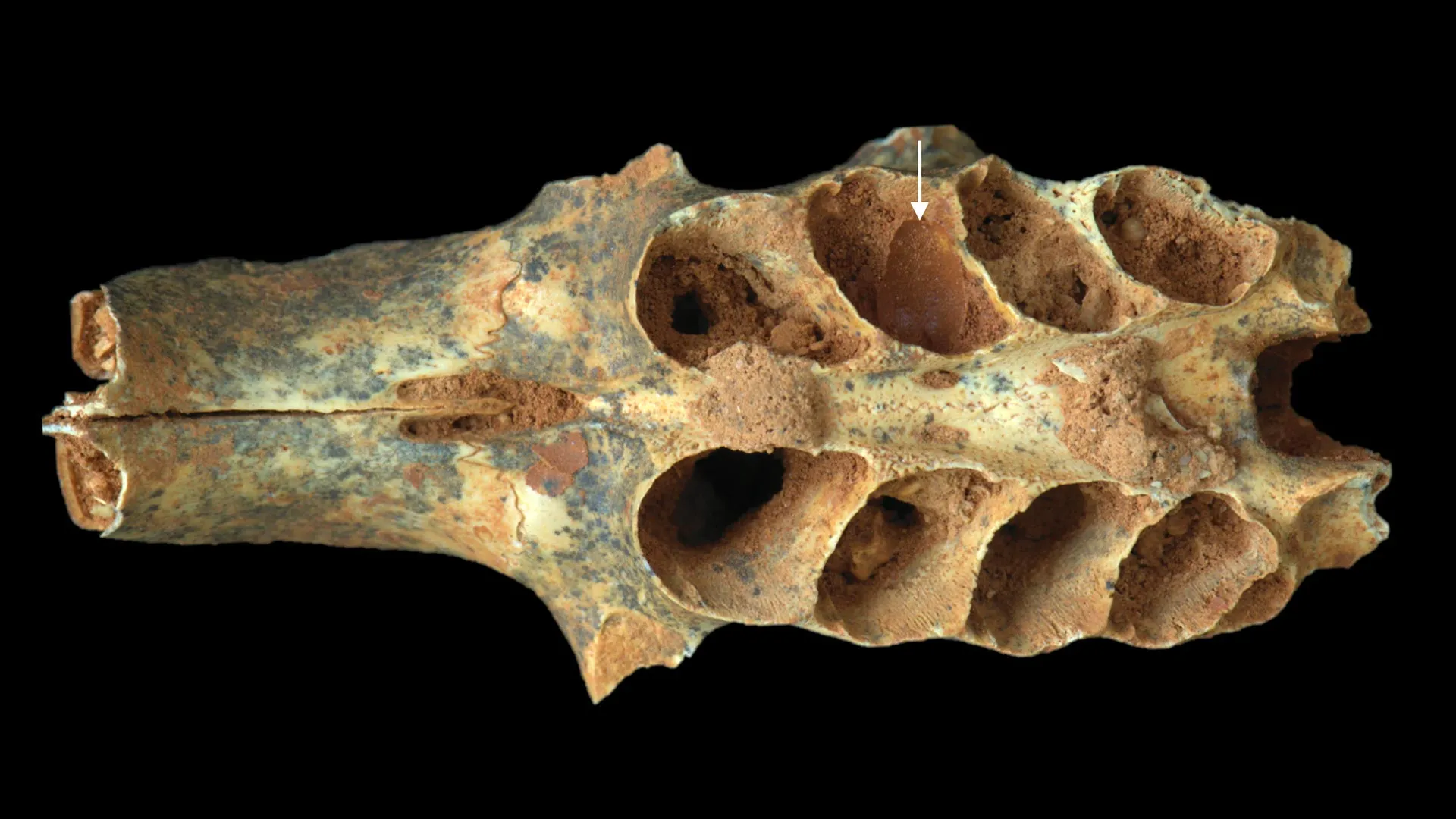
Around 20,000 years ago, a limestone cave on the Caribbean island of Hispaniola served as a vital dwelling for successive generations of owls, which regularly regurgitated pellets containing the bones of their prey. These discarded skeletal remains, accumulating over millennia, unexpectedly became a crucial resource for another group of animals: ancient solitary bees. According to a groundbreaking new study published in Royal Society Open Science, these bees ingeniously utilized the empty tooth sockets within the fossilized jaws of the owls’ victims as minuscule, protected nests for their developing offspring. This remarkable discovery not only represents the first known evidence of bees employing animal bones as places to lay their eggs but also sheds light on an extraordinary and previously undocumented nesting strategy, offering a rare glimpse into the complex paleoecology of the Late Pleistocene Caribbean.
A Glimpse into the Pleistocene Hispaniola: The Owl-Roosting Cave
The Caribbean island of Hispaniola, currently shared by Haiti and the Dominican Republic, is a geological marvel characterized by its extensive karst topography. This landscape is riddled with thousands of limestone caves and sinkholes, many of which act as natural traps and exceptional repositories for prehistoric life. "In some areas, you’ll find a different sinkhole every 100 meters," explains Lazaro Viñola López, a postdoctoral researcher at the Field Museum in Chicago and the lead author of the pivotal study. These subterranean labyrinths have long captivated paleontologists, offering unparalleled opportunities to reconstruct ancient ecosystems.
The specific cave examined in this research, located in the Dominican Republic, had previously been identified by Juan Almonte Milan, curator of paleobiology at the Dominican Republic’s Museo Nacional de Historia Natural, as an exceptionally rich fossil deposit. Almonte Milan, a leading paleontologist in the region, recognized the site’s immense potential, having dedicated decades to exploring Hispaniola’s paleontological treasures. Viñola López and his colleagues embarked on their exploration of this promising site during his PhD research at the University of Florida and the Florida Museum of Natural History.
The entry into the cave, while requiring a rappel down a ten-meter drop, quickly transitions into a fossil-laden environment. "If you go in at night, you see the eyes of the tarantulas that live inside," Viñola López recounted, painting a vivid picture of the cave’s vibrant modern ecosystem. Beyond this initial descent, a ten-meter-long underground tunnel unveils layers upon layers of fossilized remains, each stratum providing a chronological snapshot of the cave’s ancient inhabitants. The cave’s unique geological conditions, with carbonate deposits forming during ancient rainy periods, created distinct fossil layers, effectively preserving a chronological record spanning thousands of years.
The vast majority of the recovered remains belonged to rodents, a testament to their abundance and the owls’ dietary preferences. However, researchers also unearthed fossils from a diverse array of other animals, including extinct sloths, various birds, reptiles, and numerous other species, collectively representing more than 50 distinct taxa. These findings paint a comprehensive picture of a vibrant, interconnected ecosystem that thrived in Hispaniola during the Late Pleistocene. The sheer volume and variety of fossils strongly suggest that this cave served as a long-term roosting and nesting site for raptors. "We think that this was a cave where owls lived for many generations, maybe for hundreds or thousands of years," Viñola López elaborated. "The owls would go out and hunt, and then come back to the cave and throw up pellets. We find fossils of the animals that they ate, fossils from the owls themselves, and even some turtles and crocodiles who might have fallen into the cave." This continuous deposition of bones created a unique, albeit macabre, resource landscape within the cave.
Unearthing the Unexpected: A Serendipitous Discovery
The primary focus of Viñola López’s doctoral research involved studying the mammal bones accumulated by the ancient owls. It was during the meticulous process of cleaning these fossilized remains that he stumbled upon an anomaly—a detail that would fundamentally alter the understanding of ancient insect behavior. Within several of the empty tooth sockets of the fossilized jawbones, he observed smooth, concave deposits. These structures presented a stark contrast to the naturally accumulated sediment that typically fills such cavities.
"It was a smooth surface, and almost concave. That’s not how sediment normally fills in, and I kept seeing it in multiple specimens. I was like, ‘Okay, there’s something weird here,’" he recounted, describing the initial flicker of curiosity that led to a significant breakthrough. The unusual texture and consistent morphology immediately triggered a memory from an earlier experience during an undergraduate fossil excavation in Montana. There, another paleontologist had shown him fossilized wasp cocoons – small, mud-built chambers where developing larvae mature into adults. The resemblance between those ancient wasp structures and the deposits within the Hispaniola jawbones was striking and undeniable. This moment of recognition underscored the importance of interdisciplinary knowledge and the value of an observant eye in paleontological research, where seemingly minor details can unlock profound scientific insights.
The Invisible Architects: Ancient Solitary Bees and Their Unique Nests
While popular perception often associates bees with large, communal hives, like those of honey bees, the vast majority of bee species worldwide are solitary. These solitary bees exhibit an incredible diversity in their nesting strategies, eschewing the complex social structures of their colonial cousins. Instead, they typically lay their eggs in small, individual cavities, provisioning each with a store of pollen for the developing larvae. "But actually, most bees are solitary. They lay their eggs in small cavities, and they leave pollen for the larvae to eat," Viñola López clarified. "Some bee species burrow holes in wood or in the ground, or use empty structures for nests. Some species in Europe and Africa even build their nests in empty snail shells." The discovery in Hispaniola, however, introduced an entirely new category: nesting within the empty tooth sockets of fossilized bones.
To investigate these enigmatic structures further without damaging the precious fossils, the research team employed advanced imaging techniques, specifically CT scanning. This non-invasive technology allowed them to generate detailed three-dimensional images of the compacted material inside the tooth sockets. The CT scans proved conclusive, revealing internal structures that perfectly matched the mud nests constructed by various modern solitary bee species. Even more remarkably, some of these ancient nests preserved grains of pollen, a direct testament to the maternal provisioning strategy, indicating that the mother bees had meticulously stored food for their developing offspring within these tiny chambers.
The researchers hypothesize that these ancient bees crafted their nests by mixing dirt with saliva, forming a durable, protective material. Each individual nest, surprisingly small, measured less than the size of a pencil eraser. The decision to nest within the hollow spaces of larger animal bones likely offered several adaptive advantages. These bone cavities would have provided a degree of structural integrity and insulation, potentially shielding the delicate eggs and larvae from environmental fluctuations and, crucially, from predators such as parasitic wasps or other invertebrates seeking an easy meal. This innovative nesting strategy exemplifies the extraordinary adaptability of insects, showcasing their capacity to exploit novel ecological niches and resources within their environment.
A New Chapter in Trace Fossil Taxonomy: Osnidum almontei
Despite the compelling evidence of bee activity, the nests themselves contained no fossilized bees. This absence, while initially disappointing, is not unexpected given the cave’s warm, humid conditions, which are generally poor for the preservation of delicate insect bodies. The highly organic and chitinous nature of insect exoskeletons renders them particularly susceptible to decomposition in such environments, making complete fossilization a rare event.
Without the physical remains of the bees, scientists could not definitively determine the exact species responsible for constructing the nests. However, the unique and distinct nature of the nest structures themselves was sufficient to warrant their own taxonomic classification. In paleontology, traces of ancient life, such as nests, burrows, footprints, or bite marks, are known as ichnofossils (or trace fossils) and are often classified independently when the body fossil of the producer is unknown.
The fossil nests were thus formally named Osnidum almontei. This scientific nomenclature serves as a profound tribute to Juan Almonte Milan, the visionary paleontologist who first identified the cave’s exceptional fossil richness and has dedicated decades to studying the prehistoric fauna of Hispaniola. The naming acknowledges his foundational contributions to the field and his integral role in bringing this remarkable site to scientific attention. The identity of the ancient bee species remains an open question. "Since we didn’t find any of the bees’ bodies, it’s possible that they belonged to a species that’s still alive today – there’s very little known about the ecology of many of the bees on these islands," Viñola López mused. "But we know that a lot of the animals whose bones are preserved in the cave are now extinct, so the bees that created these nests might be from a species that has died out." This uncertainty underscores the challenges and ongoing mysteries inherent in paleontological research, particularly concerning ancient invertebrates.
Hispaniola’s Paleontological Tapestry: Broader Ecological and Evolutionary Implications
The discovery of Osnidum almontei represents a significant advancement in paleoecology, offering unprecedented insights into the intricate relationships between different life forms in a Pleistocene ecosystem. This is the first documented case of bees using animal bones as nesting sites, highlighting the profound adaptability and resourcefulness of ancient insects.
Interconnected Ancient Ecosystems
This finding dramatically illustrates the interconnectedness of ancient ecosystems. It reveals a fascinating trophic cascade: large raptors (owls) consumed vertebrates, depositing their bones; then, tiny invertebrates (bees) repurposed these discarded remains for their reproductive cycles. Such detailed interactions are often difficult to reconstruct from the fossil record, which typically favors the preservation of larger, more robust organisms. The presence of pollen within the nests further enriches this picture, indicating the co-existence of flowering plants that served as food sources for these bees, creating a holistic view of a dynamic ancient food web.
Insights into Paleoecology and Behavior
The unique nesting strategy of Osnidum almontei offers a rare window into the behavioral adaptations of ancient insects. While the ecological pressures that drove this specific behavior are still being fully explored, several factors likely played a role. The limestone karst landscape of Hispaniola, characterized by minimal topsoil, would have presented challenges for bees that typically nest in the ground. In such an environment, the thousands of hollow tooth sockets within the owl-deposited bones would have offered an abundant, readily available, and protected alternative. This demonstrates a remarkable level of opportunistic resource utilization, a key driver of evolutionary success.
Geological Context and Scarcity of Resources
The geological context of Hispaniola is paramount to understanding this discovery. The island’s extensive karst topography, while providing numerous caves for fossil preservation, also means that surface soil suitable for conventional ground-nesting bees is scarce. This environmental constraint would have made alternative nesting sites highly valuable. The continuous accumulation of bones by generations of owls within the cave provided a unique and plentiful supply of pre-formed cavities, creating a perfect storm of ecological opportunity for the resourceful bees. This highlights how geological features can directly influence biological adaptations and behavioral strategies within an ecosystem.
The Value of Trace Fossils
This study powerfully reinforces the critical importance of trace fossils in paleontological research. While body fossils provide direct evidence of an organism’s morphology, trace fossils like Osnidum almontei reveal information about ancient behavior, diet, movement, and environmental interactions that body fossils alone cannot. The discovery serves as a compelling argument for paleontologists, even those primarily focused on vertebrates, to remain vigilant for the subtle clues left by invertebrates. "Even if you’re looking primarily for fossils of larger, vertebrate animals, you should keep an eye out for trace fossils that can tell you about invertebrates like insects," Viñola López advises. "Knowing about insects can tell you a lot about a whole ecosystem, so you have to pay attention to that part of the story." This interdisciplinary approach is vital for constructing a comprehensive understanding of ancient life.
Modern Relevance and Conservation
Beyond its historical implications, understanding ancient bee behaviors can offer valuable insights for modern conservation efforts. Solitary bees, though often overshadowed by honey bees, are crucial pollinators and face numerous threats today, including habitat loss and climate change. Studying the adaptive strategies of their ancient counterparts, such as utilizing unconventional nesting sites in resource-limited environments, could inform strategies for supporting current bee populations. It underscores the incredible resilience and adaptability inherent in these insects, which have found ways to thrive in diverse and challenging conditions for millennia.
The Collaborative Spirit of Discovery
The successful elucidation of this ancient bee behavior is a testament to the collaborative and interdisciplinary nature of modern paleontology. The project involved researchers from institutions such as the Field Museum, the University of Florida, the Florida Museum of Natural History, and the Dominican Republic’s Museo Nacional de Historia Natural. This blend of expertise, from vertebrate paleontology to entomology and advanced imaging, was essential in piecing together the narrative of these ancient bone-nesting bees. The careful work of cleaning fossils, the astute observation of anomalies, and the application of cutting-edge technology all converged to bring this remarkable story to light. As research continues in Hispaniola’s treasure-filled caves, it is clear that many more secrets of the island’s ancient past await discovery, promising further revelations about the planet’s evolutionary history.
