
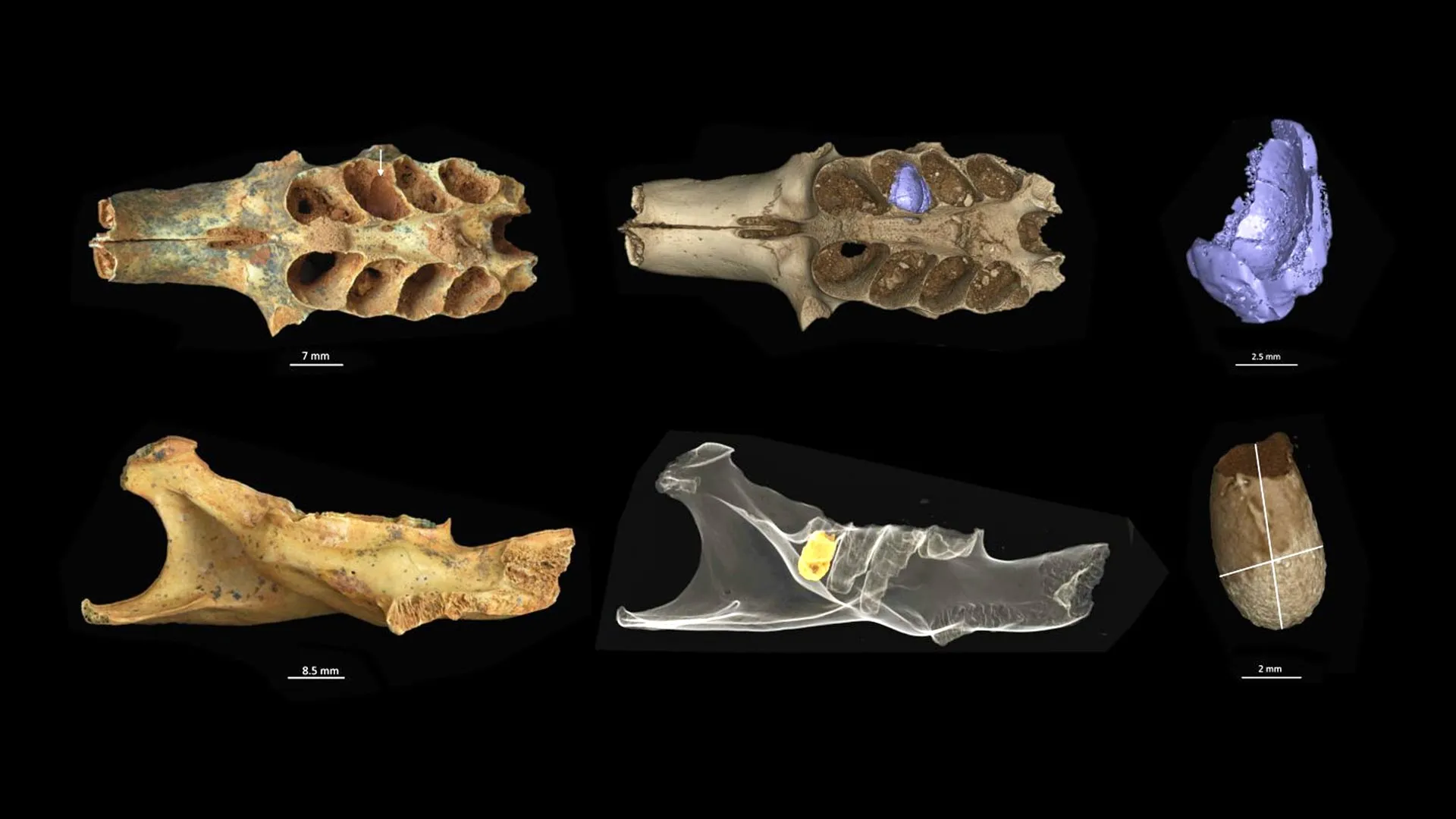
A remarkable scientific finding on the Caribbean island of Hispaniola has unveiled a previously unknown ecological interaction spanning millennia, where ancient burrowing bees repurposed the fossilized remains of extinct animals as nesting sites. This extraordinary revelation, published in the Proceedings of the Royal Society B, offers an unparalleled glimpse into the resourcefulness of life and the intricate taphonomic processes that preserve such unique behaviors in the geological record. The discovery challenges conventional understanding of insect nesting habits and provides critical insights into the paleoenvironments of the Greater Antilles.
Unraveling an Ancient Mystery: A Multi-Millennial Narrative
The unusual chain of events that culminated in this discovery likely began thousands of years ago within the dark recesses of a cave system in Hispaniola, specifically the Cueva de Mono in the southern Dominican Republic. This cave served as a long-term feeding ground for a formidable predator of the past: the giant barn owl (Tyto pollens). Weighing significantly more and possessing a larger wingspan than its modern counterparts, Tyto pollens was an apex avian predator in the ancient Caribbean ecosystem. These owls routinely captured a variety of prey, including the now-extinct Hispaniolan hutia, a large native rodent. The owls would carry their catches back to the cave to feed their young, leaving behind a scattering of bones and other indigestible remains after the meals concluded. Over countless generations, this repetitive behavior led to the accumulation of a rich fossil deposit within the cave, a veritable graveyard of ancient Caribbean fauna.
After the era of the giant barn owls and the hutias they preyed upon, and likely long after both species had vanished from the island’s ecosystem, a new chapter unfolded. Burrowing bees, searching for suitable locations to construct their nests, arrived in the cave. Their keen instincts led them to the fine, clay-rich silt that had accumulated in the cave’s darker, more stable sections. As these bees began to excavate their subterranean homes, they encountered an unexpected, yet remarkably convenient, resource: the fossilized bones of the hutias and other creatures left behind by the owls.
A Meticulous Discovery: From Sediment to Scientific Significance
The scientific journey to uncover this ancient interspecies interaction began with the meticulous work of paleontologist Lazaro Viñola Lopez, then a doctoral student at the Florida Museum of Natural History. His primary focus was on the poorly understood Hispaniolan hutia, a species rarely found in such abundance elsewhere on the island. During his excavations in Cueva de Mono, Viñola Lopez uncovered thousands of fossils, predominantly belonging to what appeared to be this singular species of hutia, reinforcing the hypothesis that the cave was indeed a long-term feeding site for the giant barn owls.
The crucial turning point came through Viñola Lopez’s exceptional attention to detail—a trait often distinguishing significant discoveries from missed opportunities. Standard paleontological practice dictates the thorough cleaning of fossil specimens, which typically involves removing all sediment from cavities such as tooth sockets, known as alveoli. However, rather than immediately cleaning the vast number of hutia fossils, Viñola Lopez opted for a closer inspection. It was during this careful examination that he noticed something peculiar: certain cavities within the fossilized jaws and other bones possessed an unusually smooth inner surface, starkly contrasting with the rough, porous texture of the surrounding bone. This anomaly piqued his curiosity, recalling a similar observation from earlier field work.
The Scientific Sleuths: Challenging Initial Assumptions
Viñola Lopez had encountered comparable structures in 2014 while collecting dinosaur fossils in Montana, where he and his colleagues had identified wasp cocoons intermingled with the fossil material. His initial working hypothesis, therefore, was that the smooth cavities in the Hispaniolan hutia fossils were also the work of wasps. He envisioned a straightforward scientific note detailing the occurrence of these insect nests within the mandibles.
He shared this intriguing idea with his colleague, Mitchell Riegler, another doctoral student at the Florida Museum. Riegler, initially occupied with other research, was not immediately convinced of the project’s priority, humorously recalling, "I was like, Lazaro, that’s a niche project, and I have a lot of other things to do." The concept lay dormant until Riegler, spurred by a friendly challenge from a former advisor to complete a scientific paper within a week, revisited the idea with Viñola Lopez. This impromptu challenge spurred the duo into action, transforming a casual observation into a focused research endeavor.
The turning point in their investigation arrived as they delved deeper into the study of ichnofossils—trace fossils that provide evidence of past life activity, such as footprints, burrows, or nests, rather than the preserved remains of the organism itself. Their review of existing literature revealed a critical discrepancy. Wasp nests, particularly those of mud daubers or potter wasps, are typically constructed from chewed plant material mixed with saliva or mud, resulting in rough, textured walls. The structures observed within the Hispaniolan fossils, however, were notably smooth. This led the researchers to consider an alternative. Many species of burrowing bees, in contrast to wasps, line their subterranean nests with a waxy, waterproof secretion, creating a polished, almost glazed interior. This subtle but crucial detail provided the definitive clue, revealing the true identity of the ancient nest builders: they had been studying bees, not wasps. This reclassification elevated the discovery from an interesting anecdote to a finding of profound scientific importance.
An Unprecedented Ecological Adaptation
The correction from wasps to bees dramatically amplified the significance of the discovery. While there are a few documented instances of burrowing bees nesting within caves, this finding from Hispaniola presents an unparalleled scenario: bees utilizing pre-existing fossil structures as nesting sites without significant alteration. Previous reports, for example, have described bees actively drilling into human bones to create nests, demonstrating an adaptive behavior. However, the Hispaniolan bees simply occupied natural cavities—the empty alveoli of hutia jaws, the pulp cavities of sloth teeth, and the neural canals of vertebrae—as ready-made homes. This passive yet highly efficient exploitation of available resources represents an ecological adaptation that is, to the best of current scientific knowledge, unprecedented in the fossil record.
Realizing the magnitude of their findings, Viñola Lopez and Riegler expanded their study, consulting with experts in modern bee biology and meticulously reviewing a vast body of scientific literature. Viñola Lopez even returned to the Cueva de Mono to conduct further geological surveys, seeking to establish a more precise chronological context for the fossil layers and the bee nests within them. The implications of this discovery are far-reaching, providing a unique window into the behavioral plasticity of ancient insects and their ingenious ways of adapting to environmental constraints. It underscores how seemingly disparate elements of an ecosystem—predator, prey, and scavenger/opportunist—can become inextricably linked through geological time.
The Caribbean Context: Karst Landscapes and Resource Scarcity
The unusual nesting behavior of these ancient bees can be directly attributed to the unique geological characteristics of Hispaniola, particularly its pervasive karst topography. Karst landscapes, prevalent across much of the Caribbean, are characterized by soluble bedrock, primarily limestone, which is eroded by water to create a rugged terrain of sinkholes, caves, and underground drainage systems. The surface environment of karst regions is often notoriously poor in stable soil. As Riegler vividly described, "The area we were collecting in is karst, so it’s made of sharp, edgy limestone, and it’s lost all of its natural soils. I actually fell on it at one point, so I can tell you all about it."
This scarcity of stable, diggable soil on the surface presents a significant challenge for burrowing insects that rely on such substrates for nesting. However, the same geological processes that create this challenging surface environment also offer a solution. Any soil that does accumulate on the surface, along with organic debris and eroded sediments, is frequently washed into the myriad caves and fissures of the karst system. These subterranean deposits, protected from surface erosion and weathering, create pockets of fine, clay-rich silt—ideal conditions for burrowing bees seeking to establish their nests. In the context of Hispaniola’s ancient landscape, these cave deposits likely represented some of the only viable nesting conditions for burrowing bees in the region, driving their opportunistic use of any available cavity, including the fossilized remains of long-dead animals.
Beyond Hutia Jaws: A Diverse Fossil Archive
The final study detailed a comprehensive analysis of the cave’s history and the diverse range of fossil structures utilized by these resourceful bees. The nesting sites were not confined solely to the jawbones of hutias. In one instance, a bee nest was discovered within the pulp cavity of a sloth tooth. Tree sloths, once common across the Caribbean islands, formed a significant part of the ancient megafauna but largely disappeared following the arrival of humans. Another nest was found ingeniously placed within a hutia vertebra, specifically occupying the space that once housed the spinal cord.
Advanced imaging techniques, such as CT scans, provided further astonishing details. These scans revealed that some of the fossilized cavities contained multiple layers of nests, stacked one within another like a set of Russian dolls. This phenomenon indicates that, rather than expending energy to dig new tunnels, certain bee lineages efficiently reused existing, empty cavities. One remarkable example showed six individual nests precisely arranged within a single alveolus, demonstrating an exceptional degree of resource optimization. This multi-layered nesting strategy also offers insights into the longevity of these nesting sites and potentially, the continuity of bee occupation over successive generations.
Safeguarding Ancient Secrets: The Rescue Mission
The invaluable paleontological record preserved within Cueva de Mono faced a serious threat during the course of the research. At one point, a plan emerged to develop the land surrounding the cave, with the alarming intention of converting the ancient geological formation into a septic tank. Such a development would have irrevocably destroyed the cave’s unique fossil deposits and the scientific insights they held.
Recognizing the imminent danger, the research team sprang into action, launching an urgent rescue mission to recover as many fossils as possible before any potential damage could occur. "We had to go on a rescue mission and get as many fossils out as possible, and we got a lot of them," Viñola Lopez recounted, highlighting the intense pressure and dedication required to safeguard such irreplaceable scientific heritage. This incident underscores the constant threat that development and human activities pose to paleontological sites globally, emphasizing the critical importance of rapid scientific intervention and conservation efforts. The success of their rescue mission ensured that the stories held within Cueva de Mono could continue to be told.
Future Horizons: More Stories from the Cave
The discovery of bees nesting in fossilized bones is just one chapter in the ongoing narrative of Cueva de Mono. The researchers are continuing their extensive study of the vast array of other fossils recovered from the cave, with additional groundbreaking findings anticipated in future publications. The cave, a silent archive of ancient life, promises to yield further secrets about the paleoecology of Hispaniola and the broader Caribbean.
This pioneering work, published in one of the world’s most prestigious scientific journals, the Proceedings of the Royal Society B, provides a compelling testament to the adaptability of life in the face of environmental challenges. It reveals how a cave, initially a site of predation and accumulation of death, transformed over geological time into a vibrant shelter for an entirely different kind of inhabitant. The intricate interplay between geology, climate, extinct megafauna, and modern insects paints a vivid picture of an ecosystem far more complex and interconnected than previously imagined, offering profound lessons on the enduring ingenuity of natural selection and the serendipitous nature of scientific discovery.
