
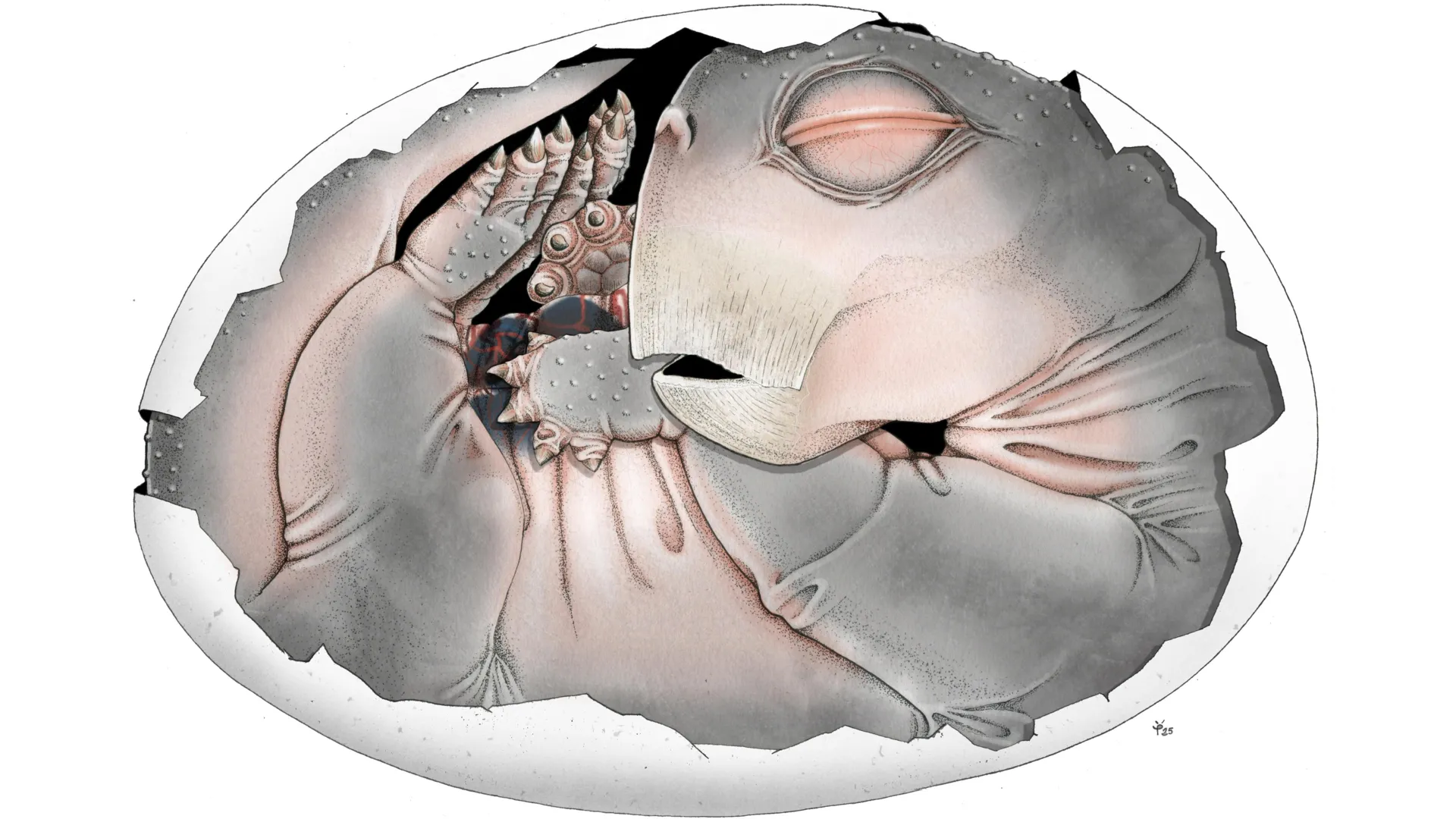
A groundbreaking fossil discovery is casting new light on one of Earth’s most astonishing survival narratives, simultaneously providing a definitive answer to a scientific enigma that has perplexed researchers for generations. The finding centers on Lystrosaurus, a resilient, plant-eating ancestor of mammals that emerged as a dominant species in the chaotic aftermath of the End-Permian Mass Extinction approximately 252 million years ago. This catastrophic event, often dubbed "The Great Dying," obliterated an estimated 96% of marine species and 70% of terrestrial vertebrate species, making it the most severe biotic crisis in Earth’s history. Despite enduring extreme heat, pervasive environmental instability, and prolonged droughts, Lystrosaurus not only persisted but thrived, a testament to its remarkable adaptability.
The End-Permian Cataclysm: A World Reborn from Ruin
To fully appreciate the significance of Lystrosaurus‘s triumph, it is crucial to understand the sheer scale of the End-Permian Mass Extinction. Occurring at the boundary between the Permian and Triassic geological periods, this cataclysm transformed Earth into a desolate wasteland. Scientists largely attribute the extinction to massive volcanic eruptions in the Siberian Traps, which spewed colossal amounts of greenhouse gases like carbon dioxide and methane into the atmosphere. This led to runaway global warming, acid rain, widespread ocean anoxia (lack of oxygen), and ocean acidification, rendering vast swathes of the planet uninhabitable. Ecosystems collapsed, food chains disintegrated, and biodiversity plummeted to unprecedented lows. For millions of years following the extinction, Earth’s recovery was slow and arduous, characterized by impoverished faunas and unstable environments. Yet, amidst this planetary devastation, Lystrosaurus not only survived but flourished, becoming one of the most widespread and abundant terrestrial vertebrates in the early Triassic period. Its exceptional resilience has long fascinated paleontologists, prompting questions about the biological mechanisms that allowed it to overcome such extreme adversity.
Lystrosaurus: An Unlikely Conqueror of the Post-Apocalyptic World
Lystrosaurus, a genus of dicynodont therapsids, represents a crucial branch in the evolutionary tree leading to modern mammals. Therapsids are often referred to as "mammal-like reptiles" due to their blend of reptilian and mammalian characteristics. These stout, pig-like herbivores possessed a distinctive beak-like snout and often a pair of tusks, adapted for digging up roots and tubers in a landscape likely stripped bare of lush vegetation. Their squat bodies and strong limbs suggest they were well-suited to navigating the harsh, often arid conditions of the early Triassic. Fossil evidence indicates that Lystrosaurus populations exploded across the supercontinent Pangaea, found in what are now parts of Africa, Asia, Antarctica, and India. Its widespread distribution and numerical dominance post-extinction made it a key subject for understanding survival strategies during global crises. However, a significant piece of its biological puzzle remained elusive: how did it reproduce? For decades, the question of whether early mammal ancestors like Lystrosaurus laid eggs or gave live birth persisted as a major unanswered question in vertebrate paleontology, primarily due to the scarcity of direct fossil evidence.
The Discovery: A Decades-Old Mystery Unveiled
New research, meticulously detailed in the scientific journal PLOS ONE, describes a pivotal discovery that fundamentally alters our comprehension of this ancient animal and the broader trajectory of early mammalian evolution. An international consortium of researchers, spearheaded by Professor Julien Benoit and Professor Jennifer Botha from the Evolutionary Studies Institute at the University of the Witwatersrand, South Africa, alongside Dr. Vincent Fernandez from ESRF – The European Synchrotron in France, has identified an extraordinarily rare fossil: an egg containing a Lystrosaurus embryo, dating back approximately 250 million years.
This unprecedented fossil represents the first definitively confirmed egg ever found from a mammal ancestor. Its existence unequivocally resolves the long-standing debate about the reproductive mode of these ancient creatures. The answer, now confirmed by direct empirical evidence, is a resounding yes: the ancestors of mammals laid eggs.
Professor Botha recounts the initial stages of this remarkable find: "This fossil was discovered during a field excursion I led in 2008, nearly 17 years ago. My preparator and exceptional fossil finder, John Nyaphuli, identified a small nodule that at first revealed only tiny flecks of bone. As he carefully prepared the specimen, it became clear that it was a perfectly curled-up Lystrosaurus hatchling. I suspected even then that it had died within the egg, but at the time, we simply didn’t have the technology to confirm it." The initial suspicion, held for almost two decades, underscored the limitations of traditional paleontological methods when faced with extremely delicate and complex specimens.
Unveiling the Hidden Past: The Power of Synchrotron Technology
The definitive confirmation of Professor Botha’s initial hunch became possible only with the advent and application of cutting-edge imaging technologies. With modern synchrotron X-ray Computed Tomography (CT) scanning, utilizing the immensely powerful X-rays available at the ESRF, researchers were finally able to non-invasively examine the intricate internal structures of the fossil. These advanced tools enabled them to peer inside the specimen with unparalleled resolution and detail, validating what had long been a hypothesis.
Dr. Fernandez articulated the palpable excitement surrounding this technological breakthrough: "Understanding reproduction in mammal ancestors has been a long-lasting enigma, and this fossil provides a key piece to this puzzle. It was essential that we scanned the fossil just right to capture the level of detail needed to resolve such tiny, delicate bones." Synchrotron facilities, like the ESRF, generate X-rays thousands of times brighter than conventional X-ray sources, allowing for the precise imaging of minute features within dense materials without causing any damage to the irreplaceable fossil. This capability was critical for discerning the subtle features of the embryo and the remnants of the egg structure.
The high-resolution scans not only confirmed the presence of an embryo within an egg but also uncovered a crucial clue regarding the embryo’s developmental stage. Professor Benoit highlighted a specific anatomical observation: "When I saw the incomplete mandibular symphysis, I was genuinely excited. The mandible, the lower jaw, is made up of two halves that must fuse before the animal can feed. The fact that this fusion had not yet occurred shows that the individual would have been incapable of feeding itself." This detail was paramount, indicating that the embryo was still in a pre-hatching stage, solidifying the interpretation of it being an egg-bound individual rather than a post-hatchling that had curled up for preservation.
Anatomy of an Ancient Egg: Soft-Shelled Secrets
The discovery also provided a compelling explanation for why such crucial evidence of early mammalian reproduction had eluded paleontologists for so long. The researchers posit that Lystrosaurus eggs were soft-shelled, a characteristic shared by many modern reptiles (like snakes, lizards, and some turtles) and even extant monotremes (the platypus and echidna), which are the only living egg-laying mammals. Unlike the hard, mineralized (calcium carbonate-rich) eggs of dinosaurs and birds, which possess robust shells that readily fossilize, soft-shelled eggs are primarily composed of organic materials such such as collagen and protein. These organic components are highly susceptible to decay, typically biodegrading rapidly before they can undergo the mineralization processes necessary for fossil preservation. This inherent fragility makes the Lystrosaurus egg discovery exceptionally rare and invaluable. Its preservation is likely due to extraordinary taphonomic conditions, possibly rapid burial in fine-grained sediment that shielded it from decomposition and scavengers.
Reproductive Strategy: Large Eggs, Fast Growth – A Winning Formula
Beyond merely confirming egg-laying, the study delves into the specific reproductive strategy employed by Lystrosaurus, offering profound insights into its unparalleled success in a desolate world. The research indicates that Lystrosaurus produced relatively large eggs in proportion to its body size. In contemporary animals, larger eggs are typically provisioned with a greater quantity of yolk, a nutrient-rich substance that provides sustained nourishment for the developing embryo. This extended internal nourishment allows embryos to reach an advanced developmental stage before hatching, potentially negating the immediate need for extensive parental care or feeding after birth. This suggests that, unlike modern placental or marsupial mammals, Lystrosaurus likely did not feed its young with milk, aligning it more closely with reptilian reproductive patterns.
The large size of these eggs offered another critical advantage in the post-extinction environment. They would have been significantly more resistant to desiccation (drying out) compared to smaller eggs. This resistance to water loss would have been a crucial factor in the predominantly dry and climatically unstable conditions that characterized the early Triassic period following the mass extinction, giving Lystrosaurus a distinct edge in arid landscapes.
Furthermore, the findings strongly suggest that Lystrosaurus hatchlings were likely "precocial." Precocial young are born at a relatively advanced stage of development, often capable of independent movement, feeding, and predator avoidance shortly after hatching. This contrasts with "altricial" young, which are born helpless and require prolonged parental care (like human infants or songbird chicks). For Lystrosaurus, being precocial would have meant that the young animals could rapidly forage for themselves, evade threats, and reach sexual maturity quickly. This accelerated life cycle—growing fast and reproducing early—would have been an incredibly effective strategy in an unpredictable and resource-scarce environment, allowing populations to rebound rapidly and seize newly available ecological niches.
Broader Implications for Evolutionary Science and Modern Challenges
The discovery of the Lystrosaurus egg provides the first direct empirical evidence of egg-laying in mammal ancestors, fundamentally reshaping our understanding of the origins of mammalian reproduction. It bridges a significant gap in the fossil record, helping to trace the evolutionary pathway from reptilian egg-laying to the diverse reproductive strategies seen in modern mammals. It highlights that the transition to viviparity (live birth) in the mammalian lineage was a later evolutionary development, occurring after the initial diversification of therapsids.
Moreover, the study offers a compelling explanation for Lystrosaurus‘s exceptional success in the challenging post-extinction ecosystems. Its combination of large, yolk-rich eggs, robust against desiccation, and the production of precocial young that could quickly become independent, collectively formed a highly adaptive reproductive strategy. This strategy enabled Lystrosaurus to rapidly colonize and dominate a depopulated world, exemplifying how specific biological traits can confer immense selective advantages during periods of extreme environmental stress.
As scientists continue to unravel the complexities of ancient life, a consistent pattern emerges: survival during profound global crises hinges on a combination of adaptability, resilience, and shrewd reproductive strategies. Lystrosaurus appears to have masterfully integrated all three.
Voices from the Field: Reflections on a Milestone Discovery
Professor Julien Benoit articulated the multi-faceted impact of this research: "This research is important because it provides the first direct evidence that mammal ancestors, such as Lystrosaurus, laid eggs, resolving a long-standing question about the origins of mammalian reproduction. Beyond this fundamental insight, it reveals how reproductive strategies can shape survival in extreme environments: by producing large, yolk-rich eggs and precocial young, Lystrosaurus was able to thrive in the harsh, unpredictable conditions following the End-Permian Mass Extinction. In a modern context, this work is highly impactful because it offers a deep-time perspective on resilience and adaptability in the face of rapid climate change and ecological crisis. Understanding how past organisms survived global upheaval helps scientists better predict how species today might respond to ongoing environmental stress, making this discovery not just a breakthrough in paleontology, but also highly relevant to current biodiversity and climate challenges." He also reflected on the collaborative scientific process: "The opportunity to work at the European Synchrotron Radiation Facility alongside beamline scientists was also an unforgettable part of the journey. The cutting-edge data we generated there allowed us to ‘see’ inside the fossil in extraordinary detail, ultimately revealing that the embryo was still at a pre-hatching stage. That moment, when the pieces all came together, was incredibly rewarding."
Professor Jennifer Botha added her perspective on the continuity of scientific inquiry: "What makes this work especially exciting is that we were able to quite literally follow in John Nyaphuli’s footsteps, returning to a specimen he discovered nearly two decades ago and finally solve the puzzle he uncovered. At the time, all we had was a beautifully curled embryo, but no preserved eggshell to prove it had died within an egg. Using modern imaging techniques, we were able to answer that question definitively." She also emphasized the historical significance for South African paleontology: "It is also thrilling because this discovery breaks entirely new ground. For over 150 years of South African paleontology, no fossil had ever been conclusively identified as a therapsid egg. This is the first time we can say, with confidence, that mammal ancestors like Lystrosaurus laid eggs, making it a true milestone in the field."
The discovery of the Lystrosaurus egg is more than just a paleontological curiosity; it is a foundational piece in the grand narrative of life on Earth. It not only clarifies a critical juncture in mammalian evolution but also offers vital lessons on resilience and adaptation, lessons that resonate powerfully in an era grappling with unprecedented environmental change and biodiversity loss. As scientists continue to explore Earth’s deep past, fossils like this Lystrosaurus egg serve as enduring reminders of life’s remarkable capacity to endure and innovate, even in the face of the most profound global upheavals. The secrets held within this ancient fossil will undoubtedly inspire further research into the complex interplay between reproductive biology, environmental pressures, and evolutionary success.
