
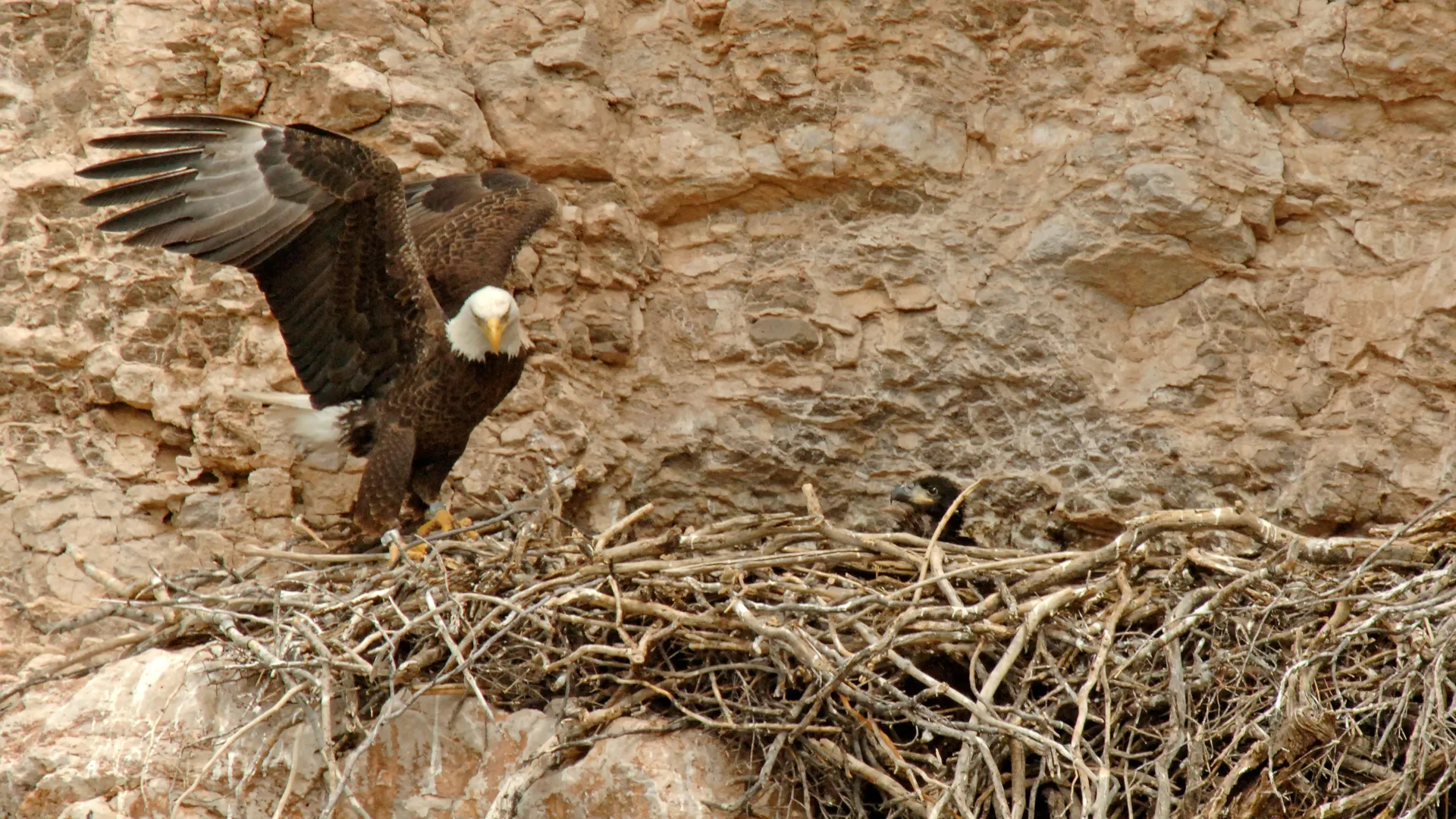
Despite the common adage, birds of a feather do not always flock together, nor do they always follow conventional migratory paths. A groundbreaking new study published in the Journal of Raptor Research reveals an unexpected behavior among Bald Eagles (Haliaeetus leucocephalus) originating from Arizona: an unusual northward migration, defying the typical southward journey observed in most temperate migratory birds. This finding challenges long-held assumptions about avian movement and underscores the remarkable adaptability of these iconic raptors in an era of rapid environmental change. The paper, titled "Northward Migrations of Nonbreeding Bald Eagles from Arizona, USA," also documents a singular, compelling case of an eagle that embarked on an extensive journey from Arizona to ultimately settle in California, a decision that provides rare insight into the often-elusive phenomenon of emigration from a home population. Researchers conclude that southwestern Bald Eagles exhibit a highly exploratory nature, a likely evolutionary strategy to locate dynamic and often short-lived food sources across vast landscapes. As global climate patterns and local ecosystems continue to transform, research meticulously documenting how wildlife adjusts its movements becomes critically important for designing effective conservation strategies and safeguarding essential travel corridors for vulnerable species.
A Departure from Convention: Understanding Avian Migration
The prevailing scientific understanding of avian migration in temperate regions largely centers on a southward movement during the nonbreeding season, typically autumn and winter, to escape harsh conditions and find more abundant food resources. This pattern is deeply ingrained in both scientific literature and public perception, with images of geese flying south for the winter serving as a cultural touchstone. However, Arizona’s Bald Eagles present a fascinating anomaly. Unlike their northern counterparts, Bald Eagles in Arizona commence their breeding season in the winter months, meaning their nonbreeding period naturally falls during the summer and autumn. This inverted seasonal timing sets the stage for their unusual northward movements.
Dr. Caroline D. Cappello, the lead author of the study, expressed her intrigue regarding this divergent timing. "Northward migratory behavior raises interesting questions about the recent and historical pressures that shape these movement strategies," she noted. This observation compels ornithologists to reconsider the monolithic view of avian migration and delve deeper into the specific ecological and evolutionary drivers that might lead a population to adopt such a distinct pattern. It suggests that migratory strategies are not merely hardwired responses to temperature gradients but are complex adaptations influenced by a myriad of factors, including local resource availability, competitive pressures, and historical climatic shifts. Understanding these underlying pressures is paramount to predicting how other species might respond to future environmental changes.
The Arizona Anomaly: An Isolated Population’s Unique Strategy
Arizona’s Bald Eagle population is particularly significant. While Bald Eagles have made a remarkable recovery across North America following their near extinction due to DDT poisoning in the mid-20th century, the Arizona contingent represents a somewhat isolated and distinctive group. The species was delisted from the federal Endangered Species Act in 2007, a testament to concerted conservation efforts, but localized populations, like those in Arizona, continue to face unique challenges. These eagles inhabit a desert environment, a less typical habitat for a species often associated with large bodies of water and forested areas. This unique ecological context likely plays a substantial role in shaping their migratory and foraging behaviors.
Historically, Bald Eagles in Arizona were considered largely sedentary, with breeding adults remaining close to their nesting territories year-round. This perception, however, was largely based on observations of breeding birds, leaving a significant gap in knowledge about the movements of nonbreeding individuals. The new study directly addresses this gap, providing crucial insights into the life stages often overlooked in traditional population monitoring. By focusing on nonbreeding eagles, researchers gain a more holistic understanding of the species’ life cycle and the environmental pressures that influence survival and dispersal across different age classes. This expanded perspective is critical because survival rates can vary dramatically across life stages, and understanding these differences is key to effective population management.
Mapping the Unseen: Methodology and Scope of the Study
To unravel the mysteries of Arizona Bald Eagle movements, the research team employed cutting-edge satellite telemetry technology. Between 2017 and 2023, the Arizona-based team meticulously fitted satellite transmitters to 24 newly fledged Bald Eagles and two nonbreeding adults. These sophisticated devices provided invaluable, real-time data, allowing researchers to map their intricate movements both within and beyond the state’s borders. The transmitters, which could function for up to four years in some cases, provided a rich dataset over the seven-year study period, offering an unprecedented glimpse into the lives of these majestic birds.
The decision to focus on nonbreeding birds was a deliberate and strategic one. While the movements of breeding Bald Eagles in Arizona were relatively well understood, the activities of their nonbreeding counterparts remained largely unknown. This data gap meant that a comprehensive view of the species’ population dynamics was incomplete. As Dr. Javan M. Bauder, a USGS researcher, Assistant Unit Leader at the Arizona Cooperative Fish and Wildlife Research Unit, and Assistant Professor at the University of Arizona, emphasized, "managing and conserving wildlife populations requires that we understand the movement of patterns of individuals of all age classes within those populations." By comparing the movement patterns and survival rates of nonbreeding eagles with those of breeders, scientists can now construct a far more complete picture of the species’ health across its range and discern how population-level processes are truly shaped by individual behaviors throughout their lifespan. This granular understanding is vital for crafting targeted and effective conservation strategies that account for the needs of all age groups.
Intermountain Flyway: Enduring Habitats and Seasonal Bonanzas
The study confirmed the enduring importance of specific aquatic habitats along what is known as the Intermountain Flyway. Tracked eagles consistently paused at many of the same lakes and rivers that a foundational study in the 1980s had already identified as crucial stopover sites for Bald Eagles. This remarkable overlap across generations strongly supports the idea that these particular habitats have remained critical gathering points and resource hubs for the species over several decades. This long-term fidelity to specific locations highlights the necessity of protecting these established corridors and rest areas for migratory birds.
Beyond reaffirming the significance of the Intermountain Flyway and a clear dependence on lakes and rivers along their routes, the research revealed that eagles of different ages undertook migrations to both the northern U.S. and southern Canada. This wide-ranging exploration by both young and older non-breeding birds demonstrates a flexible and opportunistic foraging strategy. The team also observed a fascinating developmental aspect: as eagles matured, their migration pathways became notably more precise and refined. Most birds tracked for at least two years consistently returned to Arizona in the fall of their hatch year after spending the summer months roaming farther north. Researchers hypothesize that these young, exploratory eagles might be capitalizing on ephemeral, yet abundant, seasonal food bonanzas found in northern latitudes. These could include events such as spawning salmon runs in rivers, the nesting of large waterfowl populations, or the availability of carcasses from large mammals, all of which offer rich, albeit temporary, food sources. While further research is needed to definitively confirm these dietary hypotheses, the evidence points towards a highly adaptive foraging strategy driven by the pursuit of calorically dense, if fleeting, opportunities.
The Perilous Journeys: Threats to Young Raptors
Bald Eagles, like many other large raptors, must navigate a gauntlet of hazards in an increasingly human-dominated world. The study brought to light a particularly poignant case: one young eagle traversed an astonishing ten U.S. states and four Canadian provinces during her early life. Her epic journey culminated in northern California, where, at four years old, she appeared poised to establish a breeding territory – a significant milestone for any raptor. However, her promising trajectory was tragically cut short by electrocution, a disturbingly common cause of death for large birds of prey. This loss was especially troubling, as Dr. Cappello explained, because it "underscored the ongoing risks these birds face," and because emigration – the permanent departure from a natal population – is an inherently difficult aspect of population dynamics to accurately measure. Her apparent decision to live and breed in California would have provided invaluable, rare insight into the frequency with which Bald Eagles hatched in Arizona disperse to other regions, a key metric for understanding population connectivity and genetic exchange.
The dangers faced by young raptors extend far beyond electrocution. Other significant threats include poisoning from lead, often ingested from bullet fragments in hunter-killed game carcasses, and rodenticides, which accumulate in the food chain when raptors consume poisoned prey. Collisions with wind turbines, a growing concern with the expansion of renewable energy infrastructure, also pose a substantial risk. Habitat loss, driven by urbanization and agricultural expansion, continues to fragment and degrade essential breeding, foraging, and migratory areas. Furthermore, the overarching uncertainty related to a rapidly changing climate introduces a suite of new challenges, from altered prey availability and modified migratory cues to increased frequency of extreme weather events. By meticulously studying raptors at every stage of life, particularly the inherently risky and exploratory journeys of young birds, scientists can gather evidence-based insights. This data is crucial for formulating precise recommendations about which stopover sites are most important to protect and which types of human infrastructure, including electrical systems, could be modified to significantly improve survival rates for eagles and other large raptors, ensuring the long-term viability of these magnificent creatures.
Conservation in a Changing Climate: Implications and Future Directives
The findings from this study carry significant implications for the future of Bald Eagle conservation, particularly in the face of escalating environmental changes. Understanding the exploratory nature and northward migratory patterns of Arizona’s Bald Eagles provides conservationists with critical data to adapt existing strategies. It highlights the need to shift from a purely localized approach to one that considers broad regional and even international connectivity, especially along the Intermountain Flyway. Protecting the identified lakes and rivers that serve as crucial stopover sites is paramount. This protection must extend beyond just the physical habitat to include measures that ensure the availability of prey and minimize human disturbance during critical migratory periods.
Moreover, the tragic death by electrocution underscores the urgent need for collaboration between wildlife agencies and utility companies. Retrofitting existing power lines with bird-safe designs and ensuring new infrastructure is built with raptor safety in mind can drastically reduce mortality rates. This proactive approach to infrastructure modification is a tangible step towards mitigating human-induced threats. As the climate continues to change, leading to unpredictable shifts in precipitation, temperature, and resource distribution, species like the Bald Eagle, with their demonstrated adaptability, may offer clues for how other wildlife populations might respond. Documenting how wildlife adjusts its movements – whether through altered migratory routes, timing, or the establishment of new foraging grounds – is vital for designing robust, forward-looking conservation strategies. These strategies must prioritize the protection of key travel corridors and flexible habitats that can accommodate dynamic shifts in species distribution, ensuring the resilience of vulnerable populations in a rapidly evolving world.
Charting the Unknown: Future Research Avenues
Building upon this foundational research, the team recommends several critical avenues for future investigation. One key area is the study of route fidelity. As Dr. Cappello notes, "if consistent patterns exist it could help focus conservation efforts on specific, high-use areas along their migratory route." Identifying these predictable pathways would allow conservationists to target resources more effectively, protecting the most vital segments of the eagles’ journeys.
Another important direction involves comparative studies. The researchers highlight the significance of comparing these Arizona Bald Eagles to other wildlife populations that also migrate north from the southern edge of their ranges. Such comparisons could provide broader insights into the evolutionary tradeoffs, energetic costs, and ecological benefits associated with this specific northward migration strategy. Understanding why certain populations adopt this counter-intuitive movement pattern while others adhere to traditional southward migration could unlock fundamental principles of avian ecology and evolution. Furthermore, long-term tracking data on individual eagles remains invaluable for observing how migratory patterns might shift over a bird’s lifetime and across generations in response to ongoing environmental changes. This continued vigilance and dedicated scientific inquiry are essential for ensuring the sustained recovery and long-term viability of Bald Eagle populations, providing a beacon of hope for wildlife conservation in a dynamic and challenging future.
