
Avian Endurance Record Shattered: Tiny Sandpiper Completes Epic Trans-African Journey
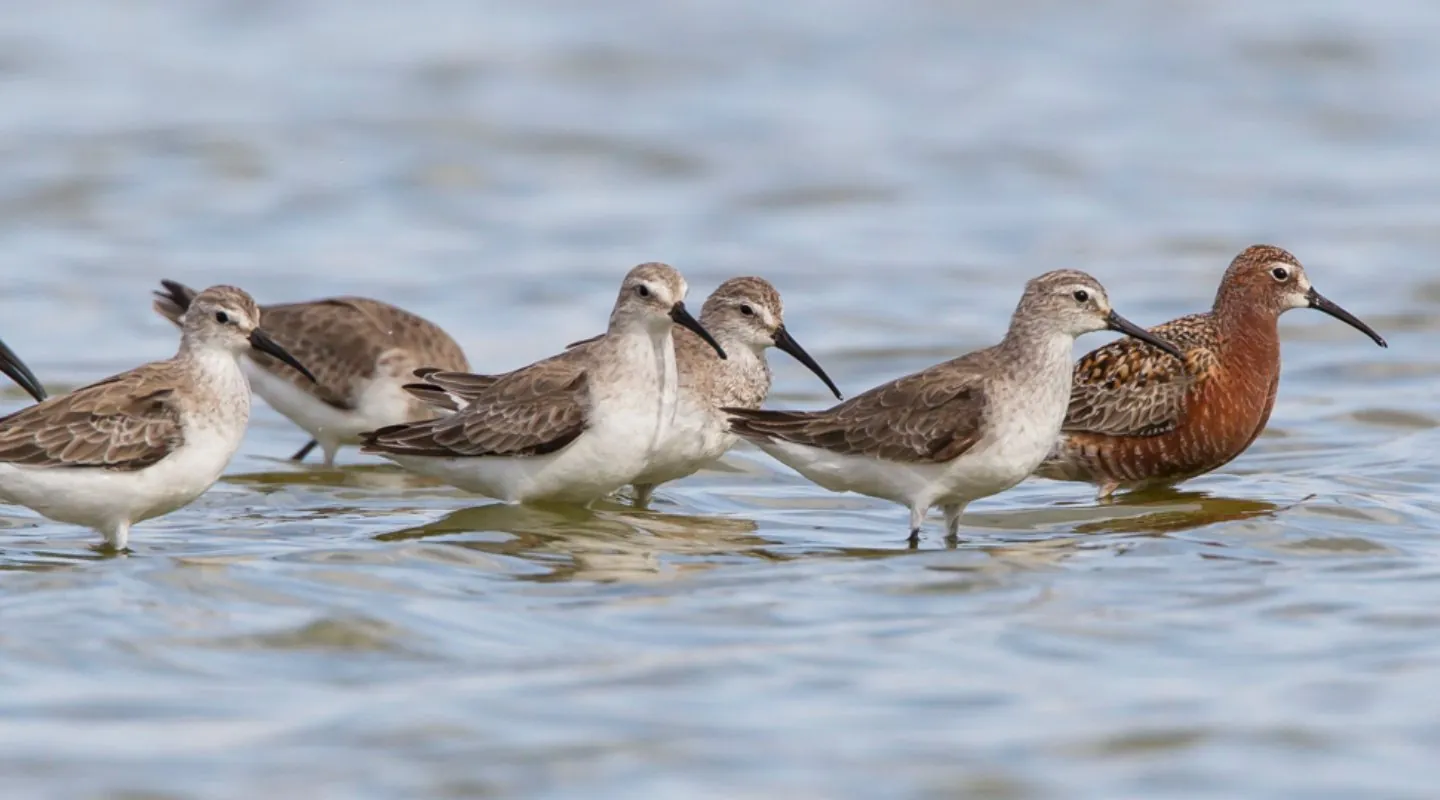
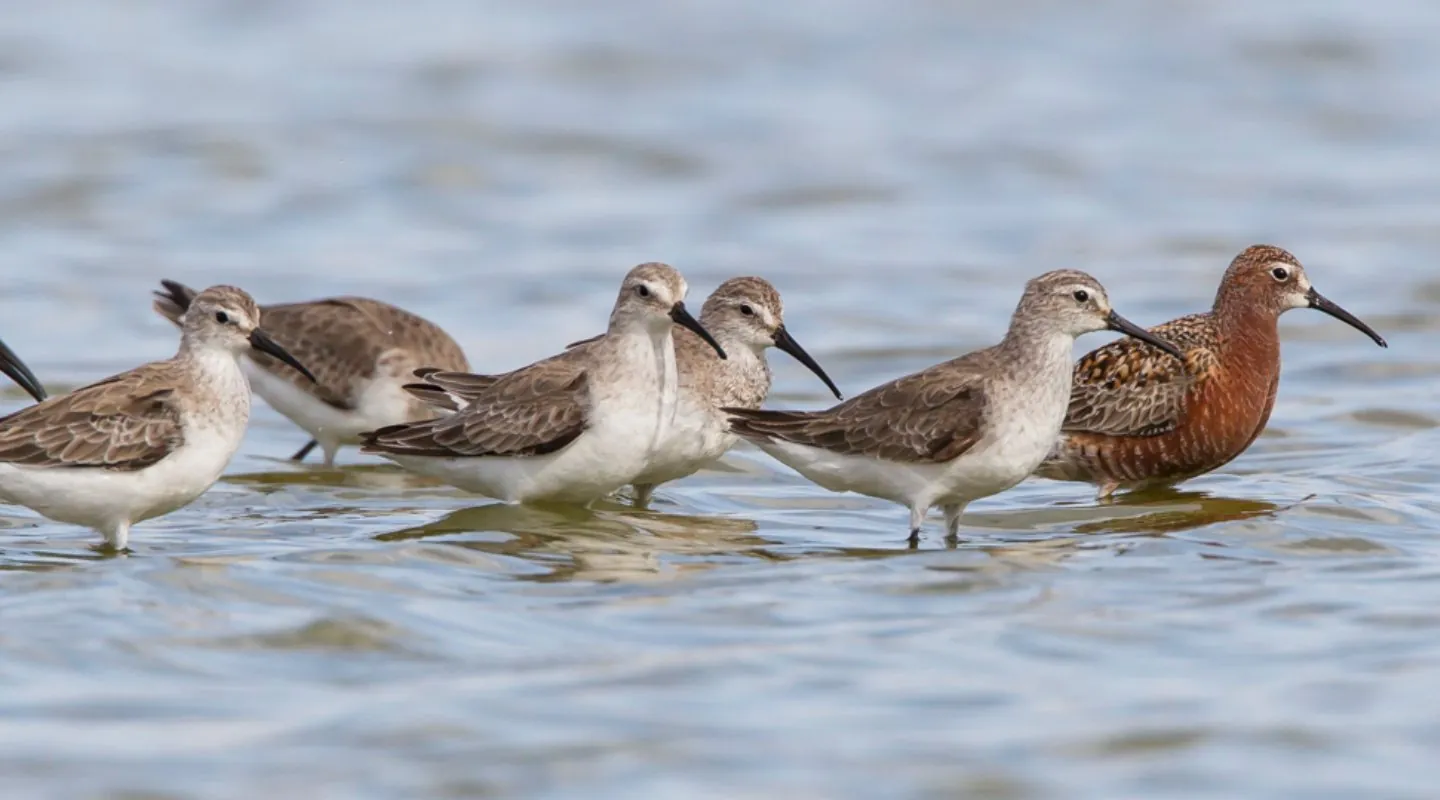
In a feat of biological endurance that has left ornithologists astounded, a single Curlew Sandpiper, weighing no more than a standard smartphone, has successfully completed a non-stop flight spanning 60 hours and covering an incredible 3,870 kilometers. This remarkable journey, undertaken by a bird affectionately nicknamed "Delta," marks a significant moment in our understanding of avian migration and the extraordinary capabilities of these small, feathered travelers.
The groundbreaking tracking effort, a collaborative initiative between Wetlands International and Birdlife South Africa, involves monitoring 20 Curlew Sandpipers as they embark on their annual migration from the southern tip of Africa towards the distant Arctic tundra. While the migration itself is a testament to nature’s marvels, Delta’s individual performance has elevated the expedition into uncharted territory, pushing the boundaries of known endurance for this species.
The Genesis of an Epic Flight: From South Africa to the Makgadikgadi Pans
Delta’s extraordinary odyssey began in early March, with its departure from South Africa. The initial phase of its journey saw the bird spend approximately 1.5 months in the ecologically rich Makgadikgadi Pans of neighboring Botswana. These vast salt pans, renowned for their ephemeral wetlands, provide crucial feeding and resting grounds for a multitude of migratory birds. It is here that Delta, like many other shorebirds, likely amassed the vital energy reserves necessary for the arduous trek north.
The Makgadikgadi Pans, often described as one of the largest salt pans in the world, are a critical stopover point for birds utilizing the African-Eurasian Flyway. Their fluctuating water levels, dictated by seasonal rains, create diverse habitats that support abundant invertebrate life, a primary food source for sandpipers. The extended stay of Delta in this region underscores its importance as a staging area, allowing birds to build up fat reserves that fuel their long-distance flights.
A Relentless Northward Push: Charting Delta’s Flight Path
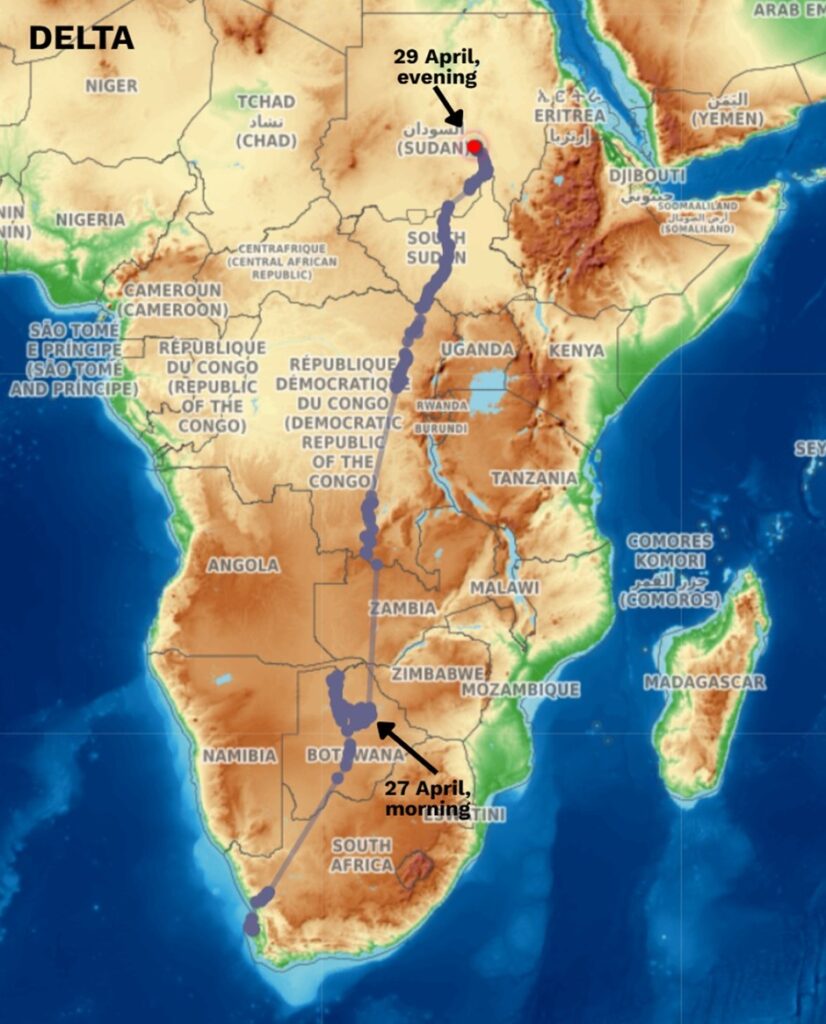
The pivotal moment of Delta’s record-breaking flight commenced in the early hours of April 27th. With the first light of dawn, the diminutive bird launched itself into the sky, its sights set firmly on the north. The initial leg of its journey saw it traverse the skies over Zimbabwe, a country characterized by its diverse landscapes, from rolling hills to savannahs.
As the day progressed, Delta continued its relentless northward trajectory, crossing the border into Zambia. The vast expanse of this nation, with its network of rivers and woodlands, offered no respite or temptation for a stop. By early afternoon, the Curlew Sandpiper had already entered the Democratic Republic of Congo (DRC).
The sheer scale of the DRC, the second-largest country in Africa, presented a significant challenge. As evening descended, Delta was already deep within its borders, its tiny wings beating rhythmically, pushing onward. The bird’s determination was palpable, as it continued its flight towards its next critical waypoint: South Sudan.
The Sudd Marshes: A Brief Encounter with a Wetland Wonder
The dawn of April 28th found Delta continuing its flight, its internal compass guiding it inexorably north. By late evening, the bird had reached the southern reaches of the Sudd Marshes in South Sudan. This sprawling wetland system, one of the largest in the world, is a vital ecological corridor and a designated Key Biodiversity Area. The Sudd is a crucial refueling station for numerous migratory species, offering vast expanses of shallow water and rich feeding grounds.
While several of Delta’s tagged companions have been observed stopping in the Sudd region to rest and replenish their energy stores, Delta’s internal imperative remained singular: to fly. The bird appears to have bypassed the abundant opportunities for sustenance and rest, opting instead for an unbroken flight over this vital wetland ecosystem. This decision highlights the immense energetic demands of its migration and the bird’s remarkable physiological capacity.

By 08:00 on April 29th, Delta had already overflown the entirety of the vast Sudd region. This indicates an astonishing speed and stamina, as it covered this massive wetland area in a relatively short period. Its journey then continued into Sudan, with the bird setting a course towards the fertile White Nile valley.
Landing in Sudan: The Culmination of an Unprecedented Journey
The final leg of Delta’s epic flight concluded shortly after noon on April 29th. After approximately 60 hours of continuous flight, the Curlew Sandpiper touched down in Sudan, having covered an astonishing 3,870 kilometers from its point of origin in South Africa. This distance is equivalent to flying from London to New York City, a feat that would be challenging for much larger aircraft.
The sheer magnitude of this achievement is underscored by the bird’s physical attributes. A Curlew Sandpiper typically weighs between 50 and 80 grams, with Delta likely falling within this range. To sustain flight for 60 hours non-stop, covering such a vast distance, requires an extraordinary metabolic rate and an incredible capacity to store and utilize energy. The average speed maintained during this flight was an impressive 64.5 kilometers per hour, a testament to the bird’s efficient flight mechanics.
Scientific Significance and Conservation Implications
The tracking of Delta and the other 19 Curlew Sandpipers, along with three Grey Plovers, is part of a broader scientific endeavor to unravel the complexities of migratory bird movements across the African-Eurasian Flyway. This project, spearheaded by Birdlife South Africa, involves a formidable consortium of international partners, including Wetlands International, the Department of Ornithology at the Max Planck Institute for Biological Intelligence in Germany, the FitzPatrick Institute of African Ornithology at the University of Cape Town, and Conserve Eden in Plettenberg Bay. The initiative is generously supported by the Royal Society for the Protection of Birds and the Ecological Restoration Fund.
The primary objective of this collaborative effort is to gain a deeper understanding of the migratory patterns of these species and, crucially, to identify and protect the critical wetland sites they depend on for rest and refueling. These stopover sites are often under immense pressure from habitat degradation, agricultural expansion, and climate change. By mapping the precise routes and identifying key staging areas, conservationists can develop more targeted and effective strategies to safeguard these vital ecosystems.
Delta’s extraordinary flight, in particular, highlights the critical importance of unimpeded migratory routes and the potential for these small birds to undertake journeys far exceeding previous estimations. The ability of such a small creature to navigate vast distances and endure prolonged periods of flight without stopping has profound implications for how we perceive and protect migratory species.
Expert Reactions and Future Research
Dr. Anya Sharma, a leading ornithologist involved in the project, expressed her profound admiration for Delta’s achievement. "We are consistently amazed by the resilience and endurance of migratory birds, but Delta’s flight is truly exceptional," she stated. "To maintain such a sustained effort over 60 hours, covering nearly 4,000 kilometers, is a testament to the incredible evolutionary adaptations that allow these species to survive. This data will be invaluable in refining our understanding of their energy budgets, navigation strategies, and the physiological limits they can push."
The data collected from these tracking devices, which are minimally invasive and designed to transmit location and environmental data, provides an unprecedented real-time view of the birds’ journeys. This information is not only crucial for conservation but also for advancing fundamental biological research into topics such as metabolic physiology, flight dynamics, and the impact of environmental factors on migration success.
Broader Context: The African-Eurasian Flyway
The African-Eurasian Flyway is one of the world’s most important migratory routes, connecting breeding grounds in the Arctic and temperate Eurasia with non-breeding areas in Africa. Millions of birds undertake these journeys annually, facing a myriad of challenges along the way. Wetlands, coastal areas, and other critical habitats along this flyway serve as vital lifelines, providing essential resources for these travelers.
However, many of these critical habitats are under threat. Wetlands, in particular, are being drained for agriculture, urban development, and industrial purposes. Pollution and climate change further exacerbate these pressures, leading to habitat loss and degradation. The efforts to track birds like Delta are directly aimed at highlighting the importance of these ecosystems and advocating for their protection.

The Power of Collaboration and Technology
This groundbreaking research underscores the power of international collaboration and the advancements in tracking technology. Miniature GPS transmitters, equipped with long-lasting batteries and data transmission capabilities, have revolutionized our ability to study elusive migratory species. The partnership between organizations like Wetlands International and Birdlife South Africa, along with leading research institutions, demonstrates a unified approach to tackling complex conservation challenges.
The accessibility of real-time updates via platforms like WhatsApp channels allows the public to engage directly with the scientific process, fostering a greater appreciation for the natural world and the importance of conservation. By sharing Delta’s story and the progress of the other tracked birds, the project aims to inspire a wider audience and build support for conservation efforts.
Looking Ahead: Safeguarding the Future of Migratory Birds
Delta’s remarkable journey is not just a scientific curiosity; it is a potent reminder of the intricate web of life and the interconnectedness of ecosystems across continents. The challenges faced by migratory birds are significant, and their continued survival depends on our collective efforts to protect their habitats and migratory routes.
The data gathered from this project will inform conservation policies, guide habitat restoration initiatives, and contribute to international agreements aimed at protecting migratory species. As we continue to unravel the mysteries of avian migration, the story of Delta, the 60-gram marathon flyer, will undoubtedly serve as a beacon of inspiration, urging us to redouble our commitment to preserving the natural wonders of our planet. The ongoing monitoring of these birds promises to yield further insights, potentially revealing even more astonishing feats of endurance and adaptation in the natural world.
