
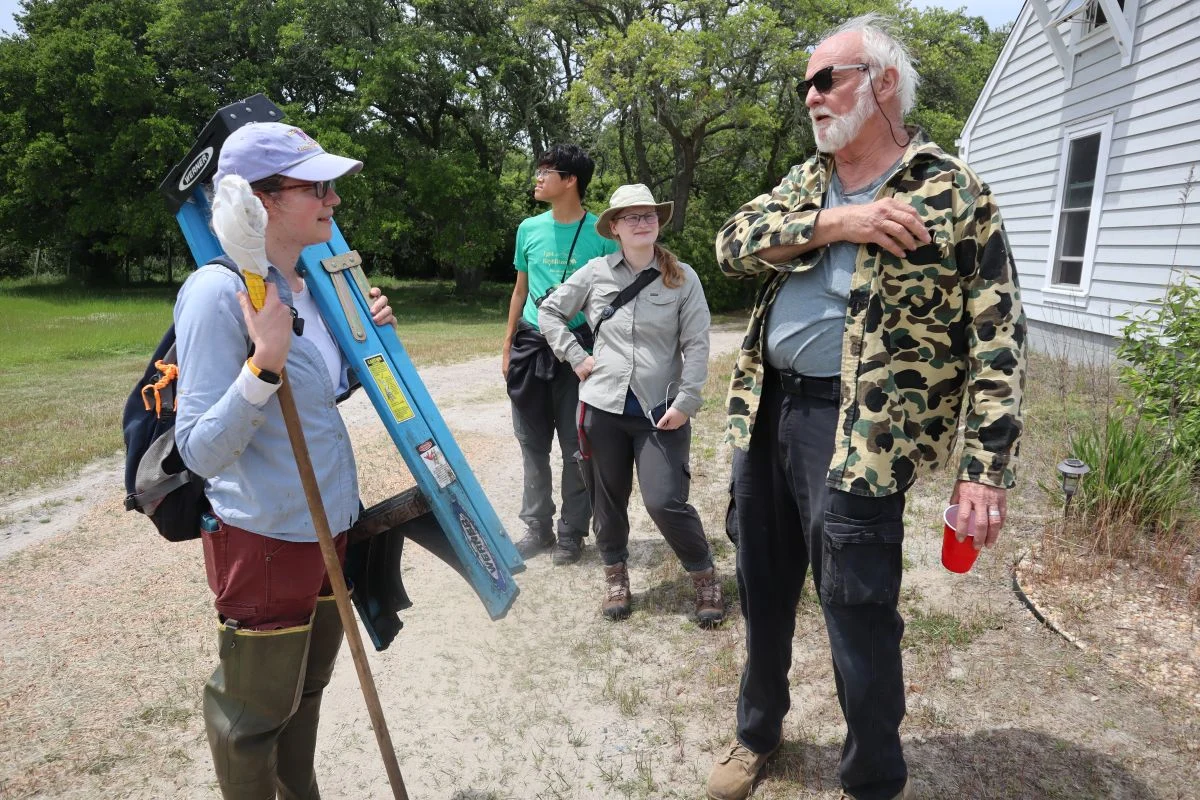
A comprehensive community science initiative, known as a BioBlitz, recently concluded at the National Audubon Society’s Pine Island Sanctuary on North Carolina’s Outer Banks, yielding a treasure trove of ecological data. Over a single weekend in May, a dedicated cohort of scientists, Audubon staff, and passionate volunteers meticulously surveyed the sanctuary’s diverse ecosystems, documenting an impressive 604 distinct species. This intensive effort, spanning from the estuarine banks of Currituck Sound to sprawling grassy marshes, historic duck impoundments, and mature upland maritime forests, underscored the sanctuary’s crucial role as a haven for globally rare habitats and its continued protection from encroaching development pressures. The findings from this latest BioBlitz are poised to provide invaluable insights for ongoing and future conservation strategies, reaffirming the sanctuary’s ecological significance within the fragile coastal landscape of North Carolina.
Understanding the BioBlitz: A Snapshot of Biodiversity
A BioBlitz is an intense period of biological surveying, typically over 24 or 48 hours, aimed at finding and identifying as many species as possible within a designated area. These events serve as vital community science endeavors, engaging both expert taxonomists and enthusiastic volunteers in a collaborative effort to inventory biodiversity. The primary goal is to generate a rapid "snapshot" of the ecological health and species richness of a particular site. This data is critical for conservation organizations and land managers, offering baseline information to track changes over time, assess habitat quality, and inform targeted protection and restoration efforts. For the Audubon Society, which manages sanctuaries across the continent, BioBlitzes are instrumental in fulfilling its mission to protect birds and the places they need, today and tomorrow, by understanding the intricate web of life that supports avian populations.
Pine Island Sanctuary, encompassing approximately 2,600 acres, represents a critical segment of the Outer Banks ecosystem. Its unique geographical position and array of habitats—ranging from brackish marshes influenced by Currituck Sound to elevated dune ridges supporting maritime forests—make it an ecological hotspot. This region serves as a crucial stopover for migratory birds, a breeding ground for resident species, and a home for a variety of reptiles, amphibians, insects, and plants, many of which are specially adapted to the dynamic coastal environment. The sanctuary’s long-standing protection from the extensive development characteristic of much of the Outer Banks further elevates its conservation value, making it an invaluable living laboratory for ecological study. The previous BioBlitz in 2014 provided a foundational dataset, and this latest survey offered an opportunity to compare findings, identify trends, and discover new or previously unrecorded species.
A Weekend of Discovery: The Chronology of the BioBlitz
The May BioBlitz commenced on a Friday, with participants arriving from various regions, some traveling considerable distances to contribute their expertise. After an initial briefing that outlined safety protocols, designated survey areas, and logistical arrangements, teams fanned out across the sanctuary. The weekend was structured to maximize coverage across different habitats and time periods, acknowledging that many species are most active at dawn, dusk, or under the cover of night.
Throughout Friday and Saturday, daylight hours were primarily dedicated to surveying birds, plants, and diurnal insects. Ornithologists, equipped with binoculars and field guides, navigated marshlands and forest edges, identifying species by sight and sound. Botanists meticulously documented flora, from rare marsh grasses to ancient maritime forest trees, often employing photographic records for later verification. General insect surveys involved sweep netting, visual searches, and examining under logs and leaf litter.
As dusk settled, a new phase of the BioBlitz began. Nocturnal surveys became paramount, particularly for elusive creatures like bats, certain amphibians, and, notably, moths and spiders. Specialized equipment came into play. Arachnid expert Brian Bockhahn, for instance, employed a marsh vacuum to sample vegetation in the dense marshes, collecting tiny spiders that would otherwise be nearly impossible to spot. His work extended into the late hours, utilizing a headlamp to meticulously search for nocturnal arachnids as they emerged from their daytime hiding spots. Simultaneously, moth specialists Sarah Toner and Larry Chen deployed their innovative light-trapping setup: a white pop-up closet from Ikea, illuminated by a battery-powered UV light. This simple yet highly effective method drew moths and other nocturnal insects to the sheet, providing an ideal surface for identification, counting, and photography.
Sunday morning brought a final push, with teams revisiting promising locations or focusing on specific taxonomic groups that required more intensive searching. Data compilation and preliminary discussions among experts also began, allowing for the cross-referencing of observations and the initial tallying of findings. The collaborative spirit was palpable throughout the weekend, with seasoned experts sharing knowledge with enthusiastic volunteers, fostering a deeper understanding of the natural world and the scientific process. The collective effort culminated in a rich dataset, a testament to the power of community science.
Unveiling the Sanctuary’s Rich Tapestry: Key Findings
The three-day BioBlitz ultimately documented an astounding 604 species, a figure that underscores the exceptional biodiversity contained within the Pine Island Sanctuary. This total was a composite of numerous taxonomic groups, each revealing unique aspects of the sanctuary’s ecological health.
Avian Diversity Takes Flight: Birds constituted a significant portion of the documented species, with 91 avian species recorded. Long-time Outer Banks birder Jeff Lewis was instrumental in tracking down 85 of these, providing a detailed eBird trip report that became a cornerstone of the avian inventory. Notable sightings included the Chuck-will’s-widow, a nocturnal bird known for its distinctive call; the elusive King Rail, a marsh-dwelling species whose presence indicates healthy wetland habitats; and the Least Bittern, one of North America’s smallest herons, also a strong indicator of thriving marsh ecosystems. The presence of such diverse and often secretive bird species highlights Pine Island’s critical role as both a breeding ground and a stopover point along the Atlantic Flyway, offering essential resources for migratory populations.
Arachnid Revelations: The survey of spiders proved particularly fruitful, with a remarkable 69 species identified. Brian Bockhahn, an education specialist with the North Carolina State Park system and a recognized arachnid expert, personally accounted for 66 of these species. His diligent efforts, employing specialized techniques like marsh vacuuming and nocturnal searches, led to the discovery of three state-listed species. In North Carolina, a "state-listed species" is one that has been formally recognized by the state as requiring special protection or monitoring due to its rarity, declining populations, or vulnerability to habitat loss. These designations (such as "endangered," "threatened," or "special concern") trigger specific conservation actions and management strategies aimed at preventing their further decline. The identification of such species at Pine Island underscores the sanctuary’s importance as a refuge for sensitive invertebrate populations that might be struggling in less protected areas.
Insect Wonders, Including a Rare Moth: The insect count reached 240 species, showcasing the vast invertebrate life that underpins the sanctuary’s ecosystems. Among these, moths were a particular focus for specialists Sarah Toner and Larry Chen, who identified more than 45 moth species using their UV light-trapping method. Their findings included a beautiful Undulambia moth, an exceptionally rare discovery. This particular species has been documented only three times previously in North Carolina, making its presence at Pine Island a significant record. Such rare sightings often indicate the presence of specific host plants or microhabitats that are essential for the species’ survival and are often indicative of a healthy and undisturbed environment. The meticulous work of these entomologists reveals the hidden biodiversity that plays crucial roles in pollination, nutrient cycling, and as a food source for other animals.
Botanical Foundations: The plant survey documented 141 species, forming the foundational layer of the sanctuary’s ecosystems. From the salt-tolerant species of the estuarine fringe to the diverse understory plants of the maritime forest, this botanical inventory provides essential information about habitat structure and health. Plant diversity directly influences the availability of food and shelter for herbivores, insects, and ultimately, the entire food web.
Reptilian Encounters: Beyond the smaller creatures, the BioBlitz also yielded exciting discoveries among the sanctuary’s reptile inhabitants. A significant finding was the documentation of a rainbow snake, marking only the second time this elusive species has been observed at the sanctuary. The previous sighting occurred during the 2014 BioBlitz, making its reappearance a strong indicator of stable habitat conditions. Rainbow snakes are known for their secretive nature, spending much of their lives concealed in aquatic vegetation, making their detection a rare event. Other notable reptilian observations included the vibrant orange eastern hognose snake, known for its dramatic defensive displays; several cottonmouths, a venomous water snake; and beautiful kingsnakes, which are beneficial predators of other snakes and rodents. The presence of a healthy and diverse reptile population speaks to the integrity of the sanctuary’s varied terrestrial and aquatic habitats.
The Unsung Heroes: Microbes and Mini-Critters: The survey also diligently counted "the smallest critters," including ticks, flies, wasps, beetles, and grasshoppers. While often overlooked, these invertebrates and microorganisms play indispensable roles in maintaining ecosystem health. They are vital pollinators, ensuring the reproduction of many plant species; they serve as a critical food source for countless birds, amphibians, reptiles, and mammals; they are essential decomposers, breaking down organic matter and recycling nutrients back into the soil; and they contribute to soil aeration and water filtration. The comprehensive nature of the BioBlitz, extending to these often-unseen components of biodiversity, provides a holistic view of the sanctuary’s ecological functionality.
Expert Perspectives and Audubon’s Commitment
The success of the BioBlitz was largely attributed to the collaborative spirit and the invaluable contributions of specialized experts. Sara Marschhauser, Audubon Senior Coordinator of Habitats and Facilities, articulated this sentiment, stating, "This count wouldn’t have been possible without the amazing experts that traveled to the northernmost corner of the Outer Banks. Their observations will be invaluable for current and future conservation projects around the sanctuary." Marschhauser further highlighted the significance of specific findings, particularly the rainbow snake, noting, "It was great to document a rainbow snake during the survey because we’ve only seen one at the sanctuary before and that was during the last BioBlitz in 2014. This finding shows the value of these kinds of surveys and how they can help us adapt management strategies for certain species."
The enthusiasm was echoed by the participating experts. Brian Bockhahn, reflecting on his meticulous search for spiders, likely emphasized the thrill of discovering state-listed species, affirming that such findings underscore the urgent need for habitat protection. Jeff Lewis, the veteran birder, would have undoubtedly highlighted the importance of Pine Island as a refuge for both common and rare avian species, especially given the pressures on coastal habitats. Moth specialists Sarah Toner and Larry Chen, through their innovative light-trapping methods, likely conveyed the excitement of uncovering such a rare species as the Undulambia moth, illustrating how seemingly simple techniques can yield profound scientific discoveries. These collective statements reinforce the scientific rigor and the conservation imperative driving such initiatives.
From an organizational standpoint, the Audubon Society remains steadfast in its commitment to protecting vital habitats like Pine Island. The sanctuary’s status as a globally rare habitat, protected from development, is central to its ecological significance. The BioBlitz serves as a powerful testament to Audubon’s dedication to science-based conservation, utilizing data to inform land management, advocate for policy changes, and educate the public about the importance of biodiversity.
Broader Impact and Future Implications for Conservation
The data collected during the Pine Island BioBlitz will have far-reaching implications for conservation efforts, both locally and regionally. Firstly, it provides a crucial baseline for understanding the health, abundance, and diversity of species that call the sanctuary home. This baseline can then be used to monitor changes in biodiversity over time, potentially revealing impacts from climate change, habitat degradation in surrounding areas, or the success of restoration projects within the sanctuary.
Secondly, the identification of state-listed species and exceptionally rare finds like the Undulambia moth and the rainbow snake directly informs adaptive management strategies. For example, if specific habitats are found to harbor these sensitive species, management plans can be tailored to enhance or protect those particular areas, perhaps through targeted vegetation management, water level adjustments, or invasive species control. The reappearance of the rainbow snake, in particular, suggests that the sanctuary’s current management practices are effectively maintaining the conditions necessary for this elusive species to thrive.
Thirdly, the BioBlitz exemplifies the power of community science. By engaging volunteers alongside experts, Audubon not only gathers vital data but also fosters a deeper connection between people and nature. This engagement can lead to increased environmental awareness, advocacy for conservation, and the development of a new generation of citizen scientists. The educational value of directly participating in species identification and ecological surveying is immense.
Finally, the findings from Pine Island contribute to a broader understanding of coastal ecosystem resilience. Barrier islands are inherently dynamic and vulnerable environments, facing threats from sea-level rise, storm surges, and human development. By meticulously documenting the biodiversity of a protected site like Pine Island, scientists can gain insights into how these ecosystems function and adapt, information that is critical for developing conservation strategies for similar coastal areas worldwide. The ongoing protection of Pine Island ensures that this vital "snapshot of life" continues to provide valuable data for the benefit of both wildlife and humanity.
The successful completion of the Audubon Pine Island BioBlitz stands as a powerful reminder of the hidden wonders within our natural spaces and the collective effort required to safeguard them. Every trudge through mud and tall grass, every careful observation, and every species identified contributes to a larger tapestry of knowledge that will guide future conservation actions, ensuring that the remarkable biodiversity of Pine Island endures for generations to come.
