
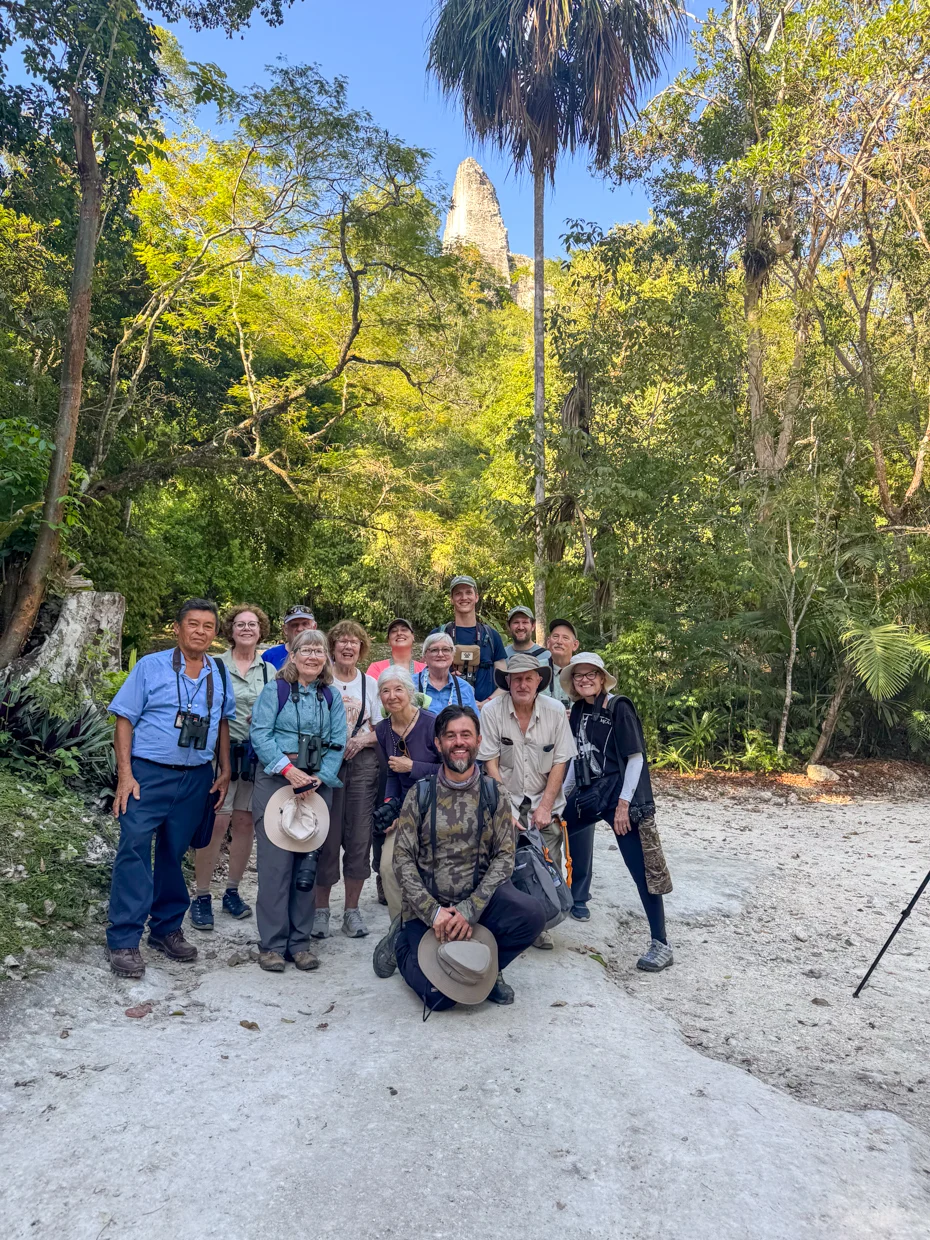
The successful conclusion of the final 2026 Belize and Tikal birding expedition, organized by Eagle-Eye Tours, has yielded significant data regarding the avian biodiversity and ecological health of the Maya Forest corridor. Led by ornithological experts Matthew Fuirst and Oscar Zúñiga Meza, a cohort of fourteen birders completed an intensive eleven-day survey from March 3 to March 13, 2026. The expedition traversed a variety of critical habitats, ranging from coastal mangroves and pine savannas to the dense tropical broadleaf forests of the Maya Mountains and the archaeological preserves of Guatemala. By the end of the journey, the group recorded a total of 271 bird species, highlighting the region’s status as a premier destination for Neotropical migratory and resident bird research.

Initial Surveys: Coastal and Riparian Habitats
The expedition commenced in Belize City, a critical transition zone where urban landscapes meet coastal ecosystems. Initial observations on March 3 and 4 focused on the city’s quiet residential peripheries and the nearby Monkey Bay Wildlife Sanctuary. Early surveys documented the Ruddy Crake (Laterallus ruber), a notoriously secretive rail, appearing in unusual proximity to human infrastructure. This sighting served as a precursor to a robust list of urban-adapted species, including the Golden-fronted Woodpecker and the Morelet’s Seedeater.
A brief analysis of the coastal environment at the Belize Welcome Sign allowed the team to document several maritime species. Despite inclement weather, the group recorded Magnificent Frigatebirds and Sandwich Terns, which utilize the Belize Barrier Reef system—the second largest in the world—for foraging.

Transitioning inland toward the Monkey Bay Wildlife Sanctuary, the group observed the immediate impact of recent rainfall on bird activity. The surge in insect biomass led to high visibility for species such as the Red-legged Honeycreeper and the Scarlet-rumped Tanager. The sanctuary, which serves as a vital corridor between the Sibun River and the Maya Mountains, provided sightings of the Lesser Swallow-tailed Swift and the Golden-olive Woodpecker, reinforcing the importance of protected riparian zones in maintaining avian corridors.
The Maya Mountains and the Jade Jungle Corridor
From March 4 to March 7, the expedition was stationed at the Jade Jungle Resort, formerly known as Pook’s Hill. This 300-acre private reserve is situated in the foothills of the Maya Mountains, a region characterized by its high degree of biodiversity and intact forest cover. The foothills act as a biological bridge, supporting species that require large tracts of primary rainforest.

During the stay at Jade Jungle, the group utilized the property’s trail system to document mixed-species foraging flocks. Notable observations included the Keel-billed Toucan—the national bird of Belize—and the Collared Aracari. The presence of these large frugivores indicates a healthy forest canopy capable of providing year-round food sources. Furthermore, the recording of a roosting Spectacled Owl provided the group with a rare opportunity to observe an apex nocturnal predator in its natural habitat.
A pivotal moment of the expedition occurred during a day trip to the Mountain Pine Ridge Forest Reserve. This habitat is distinct from the surrounding rainforest, consisting primarily of Pinus caribaea (Caribbean Pine). Here, the group recorded a male Lovely Cotinga (Cotinga amabilis). The Lovely Cotinga is a rare, turquoise-blue bird whose presence is often unpredictable due to its movements between different elevations. Lead guides Matthew Fuirst and Oscar Zúñiga Meza noted that this sighting was particularly significant, as the species is infrequently encountered on standard tours and represented a "lifer"—a first-time sighting—for even the seasoned local guides.

The team also visited the Green Hills Butterfly Ranch, where data collection shifted to nectar-feeding species. Nine species of hummingbirds were identified, including the Wedge-tailed Sabrewing and the Violet Sabrewing. These records contribute to the ongoing monitoring of hummingbird populations, which are vital pollinators within the Mesoamerican biological corridor.
Cross-Border Conservation: Tikal National Park
On March 7, the expedition crossed the border into Guatemala to explore Tikal National Park, a UNESCO World Heritage site. Tikal is unique in that it protects both cultural heritage—massive Mayan ruins—and 575 square kilometers of pristine rainforest. The park is a cornerstone of the Maya Biosphere Reserve, which seeks to balance archaeological preservation with ecological integrity.

The birding at Tikal was marked by the observation of "army ant swarms." This biological phenomenon occurs when swarms of Eciton burchellii ants move across the forest floor, flushing out insects and small vertebrates. A diverse group of "ant-following" birds was documented capitalizing on this event, including the Gray-throated Chat and five different species of Woodcreepers (Ruddy, Northern Barred, Ivory-billed, Tawny-winged, and Olivaceous). The presence of such specialized foraging behavior is a hallmark of a mature, complex ecosystem.
The expedition also focused on the Orange-breasted Falcon (Falco deiroleucus), one of the rarest raptors in the Americas. Tikal is one of the few remaining strongholds for this species, which nests on the towering limestone temples. The group successfully observed two individuals foraging around Temple IV. According to conservation data, the Orange-breasted Falcon population is highly fragmented, making the Tikal sightings critical for assessing the species’ continued presence in the Petén region.

Non-avian highlights in Tikal included significant sightings of the Central American Spider Monkey and the Black Howler Monkey. These primates serve as essential seed dispersers, and their abundance in Tikal reflects the effectiveness of the park’s anti-poaching and habitat preservation efforts.
Wetland Ecology: Crooked Tree Wildlife Sanctuary
The final leg of the tour, from March 10 to March 13, took place at the Crooked Tree Wildlife Sanctuary in Belize. Established in 1984 by the Belize Audubon Society, this sanctuary is a Ramsar site of international importance, consisting of a vast network of inland lagoons, swamps, and waterways.

The group conducted boat-based surveys, which allowed for the documentation of elusive waterbirds. Key sightings included the Agami Heron, often described as the most beautiful heron in the world, and the Sungrebe. The sanctuary’s role as a wintering ground for migratory species was evidenced by the presence of various kingfisher species—Ringed, Belted, Green, and American Pygmy—all occupying the same riparian niche.
The expedition’s conclusion was highlighted by the sighting of the Jabiru (Jabiru mycteria), the tallest flying bird in Central and South America. The Jabiru is a species of high conservation concern in Belize, with a limited number of breeding pairs. Observing a Jabiru foraging in the wetlands provided a successful end-point to the trip’s data collection, emphasizing the sanctuary’s role in protecting large-scale wading birds.

Analysis of Findings and Broader Implications
The 2026 Eagle-Eye expedition provides a valuable snapshot of the current state of biodiversity in the Belize-Guatemala corridor. The recording of 271 species over eleven days suggests that despite global trends of habitat loss, the protected areas within the Maya Forest remain resilient.
Supporting Data and Statistics:

- Total Species Recorded: 271
- Key Habitats Surveyed: 5 (Coastal, Tropical Broadleaf, Pine Savannah, Wetland, Archaeological Preserve)
- Rare Species Highlights: Lovely Cotinga, Orange-breasted Falcon, Jabiru, Agami Heron.
- Regional Endemics: Yucatan Jay, Yucatan Woodpecker, Ocellated Turkey.
The success of the tour also underscores the economic and conservation-based value of birding tourism. Ecotourism provides the financial impetus for local communities to protect habitats rather than convert them for agricultural use. In locations like Crooked Tree and Jade Jungle, the presence of international birding groups supports local employment for guides, lodge staff, and conservation officers.
Furthermore, the data collected during this trip has been uploaded to eBird, a global citizen-science database managed by the Cornell Lab of Ornithology. This contribution allows researchers to track bird populations, migration patterns, and the impacts of climate change on Neotropical ecosystems. The sighting of the Lovely Cotinga in Mountain Pine Ridge, for instance, adds to the limited dataset available for this elusive species.

Conclusion
The March 2026 Eagle-Eye Belize and Tikal adventure successfully met its objectives of wildlife observation and habitat exploration. By documenting nearly 300 species and visiting some of the most ecologically significant sites in Central America, the expedition highlighted the inextricable link between cultural history and natural preservation. As the Maya Forest continues to face pressures from development, expeditions such as these serve as both a monitoring tool and a testament to the region’s enduring biological richness. The collaboration between international experts like Matthew Fuirst and local specialists like Oscar Zúñiga Meza remains a vital component in the ongoing effort to document and protect the avian wonders of the Neotropics.
