
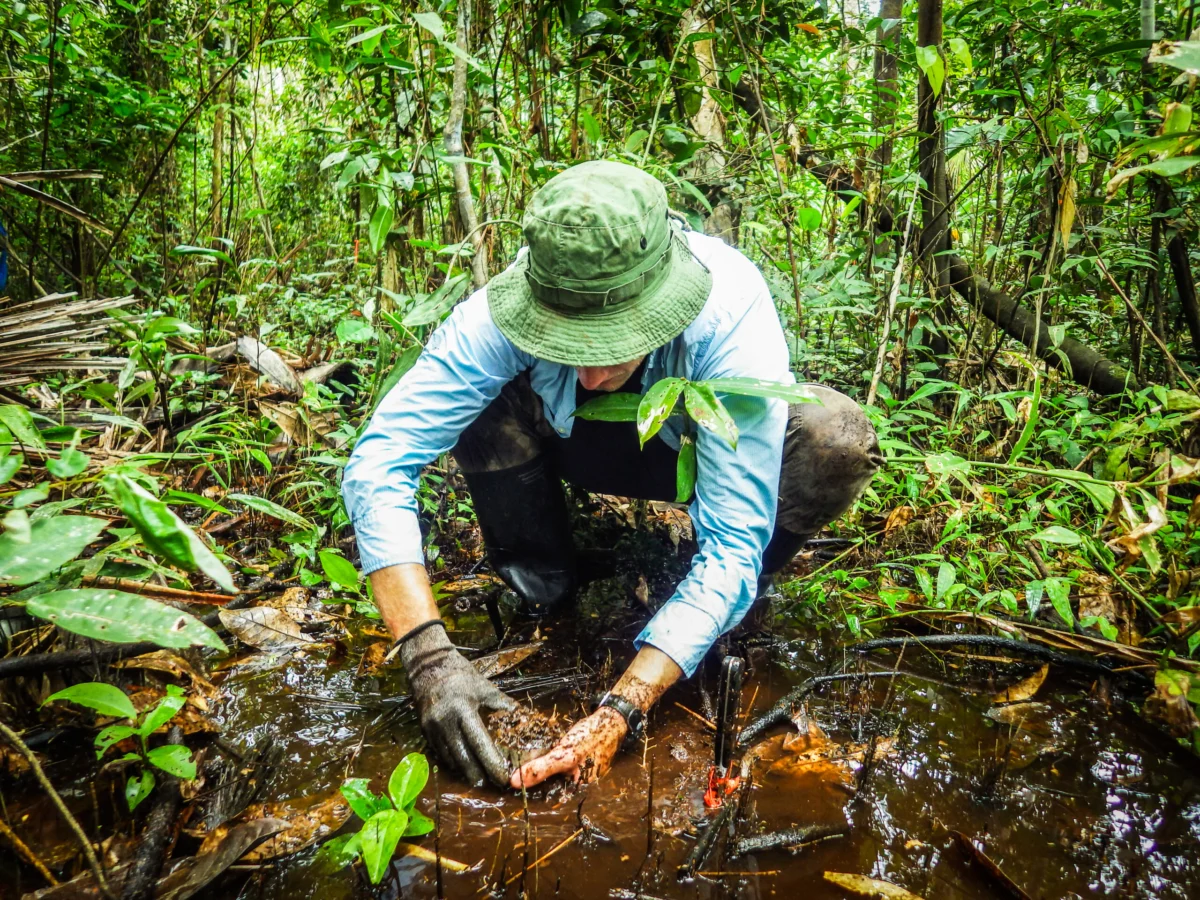
Brazil is advancing toward becoming a Champion Country of the Peatland Breakthrough, a landmark global initiative that accelerates the conservation, restoration, and sustainable management of peatlands worldwide. This pivotal development follows a formal recommendation issued by Brazil’s National Committee for Wetlands (CNZU), which has called upon the Ministry of the Environment (MMA) to officially endorse the Peatland Breakthrough and embrace a leadership role on the international stage.
The momentum behind this policy shift highlights a critical evolution in how South America’s largest nation approaches wetland governance. Historically sidelined in major national environmental policies and greenhouse gas inventories, Brazil’s vast peatlands are now emerging as frontline assets in national strategies addressing climate change, biodiversity loss, and water security. If finalized, the endorsement will position Brazil alongside pioneering nations such as Peru, Uganda, and Germany, cementing its commitment to international climate objectives established during recent global climate summits.
A National Awakening for Subterranean Carbon Stores
Spanning an estimated 226,000 square kilometers across diverse biomes—including the Amazon, the Cerrado, the Pantanal, the Atlantic Forest, the Pampa, and coastal zones—Brazil houses the largest expanse of tropical peatlands in the world. Despite covering only a fraction of the Earth’s land surface, peatlands represent disproportionately massive carbon reservoirs. Globally, these water-logged ecosystems cover merely 3 to 4 percent of terrestrial land yet store up to one-third of all global soil organic carbon, doubling the carbon storage capacity of all the world’s forests combined.
In Brazil, these ecosystems hold billions of tonnes of organic carbon. Beyond carbon sequestration, they function as vital hydrological regulators, maintaining base flows in major river basins during dry seasons and supporting rich, specialized biodiversity. However, these fragile ecosystems face mounting anthropogenic pressures. Drainage for agriculture, infrastructure expansion, destructive wildfires, and hydrological alterations threaten to convert these crucial carbon sinks into net carbon sources, releasing centuries of accumulated greenhouse gases back into the atmosphere.
The Chronology of a Policy Shift: From COP30 to National Committee Action
The current policy momentum is the direct result of intensifying dialogue sparked by international climate conferences and a mobilized scientific community. The trajectory toward formal recognition has unfolded through several key milestones:
- November 2025 (COP30 in Belém): The Peatland Breakthrough is formally launched at the UN Climate Change Conference in Belém, Brazil, providing a science-based framework for global peatland targets, guiding principles, and international cooperation.
- Post-COP30 Engagement: Exchanges between international peatland scientists—including delegations from the Greifswald Mire Centre—and Brazilian conservationists accelerate, highlighting the glaring absence of peatlands in Brazil’s national climate accounting.
- Early 2026: A collective of 53 prominent Brazilian researchers publishes a landmark open letter urging federal policymakers to recognize peatlands as high-priority ecosystems, mandate comprehensive mapping, and establish a national peatland program.
- Mid-2026 (CNZU Recommendation): Brazil’s National Committee for Wetlands (CNZU) formally issues its recommendation to the Ministry of the Environment, advocating for the nation to endorse the Peatland Breakthrough and pursue a Champion Country designation.
Expert Perspectives and International Acclaim
The decision by the National Committee for Wetlands has drawn widespread praise from the international conservation community, which views Brazil’s potential leadership as a game-changer for global climate targets.
“Brazil is home to some of the world’s most extensive and carbon-rich tropical peatlands, part of the Amazon or the Cerrado regions,” stated Eva Hernandez, Programme Head for Peatlands at Wetlands International. “The country has a unique opportunity to demonstrate how protecting these ecosystems can simultaneously advance climate change mitigation and adaptation, biodiversity conservation, water security, and sustainable development. Championing the Peatland Breakthrough would send a powerful signal: that peatlands belong at the heart of national and international climate agendas, as much as forests do.”

Echoing this sentiment, Dr. Franziska Tanneberger, director of the Greifswald Mire Centre, emphasized the catalytic effect of the Belém climate summit. “This is great news for the global peatland community,” Tanneberger noted following her participation in the CNZU discussions. “Catalysed by the climate conference COP30 in Belem, exchange with peatland scientists and conservationists in Brazil intensified, and we are excited and very grateful for the country’s interest and commitment to join global peatland action.”
From domestic agencies, the alignment is seen as an institutional turning point. Dr. Suelma Ribeiro Silva of the Chico Mendes Institute for Biodiversity Conservation (ICMBio), an operational arm of the Ministry of the Environment, highlighted the strategic utility of the framework. “The recommendation issued by the National Committee for Wetlands reflects Brazil’s growing recognition of peatlands as strategic ecosystems for climate regulation, biodiversity conservation, and water security,” Silva explained. “The Peatland Breakthrough provides an important opportunity to strengthen international cooperation, mobilize technical expertise, and support the development of national actions for the protection and restoration of Brazilian peatlands.”
Decoding the Science-Based Framework of the Peatland Breakthrough
The Peatland Breakthrough operates on a clear, scientifically validated framework designed to halt degradation and scale up restoration. Spearheaded by a coalition that includes Wetlands International, the United Nations Environment Programme (UNEP), the Food and Agriculture Organization (FAO), and the Greifswald Mire Centre—in close alignment with the Global Peatlands Initiative and the Convention on Wetlands—the initiative sets out clear global targets.
To achieve net-zero emissions from global peatlands and transform them into a net greenhouse gas sink, the initiative outlines three core directives for participating nations:
- Halt the drainage and degradation of pristine and natural peatlands worldwide.
- Scale up the ambitious restoration and rewetting of drained and degraded peatlands.
- Implement sustainable management practices across all remaining productive peatland landscapes.
Achieving these milestones will require unprecedented financial mobilization. International partners estimate that at least 100 billion USD must be channeled into transparent, accessible, and just financing for peatlands by 2030. Furthermore, the framework stresses that every peatland-rich country must immediately prioritize mapping, monitoring, and proactive management before these ecosystems suffer irreversible structural damage.
Broader Impacts and Policy Implications for Brazil
For Brazil, formally joining the Peatland Breakthrough carries profound domestic and geopolitical implications. At the policy level, endorsement bridges a persistent gap in Brazil’s Nationally Determined Contributions (NDCs) under the Paris Agreement. By integrating peatlands into national greenhouse gas inventories, Brazil can more accurately account for land-use emissions and unlock new avenues for climate finance.
Moreover, the initiative offers a practical blueprint for inter-agency collaboration. Effective peatland governance requires synthesizing data across forestry, water resources, agriculture, and Indigenous rights frameworks. Enhanced mapping and monitoring protocols will empower local and Indigenous communities—who often act as the primary stewards of these water-rich landscapes—with technical and financial support to protect their territories.
As the Ministry of the Environment reviews the National Committee for Wetlands’ recommendation, Brazil stands on the threshold of redefining its environmental leadership. By stepping up as a Peatland Breakthrough Champion, the nation can harmonize its economic development goals with the urgent imperative of safeguarding the world’s most potent subterranean carbon stores.
