
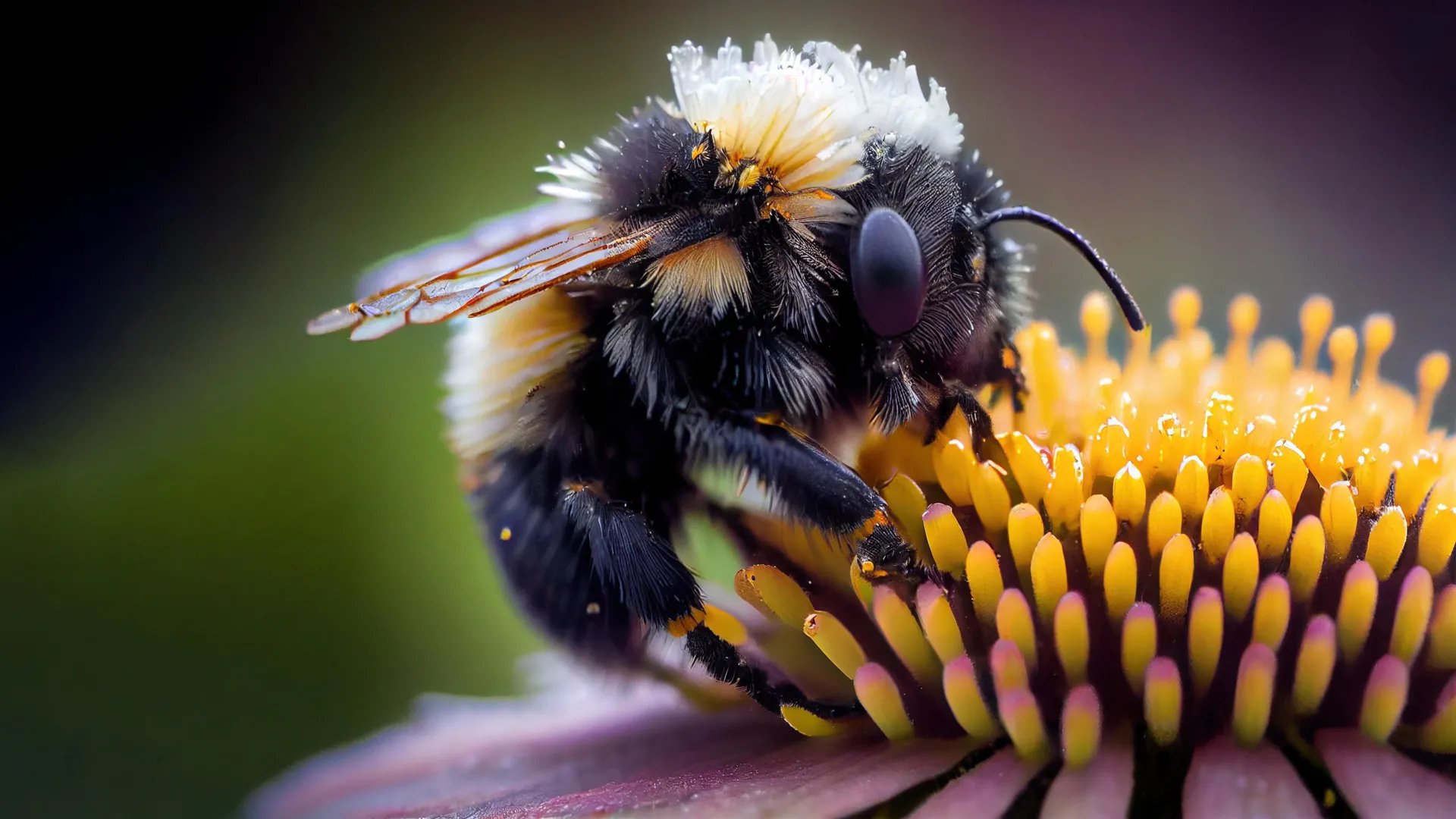
Heavy metal contamination in the environment has long been recognized as a pervasive ecological challenge, affecting everything from aquatic ecosystems to agricultural yields. However, recent scientific inquiry has increasingly turned its focus toward the microscopic hazards facing terrestrial invertebrates, particularly pollinators that form the backbone of global ecosystems and food security. A groundbreaking study conducted by researchers at the University of Cambridge has now revealed a stark and previously underappreciated disparity in how different bee species interact with industrial and environmental pollutants. According to the findings, bumblebees can accumulate up to seven times more heavy metals in their pollen loads than honeybees, even when both species forage side by side within the exact same geographical landscape.
Published in the esteemed journal Ecological Entomology, the research was spearheaded by Dr. Sarah Scott during her tenure at the University of Cambridge’s Department of Zoology—she is now based at Newcastle University—alongside senior author Professor Lynn Dicks. The study challenges long-held ecological assumptions regarding how environmental contamination is measured and highlights an acute, hidden vulnerability among wild bumblebee populations. While honeybees have traditionally served as the quintessential bioindicators for environmental monitoring in industrial zones, this new research demonstrates that their managed, highly adaptable cousins face entirely different exposure risks that could jeopardize their survival, navigation, and reproductive capacities.
The Origins and Mechanics of Environmental Metal Contamination
To understand the gravity of the Cambridge findings, it is essential to examine how heavy metals enter terrestrial ecosystems. Heavy metal pollution is a ubiquitous byproduct of modern civilization. It is commonly associated with heavy industrial zones, active mining regions, and densely populated urban landscapes where vehicular emissions, manufacturing processes, and municipal waste management leave a chemical footprint. Yet, the contamination is by no means confined to concrete jungles and rust belts.
Contaminants routinely infiltrate rural and semi-rural landscapes through a variety of less obvious vectors. Airborne particulate matter can travel significant distances on prevailing winds, eventually settling onto soils, vegetation, and water sources. Furthermore, agricultural practices introduce heavy metals directly into the earth. The application of sewage sludge as a soil conditioner, the use of phosphate-based fertilizers laden with trace metals like cadmium, and the utilization of certain livestock feeds can elevate background levels of toxic elements in ostensibly pristine countryside environments.
As bees navigate these landscapes in search of sustenance, they become unwitting samplers of their environment. They are continuously exposed to a matrix of contaminated soil, ambient dust, and pollen grains that have absorbed heavy elements from the surrounding earth and air. Once ingested or attached to the bees’ bodies, even trace amounts of these toxic elements—including arsenic, cadmium, chromium, cobalt, lead, and tin—can disrupt biological processes. Previous toxicological studies have established that heavy metal exposure interferes with neurological pathways governing learning and memory. For a foraging bee, impaired navigation can prove fatal, drastically reducing its ability to locate food sources, return to the hive, and effectively communicate resource locations to nestmates. Beyond cognitive deficits, metal toxicity has been linked to diminished reproductive success, lower overall offspring counts, and disrupted brood development, threatening the long-term viability of colonies.
Methodology and Comparative Analysis in Cambridgeshire
The research team set out to investigate whether different eusocial bee species accumulate heavy metals at varying rates despite experiencing identical environmental exposures. To test this hypothesis, the scientists established a rigorous field methodology in Cambridgeshire, England, a region where background soil contamination is generally evaluated as low to moderate.
The study utilized side-by-side positioning of managed honeybee hives and wild bumblebee colonies, ensuring that the two species were foraging across the exact same spatial and botanical matrix. Over the course of the observation and collection period, researchers utilized specialized pollen traps to harvest provisions directly from returning foragers. They subsequently conducted comprehensive chemical analyses to measure concentrations of multiple heavy metals—specifically arsenic, cadmium, chromium, cobalt, lead, and tin—in both the collected pollen samples and the tissues of adult bees.
The analytical results revealed a striking and statistically significant divergence between the two species. Across the vast majority of the heavy metals examined, pollen gathered by bumblebees contained between two and seven times higher concentrations of toxic contaminants than the pollen collected by honeybees in the identical environment. Furthermore, when analyzing the physical bodies of the insects themselves, researchers found that adult bumblebees had accumulated roughly three times higher concentrations of heavy metals within their tissues compared to their honeybee counterparts.
Dr. Sarah Scott elaborated on the physiological and ecological implications of these findings, noting that while the absolute concentrations detected were generally below acute lethal thresholds, chronic sublethal exposure carries profound risks. "Most metal levels we found were not high enough to kill bees instantly," Dr. Scott explained, "but even low levels can still harm bee health and colony success in subtle but important ways, such as affecting their ability to forage, navigate, and reproduce successfully."
Behavioral and Biological Drivers of Differential Exposure
The pronounced disparity in heavy metal accumulation between honeybees and bumblebees cannot be explained by geography alone, as both species shared the same foraging grounds. Instead, the researchers concluded that the variance stems from a complex interplay of distinct biological traits, nesting strategies, and behavioral foraging patterns unique to each group.
Colony architecture and population scale represent the first major dividing factor. Honeybees typically establish large, permanent colonies consisting of 30,000 to 60,000 individuals, usually housing them above ground in hollow trees or managed, artificial apiary hives. In stark contrast, bumblebees construct much smaller colonies, typically numbering between 50 and 500 individuals, and generally nest underground in soil cavities or beneath dense leaf litter. This subterranean nesting habit places bumblebees in direct, prolonged contact with surrounding soils that may harbor concentrated deposits of settled atmospheric pollutants and agricultural residues.
Foraging behavior further accentuates the exposure gap. Honeybees are generalist foragers with an expansive operational range. A single honeybee workforce can travel distances of up to 10 kilometers from the central hive in search of high-yield floral resources. Because of their immense workforce and vast flight radius, honeybees can distribute their foraging efforts across a massive geographical area, effectively diluting their exposure to localized contamination hotspots. Additionally, honeybees collect pollen from a diverse array of plant species, further mitigating the risk of consuming high concentrations of any single contaminant.
Bumblebees, however, operate under entirely different ecological constraints. They typically restrict their foraging activities to a radius of approximately 1.5 kilometers from their nest. This restricted flight range provides them with far fewer opportunities to bypass localized pollution zones. Moreover, bumblebee colonies collect smaller quantities of pollen from a narrower selection of plant species, making their nutritional intake highly dependent on the specific biochemical profiles of the plants growing in their immediate vicinity. If their chosen forage species happen to be hyperaccumulators of certain heavy metals—plants that naturally absorb and concentrate elements from the soil—the bumblebees ingest these toxins in concentrated doses.
Physical morphology also plays a critical role. Bumblebees possess significantly hairier bodies than honeybees. This dense, plush pubescence is evolutionary adapted to trap pollen grains efficiently, but it also acts as an adhesive trap for ambient dust, particulate matter, and airborne industrial fallout laden with heavy metals. Consequently, bumblebees physically carry a heavier burden of surface-bound contaminants back to their nests alongside their floral provisions.
Implications for Rural Ecosystems and Biodiversity
The findings challenge the comforting assumption that rural environments are inherently safe havens for wildlife. Because heavy metals can travel invisibly via air currents and agricultural inputs, even landscapes far removed from heavy industry harbor chemical residues capable of altering insect physiology.
Professor Lynn Dicks, senior author of the study and a Fellow at Selwyn College, Cambridge, emphasized the magnified vulnerability of wild populations. "Even in areas that we usually consider safe or lower risk for heavy metals—typically rural areas, away from industrial or mining centers—bees can pick up toxic metals," Professor Dicks noted. "Bumblebee colonies tend to have far fewer workers available to perform essential tasks compared to honeybees, so the loss or impairment of individual foragers can have a disproportionately severe impact on overall colony function and survival."
Given that bumblebees are premier pollinators for both wild flora and key agricultural crops—including tomatoes, peppers, and berries that rely on buzz pollination—any decline in their health directly ripples upward into broader ecological stability and human food security.
Balancing Conservation Action and Environmental Realities
Despite the sobering nature of the findings, the researchers are careful to discourage any well-intentioned public pullback from pollinator conservation efforts. The modern push to plant urban meadows, backyard pollinator gardens, and wildflower strips remains vital for supporting struggling insect populations.
Addressing the practical takeaway for gardeners and conservationists, Dr. Scott offered a pragmatic perspective. "Bees play a critical role in both biodiversity and food security, so we’d still encourage people to plant flowers to help them, even if you live in an area more likely to be contaminated," she urged. "At the end of the day, bees still need food. Even if it carries traces of heavy metals, having some food is undeniably better than having no food at all."
The study, funded by a grant from the Royal Society, opens new avenues for environmental toxicology and entomology. As researchers continue to untangle the complex pathways through which anthropogenic pollution permeates natural food webs, studies like this underscore the urgent need to monitor not just the presence of environmental toxins, but how different species uniquely metabolize and endure the chemical footprint of the modern world.
