
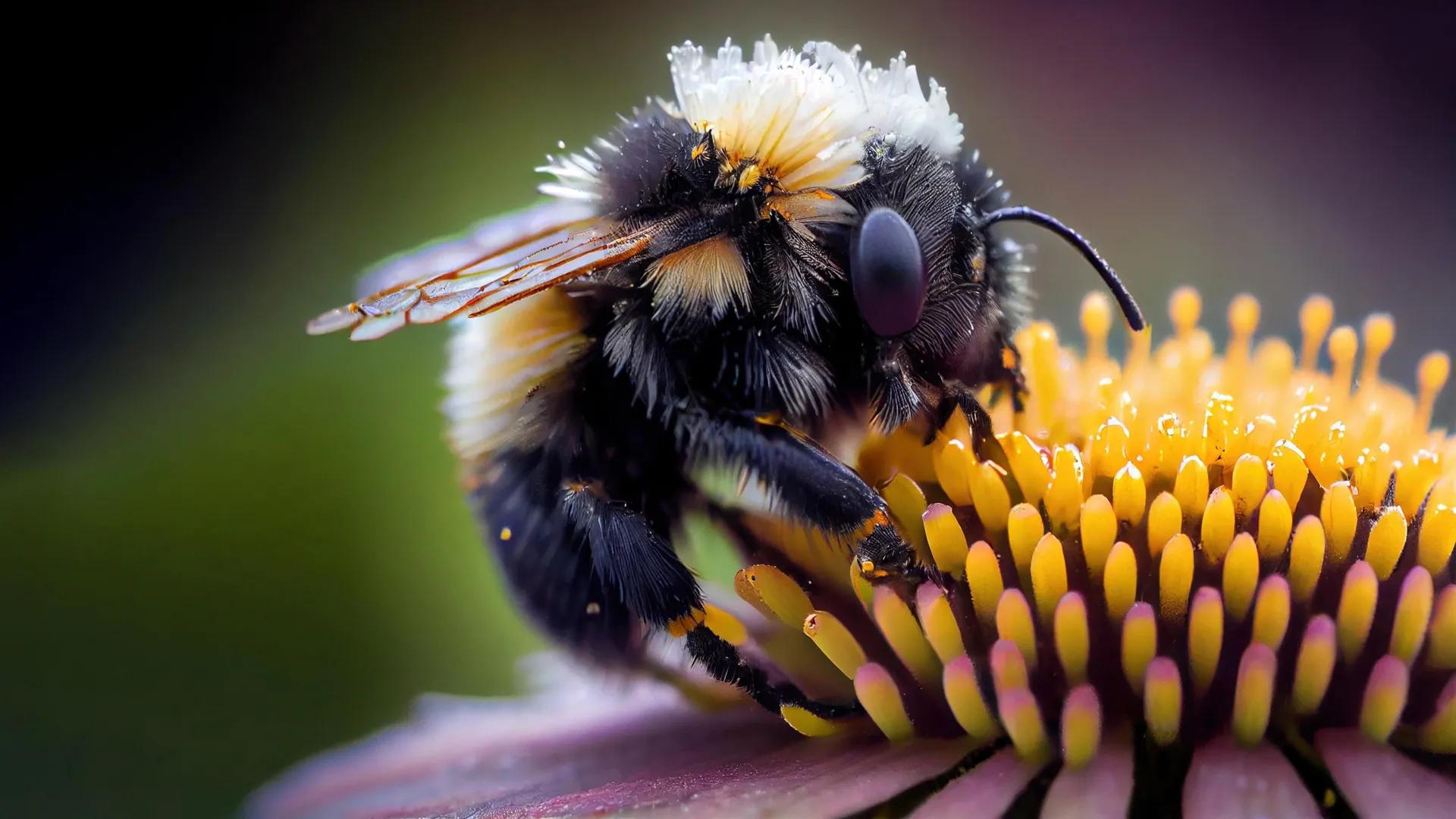
A groundbreaking study from the University of Cambridge has revealed a concerning disparity in how different bee species interact with environmental pollutants. Scientists have found that bumblebees collected up to seven times more heavy metals in their pollen than honeybees, even when sharing identical foraging grounds. This stark difference raises significant alarms about the hidden impact of pollution on bumblebee health, survival rates, and reproductive capabilities, suggesting a heightened vulnerability for these crucial wild pollinators.
Unveiling the Disparity: The Cambridge Study’s Core Findings
The research, published in Ecological Entomology, the journal of the Royal Entomological Society, provides compelling evidence that the traditional use of honeybees as universal bio-indicators for environmental contamination may overlook critical species-specific vulnerabilities. The Cambridge team, led by researchers from the Department of Zoology, conducted a meticulous comparative study involving both honeybee and bumblebee colonies. These colonies were strategically located side-by-side in Cambridgeshire, England—an area generally characterized by low soil contamination, which underscores the ubiquity of the pollution challenge.
To assess metal accumulation, scientists utilized pollen traps to collect samples and subsequently measured the levels of six specific heavy metals: arsenic, cadmium, chromium, cobalt, lead, and tin. The analysis was performed on both the collected pollen and the adult bees themselves. The results were striking. Pollen gathered by bumblebees consistently contained between two and seven times higher concentrations of these heavy metals compared to pollen collected by honeybees. Furthermore, bumblebees themselves showed roughly three times higher concentrations of heavy metals within their bodies, indicating a systemic uptake of these toxins.
Dr. Sarah Scott, who spearheaded the research during her tenure at the University of Cambridge and is now based at Newcastle University, articulated the gravity of these findings. "While most metal levels we found were not high enough to be immediately lethal to bees, even low levels can still harm bee health and colony success in subtle but important ways," Dr. Scott explained. "These impacts can manifest as impairments to their ability to forage effectively and reproduce successfully, ultimately compromising the long-term viability of their colonies." This highlights a critical shift in understanding, moving beyond acute toxicity to recognize the pervasive and insidious effects of chronic, sub-lethal exposure.
The Pervasive Threat of Heavy Metal Pollution
Heavy metal pollution is a widespread environmental challenge, originating from a diverse array of anthropogenic activities. Industrial sites, mining regions, and densely populated urban areas are primary hotspots for contamination. However, the reach of these pollutants extends far beyond their immediate sources. Contaminants can readily disperse into pristine rural landscapes through atmospheric transport, depositing heavy metals over vast distances. Agricultural practices also contribute significantly, with the application of sewage sludge, certain fertilizers, and other agricultural products acting as conduits for heavy metals to enter the soil and water systems. For instance, cadmium, lead, and arsenic are common in some phosphate fertilizers, accumulating in agricultural soils over time.
As bees diligently gather nectar and pollen, they inevitably come into contact with contaminated soil, dust, and pollen grains that may harbor these heavy metals. The consequences for bee physiology and behavior are profound. Even in relatively small amounts, these elements are known neurotoxins and endocrine disruptors. They can interfere with vital cognitive functions such as learning and memory, thereby impairing a bee’s ability to navigate efficiently, locate food sources, and communicate within the hive. Previous scientific investigations have consistently linked chronic metal exposure to a cascade of negative reproductive outcomes, including diminished reproductive success, a reduction in the number of viable offspring, and disrupted brood development, all of which severely undermine colony health and resilience.
Deciphering the Vulnerability: Why Bumblebees Suffer More
The pronounced differences in heavy metal accumulation between bumblebees and honeybees can be attributed to a complex interplay of their distinct biology and foraging behaviors.
-
Nesting Habits: Honeybees (primarily Apis mellifera) typically establish their nests above ground, often in hollow trees or within managed hives provided by beekeepers. Their colonies are vast, ranging from 30,000 to 60,000 individuals, offering a large workforce for various tasks. In contrast, bumblebees (genus Bombus) construct their nests underground, usually in abandoned rodent burrows, dense leaf litter, or other subterranean cavities. Their colonies are significantly smaller, typically numbering between 50 and 500 individuals. This subterranean nesting habit places bumblebees in direct and prolonged contact with soil, which acts as a major reservoir for heavy metals. Contaminated soil particles can adhere to their bodies, be brought into the nest, and be ingested directly or indirectly by larvae and adult bees.
-
Foraging Strategy and Dietary Breadth: Both species exhibit specific flower preferences influenced by factors such as nutritional requirements, body size, and tongue length. However, their overall foraging strategies differ. Honeybees are highly generalist foragers, visiting a wide array of flower species across their foraging range. This broad dietary spectrum can have a ‘dilution effect,’ spreading potential contaminants across a larger volume of food and reducing the concentration of heavy metals from any single source. Bumblebees, on the other hand, often collect smaller amounts of pollen from a more limited selection of plant species. This narrower foraging niche makes their exposure to heavy metals more dependent on whether those specific preferred plants have absorbed elevated levels of contaminants from the soil. Some plant species are known hyperaccumulators of heavy metals, readily drawing them up from the soil into their tissues, including pollen and nectar.
-
Foraging Range and Spatial Avoidance: Honeybees are renowned for their impressive foraging distances, capable of traveling up to 10 kilometers from their colony to find food. Their expansive foraging range, coupled with their large workforce, allows them to spread their search across a wide geographical area, potentially enabling them to bypass or minimize exposure to localized pockets of severe pollution. Bumblebees, by comparison, typically forage within a much more restricted radius, usually within about 1.5 kilometers of their nests. This limited foraging range significantly reduces their opportunities to avoid local contamination sources, effectively trapping them within polluted environments if their immediate vicinity is affected.
-
Physical Characteristics: Another contributing factor may be the morphological differences between the two species. Bumblebees possess considerably hairier bodies than honeybees. This dense, fuzzy coat provides a larger surface area to which dust particles and airborne contaminants containing heavy metals can readily cling. As bumblebees visit flowers and return to their nests, these particles, along with pollen, are inadvertently transported back, potentially increasing the overall exposure within the colony.
Broader Ecological Implications and the Pollinator Crisis
The findings from Cambridge underscore a critical aspect of the ongoing global pollinator decline—the insidious role of hidden environmental contaminants. The decline of pollinator populations, including both wild and managed bees, is a multifaceted crisis driven by habitat loss, pesticide use, climate change, and disease. This study adds a significant layer to our understanding by highlighting the differential vulnerability to ubiquitous pollutants.
Bumblebees are vital components of biodiversity and play an indispensable role in maintaining healthy ecosystems. As wild pollinators, they are crucial for the reproduction of countless wild plants, contributing to overall ecosystem resilience. Furthermore, they are indispensable for global food security, pollinating a wide array of crops that contribute billions to the global economy. Approximately 75% of the world’s food crops and 90% of wild flowering plants rely, at least in part, on animal pollination. Bumblebees are particularly effective pollinators for crops such as tomatoes, blueberries, and cranberries, often performing "buzz pollination" (sonication) which honeybees cannot. The loss or impairment of bumblebee colonies due to heavy metal exposure could have cascading negative effects on both natural ecosystems and agricultural yields.
Professor Lynn Dicks from the Department of Zoology at the University of Cambridge, the study’s senior author, emphasized the broader context of the findings. "Even in areas that we usually consider safe or lower risk for heavy metals — typically rural areas, away from industrial or mining areas — bees can pick up toxic metals," Professor Dicks noted. She further highlighted the particular sensitivity of bumblebee colonies: "Bumblebee colonies tend to have fewer workers available to perform tasks, so the loss of individuals can have a big impact on overall colony function." This means that even a subtle reduction in individual bee health can have a disproportionately large impact on the survival and productivity of an entire bumblebee colony, potentially leading to faster population declines compared to larger honeybee colonies.
Historical Context and Evolving Environmental Awareness
The issue of heavy metal pollution is not new, tracing its roots back to the dawn of the Industrial Revolution in the 18th and 19th centuries. The widespread burning of fossil fuels, smelting of ores, and various manufacturing processes led to an unprecedented release of metals like lead, cadmium, and mercury into the atmosphere, soil, and water systems. Early environmental awareness primarily focused on acute, visible pollution events and immediate human health impacts.
Over the latter half of the 20th century, particularly from the 1970s onwards, a greater understanding emerged regarding the long-term, chronic effects of environmental contaminants, including heavy metals. Regulations were gradually introduced to curb emissions, such as phasing out lead in gasoline and implementing stricter controls on industrial discharges. However, the legacy of historical pollution persists, with many soils and sediments still acting as reservoirs for these persistent toxins. Furthermore, new sources continue to emerge, and the cumulative impact of low-level exposure is increasingly recognized as a significant environmental and public health concern. This Cambridge study contributes to this evolving understanding by demonstrating that even in seemingly ‘clean’ environments, sub-lethal levels of contamination can have profound ecological consequences, especially for vulnerable species.
Bees as Bio-indicators: A Refined Understanding
For decades, honeybees have served as valuable biological indicators for monitoring environmental contamination. Their extensive foraging ranges, efficient pollen collection, and relatively stable colony structures make them excellent sentinels for detecting various pollutants, including pesticides and heavy metals, particularly in heavily industrialized or agricultural regions. However, the Cambridge study now challenges and refines this perspective. By demonstrating distinct species-specific responses to heavy metal accumulation, the research suggests that relying solely on honeybees might lead to an underestimation of the true pollution burden and its impact on other, potentially more vulnerable, pollinator species. Future environmental monitoring programs may need to incorporate a wider array of pollinator species to gain a more comprehensive and accurate picture of ecological health. This refined understanding is crucial for designing effective conservation strategies and targeted pollution mitigation efforts.
Expert Reactions and Policy Considerations
While the Cambridge study primarily presents its scientific findings, its implications resonate deeply within the scientific community, environmental organizations, and policy-making circles. Environmental scientists and conservation biologists are likely to echo calls for more nuanced and species-specific environmental risk assessments. They would advocate for integrated monitoring programs that track heavy metal levels not just in honeybees, but also in wild pollinators like bumblebees, alongside other key ecological indicators.
Conservation groups would likely leverage these findings to push for stricter regulations on industrial emissions, responsible waste management practices, and the development of sustainable agricultural inputs that minimize heavy metal contamination. The agricultural sector, which relies heavily on bee pollination, might express concern over potential impacts on crop yields and quality, fostering interest in research on phytoremediation strategies or alternative farming methods that reduce soil contamination. Policymakers could consider these results when formulating land-use planning, environmental protection laws, and public health guidelines, recognizing the indirect pathways through which environmental pollution can affect vital ecosystem services. The Royal Society, which funded this research, exemplifies the ongoing commitment within scientific institutions to address such critical ecological challenges.
Mitigation Strategies and Future Directions
Addressing the challenge of heavy metal pollution impacting pollinators requires a multi-pronged approach. Firstly, robust regulatory frameworks and enforcement are essential to minimize the release of heavy metals from industrial sources, mining operations, and waste disposal sites. Investment in cleaner industrial technologies and improved waste treatment processes is paramount. Secondly, sustainable agricultural practices, including careful selection of fertilizers, responsible management of sewage sludge, and promotion of organic farming, can help reduce the influx of heavy metals into agricultural soils.
Further research is critical to deepen our understanding. Studies are needed to explore the long-term, cumulative effects of low-level heavy metal exposure on bumblebee populations, including impacts on their immune systems, disease susceptibility, and genetic diversity. Geographical variations in metal accumulation and their correlation with specific pollution sources also warrant investigation. Expanding research to include other wild pollinator species, such as solitary bees and hoverflies, would provide an even broader perspective on the ecosystem-wide impact of heavy metals. Ultimately, the goal is to develop targeted conservation strategies that protect these essential insects from a pervasive and often unseen threat.
Continued Support for Pollinators: A Balanced Perspective
Despite these concerning findings, the researchers strongly emphasize that public efforts to support pollinators must continue unabated. Dr. Scott reiterated this crucial message: "Bees play a critical role in both biodiversity and food security, so we’d still encourage people to plant flowers to help them, even if you live in an area more likely to be contaminated. At the end of the day, bees still need food. Even if it carries traces of heavy metals, having some food is better than having no food." This balanced perspective highlights the immediate need for floral resources to combat habitat loss, while simultaneously advocating for long-term solutions to pollution. The work of Professor Dicks, also a Fellow at Selwyn College, University of Cambridge, continues to bridge fundamental ecological research with practical conservation advice, ensuring that scientific discoveries translate into actionable steps for environmental stewardship. The battle against pollinator decline is complex, requiring both direct support for bees and comprehensive strategies to clean up our shared environment.
