
The intricate world of avian life, often glimpsed but rarely deeply understood, is increasingly becoming the focus of concerted observation efforts, blending traditional field biology with cutting-edge technology and even ancient cultural perspectives. These diverse approaches are revealing not only the fascinating behaviors of birds but also their critical role as environmental indicators, signaling the health of our planet and the profound impacts of human activity. From the precision hunting of an Osprey captured in a single photograph to the collective data gathered by citizen scientists tracking climate change, the story of modern ornithology is one of deepening engagement and expanding understanding, essential for the future of conservation.
The Osprey: A Sentinel of Aquatic Ecosystems
Few birds embody the spirit of wild, aquatic environments as distinctly as the Osprey (Pandion haliaetus). Often referred to as "fish hawks," these magnificent raptors boast a near-global distribution, thriving along coastlines, rivers, and lakes across every continent except Antarctica. Their specialized diet, consisting almost exclusively of fish, has shaped their unique physical adaptations, making them unparalleled aerial anglers.
A Hunter’s Precision: Mark Smith’s Photographic Insight
The sheer predatory prowess of an Osprey is vividly brought to life in an arresting cover photograph by Mark Smith. The image captures a southbound migratory Osprey in spectacular detail, a testament to its highly specialized aquatic lifestyle. Smith, positioned on a Florida pier, witnessed a school of menhaden—small, oily forage fish—swimming in with the tide. For the Osprey, a critical stopover on its arduous journey, this presented an invaluable opportunity. With laser-like focus, the bird plunged within 30 feet of Smith, executing a flawless dive to secure its prey. Smith recounted the moment, emphasizing the bird’s single-minded determination: "For a bird with a thousand miles still ahead, that fish was everything." This single snapshot transcends mere aesthetics, offering a powerful glimpse into the daily struggle for survival that underpins long-distance migration and highlights the absolute necessity of abundant food sources for these travelers. Conservation biologists widely agree that such opportunistic feeding events are crucial for migratory birds, allowing them to replenish energy reserves vital for completing their epic journeys.
Chesapeake Bay’s Vital Link: Bryan Watts’ Research and the Menhaden Dilemma
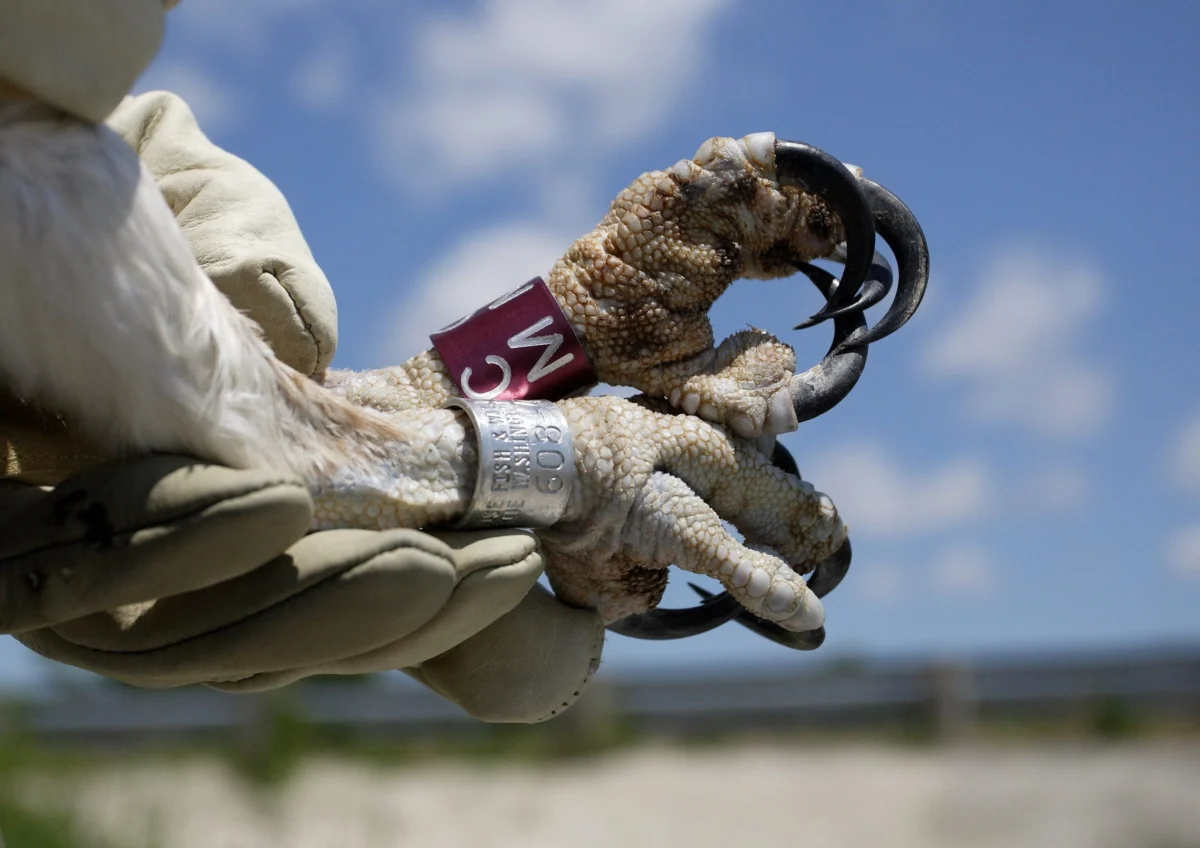
While Smith’s photograph captures a singular moment of triumph, the broader narrative of Osprey survival is one of ongoing scientific inquiry and conservation vigilance. Dr. Bryan Watts, a distinguished biologist whose work primarily focuses on the Chesapeake Bay, exemplifies this dedication. His meticulous research involves scaling heights to peer into Osprey nests, often using a mirror mounted on a long pole to observe the intimate details of family life without disturbing the birds. One such observation, captured in a photograph featured in David Gessner’s accompanying piece, depicts an adult Osprey feeding its chick. The image, while seemingly idyllic, holds a poignant story. Just out of frame, a second, noticeably smaller chick struggled, and a third had already succumbed to starvation, tragically illustrating the harsh realities of resource scarcity.
These Ospreys were part of a comprehensive study examining the indispensable role of menhaden in supporting successful Osprey reproduction. The findings, while stark, underscored a critical ecological dependency: menhaden are not just a food source but the bedrock of the Osprey’s breeding success. Studies have consistently shown a direct correlation between the availability of menhaden and the number of chicks successfully fledged by Ospreys. When menhaden populations decline, Osprey reproductive rates suffer dramatically, leading to smaller broods and increased chick mortality.
Background on Menhaden and their Ecological Importance:
Menhaden (specifically Atlantic menhaden, Brevoortia tyrannus) are schooling filter-feeders that play a foundational role in the Atlantic ecosystem. They consume phytoplankton and zooplankton, converting microscopic life into a vital food source for a vast array of predators, including larger fish like striped bass, bluefish, and tuna, marine mammals, and of course, Ospreys. Their abundance acts as a buffer, supporting numerous species and contributing to the overall health of the marine food web. Historically, menhaden populations have experienced significant fluctuations due to both natural cycles and intense commercial fishing pressure.
Conservation History of Ospreys and the Menhaden Fishery:
The story of the Osprey’s recovery from the widespread use of DDT in the mid-20th century serves as a powerful testament to the effectiveness of environmental regulation. DDT, a persistent pesticide, caused eggshell thinning, leading to catastrophic reproductive failure across many raptor species, including Ospreys. Following the U.S. ban on DDT in 1972, Osprey populations slowly but steadily rebounded, particularly in regions like the Chesapeake Bay, which hosts one of the largest concentrations of breeding Ospreys in the world.
However, new challenges have emerged, primarily concerning the management of the menhaden fishery. For decades, the commercial harvest of menhaden, largely for reduction to fishmeal and fish oil, has been a contentious issue. Conservation groups and recreational fishing advocates have consistently argued for stricter quotas to ensure sufficient forage for predators. The Atlantic States Marine Fisheries Commission (ASMFC), responsible for managing menhaden, has often faced pressure to balance ecological needs with economic interests. Data from the Chesapeake Bay, for instance, indicated that in periods of low menhaden abundance, Ospreys were forced to travel farther to find alternative prey, expending critical energy and often returning with less nutritious fish, directly impacting chick survival rates. Environmental advocates emphasize that sustainable management of forage fish like menhaden is paramount, not only for Ospreys but for the entire ecosystem that relies on them. Without a robust menhaden population, the gains made in Osprey conservation post-DDT could be undermined.
Expanding the Lens: Diverse Approaches to Understanding Avian Life
The focused study of Ospreys exemplifies the depth achievable through dedicated observation, but understanding the broader avian world demands an even wider array of perspectives and methodologies. Researchers, community scientists, and even those with deep cultural connections are all contributing to a richer, more nuanced comprehension of birdlife.
Beyond the Predator: Re-evaluating Relationships with Crows
Among the most intelligent and adaptable of birds, crows (Corvus spp.) present a fascinating case study in human-animal interaction. Elizabeth Preston, in her insightful exploration, delves into the enduring question: "Are these birds really our friends?" This inquiry moves beyond simple scientific classification to probe the complex, often personal, relationships individuals forge with these enigmatic corvids. Through accounts of people who have developed profound connections with crows, Preston examines the birds’ remarkable cognitive abilities, their capacity for memory, problem-solving, and even apparent reciprocal behavior, such as bringing "gifts" to those who feed them.
For centuries, crows have held dualistic symbolism in human cultures – revered in some for their intelligence and adaptability, reviled in others for their scavenging habits. Modern behavioral ecology, bolstered by citizen observations, increasingly reveals their sophisticated social structures, use of tools, and ability to recognize individual human faces, sometimes holding grudges or forming alliances over years. These insights challenge anthropocentric views and encourage a re-evaluation of our co-existence with urban wildlife. Scientists studying corvid intelligence often highlight their capacity for meta-cognition, episodic memory, and theory of mind, placing them among the most advanced non-primate species in terms of cognitive functions. Understanding these intricate behaviors requires not just observation, but a willingness to engage with birds on a more complex, interspecies level, moving beyond simplistic categorizations.
Citizen Science on the Front Lines: Tracking Climate Change Impacts
The escalating climate crisis poses an existential threat to countless species, and birds, with their migratory patterns and habitat specificities, are particularly vulnerable. Recognizing the immense scale of this challenge, organizations like Audubon have harnessed the power of "community scientists"—dedicated volunteers—to track and understand these impacts. The Audubon Climate Watch program, initiated in the early 2010s, stands as a prime example of how distributed observation can generate invaluable data on a continental scale.
Timeline and Methodology of Climate Watch:
Launched in 2014, Climate Watch mobilizes thousands of volunteers across the United States to survey specific "target species" during two annual periods—winter and summer. Volunteers follow standardized protocols, conducting 15-minute point counts within designated survey blocks, meticulously recording all birds observed and heard. This rigorous methodology ensures data consistency and reliability, crucial for long-term ecological monitoring. Over a decade, this initiative has collected millions of data points, creating an unprecedented dataset on how avian distributions are shifting in response to rising temperatures. The program specifically targets species that climate models predict will be significantly affected by changing temperatures, allowing for targeted monitoring of their range shifts.
Significance of Data and Observed Changes:
The data gathered by Climate Watch volunteers is instrumental in revealing how bird populations are adapting—or struggling to adapt—to a rapidly warming world. For instance, analyses have shown that many species are shifting their wintering ranges northward, while others are contracting their breeding ranges as suitable habitats become scarcer. Specific examples include observations of Northern Cardinals expanding their winter presence into previously colder regions, and more sensitive species like the American Pika showing signs of habitat compression in mountainous areas. This comprehensive dataset informs Audubon’s "climate strongholds" mapping, identifying areas critical for birds facing climate change, and guiding conservation strategies aimed at protecting these vital habitats. The sheer volume and geographic spread of citizen-collected data provide a resolution that would be impossible to achieve through traditional scientific expeditions alone, making Climate Watch a cornerstone of avian climate change research. Policy makers and land managers are increasingly utilizing this data to inform decisions on habitat preservation, connectivity corridors, and climate adaptation planning.
Innovations in Avian Research: Bridging Ancient Wisdom and Modern Technology
The quest to understand birds is not limited to biological surveys or photographic documentation; it extends into cultural heritage and embraces the very cutting edge of technological advancement. By combining diverse methodologies, researchers are unlocking new dimensions of avian perception and conservation.
Echoes of the Past: Indigenous Perspectives on Birdsong
The soundscape of birdsong, often appreciated purely for its aesthetic beauty, holds profound cultural and ecological significance for Indigenous communities worldwide. Esteban Valdivia, a unique figure bridging the worlds of ethnomusicology and anthropology, exemplifies this deep connection. Valdivia plays ancient instruments, meticulously recreated or preserved, to experience birdsong not merely as a biological signal but as a conduit to the ears and understanding of Indigenous cultures. For many Indigenous peoples, birds are more than just wildlife; they are spiritual guides, storytellers, and keepers of ecological knowledge. Their songs are often woven into ceremonial practices, oral traditions, and traditional ecological knowledge systems, reflecting generations of intimate observation and understanding of natural cycles.
Valdivia’s work illuminates how these ancient instruments, designed to mimic or respond to natural sounds, offer a unique pathway to understanding how birds were perceived and integrated into the daily lives and spiritual beliefs of past societies. This approach transcends Western scientific paradigms, emphasizing a holistic relationship with nature where humans are part of, rather than separate from, the ecosystem. Indigenous elders and knowledge keepers often articulate the intricate roles birds play in ecosystem health, serving as indicators of seasonal changes, water quality, and forest vitality. Their perspectives remind us that conservation is not solely a scientific endeavor but also a cultural imperative, deeply rooted in respecting and understanding the natural world through diverse lenses.
Artificial Intelligence: A New Frontier in Conservation
At the opposite end of the observational spectrum lies artificial intelligence (AI), a revolutionary tool rapidly transforming bird conservation. The pairing of sophisticated audio recorders with advanced AI algorithms has opened unprecedented avenues for understanding and protecting avian populations. Traditionally, identifying bird species by sound required highly trained ornithologists to spend countless hours in the field, a labor-intensive and geographically limited process. AI, however, can process vast quantities of acoustic data with unparalleled speed and accuracy.
AI’s Capabilities and Practical Applications:
By deploying networks of autonomous audio recorders in remote habitats, scientists can now capture continuous soundscapes. AI models, trained on extensive libraries of bird calls and songs, can then rapidly analyze these recordings to identify not only the species present but also their relative abundance and activity patterns. This capability offers several critical advantages:
- Rapid Species Identification: AI can quickly identify even elusive or nocturnal species, providing a comprehensive biodiversity assessment of a habitat in a fraction of the time it would take human observers.
- Habitat Monitoring: Continuous acoustic monitoring allows researchers to track changes in species composition over time, detecting habitat degradation, the presence of invasive species, or the impacts of climate change on avian communities.
- Threat Detection: AI can be trained to detect sounds associated with illegal activities, such as logging, poaching, or unauthorized human encroachment, providing early warnings to conservation managers. For instance, projects in rainforests have successfully used AI to identify the sounds of chainsaws or gunshots, enabling rapid response from anti-poaching units.
- Individual Identification: Advanced AI can even differentiate between individual birds of the same species based on subtle variations in their calls, offering new insights into population dynamics, social structures, and migratory routes.
Ethical Considerations and Future Potential:
While the potential of AI in conservation is immense, its implementation also raises ethical considerations, including data privacy (especially concerning human sounds recorded incidentally), the potential for "black box" decision-making where the AI’s logic is opaque, and ensuring equitable access to these technologies. Despite these challenges, the ability of AI to process massive datasets, identify patterns imperceptible to humans, and operate in challenging environments makes it an indispensable tool for future conservation efforts. Researchers are actively developing more robust and transparent AI models, aiming to integrate these technologies seamlessly into global conservation strategies, from monitoring endangered species to predicting ecosystem shifts.
The Imperative of Observation: Navigating Environmental Challenges
As environmental challenges mount—from accelerating climate change and widespread habitat loss to pollution and biodiversity decline—the need for comprehensive, multifaceted observation of the natural world has never been more urgent. The stories of Ospreys, crows, climate trackers, and technological innovators collectively underscore a fundamental truth: to effectively protect birds and the ecosystems they inhabit, we must first truly understand them. This understanding arises from a synthesis of rigorous scientific inquiry, the wisdom of cultural heritage, the power of collective citizen action, and the analytical might of advanced technology.
Birds, in their myriad forms and behaviors, serve as invaluable sentinels, providing critical insights into the health of our planet. The plight of an Osprey chick starving in the Chesapeake Bay is not merely an isolated tragedy but a stark indicator of systemic ecological imbalance, particularly concerning the vital menhaden populations. Similarly, the northward migration shifts documented by Climate Watch volunteers are concrete evidence of a changing climate impacting species distributions on a global scale. The intricate social lives of crows challenge us to reconsider our anthropocentric views, while the ancient resonance of birdsong reminds us of deep cultural connections to nature.
The integration of diverse observational powers—the keen eye of a photographer, the patient dedication of a field biologist, the collective effort of citizen scientists, the cultural wisdom of Indigenous communities, and the analytical power of artificial intelligence—forms a robust framework for contemporary conservation. It allows us to decipher the complex messages birds are sending us, whether through their reproductive success, their migratory patterns, their calls, or their very presence. This holistic approach empowers conservationists to make informed decisions, advocate for effective policies, and implement targeted interventions that address the root causes of environmental degradation.
Ultimately, the opportunity lies before us: to "laser in" with all available tools and perspectives, to listen attentively, observe deeply, and act decisively. By embracing this imperative of observation, we can move beyond simply witnessing the natural world to actively safeguarding its future, ensuring that the vibrant tapestry of avian life continues to enrich our planet for generations to come. This collective endeavor is not just about saving birds; it is about preserving the delicate balance of life on Earth, of which humanity is an integral part.
