
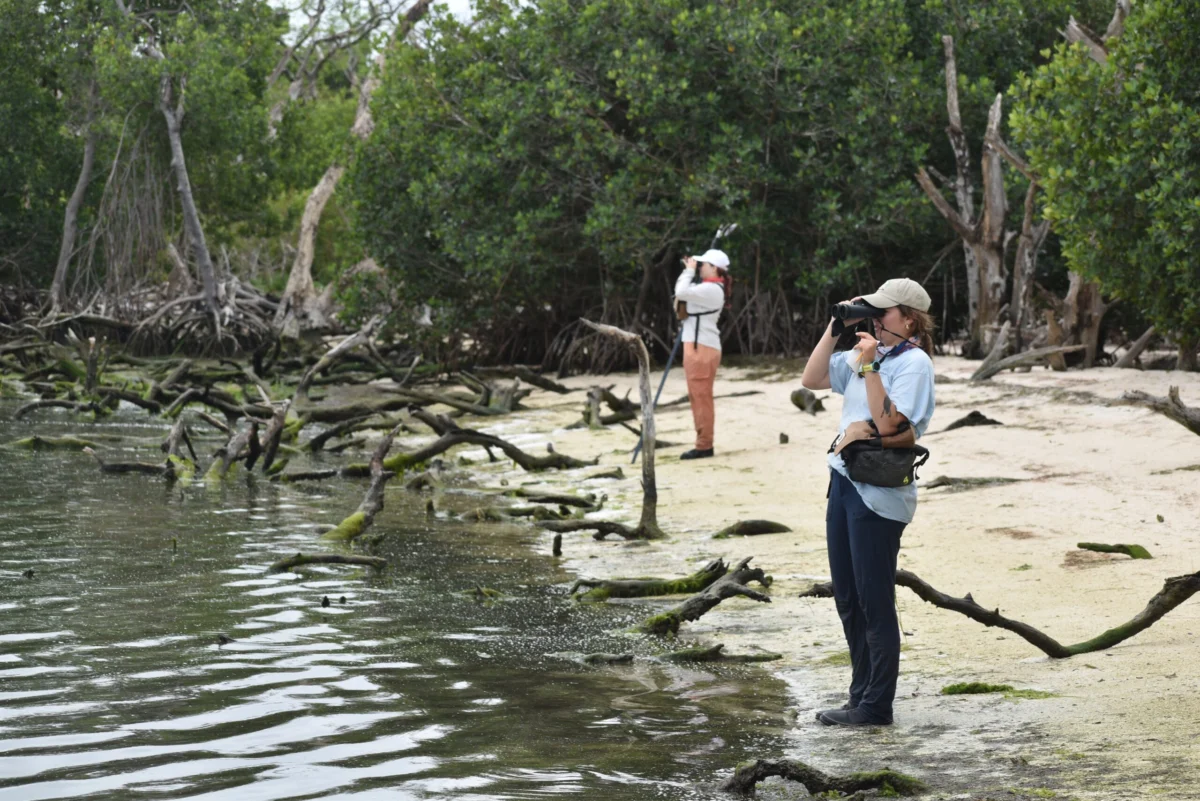
A critical endeavor to assess the health of one of the nation’s most vital and vulnerable ecosystems unfolds regularly in the shallow, turquoise waters surrounding Sandy Key in Florida Bay. Here, Shauna Sayers, a dedicated wading bird specialist with Audubon’s Everglades Research Station in Tavernier, meticulously leads a team in monitoring the nesting efforts of a diverse avian population, with a particular focus on the Roseate Spoonbill. This distinctive species serves as a crucial bio-indicator, offering profound insights into the ecological condition and ongoing restoration needs of the vast Everglades ecosystem. The data meticulously collected from these remote islands provides invaluable information that is shared with numerous conservation partners, underpinning strategic efforts to protect and restore the iconic "River of Grass."
The Sentinel Species: Roseate Spoonbills and Ecosystem Health
The morning begins with the distinct sound of an anchor splashing into the clear, shallow waters as Sayers expertly maneuvers her vessel. Soon after, the first kayak is gently lowered, signaling the start of another rigorous day of fieldwork. Sayers and her team embark on regular visits to Sandy Key and 62 other critical keys each spring, documenting the reproductive success of wading birds. The Roseate Spoonbill (scientific name: Platalea ajaja) is a species of paramount interest due to its specific habitat requirements and sensitivity to environmental changes. Their nesting success or failure directly reflects the availability of suitable foraging grounds, appropriate water levels, and the overall health of the prey base—all factors deeply intertwined with the hydrological patterns of the Everglades.
Historically, Roseate Spoonbills faced severe threats, particularly during the late 19th and early 20th centuries, when they were hunted to near extinction for their vibrant pink plumes, which were highly sought after for women’s hats. Conservation efforts throughout the 20th century, coupled with the establishment of protected areas, allowed their populations to rebound. However, new threats emerged, primarily habitat loss and degradation due to altered freshwater flows from the Everglades, which disrupted the delicate salinity balance in Florida Bay and impacted their food sources. This history underscores their resilience, but also their continued vulnerability, making their current status an urgent concern for environmental scientists and conservationists.
Navigating the Remote Waters of Florida Bay
The journey to Sandy Key is an expedition in itself, a testament to the remote and pristine nature of these critical habitats. Sayers, a seasoned captain, expertly navigates her small vessel through a complex network of channel markers. These markers are not merely navigational aids but critical indicators of environmental regulations, denoting shallow waters, no-wake zones, and seasonal no-entry zones meticulously established by the National Park Service to protect sensitive wildlife and fragile seagrass beds. The one-hour-and-fifteen-minute boat ride offers a tangible sense of the isolation and unique character of these islands, which serve as vital waystations for migratory birds, overnight roosts, and indispensable nurseries for nesting families.
Upon arrival, the team prepares for the next phase of their work. The island itself is often surrounded by a shallow flat, which acts as a natural barrier, effectively deterring unauthorized boat access and preserving the tranquility essential for nesting birds. The sounds and smells of the active bird colony immediately envelop the team. The air is alive with the squeaky calls of Red-winged Blackbirds, the twittering melodies of warblers hidden within the foliage, and the guttural squawks of Tricolored Herons emanating from deep within the dense mangrove-covered key. These auditory cues are the first signs of the vibrant life the team is there to observe and protect.
The Intricacies of Nest Monitoring
Armed with necessary permits and specialized equipment, the team, comprising Sayers, Senior Biologist Kaliegh Schendler, and Seasonal Research Assistant Alli Mallouk, uses kayaks to traverse the protective shallow flat. This careful approach minimizes disturbance to the sensitive environment. Once on the island, Mallouk immediately begins the meticulous process of recording all observed bird species on her datasheet, contributing to a comprehensive inventory of the island’s avian inhabitants.
The core of the work involves carefully navigating the challenging terrain of the mangrove forest. Sayers, with years of experience, expertly weaves through the maze of mangrove prop roots, contending with the squishy, often deep mud underfoot. Each step is deliberate, aimed at minimizing disturbance to the nesting birds. The search for nests requires keen observation and patience. Upon spotting a potential nest, Sayers pauses, watching for any signs of adult or young birds before extending her telescoping mirror. This specialized tool allows her to peek inside nests located in dense foliage or at awkward angles without directly approaching or disturbing the occupants.
During one such observation, Sayers spots a vacant nest, a common occurrence as nesting cycles vary. However, at the very next nest, a young Reddish Egret begins to stir, its gangly form a vivid reminder of the fragile life cycle being observed. "We have one chick at stage two," calls Mallouk, recording the developmental stage of the chick. Schendler, meanwhile, trains her zoom lens on the young bird, capturing crucial photographic documentation while swatting away a persistent horde of biting insects—a ubiquitous challenge of fieldwork in the Everglades.
During this particular visit, the team successfully recorded a total of 31 distinct bird species, a testament to the biodiversity of Sandy Key. Among the most numerous sightings were Double-crested Cormorants, Ruddy Turnstones, and Tricolored Herons, each playing their own role in the intricate ecosystem. Significantly, the team also documented twelve "young-of-the-year" Roseate Spoonbills, a vital metric indicating successful reproduction for the targeted species. This number, while seemingly small, represents crucial new additions to the population, signaling that conditions were conducive to at least some level of breeding success during the season.
"We had a total of 42 spoonbill nests here this year," Sayers reports, highlighting the scale of their monitoring efforts. "We come back every seven to ten days to monitor chick development through 21 days of age, after which point, if at least one chick is still alive, the nest is considered a success." This meticulous, repeated monitoring allows researchers to track survival rates and identify potential threats to chick development. While the nesting season for Roseate Spoonbills was nearing its conclusion, the cyclical nature of avian life meant that other species were just commencing their own nesting efforts, ensuring continuous activity and the need for ongoing observation.
The Broader Context: Everglades Restoration and Climate Change
Audubon’s Everglades Research Station has been at the forefront of wading bird monitoring for decades, a commitment rooted in the understanding that these birds are indispensable barometers of environmental health. The data gathered, particularly concerning Roseate Spoonbills, is not merely observational; it is a critical feedback loop for the Comprehensive Everglades Restoration Plan (CERP). CERP, authorized by Congress in 2000, is the world’s largest ecosystem restoration effort, aiming to restore the quantity, quality, timing, and distribution of water flow through the Everglades to its historical patterns. The success or failure of spoonbill nesting directly informs managers about the efficacy of restoration projects, indicating whether water management strategies are creating the necessary conditions for a thriving ecosystem.
For instance, spoonbills rely on specific water levels in the Everglades wetlands and Florida Bay to access their primary food sources, such as small fish and invertebrates. When water levels are too high, prey disperses, becoming harder to catch. When they are too low, salinity in Florida Bay can increase, impacting the estuarine food web. Therefore, successful spoonbill nesting, especially in terms of fledged young, serves as a powerful indicator of a balanced and productive hydrological system.
The challenges to the Everglades and its wading bird populations are multifaceted. Habitat loss, exacerbated by the accelerating impacts of climate change, stands as a primary driver of bird declines across the hemisphere. Climate change manifests in various ways: rising sea levels threaten coastal nesting sites with inundation and saltwater intrusion, altering the delicate balance of freshwater and saltwater ecosystems. Increased frequency and intensity of extreme weather events, such as hurricanes, can devastate nesting colonies and alter landscapes. Changes in rainfall patterns can lead to prolonged droughts or excessive flooding, both detrimental to wading bird foraging and nesting success.
In addition to dedicated Roseate Spoonbill studies, Audubon’s team also meticulously documents the nesting efforts of other species, such as Tricolored Herons, often in close partnership with the National Park Service. This broader monitoring approach provides a more holistic view of ecosystem health and biodiversity, allowing for more comprehensive conservation strategies.
Collaboration, Data Sharing, and Future Implications
The data collected by Audubon’s Everglades Research Station on all wading birds is not kept in isolation. It is a shared resource, disseminated widely among a diverse network of partners including the National Park Service, the U.S. Fish and Wildlife Service, the South Florida Water Management District, academic institutions, and other conservation organizations. This collaborative approach is fundamental to the scientific and adaptive management of the Everglades. By pooling data and expertise, these partners can collectively analyze trends, identify emerging threats, and refine restoration strategies.
Official responses from these partner organizations consistently underscore the critical value of Audubon’s long-term monitoring. Representatives from the National Park Service, for example, often highlight how external research, such as Audubon’s, provides essential baseline data and continuous feedback necessary for effective park management and compliance with environmental regulations. Similarly, Everglades restoration project managers utilize these findings to gauge the effectiveness of specific infrastructure projects, such as culvert installations or modified water flow regimes, directly linking the health of bird populations to engineering and policy decisions.
The implications of this ongoing research extend far beyond the immediate goal of counting birds. The findings help to answer crucial questions: Which specific areas within the Everglades and Florida Bay are most critical for bird population success? What are the most significant threats facing those areas, both natural and anthropogenic? And, crucially, how can we best safeguard the health and longevity of these habitats while also respecting the needs and interests of local communities that live adjacent to and depend on this unique environment?
The continuous monitoring of species like the Roseate Spoonbill serves as a powerful reminder of the interconnectedness of ecosystems and the profound impact of human activities. It is a testament to the dedication of field biologists like Shauna Sayers and her team, whose tireless efforts in challenging conditions provide the scientific foundation for informed decision-making. As climate change continues to exert pressure on vulnerable coastal ecosystems, and as Everglades restoration efforts progress, the data from Sandy Key and other critical keys will remain indispensable, guiding humanity’s ongoing commitment to preserving one of the world’s most extraordinary natural treasures for generations to come. The long-term success of the Everglades hinges on this type of sustained, collaborative scientific inquiry and the political will to act on its findings.
