
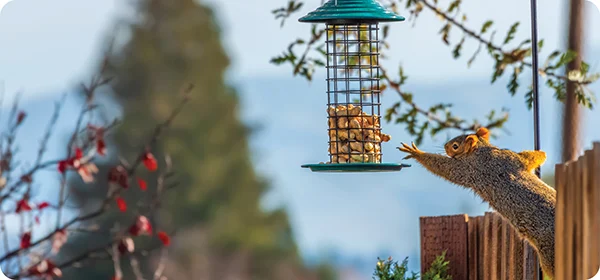
The allure of a backyard bird feeder is undeniable, offering a vibrant window into the natural world and a consistent food source for avian visitors. However, this well-intentioned generosity often extends beyond the intended recipients, attracting a diverse array of backyard critters, most notably squirrels, that can decimate birdseed supplies and even damage feeders. This article delves into effective strategies, drawing on expert recommendations, to help bird enthusiasts regain control of their feeders and ensure a more harmonious coexistence with their feathered and furry neighbors.
The Persistent Challenge of Backyard Critters
For many, the sight of squirrels expertly navigating pole systems or raiding feeders is a common, albeit frustrating, experience. These agile mammals, driven by their innate foraging instincts, perceive bird feeders as an easily accessible and abundant food source. Their ability to climb, jump, and problem-solve often makes them formidable adversaries for even the most dedicated bird feeder enthusiast. Similarly, certain bird species, often referred to as "nuisance birds," can congregate in such numbers that they overwhelm feeders, consuming large quantities of seed and preventing smaller, more desired bird species from accessing the food.
The economic impact of these persistent visitors can be significant. The cost of replacing birdseed consumed by squirrels and other non-target animals, coupled with the potential damage to expensive feeders and feeding stations, can deter even the most passionate hobbyists. Moreover, the disruption to the feeding patterns of native bird populations can be a cause for concern among conservation-minded individuals.
Strategic Defense Against Squirrel Invasions
Effective squirrel-proofing of bird feeders often hinges on understanding their physical capabilities and employing deterrents that exploit their limitations. Wild Birds Unlimited, a leading retailer and authority in backyard bird feeding, advocates for a multi-pronged approach that prioritizes physical barriers and strategic placement.
Baffles: The First Line of Defense
One of the most widely recommended and effective solutions for deterring squirrels from pole-mounted feeders is the use of baffles. These are physical barriers designed to prevent climbing.
-
Stovepipe Baffles: These smooth, metal cylinders are particularly effective when installed on pole systems. To maximize their efficacy, stovepipe baffles should be positioned at least five feet above the ground. Crucially, the entire feeder pole system must be situated at least ten feet away from any potential launching points, such as trees, bushes, fences, or other structures. This spatial separation ensures that even if a squirrel manages to reach the baffle, it cannot jump from an adjacent surface onto the feeder. The smooth, unclimbable surface of the baffle prevents them from gaining purchase and ascending to the feeder.
-
Domed Squirrel Baffles: For feeders that are hung from trees or other overhead structures, a domed baffle is the preferred method. This type of baffle is installed directly above the feeder, on the hanging wire or chain. Its convex shape makes it difficult for squirrels to navigate over or around it, effectively blocking their descent from above. When combined with a feeder designed for smaller birds, this setup can create a virtually impenetrable feeding station for squirrels.
Exclusion Cages: A Physical Barrier
Another robust method for excluding squirrels, as well as larger "nuisance" birds, is the use of an exclusion cage. These cages are designed to retrofit existing feeders, essentially creating a protective enclosure around the feeding ports.
-
Functionality: Exclusion cages typically consist of a wire mesh with openings large enough to allow smaller birds to pass through and feed, but too small for squirrels or larger birds to enter. These cages come in various sizes and dimensions, allowing them to be adapted to a wide range of feeder types, including tube feeders, hopper feeders, and suet feeders.
-
Effectiveness: By limiting physical access to the seed, exclusion cages directly address the problem of squirrels consuming birdseed. The psychological barrier of the cage, coupled with the physical impossibility of reaching the seed, can be highly effective in discouraging persistent squirrel activity. Studies on wildlife deterrence often highlight the success of physical barriers in redirecting animal behavior away from human-managed resources.
Addressing "Nuisance" Birds: A Matter of Food and Feeder Design
The term "nuisance birds" typically refers to species that, while part of the natural ecosystem, can dominate feeders to the exclusion of other desired avian visitors and rapidly deplete food resources. Common examples include starlings and certain finch species, depending on the region. The key to managing these populations lies in understanding their dietary preferences and utilizing feeder designs that favor smaller birds.

Strategic Food Selection
The type of birdseed offered plays a pivotal role in attracting certain species while deterring others.
-
Seeds to Avoid: Cracked corn and millet are often favored by larger, more aggressive bird species and squirrels. Their inclusion in a birdseed mix can inadvertently attract unwanted visitors.
-
Recommended Seeds:
- Safflower: This white, striped seed is a particular favorite of many desirable songbirds, such as cardinals, chickadees, and titmice. Notably, many "nuisance" birds, like blackbirds, tend to avoid safflower seed, making it an excellent choice for selective feeding.
- Pure Suet: While suet blends can be attractive to a wide range of birds, they can also be a magnet for starlings. Offering pure suet cakes, without added ingredients, is often ignored by starlings but remains highly appealing to woodpeckers, nuthatches, and other cavity-nesting birds that appreciate this high-energy food source.
- Nyjer Seed (Thistle): This tiny black seed is a specialty food for finches, particularly the American Goldfinch. It requires a specialized feeder with small ports that prevent larger birds from accessing the seed, making it an excellent option for attracting and sustaining finch populations.
Feeder Design for Selective Feeding
Beyond food selection, the physical design of bird feeders can be engineered to favor smaller avian species.
-
Weight-Activated Feeders: These innovative feeders feature a mechanism that closes off feeding ports when a certain weight is applied. This effectively excludes heavier birds and squirrels, allowing only lighter birds to access the seed. The weight threshold can often be adjusted to fine-tune which species are permitted to feed.
-
Feeders with Cages: As mentioned previously, feeders enclosed within a wire cage allow smaller birds to pass through the mesh while blocking larger birds. This is a dual-purpose solution that addresses both squirrel and larger bird deterrence.
-
Short or No Perches: Many feeders come with perches of varying lengths. Feeders with very short perches, or even feeders designed for birds to cling directly to the feeding ports (like some suet feeders), naturally favor smaller birds that can easily grip these surfaces. Larger birds often find it difficult to balance and feed from such perches.
Expert Guidance and Community Resources
For individuals seeking comprehensive solutions and personalized advice, local Wild Birds Unlimited stores offer invaluable resources. Their Certified Bird Feeding Specialists are trained to assess backyard environments and recommend the most effective critter-proofing strategies tailored to specific needs. These specialists can provide hands-on demonstrations of various baffles, feeders, and exclusion devices.
Furthermore, the growing trend of citizen science and online communities dedicated to bird watching and backyard ecology provides a wealth of shared experiences and practical tips. Organizations like the Cornell Lab of Ornithology actively promote bird feeding best practices and offer educational materials that can assist in understanding bird behavior and managing feeder interactions.
The "Nature Centered" podcast, produced by Wild Birds Unlimited, also features episodes dedicated to topics such as "Critter Solutions," offering further insights and expert interviews. For instance, Episode 76 of this podcast specifically addresses strategies for managing common backyard critter challenges.
Broader Implications: A Balanced Ecosystem
The efforts to manage critter populations at bird feeders extend beyond mere convenience. By implementing thoughtful strategies, backyard bird feeders can become more effective at supporting native bird populations. This includes providing essential food sources during challenging seasons, particularly winter, when natural food availability is scarce.
The presence of healthy bird populations contributes to a balanced local ecosystem. Birds play vital roles in pollination, seed dispersal, and insect control, all of which benefit the wider environment. By ensuring that feeders are accessible to the intended avian visitors, enthusiasts contribute to these ecological services.

The challenge of sharing backyard resources with wildlife is a recurring theme in urban and suburban environments. The solutions employed for bird feeders often mirror strategies used in other contexts, such as garden pest management and wildlife-friendly landscaping. The underlying principle remains consistent: understanding animal behavior and implementing non-harmful deterrents to foster coexistence.
Ultimately, the goal of effective critter solutions is not to eradicate wildlife from our backyards, but to create a sustainable and enjoyable balance. By employing the strategies outlined above, bird feeding enthusiasts can continue to enjoy the beauty and wonder of birds while minimizing the frustrations associated with sharing their feeders. This approach fosters a deeper appreciation for the natural world and our role within it, transforming potential conflicts into opportunities for harmonious coexistence. The ongoing evolution of feeder technology and our understanding of animal behavior promises even more innovative and effective solutions in the future, ensuring that the joy of backyard bird feeding can be sustained for generations to come.
