
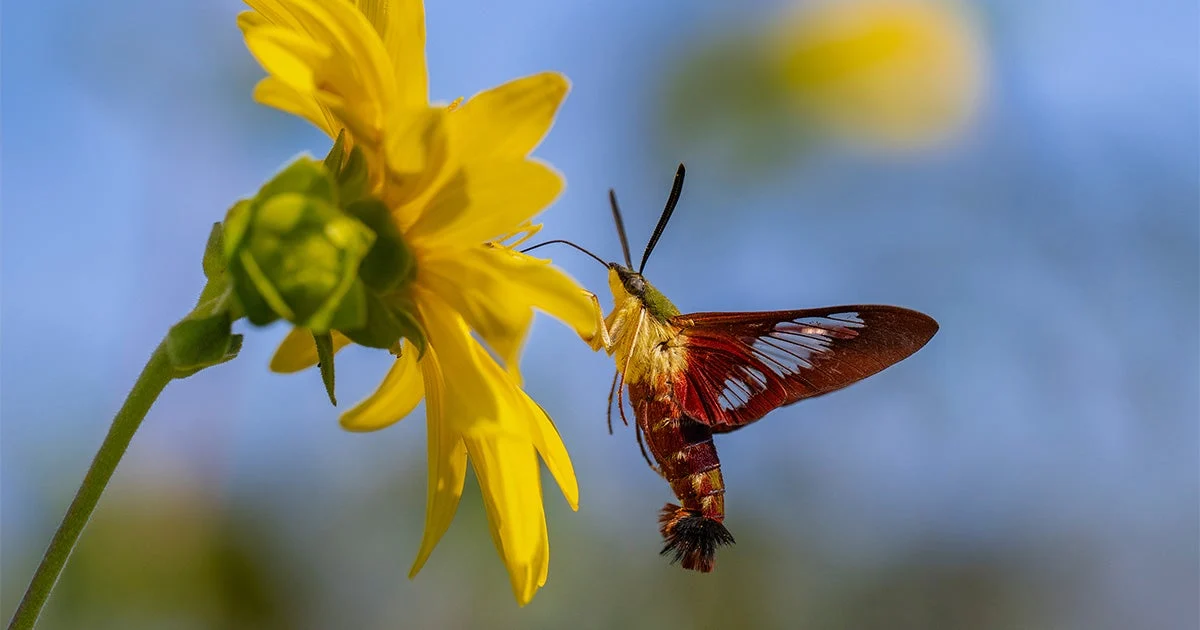
While birds often command our attention throughout the year, taking a respite during the hottest months to tend to their young, summer presents a unique and compelling opportunity to shift our focus to the smaller wonders that surround us: insects and other arthropods. This pivot from avian appreciation to invertebrate observation, often termed "bugwatching," offers a rich, accessible, and ecologically significant pathway to connect with Earth’s astonishing biodiversity, mirroring many of the meditative and educational benefits of traditional birding. The intricate lives of these often-overlooked creatures, from their dazzling colors and ingenious evolutionary adaptations to migratory journeys that rival those of many birds, provide an inexhaustible source of fascination, particularly when insect activity reaches its annual zenith during the warmer seasons.
The Interconnected Web: Why Insects Matter
Birding inherently connects us to the natural world, prompting a search for and observation of diverse life forms. However, to truly appreciate the ecological tapestry, one must look beyond the feathered and embrace the six-legged (or more). Insects, despite a pervasive "creepy-crawly" reputation, are fundamental to virtually all terrestrial ecosystems. Their importance is underscored by the profound interdependence with avian species; an estimated 90 percent of all bird species consume insects at some point in their life cycles, often critically relying on them to nourish their rapidly growing chicks. This deep connection means that understanding and appreciating insects is, in essence, a deeper understanding of the world birds inhabit and depend upon.
Beyond their role in the avian diet, insects provide invaluable ecosystem services. They are the primary pollinators of an estimated 75 percent of the world’s food crops and nearly 90 percent of wild flowering plants. Furthermore, they act as natural pest controllers, decomposers, and vital links in food webs, recycling nutrients and maintaining soil health. The global economic value of insect services, though difficult to quantify precisely, is estimated to be in the hundreds of billions of dollars annually, highlighting their indispensable contribution to human well-being and planetary health.
A Seasonal Shift: From Feather to Exoskeleton
The summer months, typically from June through August in the Northern Hemisphere, mark a natural lull in bird activity for many species. Adult birds are often less vocal, focused on foraging for their fledglings, and sometimes undergoing molting, making them less conspicuous. Concurrently, insect populations explode. Warmer temperatures accelerate their metabolic rates and life cycles, leading to peak emergence, breeding, and foraging activity. This temporal synchronicity makes summer an ideal period for bugwatching, offering a vibrant, dynamic display of invertebrate life right outside our doors.
Observing invertebrates can fulfill the same contemplative and discovery-driven impulses that draw individuals to birding. Like birds, insects can be meticulously documented with cameras, identified through field guides, and added to personal "life lists," fostering a sense of accomplishment and deepening one’s biological knowledge. Eric R. Eaton, author of Bugwatching, a foundational guide to the practice, emphasizes that "Bugwatching is being a conscientious observer and having an open mind, rather than having preconceived notions of whether an organism is good or bad." This open-minded approach encourages a shift from ingrained biases to genuine curiosity, revealing the beauty and complexity in creatures often dismissed or feared.
Getting Started: Tools and Techniques for the Aspiring Entomologist
Embarking on a bugwatching journey requires minimal specialized equipment, making it an accessible hobby for many. Eaton suggests beginning with tools already familiar to birders: binoculars. While standard birding binoculars can offer excellent views of larger insects like butterflies, close-focus binoculars, specifically designed for observing nearby objects, can significantly enhance the experience, revealing intricate details often missed by the naked eye. For even closer inspection, a simple handheld magnifying lens or a macro lens attachment for a smartphone camera can transform the observation of a tiny ant or beetle into a revelatory experience. Modern smartphones, with their increasingly sophisticated cameras, are powerful tools for capturing high-resolution images, essential for identification and documentation. Libraries, increasingly serving as community resource hubs, may even lend out specialized gear, offering an opportunity to explore without initial financial investment.
Where to Look: Unveiling Hidden Worlds
Insects are ubiquitous, inhabiting nearly every terrestrial and freshwater environment. However, knowing where to focus observation efforts can significantly increase discovery rates. Insects, like all organisms, congregate around essential resources. Prime locations include:
- Food Sources: Flowering plants, which attract pollinators like bees, butterflies, and hoverflies; decaying organic matter, which draws beetles and flies; and even animal waste, a magnet for dung beetles and various fly species.
- Water Sources: Puddles, dew-covered leaves, and damp soil attract a variety of insects for drinking and mineral uptake, particularly butterflies engaging in "puddling" behavior.
- Sunlit Patches: Many insects are ectothermic, relying on external heat sources to regulate their body temperature. Sun-drenched rocks, leaves, and open patches in forests are common basking spots where insects can be observed grooming or resting.
- Native Plant Gardens: Cultivating native flowers, shrubs, and trees in one’s yard provides essential habitat and food for local insect populations. Crucially, avoiding pesticides and herbicides is paramount to creating a safe and inviting environment.
- Inviting Structures: Piles of leaves, logs, or even specific "insect hotels" can attract beneficial insects, offering shelter and breeding grounds.
As the day transitions to night, a new realm of insect activity emerges. Nocturnal observation can be particularly rewarding. After dusk, a simple setup involving a bright light (such as an LED floodlight or a blacklight) trained on a white sheet or wall can attract a mesmerizing array of moths, beetles, lacewings, and other nocturnal fliers and crawlers. This technique, popular among entomologists, provides a static display for easy observation and photography. Eaton succinctly summarizes the ethos of bugwatching: "Any way you observe insects aside from squashing them is a valid way of looking at them."
Safety and Ethics in Observation: A Responsible Approach
Responsible bugwatching, like responsible birding, prioritizes the well-being of both the observer and the observed. Key safety and ethical considerations include:
- Species Identification: Learning to identify species that sting or bite, such as certain wasps, bees, or spiders, and maintaining a respectful distance is crucial. Awareness of local venomous species is always advisable.
- Minimize Disturbance: Avoid unnecessary handling of insects. If a rock or log is overturned to reveal hidden creatures, it should always be carefully returned to its original position to preserve the microhabitat. Physical contact with living bugs should be minimized to prevent stress or injury to the insect.
- Respect Habitat: Stay on designated paths where possible and avoid trampling vegetation. The goal is to observe, not interfere.
- Documentation, Not Collection: For most citizen science purposes, photographic documentation is sufficient and preferred over collecting specimens, which can disturb populations.
As observers become more familiar with the invertebrate world, they may develop a particular fondness for specific niches, such as the iridescent flash of tiger beetles, the intricate camouflage of stick insects, or the buzzing acrobatics of flower flies. Paying close attention to geographical, habitat, and seasonal variations in insect species, much like with birds, enriches the experience and provides valuable insights into local ecology.
Community Science: A Catalyst for Conservation and Research
The power of citizen science in advancing ecological understanding and conservation efforts cannot be overstated, and this holds especially true for insects. Platforms such as iNaturalist and BugGuide allow individuals to upload observations, complete with photographs, location data, and identifications, which are then vetted by a community of experts. This collective data contributes significantly to scientific research and conservation initiatives.
Sarah Kornbluth, a field associate at the American Museum of Natural History, regularly utilizes iNaturalist data to inform practical conservation solutions. She advises landscape architects on selecting native plants that best attract local pollinators, directly linking citizen observations to tangible habitat restoration. Kornbluth highlights the particular value of documenting insects in under-reported areas, including one’s own backyard, as this data provides critical insights for ecologists and conservationists interested in the biodiversity of specific regions.
Large-scale community science events are further amplifying this data collection. National Moth Week, an annual global event held each July, exemplifies the immense potential of collective observation. Cofounded in 2012 by Elena Tartaglia, a research ecologist at Rutgers University, the event has grown exponentially. In July 2025, National Moth Week drew over 150,000 participants across 80 countries, generating a massive dataset. These observations are proving invaluable for researchers, particularly in tracking how different moth species are responding to the pressures of climate change, offering critical insights into ecological shifts on a global scale.
The scope of insect citizen science extends even to activities traditionally focused on birds. The Xerces Society for Invertebrate Conservation, a leading organization in invertebrate conservation, actively enlists participants in autumn hawk watches to simultaneously count migrating dragonflies. According to executive director Scott Black, this integrated data collection provides crucial insights into the largely understudied phenomenon of dragonfly migration, revealing patterns and routes that might otherwise remain unknown. This collaborative approach underscores the inherent interconnectedness of wildlife and the benefits of a holistic observation strategy.
The Broader Ecological Significance: Addressing the "Insect Apocalypse"
The increasing engagement in bugwatching and citizen science arrives at a critical juncture for insect populations globally. Scientific studies in recent decades have highlighted a concerning phenomenon often termed the "insect apocalypse," referring to widespread declines in insect biomass and diversity across many regions. Factors such as habitat loss, pesticide use, climate change, and invasive species are implicated in these declines. The implications of such losses are profound, threatening the stability of ecosystems, agricultural productivity, and the survival of countless species that rely on insects for food.
In this context, bugwatching transcends a mere hobby; it becomes an act of ecological stewardship. By observing and documenting insects, citizen scientists contribute to baseline data that helps researchers understand population trends, identify vulnerable species, and assess the effectiveness of conservation interventions. The sheer volume of data generated by thousands of individuals can provide a more comprehensive picture of insect health than could ever be achieved by professional scientists alone. This collective effort is vital for monitoring biodiversity, especially in an era of rapid environmental change.
A World Yet to Be Explored: The Allure of Discovery
If the ecological imperative isn’t enough to convince the curious observer, consider the sheer scale of the unknown. Scientists currently estimate that there are approximately one million known insect species. However, conservative estimates suggest that millions more species are yet to be discovered and formally described, with some entomologists believing the true number could be as high as 30 million. This staggering biodiversity means that every foray into bugwatching holds the potential for genuine scientific discovery, even in one’s own backyard.
The prospect of building a personal "life list" of insects, far more extensive and diverse than any bird list could ever be, offers an unparalleled sense of ongoing exploration and learning. Each new identification, each observed behavior, peels back another layer of the natural world’s complexity and wonder. As summer unfolds, and the avian chorus quiets, turning our gaze to the ground, the foliage, and the night sky reveals a miniature universe teeming with life, a world of intricate beauty and vital ecological importance, just waiting to be explored. Embracing bugwatching is not merely a pastime; it is an invitation to engage with the essential fabric of life on Earth, fostering a deeper appreciation for the planet’s most numerous and often overlooked inhabitants.
This story originally ran in the Summer 2026 issue. To receive our print magazine, become a member by making a donation today.
