
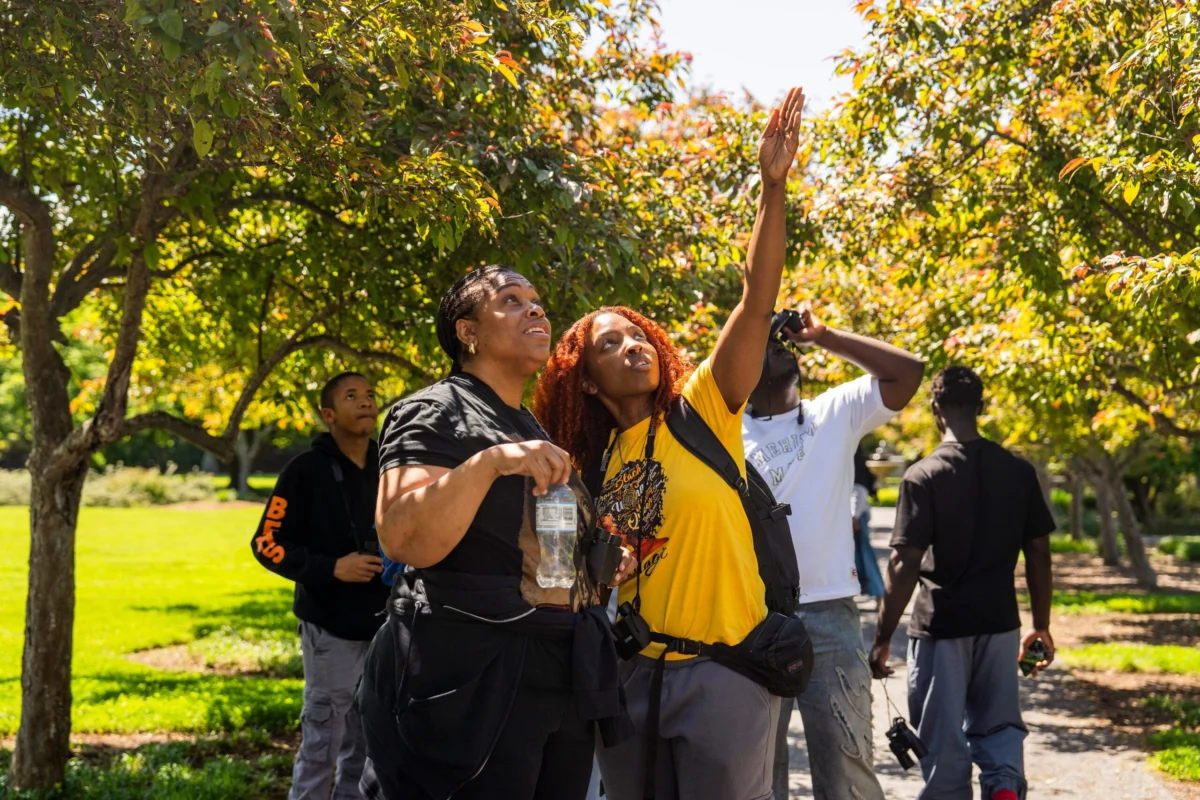
Data from the extensive community science initiative, Audubon’s Climate Watch, is providing unprecedented insights into how avian species are responding to a rapidly changing climate, identifying which birds are successfully adapting their ranges and which are critically lagging behind in the face of escalating environmental pressures. The profound chill of a February morning in Orangeburg, South Carolina, offered a poignant backdrop as Aiyana Uter, a dedicated member of Claflin University’s Audubon campus chapter, lifted her binoculars, her breath misting in the frigid air, eyes scanning the skeletal trees for the telltale flecks of blue that would signify an Eastern Bluebird. Alongside her peers, Uter meticulously listened for the familiar, soft warble, their group moving with practiced precision through preselected patches of landscape, dedicating five minutes at each location to record observations of Eastern Bluebirds and other species encountered. This dedicated fieldwork is a microcosm of a much larger, nationwide effort, with hundreds of such groups fanning out across the country each winter and summer, contributing vital ground-level data to Audubon’s Climate Watch, a pivotal community science initiative designed to track the intricate movements of birds as they navigate a planet undergoing profound climatic shifts.
The Genesis of Climate Watch: Predicting Avian Futures
The roots of Climate Watch extend back to Audubon’s foundational work in climate science. Recognizing the escalating threat posed by global warming, the organization embarked on a series of comprehensive studies to predict the future of North American birds. In 2014, and subsequently with an updated and more refined analysis in 2019, Audubon scientists published groundbreaking reports, most notably "Survival by Degrees," which meticulously analyzed how rising temperatures, altered precipitation patterns, and other cascading environmental changes could fundamentally reshape avian habitats across the continent. These predictive models projected that a staggering 389 North American bird species were vulnerable to climate threats, mapping out intricate scenarios of where birds might gain or lose critical ground under various global warming trajectories, including 1.5°C, 2.0°C, and 3.0°C warming above pre-industrial levels. The reports highlighted how specific climate variables, such as extreme heat days, heavy rainfall events, and prolonged droughts, would render vast areas either more or less suitable for different species’ unique ecological requirements.
However, these were, by their very nature, forecasts—sophisticated statistical predictions based on ecological niche modeling. To ascertain whether birds were truly moving into new territories or vanishing from historically robust populations, on-the-ground observations were indispensable. This critical gap between projection and reality became the impetus for Climate Watch. Launched in 2016, the program started modestly with just 75 participants focused on tracking bluebirds in four states. In the ensuing decade, it has burgeoned into a formidable network, mobilizing over 1,000 annual participants who diligently count 12 key species, including nuthatches, goldfinches, and towhees. Volunteers survey locations where these species have historically thrived, but crucially, also where they might be establishing new presences, or conversely, where they might be conspicuously absent. This dual approach of recording both presence and absence of "target species" provides invaluable empirical data to validate, refine, or challenge the initial climate models. Brooke Bateman, senior director of climate and community science at Audubon, underscores the unparalleled scale and scientific rigor of the initiative, stating, "Nobody has really done, at this scale, what we’re doing. The science is telling a story that we wouldn’t be able to do without these folks out there across the country." The meticulous collection of data by dedicated volunteers forms the bedrock of this large-scale ecological monitoring effort, bridging the gap between theoretical models and observed biological responses.
Community Science in Action: A Methodical Approach to Data Collection
The methodology of Climate Watch is designed for consistency and scientific validity, ensuring that data collected by diverse groups across varying landscapes can be reliably aggregated and analyzed. Volunteers, often organized through local Audubon chapters, universities, or community groups, are assigned specific survey routes within pre-determined grids. These routes typically consist of multiple points, or "stations," often spaced hundreds of meters apart, representing various habitat types within a localized area. At each station, participants like Aiyana Uter spend a fixed period, typically five minutes, observing and listening for target bird species within a defined radius. This standardized approach minimizes observer bias and allows for robust comparisons across different sites and survey periods.
Participants undergo training to accurately identify the 12 target species, which include both Eastern and Western Bluebirds, White-breasted, Red-breasted, and Brown-headed Nuthatches, American Goldfinches, Pine Siskins, Rufous-sided Towhees, and others. The selection of these species is deliberate, focusing on those identified in Audubon’s climate vulnerability reports as particularly sensitive to temperature shifts or those with distinct habitat requirements. Importantly, volunteers are instructed to record not just the presence of a target species, but also its absence, as this "null data" is equally critical for understanding range contractions and expansions. Data is typically submitted through user-friendly online platforms, which then feed into Audubon’s central database for analysis. This systematic approach, replicated across thousands of survey points each year, generates an unparalleled dataset on avian distributional changes, providing a clear, empirical signal of climate change’s impact on living systems. The growth of the program from a nascent effort in 2016 to a robust, nationwide network of over 1,000 participants counting 12 species underscores the power of community engagement in scientific research.
Validating Predictions: Early Findings and Nuances in Avian Response
The dedication of these community scientists has yielded compelling results. In 2020, the Climate Watch team published an initial study in the journal Ecological Applications, which confirmed that observed bird movements were, broadly speaking, aligning with Audubon’s climate predictions. The study provided early empirical validation that birds were indeed expanding their ranges into new areas as local climate conditions shifted. A notable example cited was the Brown-headed Nuthatch, a species historically confined to the pine forests of the southeastern United States, observed fanning out northwestward into previously unoccupied territories, consistent with models predicting a northward shift in suitable habitat.
Now, with a decade’s worth of accumulated data, the team is engaged in an updated, more comprehensive analysis that promises even deeper insights. Sarah Saunders, Audubon’s senior manager of quantitative science, notes, "We’re seeing even stronger validation of our climate projections than we did from the first paper. And we’re identifying which species are keeping pace with climate change and which are lagging behind." This refined analysis is revealing critical nuances in how different species respond to climate pressures, highlighting that avian adaptation is not a uniform process.
For instance, models predict that both Eastern and Western Bluebirds, species that depend on semi-open woodlands and groves for nesting and foraging, could be displaced from certain southern portions of their ranges as temperatures continue to climb. Simultaneously, new swaths of habitat to the north are projected to become more livable for them. The latest Climate Watch findings suggest a divergence in their responses: Western Bluebirds appear to be already relocating, exhibiting a more agile response to shifting conditions. In contrast, Eastern Bluebirds have been observed to be slower in shifting their winter habitats, a concerning trend that could leave them disproportionately exposed to climate threats as their traditional wintering grounds become less hospitable. This hesitancy to adapt their winter range could have profound implications for their survival and reproductive success, as wintering conditions heavily influence their physiological state heading into the breeding season.
Furthermore, the data indicates that nuthatches, despite showing some range expansion, appear hesitant to colonize entirely new forest types for the breeding season, even when climatic conditions within those new areas are predicted to be favorable. Saunders suggests that this reluctance points to other crucial habitat factors – such as specific tree species for foraging, availability of suitable nesting cavities, or the presence of preferred insect prey – that may be holding birds back from fully exploiting newly climatically suitable areas. This finding underscores that climate change impacts are rarely singular; they interact with existing ecological requirements and habitat availability, creating complex challenges for species. The ability to distinguish between climate-driven shifts and other limiting factors is a key strength of the Climate Watch data.
A Broader Scientific Lens: Birds as Climate Indicators
Audubon’s Climate Watch contributes significantly to a growing global body of scientific work that tracks species redistribution on a warming planet. Evolutionary biologist Ben Winger from the University of Michigan, though not directly involved with Climate Watch, highlights parallel phenomena observed in other avian populations. He notes, for example, that some mountain birds are quite literally running out of space as they seek cooler conditions at ever-higher elevations. As temperatures rise, the treeline or suitable habitat zones push upslope, shrinking the available area at the summit, eventually leaving nowhere for these specialized species to go.
Other recent studies, often leveraging vast datasets from initiatives like the Cornell Lab of Ornithology’s eBird, have consistently found that many North American bird populations have shifted their ranges northward over the past few decades. However, Winger and other researchers caution that even these observed shifts have frequently not been rapid or extensive enough to fully outrun the accelerating pace of global temperature increases. This concept, sometimes referred to as "climate velocity," refers to the speed and direction that isotherms (lines of equal temperature) are moving across the landscape. If species cannot move at least as fast as their preferred climate conditions, they face increasing stress and potential decline.
The broader ecological implications of these avian movements are profound. Birds serve as excellent bio-indicators, their sensitivity to environmental changes making them crucial barometers for ecosystem health. Shifts in bird distributions can signal cascading effects throughout food webs, impacting insect populations, plant dispersal (through seed consumption and distribution), and even predator-prey dynamics. The data from Climate Watch, alongside other continental-scale monitoring efforts, paints a sobering picture of ecological reorganization, underscoring the urgency of understanding and mitigating the impacts of climate change on biodiversity. It reinforces the scientific consensus articulated by the Intergovernmental Panel on Climate Change (IPCC) that species extinctions and ecosystem disruptions are accelerating.
Implications for Conservation and Policy
Ultimately, the rich trove of data generated by Climate Watch serves as an indispensable tool for informing and prioritizing conservation efforts. By identifying which bird species are struggling to adapt, scientists and conservationists can strategically allocate resources to habitats and species most in need of intervention. This might involve focusing on preserving or restoring critical "climate refugia" – areas that are projected to remain climatically stable for longer periods – or implementing targeted habitat management strategies in areas where vulnerable species are attempting to establish new ranges. For instance, knowing that Eastern Bluebirds are slow to shift winter habitats could prompt targeted conservation actions in their current wintering grounds to enhance resilience against warming, or efforts to establish new suitable habitats further north.
Communities themselves play a vital role in these localized conservation efforts. As Ben Winger suggests, birders and local conservation groups can actively facilitate adaptation, for example, by installing nest boxes to welcome bluebirds and other cavity-nesting species into new territories where suitable natural cavities might be lacking. This proactive, adaptive conservation approach is critical in a rapidly changing world. More broadly, Winger views birds as a powerful and accessible lens through which anyone can grasp the tangible realities of climate change reshaping local landscapes. Their movements and struggles offer a relatable, observable demonstration of a global phenomenon.
Audubon, leveraging this data, can advocate more effectively for climate-smart conservation policies, land-use planning that considers future avian distributions, and broader climate mitigation strategies. The findings provide concrete evidence to support calls for reducing greenhouse gas emissions and protecting intact ecosystems that offer greater resilience to climate impacts. The data also empowers local communities to engage with their elected officials, armed with local observations that reflect national trends.
The Human Element: Volunteers on the Front Lines of Discovery
Beyond its scientific output, Climate Watch profoundly impacts the individuals who participate, fostering a deeper connection to nature and a sense of purpose. Carrie Wild, who became involved through the Amos Butler Audubon Society in Indiana, articulates this sentiment powerfully: "I had the best time because it felt like I was a part of something bigger." Her love for nature and the profound experiences she gains from her fieldwork seamlessly integrate into her professional life as an artist. On one memorable bird survey, Wild encountered a Golden-crowned Kinglet for the very first time. Inspired by the fleeting beauty of the tiny bird, she captured its essence on paper in swirling, dreamy watercolors. This artistic expression often serves a further conservation purpose, with Wild frequently donating her original works to auctions that raise crucial funds for conservation initiatives. Her story exemplifies how community science can spark creativity and amplify individual contributions to environmental stewardship.
Similarly, Aiyana Uter, who leads Claflin University’s Audubon campus chapter, emphasizes the importance of making conservation accessible, particularly for young people. She believes it’s crucial for youth to understand that they can protect nature "without it being like, ‘You need to spend a million dollars.’" For Uter, participating in Climate Watch surveys and simply keeping a watchful eye on birds in her neighborhood are tangible, empowering, and highly accessible ways to contribute meaningfully to conservation. These personal narratives highlight the dual benefit of community science: it not only generates invaluable scientific data but also cultivates a generation of engaged, informed, and passionate environmental stewards.
The Path Forward: Continued Monitoring and Urgent Action
As the planet continues to warm, the insights gleaned from Audubon’s Climate Watch will only grow in importance. The initiative underscores the critical need for sustained, long-term data collection to track the dynamic responses of species to unprecedented environmental change. The ongoing analysis of a decade’s worth of data promises to refine our understanding of avian climate vulnerability and resilience, informing more effective and targeted conservation strategies.
The overarching message from the birds, relayed through the diligent efforts of thousands of community scientists, is clear: climate change is profoundly reshaping the natural world, and its impacts are accelerating. Birds, with their visible movements and specific habitat needs, serve as vital indicators of these changes. Their struggles highlight the urgent necessity for global climate action, from policy-level interventions to individual efforts to reduce carbon footprints and protect local habitats. The opportunity for individuals to have a direct scientific impact, as exemplified by Aiyana Uter and Carrie Wild, ensures that Climate Watch will continue to be a beacon of both scientific discovery and community empowerment in the ongoing effort to conserve biodiversity in a changing world. To support such vital work and receive the print magazine where stories like this, originally published in the Summer 2026 issue as "Hot on the Trail," are shared, individuals are encouraged to become members by making a donation today.
