
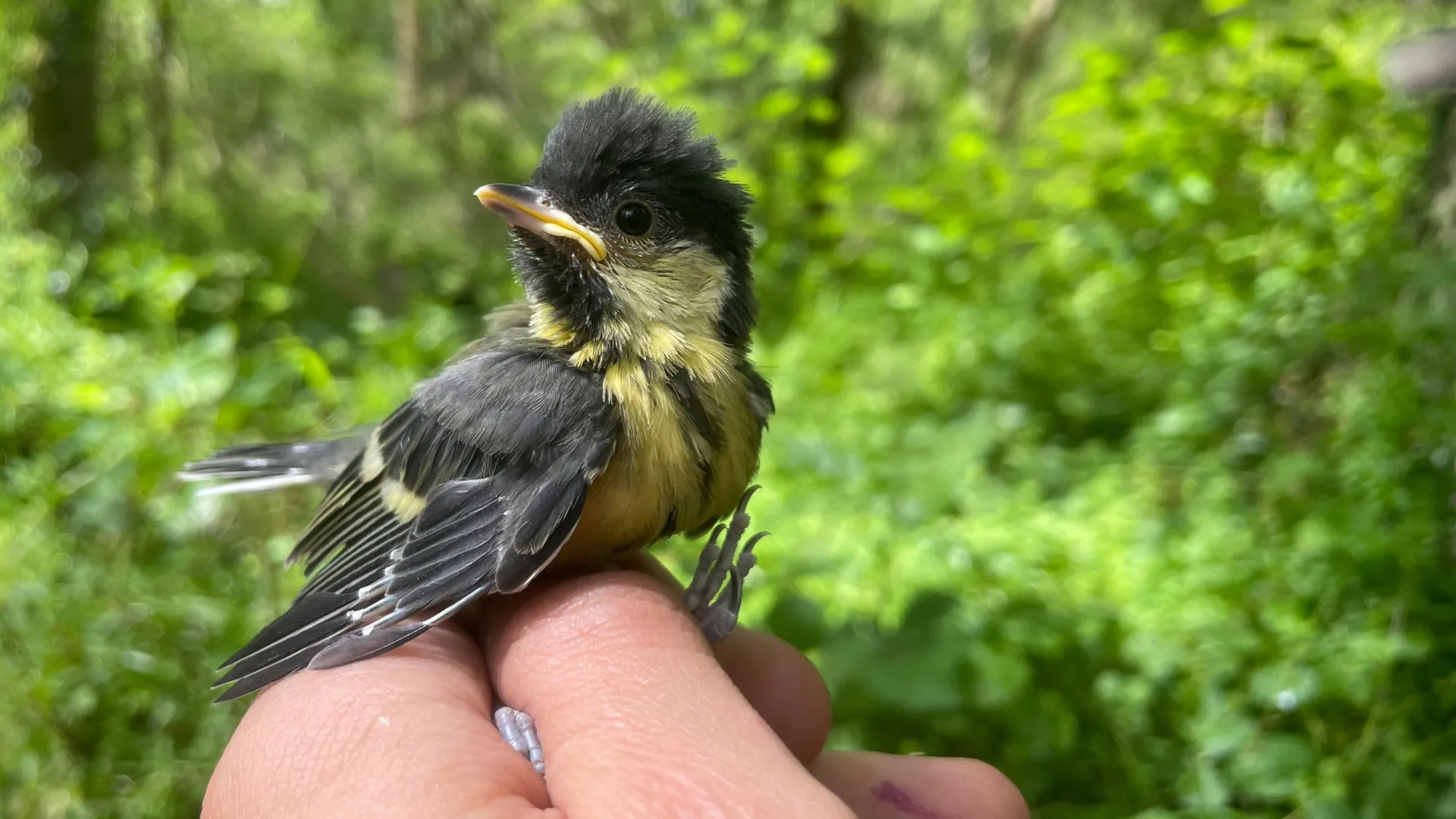
A groundbreaking study from the University of Oxford, published on March 11, has provided critical insights into how sudden cold spells and intense rainfall are impacting the survival and growth of young great tits in the UK. The research indicates that these increasingly frequent weather extremes can significantly slow development and reduce the survival chances of nestlings. However, a glimmer of resilience emerges from the data: birds that initiate their breeding cycle earlier in the season appear to be more insulated from many of the detrimental effects associated with these severe weather events. This comprehensive analysis, spanning six decades, underscores the complex and often counterintuitive ways climate change is reshaping the natural world.
Decades of Data Uncover Avian Vulnerabilities
The remarkable findings are rooted in an unusually extensive and meticulously compiled dataset. Scientists meticulously analyzed 60 years of records, encompassing detailed information on over 80,000 individual wild great tits ( Parus major) residing in Oxford’s renowned Wytham Woods. This unparalleled longitudinal study, which began in 1947, is one of the longest-running continuous studies of a wild bird population globally, offering an invaluable lens through which to observe ecological changes over generations. The avian data, meticulously collected through capture-recapture methods, nest box monitoring, and individual ringing, was then expertly cross-referenced with equally detailed daily weather records for the region. This meticulous pairing allowed researchers to precisely pinpoint the coldest, wettest, and hottest days within each breeding season. By doing so, they could measure the frequency and intensity of these extreme conditions during critical stages of chick development – from hatching to fledging – and quantify their influence on the body mass of nestlings as they left the nest. Fledging mass is a well-established and crucial predictor of a young bird’s subsequent survival into adulthood.
Wytham Woods itself, a diverse woodland estate owned by the University of Oxford, serves as an exceptional natural laboratory. Its long history of ecological research, particularly on great tits and other woodland birds, has made it a cornerstone for understanding population dynamics, evolutionary processes, and environmental responses. The great tit, a common and widespread passerine bird across Europe, is often considered an indicator species due to its sensitivity to environmental changes, its relatively short generation time, and its well-understood ecology. This makes long-term studies on its population dynamics particularly relevant for broader ecological inferences.
Cold and Rain: A Dual Threat to Nestling Survival
The study’s revelations paint a clear picture of the specific vulnerabilities faced by young great tits. It demonstrated that severe cold during the immediate post-hatching period – the first week of a chick’s life – poses a particularly acute threat. During this delicate stage, newly hatched chicks are altricial, meaning they are born featherless, blind, and entirely dependent on their parents for warmth and food. Their undeveloped thermoregulatory systems mean they cannot effectively regulate their own body temperature, making them highly susceptible to hypothermia in cold conditions.
As the chicks mature and develop some feathering, the nature of the weather threat shifts. While cold remains a concern, heavy rainfall emerges as the predominant danger. Intense precipitation can soak nestlings, leading to chilling, and can also directly hinder parental foraging efforts. The research quantified these impacts, showing that both severe cold and heavy rainfall can independently reduce the body mass of chicks at fledging by as much as 3%. This seemingly small reduction can have significant cascading effects on their ability to survive the challenging post-fledging period, find food, avoid predators, and eventually establish their own territories.
The findings also highlighted a compounding effect when multiple extreme conditions coincide. When intense heat occurs simultaneously with heavy rain, the impact on nestlings becomes far more severe. In such scenarios, fledging mass can plummet by up to 27%, a staggering reduction that drastically compromises survival prospects. This combined assault of heat and rain disproportionately affects broods that hatch later in the breeding season, suggesting a critical temporal window of vulnerability.
Lead researcher Devi Satarkar from the Department of Biology, University of Oxford, emphasized the complex interplay of these factors. "In the Wytham population, great tits have demonstrated a remarkable adaptive capacity, adjusting to warmer springs by breeding earlier to track the peak abundance of their main prey, caterpillars," Satarkar stated. "This overall earlier laying is proving beneficial, buffering them against many impacts of extreme weather. However, it also exposes them to cold spells early in the season, during that very vulnerable first week after hatching. Even small early-life deficits can have large implications for survival. It will only get tougher for birds to keep up as extreme weather increases in frequency and intensity with climate change."
Understanding the Mechanisms: Why Weather Hurts Baby Birds
The physiological and ecological mechanisms underpinning these observed impacts are multifaceted. For newly hatched chicks, the inability to thermoregulate effectively is a primary concern. Lacking insulating feathers, they must rely heavily on their parents for brooding and huddle together to conserve heat. During cold spells, a significant portion of their metabolic energy, which would otherwise be directed towards growth and development, is instead diverted to simply maintaining a stable body temperature. This energy deficit directly translates to slower growth rates and reduced body mass.
Beyond direct physiological stress, bad weather severely compromises the food supply. Both extreme cold and heavy rain can dramatically limit how often parent birds can leave the nest to forage for food. Foraging efficiency declines as parents spend more time sheltering or brooding chicks, and the visibility of prey may be reduced. Simultaneously, heavy rainfall can physically dislodge caterpillars – the primary, energy-rich food source for growing great tit chicks – from plants, making them harder to find and reducing their overall availability. This dual impact of reduced parental foraging effort and diminished prey availability creates a severe nutritional bottleneck for rapidly growing chicks, whose energy demands are exceptionally high during this developmental phase. A typical great tit brood can consist of 6-12 chicks, all requiring constant feeding, sometimes up to hundreds of times a day.
The Nuance of Warmth: Mild Heat Can Be Beneficial
Amidst the detrimental effects of cold and rain, the study uncovered an unexpected, nuanced finding regarding warmer extremes. Contrary to the common association of high temperatures with heat stress, the research indicated that warmer periods in Oxfordshire were linked to heavier fledging weights during the nestling stage. This seemingly counterintuitive result can be attributed to the specific conditions observed in the study region. The warmer periods in Oxfordshire appear to be relatively mild compared to the scorching, life-threatening heat extremes experienced in more southerly regions, such as the Mediterranean basin.
Devi Satarkar elaborated on this distinction: "Extreme weather events are affecting wild bird populations in complex ways. The level of warmth we see in these heat extremes in Oxfordshire might actually boost growth because it can increase insect activity and visibility – making caterpillars easier to find – while letting parents forage more efficiently and reducing nestlings’ thermoregulatory costs. The high water content in caterpillars also helps against dehydration. This contrasts sharply with hotter regions like the Mediterranean, where similar events can exceed 35°C and harm nestlings by causing severe dehydration, heat stroke, and reduced foraging due to extreme conditions." In regions like the Mediterranean, temperatures frequently surpass critical thresholds for avian physiology, leading to direct mortality and reproductive failure. The British climate, even during "warm extremes," generally remains within a range that can be advantageous for insect life and, consequently, insectivorous birds.
The Adaptive Strategy of Early Breeding and Its Limits
One of the most significant insights from the Oxford study is the observed adaptive shift in breeding phenology. Over the decades, great tits in Wytham Woods have increasingly begun their breeding season earlier in the spring. This strategy is primarily driven by an evolutionary imperative to synchronize hatching with the peak abundance of caterpillars, a crucial food source for their young. Caterpillars, in turn, are influenced by rising spring temperatures, emerging earlier as the climate warms. This phenomenon is known as "phenological matching" or "trophic matching," where the timing of a predator’s reproduction aligns with the peak availability of its prey.
The study confirms that this earlier breeding strategy largely benefits broods, particularly by allowing them to capitalize on occasional warm spells when caterpillars are abundant and temperatures remain within safe, even beneficial, limits. These early broods often experience more stable conditions, leading to better growth and higher fledging weights.
However, the benefits of early breeding are not absolute. Birds that breed later in the season face significantly tougher conditions. Their fledglings were found to be approximately one-third lighter than their early-hatching counterparts, even when experiencing similar ambient temperatures around 16-17°C during their warmest days. This disparity highlights the "mismatch" problem: even if temperatures are similar, later-hatched broods may face declining caterpillar availability as the season progresses, or be more susceptible to the compounded effects of later-season heavy rains and heat.
Over the longer term, the cumulative effects of extreme cold and rainfall were found to slightly reduce the overall odds of young birds surviving to adulthood. Conversely, the observed warm extremes, within the Oxfordshire context, occasionally imparted small positive effects on survival. Crucially, the overarching pattern reveals that breeding earlier within a season acts as a significant buffer, shielding many birds from the worst consequences of unpredictable and intensifying weather extremes.
Broader Ecological Implications and the Challenge of Climate Change
This research contributes significantly to the growing body of evidence demonstrating the profound and often complex impacts of climate change on wildlife. The great tit study in Wytham Woods serves as a powerful microcosm for understanding broader ecological challenges. As global temperatures continue to rise, the frequency and intensity of extreme weather events – including cold snaps, heatwaves, and heavy precipitation – are projected to increase. This will place immense pressure on species to adapt, and those unable to keep pace with rapid environmental shifts face declines or even extinction.
The concept of "phenological mismatch" is central to these concerns. If the timing of key life cycle events, such as breeding or migration, becomes uncoupled from the availability of crucial resources due to differing responses to climate change, it can lead to severe population declines. While great tits have shown some adaptive capacity by shifting their breeding earlier, there are limits to such plasticity. Furthermore, the vulnerability to early-season cold spells, even with an overall earlier breeding schedule, indicates the inherent risks and trade-offs in adapting to a rapidly changing climate.
Conservation Strategies and Future Research Directions
The findings from this long-term study offer valuable guidance for conservation strategies aimed at protecting vulnerable wildlife populations in a changing climate. Scientists emphasize the increasing importance of monitoring small-scale environmental conditions, often referred to as microclimates, and understanding habitat differences within broader landscapes. These localized conditions can significantly buffer or exacerbate the impacts of extreme weather. For instance, the placement of nest boxes in areas with better shelter or access to specific food sources could potentially mitigate some of the negative effects on chicks. Similarly, woodland management practices that promote diverse plant communities and provide varied microhabitats could enhance resilience.
"This type of research is crucial for guiding targeted conservation strategies," states Satarkar. "Understanding the specific vulnerabilities at critical developmental stages allows us to implement more effective measures, whether it’s optimizing nestbox placement for better insulation or managing woodland to ensure a continuous supply of key prey items, even during challenging weather."
Researchers plan to continue their monitoring of the great tit population in Wytham Woods, recognizing the indispensable value of sustained, long-term ecological studies. A key question for future research revolves around the trajectory of current "moderate" heatwaves. As global temperatures continue their upward trend, will the beneficial warmth observed in Oxfordshire’s current extreme heat events eventually cross a critical threshold, transforming into genuinely harmful conditions for nestlings, akin to those seen in hotter regions? The answer to this and similar questions will be vital for predicting the long-term viability of avian populations and developing proactive conservation responses in the face of an ever-changing climate. The 60-year great tit study provides not just a historical record, but a living, evolving barometer of our planet’s health, offering crucial lessons for biodiversity preservation in the Anthropocene.
