
The Congressional Research Service (CRS) has recently published a comprehensive report, R48928, providing an in-depth analysis of the pressing challenges facing the Great Salt Lake and outlining a spectrum of potential federal policy interventions. This release significantly amplifies the growing national discourse surrounding the ecological and economic health of this vital saline lake, drawing further attention to its critical habitat for both human communities and diverse avian populations. The report’s findings arrive at a pivotal moment, coinciding with President Biden’s Fiscal Year 2027 Budget request, which proposes an ambitious $1 billion for a dedicated federal restoration program at the lake. Organizations like Audubon, a long-standing advocate and leader in Great Salt Lake conservation, have expressed readiness to collaborate with federal, state, and local partners to forge durable, effective solutions. The insights offered by the CRS report are anticipated to be instrumental in transforming these proposed solutions and the necessary resources into tangible reality.
The Great Salt Lake: A Keystone Ecosystem Under Threat
The Great Salt Lake, distinguished as the largest saline lake in the Western Hemisphere, represents an ecological marvel and an economic powerhouse. Each year, it provides indispensable habitat for over 12 million migratory waterbirds, including iconic species like the Wilson’s Phalarope and Eared Grebe, which are uniquely reliant on its hypersaline waters for critical stages of their life cycles and migratory journeys across the Americas. Beyond its ecological significance, the lake contributes an estimated $1.9 billion annually to Utah’s economy, underpinning more than 7,700 jobs across various sectors, from mineral extraction to tourism and the globally significant brine shrimp aquaculture industry.
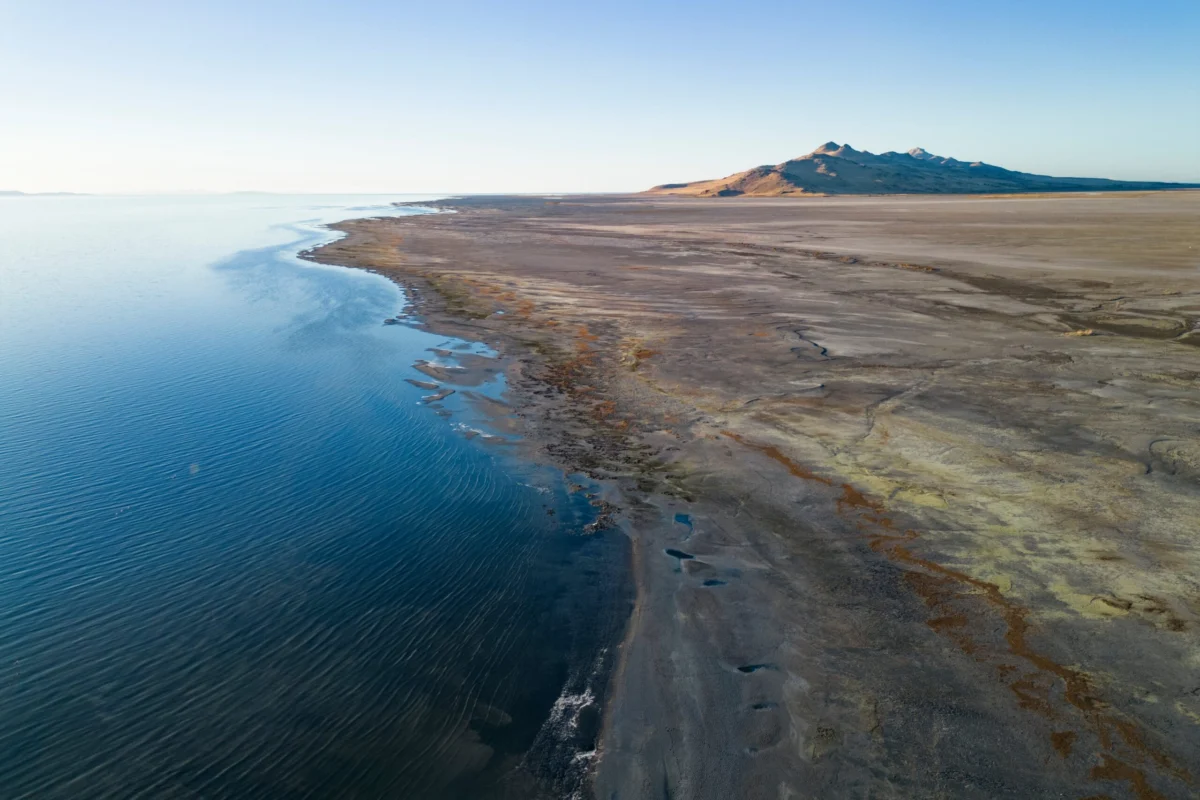
However, this irreplaceable natural asset has been in a perilous state of decline for years. Water levels at the Great Salt Lake plummeted to a historic low in 2022, shrinking its surface area and exposing vast expanses of lakebed. This environmental crisis has profound implications, not only for the lake’s delicate ecosystem and its avian inhabitants but also for regional air quality, as prevailing winds whip up dust laden with heavy metals and toxic chemicals from the exposed sediments, posing significant public health risks to the densely populated Wasatch Front. The lake’s importance extends beyond state and national borders; it is recognized as a site within the Western Hemisphere Shorebird Reserve Network (WHSRN), underscoring its hemispheric significance for migratory birds. Audubon and other conservation entities have consistently emphasized that addressing these multifaceted water challenges demands a concerted, collective action, substantial resources, and robust partnerships involving the state of Utah, federal agencies, and local communities to ensure the sustained thriving of people, birds, and wildlife.
Chronology of Decline and Emerging Responses
The current crisis at the Great Salt Lake is the culmination of decades of water diversion, exacerbated by prolonged drought conditions attributed to climate change. For over 150 years, an estimated 70-80% of the water that would naturally flow into the lake has been diverted for agricultural, municipal, and industrial uses. This systemic over-allocation, coupled with increasing temperatures and reduced snowpack in the surrounding mountains, has progressively diminished the lake’s volume.
The alarm bells grew louder in the early 2000s, with a noticeable acceleration in water level drops. By the summer of 2022, the lake had receded to its lowest recorded level since measurements began in 1847, reaching an average daily surface elevation of 4,188.5 feet above sea level. This dire situation galvanized a more urgent response from state and federal stakeholders.
State-Led Initiatives: Laying the Groundwork for Restoration
The CRS report commendably highlights the proactive measures and commitments undertaken by the state of Utah, which have been crucial in initiating the restoration effort. A significant milestone was the recent commitment from a broad coalition of Utah state and federal leaders, business executives, philanthropists, and conservation organizations to safeguard the lake for future generations through the Great Salt Lake 2034 Charter. This charter signifies a unified vision and a shared commitment to achieving specific restoration goals.
Utah’s commitment is further evidenced by several key initiatives. The Great Salt Lake Strategic Plan and the Great Salt Lake Basin Integrated Plan provide comprehensive frameworks for managing water resources and guiding restoration activities. Central to these efforts is the Great Salt Lake Watershed Enhancement Trust, established through a substantial $40 million allocation from the state. Audubon, in partnership with The Nature Conservancy, plays a leading role in the Trust, exemplifying how state-led, collaborative programs are making tangible progress in the face of persistent drought and intensifying water stress. The Trust actively acquires and holds water rights, implements water conservation projects, and leases water to increase flows into the lake, demonstrating innovative approaches to water management. For instance, the Trust has successfully secured and increased water flows into the lake by working with agricultural users and other stakeholders to implement temporary or multi-year voluntary reductions in water diversion, channeling these critical resources back into the lake system.
Federal Engagement: A Patchwork of Support, A Call for Centralization
While the federal government has historically been indirectly involved in Great Salt Lake restoration, the CRS report underscores the absence of a dedicated, large-scale federal program akin to those established for other significant aquatic ecosystems across the United States. Nevertheless, multiple federal agencies contribute through various programs and activities. These include the Bureau of Reclamation (Reclamation), the U.S. Fish and Wildlife Service (FWS), the U.S. Geological Survey (USGS), the Environmental Protection Agency (EPA), and the Army Corps of Engineers.
A notable recent development in federal support occurred in December 2024, when Reclamation announced a $50 million investment for drought mitigation in the Great Salt Lake Basin. This funding is earmarked for ecosystem restoration projects around the lake, signaling a heightened federal recognition of the crisis. Audubon has consistently advocated for robust federal programs that provide essential funding and resources for watershed restoration. The CRS report draws parallels with successful federal-state partnerships such as the Great Lakes Restoration Initiative and the Chesapeake Bay Program, both housed within the EPA, which channel significant funding to a diverse array of monitoring, restoration, and voluntary conservation programs. Similarly, the Comprehensive Everglades Restoration Plan represents a unique federal-state partnership undertaking large-scale ecosystem restoration. These models demonstrate that combining sustained federal funding and leadership with localized state and community insights and support is a proven formula for successful, long-term protection and restoration of critical water resources nationwide.
The Indispensable Role of Science and Monitoring
A recurring theme in the CRS report is the paramount importance of robust scientific research and continuous monitoring to deepen our understanding of water level fluctuations, salinity changes, and broader ecosystem dynamics. The USGS has been at the forefront of these efforts through its Saline Lakes Program, authorized by Congress in 2022. While not exclusively focused on the Great Salt Lake, this program is mandated to assess and monitor the hydrology of saline lakes across the Western United States, including the Great Salt Lake, and the migratory birds and other wildlife dependent on these unique habitats.
This USGS program has been instrumental in supporting critical scientific research and monitoring activities essential for addressing the lake’s complex challenges related to water availability and salinity levels. Saline lakes and their associated wetlands form an interconnected network of habitats vital for shorebirds and waterbirds; consequently, the health of the Great Salt Lake has significant implications for the resilience and integrity of this entire network. The scientific insights generated by the USGS program, complemented by extensive research and monitoring conducted by the state of Utah and its partners, are fundamental for developing and implementing effective, adaptive conservation strategies for the Great Salt Lake. This includes data collection on water inflows, evaporation rates, sediment composition, and the ecological responses of brine shrimp, brine flies, and avian populations to varying conditions.
Policy Opportunities for Congressional Action
The CRS report meticulously identifies several critical areas where Congress can provide further assistance and leadership. These include addressing the persistent challenge of insufficient water flows to the lake, mitigating air quality and public health concerns stemming from the exposed lakebed, and crucially, establishing a dedicated federal restoration initiative with consistent public funding.
As previously noted, the Great Salt Lake Watershed Enhancement Trust, with Audubon’s involvement, has already demonstrated success in securing and increasing water flows into the lake through innovative mechanisms. Building on this, the CRS report specifically suggests that Congress could "direct Reclamation to continue or expand its existing efforts to compensate users for temporary or multiyear voluntary reductions in water diversion or consumptive water use" and provide targeted appropriations to dedicate more water specifically to the lake. This implies exploring and supporting water banking, water leasing programs, and potentially, voluntary fallowing agreements to reallocate water to environmental needs.
Beyond water quantity, the report also addresses the burgeoning public health crisis posed by dust storms. As the lake recedes, the exposed lakebed releases fine particulate matter (PM2.5) contaminated with arsenic, lead, and other heavy metals accumulated over decades. These toxic dust events severely degrade air quality along the Wasatch Front, increasing the risk of respiratory illnesses, cardiovascular disease, and other health issues for millions of residents. Congress could facilitate inter-agency coordination (e.g., EPA, CDC, USGS) to enhance monitoring, research the long-term health impacts, and fund mitigation strategies such as dust suppression techniques or targeted land management.
Furthermore, the report emphasizes the need for a cohesive federal strategy. While various agencies contribute, a unified federal restoration initiative would provide a clear mandate, streamlined funding, and better coordination across disparate efforts. This could involve creating a Great Salt Lake Restoration Act, establishing an inter-agency task force, or designating the lake as a National Priority Area for ecosystem restoration. Such an initiative would ensure a sustained, long-term commitment commensurate with the scale of the challenge, allowing for multi-year planning and implementation of complex engineering, ecological, and policy solutions.
Broader Implications and the Path Forward
The research and insights presented by the CRS report arrive at a critical juncture, highlighting an immediate and unparalleled opportunity to consolidate and amplify the diverse efforts currently underway across federal, state, tribal, local, and partner entities within the Great Salt Lake Basin. This collective momentum can be channeled into better coordination, strategic investment, and collaborative action to implement vital restoration activities and effectively reverse the lake’s alarming decline.
The implications of inaction are dire, extending far beyond the immediate ecosystem. The potential collapse of the Great Salt Lake’s unique ecosystem would represent a catastrophic loss of biodiversity, impacting not only North American migratory bird populations but also global aquaculture markets dependent on its brine shrimp. Economically, the loss of tourism, mineral extraction, and the brine shrimp industry would devastate Utah’s economy. Socially, the degradation of air quality and the loss of recreational opportunities would diminish the quality of life for millions.
Conversely, the success of restoration efforts at the Great Salt Lake could establish a crucial precedent for water management and ecosystem recovery in other arid and semi-arid regions grappling with similar water scarcity issues driven by climate change and population growth. Audubon, alongside a growing chorus of stakeholders, is encouraged by the report’s insights and the renewed focus it brings to this urgent environmental crisis. The time for sustained, coordinated, and well-funded action is now, to ensure that the Great Salt Lake, a natural wonder and an economic engine, continues to thrive for generations to come.
