
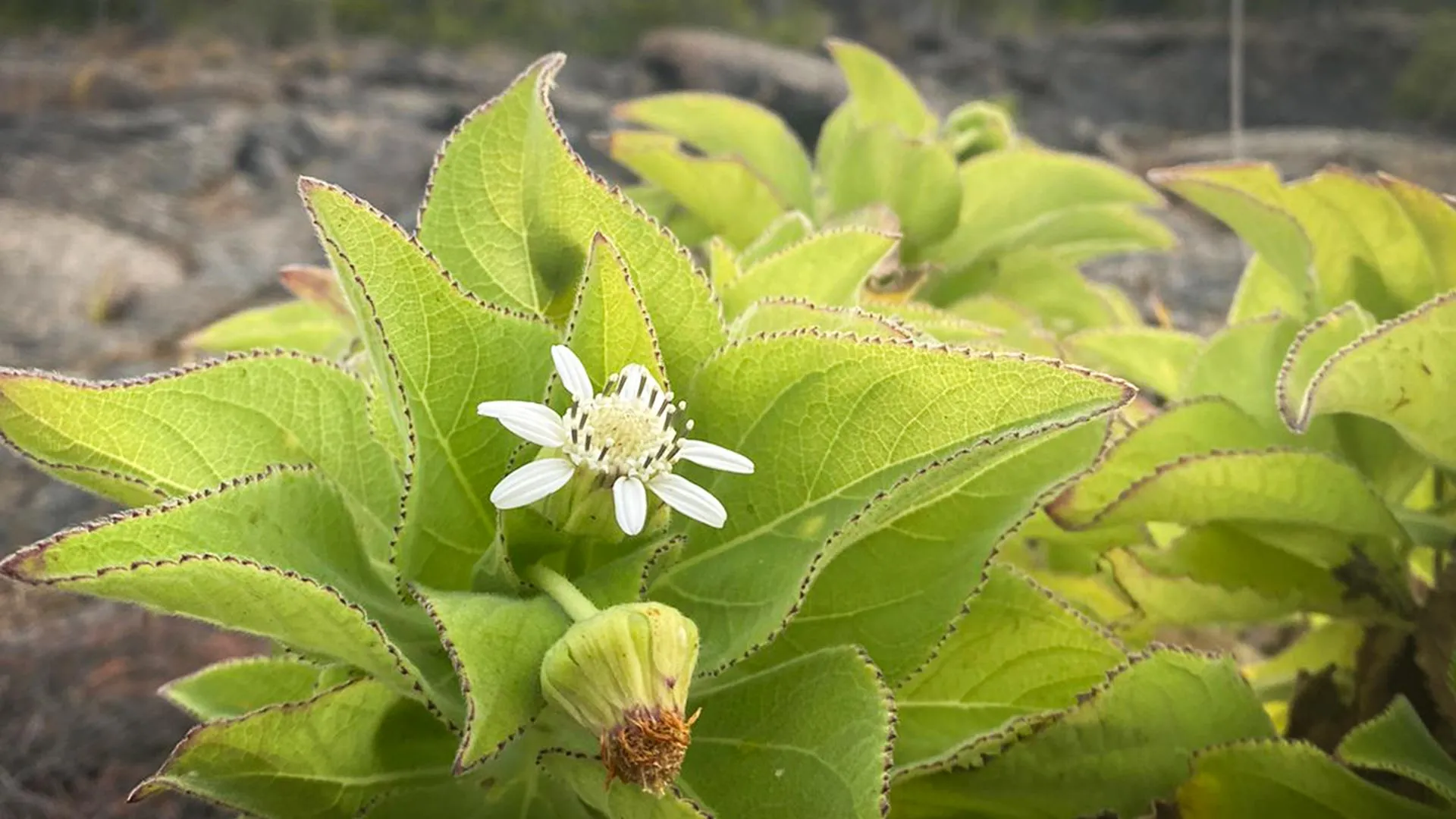
Nearly two centuries after Charles Darwin first stepped ashore on the Galapagos Islands, the volcanic archipelago continues to serve as a premier living laboratory for evolutionary biology. While Darwin’s legacy has long been inextricably linked to the finches and mockingbirds he collected during his 1835 voyage aboard the HMS Beagle, the islands’ unique flora is now offering fresh insights into the fundamental mechanisms of life on Earth. A comprehensive international study published in the journal Nature Communications has shed light on the rapid evolution of Scalesia—a genus of endemic plants commonly known as the Galapagos giant daisies. By sequencing the complete genomes of every known Scalesia species, researchers have uncovered striking details about parallel evolution, genetic networks, and ongoing speciation that may fundamentally alter how conservationists protect the fragile island ecosystems.
The research effort was spearheaded by an extensive global consortium of scientists representing the Norwegian University of Science and Technology’s (NTNU) University Museum, the Royal Botanic Gardens, Kew, the University of California, Davis, the University of Copenhagen, the Charles Darwin Foundation, the University of Georgia, the University of British Columbia, and several other collaborating institutions. According to the research team, the botanical wonders of the Galapagos are proving just as dynamic and revealing as the fauna that initially inspired Darwin’s revolutionary theories.
Historical Context and Botanical Beginnings
The story of scientific discovery in the Galapagos began in September 1835, when the HMS Beagle, commanded by Captain Robert FitzRoy, dropped anchor at the remote Pacific archipelago. Charles Darwin, then a young naturalist, spent five weeks exploring several of the islands, observing their distinctive geology and biological inhabitants. Among his myriad activities, Darwin systematically collected birds, reptiles, insects, and plants.
While his avian specimens—mistakenly categorized initially as a mix of sparrows, woodpeckers, and finches—later became the cornerstone of his theory of evolution by natural selection, his botanical collections were equally significant. Among the plants Darwin gathered were specimens that would later be used to describe species entirely new to science, including four distinct species of Scalesia.
For decades, the evolutionary mechanics driving the diversification of island species remained largely observational. Darwin’s theory, formally published in 1859 in On the Origin of Species, posited that populations gradually change over generations as individuals possessing traits better suited to their environmental pressures survive and successfully reproduce. In the Galapagos, this process—known scientifically as adaptive radiation—occurred on a grand scale, as single ancestral colonizers from the South American mainland rapidly diversified to fill empty ecological niches, ranging from arid coastal lowlands to lush, misty highland forests.
Genomic Analysis of Scalesia
To understand the genetic underpinnings of this rapid diversification, the modern research team turned to advanced DNA sequencing technologies. They analyzed the complete genomes of every recognized species within the Scalesia genus. Scalesia is a relatively young and exceptionally versatile plant group; every living species today has emerged within the past one million years.
Despite this remarkably brief evolutionary window, the genus has exploded into a diverse array of physical forms. "Just like Darwin’s famous finches, these plants evolved rapidly after arriving on the Galapagos from mainland South America," explained Dr. Vanessa Bieker, a researcher at the Royal Botanic Gardens, Kew, and lead author of the newly published study.
The physical diversity within Scalesia is striking. Depending on the species and its specific microhabitat, a Scalesia plant can manifest as a low-lying shrub or tower over the landscape as a substantial tree. The most visually arresting variation occurs in their foliage. Leaf structures range from large, smooth, and entire edges to small, deeply lobed configurations with intricate, serrated margins.
Scientists have long hypothesized that these deeply lobed leaves serve a crucial adaptive function in the harsh Galapagos climate. By reducing surface area and increasing convective heat loss, complex leaf shapes help plants mitigate thermal stress and minimize water loss in hot, dry environments. Until this latest genomic investigation, however, the precise genetic changes responsible for producing these parallel physical adaptations remained a mystery.
Unraveling Parallel Evolution Through Genetic Networks
The genomic data revealed a fascinating twist in how evolution solves environmental challenges. The researchers discovered that deeply lobed leaves evolved independently on multiple occasions across entirely separate branches of the Scalesia family tree. This phenomenon, known as parallel evolution, occurs when distinct lineages independently arrive at similar functional solutions to comparable environmental pressures.
What caught the scientific team completely off guard, however, was the underlying genetic mechanism driving this parallelism. "Even more surprising was that each time this trait evolved, it did so through different genes—even though all of them belong to the same biological system controlling leaf development," Dr. Bieker noted.
Rather than relying on a single, conserved "master gene" to dictate leaf shape across all species, evolution appeared to operate by modulating an interconnected network of genes. By tweaking different components within this broader regulatory framework, nature managed to arrive at the same physical outcome through entirely distinct genetic pathways.
Professor Michael D. Martin of the NTNU University Museum emphasized the broader significance of these findings. "More than 150 years after Darwin’s work on the Galapagos transformed our understanding of life on Earth, these islands continue to reveal new biology," Martin stated. He added that the discovery offers unprecedented clarity into how complex morphological traits can repeatedly emerge in unrelated populations or divergent branches of an evolutionary tree, demonstrating the inherent flexibility and creative capacity of evolutionary processes.
Implications for Active Speciation and Ongoing Evolution
Beyond decoding past adaptations, the genomic analysis provides compelling evidence that the evolutionary narrative of Scalesia is far from complete. The genetic data indicate that new species are actively forming across the archipelago today.
Many existing Scalesia populations exhibit profound genetic divergence and have remained geographically isolated from one another for extended periods. Because these isolated groups are accumulating distinct mutations and following separate evolutionary trajectories, scientists believe many currently unrecognized lineages are well on their way to becoming fully distinct species.
"Populations within the same species show large genetic differences and have been isolated from one another for long periods. This means new species may be in the process of forming," Professor Martin explained. "Many Scalesia populations may represent distinct evolutionary lineages that have not yet been formally described."
This ongoing, dynamic speciation carries profound practical consequences for conservation management. Traditional conservation frameworks often categorize species based on broad, visible taxonomic classifications. However, the revelation that isolated Scalesia populations represent unique evolutionary experiments suggests that a standardized approach may fail to protect the true breadth of biodiversity in the Galapagos.
Strategic Shifts in Conservation Management
The research team argues that the genetic reality of Scalesia necessitates a significant pivot in how environmental authorities manage the islands’ flora. Instead of treating widespread species as uniform entities, conservationists should evaluate and manage each isolated population as an independent conservation unit.
Protecting these individual lineages ensures that the full spectrum of genetic diversity—and the ongoing evolutionary processes driving adaptive radiation—remains intact. As climate change and human pressures continue to threaten island ecosystems worldwide, preserving the mechanisms of evolutionary flexibility becomes paramount.
The insights gained from the giant daisies of the Galapagos extend far beyond botany. By illuminating how complex genetic networks can achieve parallel outcomes through varied pathways, the study enriches our fundamental understanding of biodiversity. Nearly two centuries after Charles Darwin first collected plant specimens on these remote volcanic shores, the Galapagos Islands continue to challenge, refine, and expand our comprehension of the natural world.
