

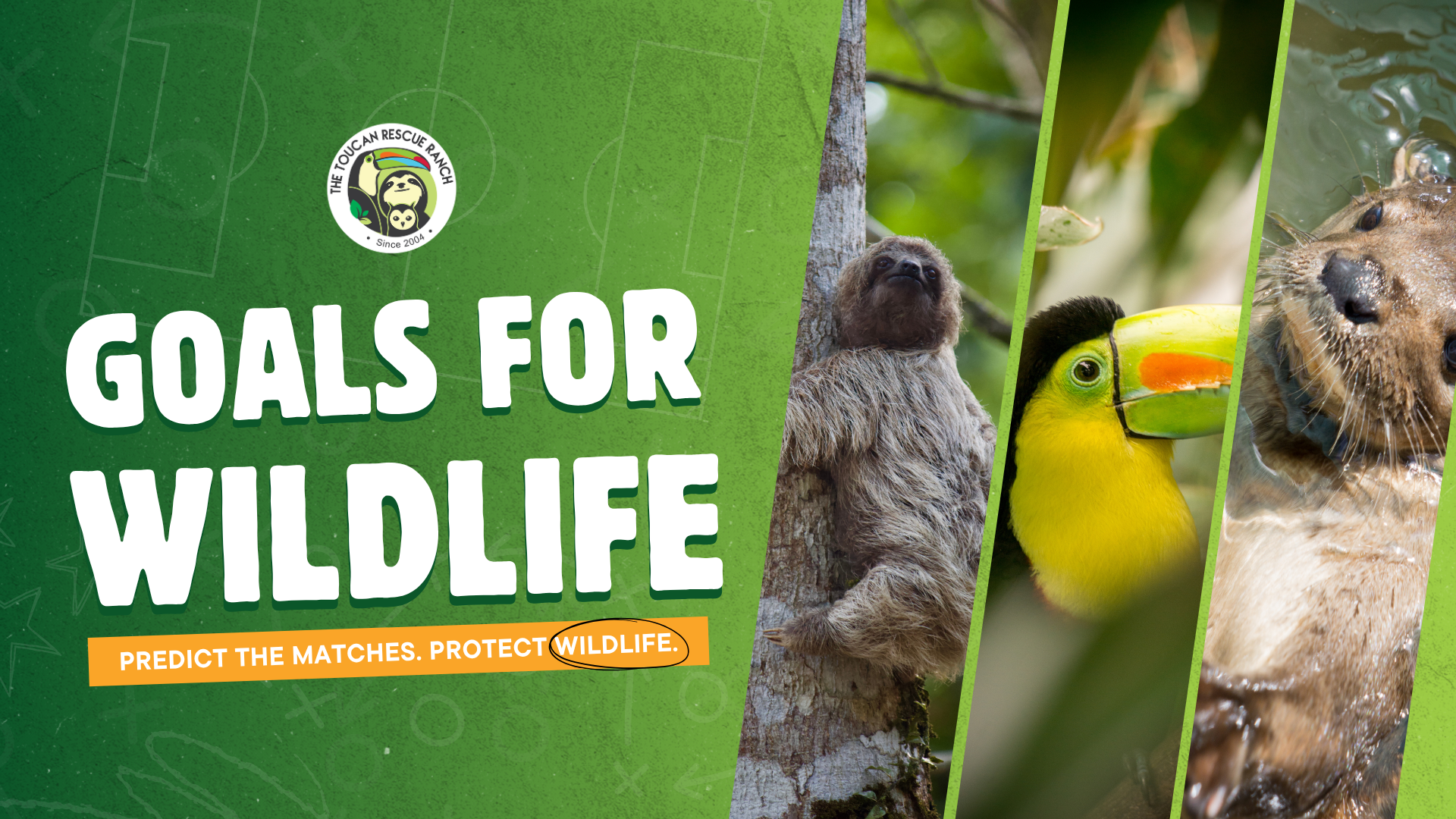
In an innovative merger of international sports enthusiasm and ecological stewardship, the Toucan Rescue Ranch (TRR) has launched its "Goals for Wildlife" campaign, a strategic initiative designed to leverage the global excitement of the World Cup to fund critical conservation efforts in Costa Rica. Although the Costa Rican national football team is not participating in the current tournament cycle, the organization is positioning its resident wildlife as the primary "team" in need of public support. This campaign represents a growing trend in the non-profit sector toward gamification—the use of game-design elements in non-game contexts—to drive engagement and diversify revenue streams for environmental protection.
The initiative functions as a multi-tiered engagement platform where participants can translate their football knowledge into tangible support for injured and orphaned animals. By integrating match predictions with a donation-based entry system, the Toucan Rescue Ranch aims to secure the financial resources necessary for its high-cost medical and rehabilitative operations. The campaign emphasizes that while the football matches are a matter of sporting pride, the daily "matches" played out at the rescue center are a matter of biological survival.
Strategic Framework of the Goals for Wildlife Campaign
The operational structure of the "Goals for Wildlife" initiative is designed to maximize both participant retention and fundraising efficiency. The process is divided into three distinct phases, beginning with a mandatory entry donation through the organization’s official campaign portal. This initial contribution serves as the "ticket" to the competition, ensuring that every participant provides immediate financial utility to the ranch’s mission.
Once registered, participants are randomly assigned to one of six wildlife teams. These teams represent the diverse fauna found within the Costa Rican rainforests, ranging from iconic sloths and toucans to lesser-known but equally vital species such as coatis or various raptors. This random assignment is a strategic choice intended to educate donors on a broader spectrum of species, rather than allowing a concentration of support only on "charismatic megafauna."
The third phase involves the active prediction of match results throughout the duration of the World Cup tournament. Participants submit prediction forms for upcoming fixtures, earning points based on the accuracy of their forecasts. This mechanism ensures consistent interaction with the TRR brand over several weeks, fostering a deeper connection between the donor and the conservation cause.
The Financials of Conservation: Where Donations are Allocated
The "Goals for Wildlife" campaign is launched against a backdrop of rising costs in the field of wildlife rehabilitation. Toucan Rescue Ranch operates as a specialized facility that provides emergency veterinary treatment, long-term care, and eventual release programs. The funds generated through this campaign are earmarked for several critical areas of operation.
First, emergency veterinary care remains the highest overhead for the organization. Animals arriving at the ranch often suffer from complex injuries including electrocution from uninsulated power lines, vehicle strikes, and trauma resulting from the illegal pet trade. Modern veterinary medicine for exotic species requires specialized diagnostic equipment, such as digital X-ray machines and endoscopy tools, as well as expensive anesthesia and pharmaceuticals.
Second, specialized nutrition is a vital component of the rehabilitation process. Each species requires a diet that mimics its natural intake in the wild to ensure proper development and health. For orphaned sloths, this includes specific goat milk formulas and a variety of native leaves, while for rescued toucans, it involves a precise balance of low-iron fruits and proteins. The logistical challenge of sourcing and preparing these diets daily represents a significant recurring expense that the campaign helps to mitigate.
Finally, the campaign supports habitat enrichment and release preparation. Before an animal can be returned to the wild, it must demonstrate the ability to forage, navigate its environment, and avoid predators. TRR utilizes "pre-release" enclosures that provide a semi-wild environment where biologists can monitor an animal’s readiness for independence. The maintenance of these large-scale enclosures is essential for ensuring that "graduates" of the program have the highest possible chance of survival in the wild.
Contextual Background: The State of Costa Rican Biodiversity
Costa Rica is home to nearly 5% of the world’s biodiversity, despite occupying only 0.03% of the earth’s surface. This density of life makes the region a global priority for conservationists. However, the country’s wildlife faces increasing pressure from human encroachment and infrastructure development. Toucan Rescue Ranch, founded in 2004, has evolved from a small rescue center for birds into a world-class facility handling a wide array of mammals and reptiles.
The "Goals for Wildlife" campaign serves as a public awareness tool to highlight these pressures. By framing conservation as a "team effort," the organization mirrors the collaborative nature of biological ecosystems. Just as a football team requires a goalkeeper, defenders, and strikers to succeed, an ecosystem requires a balance of predators, pollinators, and seed dispersers to remain healthy. The campaign’s messaging reinforces the idea that the loss of a single species can weaken the entire "team" of the rainforest.
Gamification and Public Engagement in the Non-Profit Sector
The decision to link wildlife rescue with World Cup predictions is a calculated move to tap into "event-based giving." Market analysis of the non-profit sector suggests that donors are increasingly looking for interactive ways to contribute. Traditional "silent" donations are being supplemented by peer-to-peer fundraising and competitive challenges.
"Goals for Wildlife" utilizes a leaderboard system to track the progress of the six wildlife teams. Points are accrued through a combination of accurate match predictions and direct donations. This dual-scoring system ensures that even those who may not be experts in football can still propel their assigned wildlife team to victory through financial support. The competitive element encourages participants to share the campaign within their own social circles, effectively turning donors into advocates for the Toucan Rescue Ranch mission.
Official Responses and Anticipated Impact
While official statements from the ranch emphasize the "fun" aspect of the tournament, the underlying tone is one of urgency. Representatives from Toucan Rescue Ranch have noted that the summer months often coincide with an increase in rescue calls, particularly for orphaned juveniles. The "Goals for Wildlife" campaign provides a necessary buffer for the facility’s operating budget during these peak periods.
Biologists associated with the ranch have expressed that the campaign’s greatest value may lie in its educational reach. "When people start rooting for ‘Team Sloth’ or ‘Team Owl’ in the context of a global tournament, they begin to see these animals as individuals with a stake in our shared world," one volunteer coordinator noted. This shift in perspective is crucial for long-term conservation success, which relies on public policy and behavioral changes as much as it does on clinical medicine.
Prizes and Incentives for Participation
To maintain high levels of engagement, the campaign includes a structured prize tier for the top-performing predictors and teams. The "First Place: Wildlife Champion" designation is awarded to the top participant, with subsequent prizes for second and third place. While the specific items or experiences offered as prizes vary, the organization emphasizes that the primary incentive is the "second chance" afforded to the animals in their care.
The use of prizes acts as a "thank you" to the community that sustains the ranch’s work. By rewarding those who take the time to engage with the tournament and the conservation data provided throughout the campaign, TRR builds a loyal base of supporters who are likely to continue their involvement long after the World Cup trophy has been hoisted.
Conclusion: The Broader Implications of the Initiative
The "Goals for Wildlife" campaign is more than a seasonal fundraiser; it is a model for how conservation organizations can remain relevant in a fast-paced, media-saturated environment. By aligning their mission with a global cultural phenomenon like the World Cup, Toucan Rescue Ranch ensures that the plight of Costa Rica’s wildlife remains in the public eye.
As the tournament progresses, the leaderboard will shift, predictions will be proven right or wrong, and a winner will eventually be crowned. However, the true victory of the initiative is measured in the number of successful releases back into the Costa Rican canopy. Every goal predicted and every dollar donated contributes to a larger strategy of biodiversity preservation that will have impacts far beyond the final whistle of the football tournament. Through this collective effort, the organization aims to ensure that while teams may lose on the pitch, the wildlife of Costa Rica remains on a winning trajectory toward recovery and freedom.
