
Halloween is traditionally a night when people seek out theatrical scares, but for the veterinary professionals and wildlife specialists at rescue facilities, the true horrors facing wild animals are rooted in harsh, everyday realities. While folklore is filled with fictional monsters, the actual threats to biodiversity are far more tangible: urban encroachment, vehicular collisions, human-wildlife conflict, and the illegal pet trade.
An examination of rescue logs from the 2026 calendar year reveals a disturbing cross-section of the perils facing Costa Rica’s native fauna. From a two-fingered sloth cornered on an urban porch to an anteater attacked out of misplaced fear, these incidents underscore the complex challenges of conservation in rapidly developing landscapes. However, these narratives also highlight the rigorous medical interventions and dedicated rehabilitation protocols required to return displaced animals to their natural habitats.
The Urban Intruder: Two-Fingered Sloth Encounter in La Victoria
On February 16, 2026, residents in the community of La Victoria woke to an unusual sight: an adult two-fingered sloth (Choloepus hoffmanni) perched squarely on a residential front porch just feet from a busy street. Lacking the leisurely, arboreal sanctuary of the rainforest canopy, the animal sat wide awake and visibly agitated, exhibiting defensive postures against nearby domestic dogs and approaching humans.
To the untrained observer, finding a sloth in an urban zone may evoke a sense of quaint curiosity. In ecological terms, however, a ground-level sloth represents a critical emergency. Sloths are specialized arboreal mammals; their metabolic adaptations and skeletal structures render them exceptionally vulnerable and slow-moving on the ground. Domestic dog attacks and vehicular strikes are among the leading causes of trauma admissions for sloths recovered from peri-urban environments.
Rapid urbanization throughout Costa Rica has fragmented traditional forest corridors, forcing canopy-dwelling species to navigate an increasingly hazardous matrix of roadways and electrical infrastructure. In this instance, quick community action prevented a tragedy. Rather than attempting to handle the defensive animal—whose sharp claws and powerful grip pose significant risks to both human and beast—concerned citizens contacted specialized wildlife responders.
Upon arrival, the facility’s veterinary team administered a brief, carefully monitored chemical immobilization to minimize stress and prevent injury during transport. Back at the clinic, the sloth underwent a comprehensive health assessment, including baseline blood collection for epidemiological research monitoring the physiological health of wild populations residing near human settlements. Additionally, the animal was fitted with a non-invasive microchip, providing a permanent identification number to track its demographic history should it ever require future intervention. Following a brief observation period, the sloth was successfully cleared and rewilded in a secure, contiguous forest tract far from vehicular traffic.
Misunderstood Defenses: The Northern Tamandua Incident
Scar tissue often tells a more compelling story than physical evidence alone. On June 16, 2026, a northern tamandua (Tamandua mexicana)—a small, specialized anteater—was brought to rescue authorities via the National System of Conservation Areas (MINAE) after being subjected to a brutal physical beating with a stick by a bystander in the central district of Río Cuarto.
The underlying catalyst for the assault was not malice, but rather profound ecological illiteracy regarding defensive wildlife behavior. When cornered or threatened, northern tamanduas do not flee like felines or canids. Instead, they exhibit a distinct, highly intimidating defensive display: the animal rises vertically onto its hind legs, braces itself with a muscular prehensile tail, and extends its forelimbs wide to expose long, curved claws.
To an individual unacquainted with the species’ ethology, this posture appears aggressive and menacing. In reality, the tamandua is simply attempting to appear larger to a perceived predator while pleading to be left alone. The formidable claws are evolutionary adaptations designed exclusively for tearing open subterranean ant and termite mounds, not for attacking human beings.
The physical trauma inflicted upon the Río Cuarto tamandua required immediate veterinary intervention, including targeted pain management, soft-tissue wound care, and an extended period of quiet recovery isolated from human stimuli. Within seven days of intensive supportive care, the animal regained its mobility and foraging vigor. It was subsequently released back into a protected forested zone, where it resumed its ecological role as a natural pest controller capable of consuming thousands of ants and termites daily.
Conservation scientists emphasize that the true antagonist in such cases is not the individual perpetrator, but a systemic lack of public environmental education. Wildlife officials continue to urge the public to recognize natural defensive displays for what they are: expressions of fear, not invitations to combat.
The Silent Impact: Vehicular Trauma and the Yellow-Throated Toucan
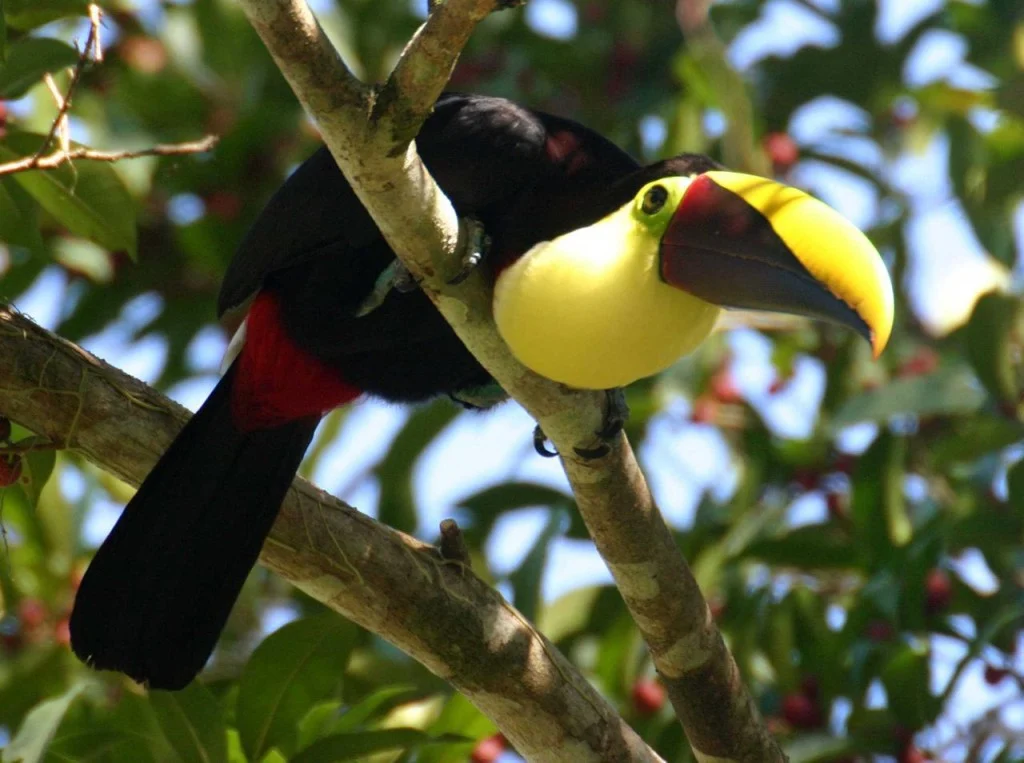
While blunt-force trauma from motor vehicles typically presents with external lacerations, hemorrhaging, or compound fractures, some of the most dangerous injuries are entirely invisible to the naked eye. On August 17, 2026, in La Victoria, the paths of a one-ton motor vehicle and a yellow-throated toucan (Ramphastos ambiguus)—a magnificent canopy bird weighing less than a kilogram—violently intersected.
Three days post-collision, the toucan was admitted to a designated release site facility. The bird was entirely unable to stand, presenting laterally with its left leg noticeably displaced. Remarkably, initial physical examinations revealed an absence of external bleeding or compound fractures.
Veterinary experts note that the absence of surface trauma frequently lulls rescuers into a false sense of security. Unlike humans, birds cannot articulate internal discomfort, making internal hemorrhaging and delayed organ failure particularly insidious threats following vehicular impacts. Consequently, advanced diagnostic imaging, including targeted radiography and ultrasonography, remains essential to clear wildlife for rewilding.
For this specific patient, diagnostic evaluations confirmed that the collision had resulted in severe soft-tissue bruising without skeletal fractures. Following a restorative regime combining targeted analgesia, supportive nutrition, and a controlled transition to an outdoor flight enclosure, the toucan demonstrated full motor function and independent foraging. Three days after admission, the bird was marked with a microchipped identifier and successfully reëstablished in its native canopy.
The Captive Toll: Illegal Wildlife Trafficking of Avian Species
Beyond acute trauma and human-wildlife conflict, the illicit wildlife trade continues to systematically drain Costa Rica’s avian biodiversity. Between January and October 2026, intake records documented 111 birds confiscated from the illegal pet trade, averaging more than two illicitly acquired birds entering the facility every week. Of this total, 81 were routed to specialized release sites, while 30 required permanent sanctuary housing at central headquarters.
The seizures highlight the diverse tactics employed by wildlife traffickers. Operations over the ten-month period included law enforcement interceptions of orange-chinned parakeets smuggled aboard public transportation networks as ordinary contraband, as well as multi-bird raids in tourist hubs such as La Fortuna. In several instances, relinquished pets were surrendered directly to government environmental offices, where they vocalized human speech patterns learned in domestic confinement—a poignant indicator of permanent detachment from natural avian flocks.
A disturbing trend within these statistics is the prevalence of physical mutilation designed to enforce captivity. At least 23 of the rescued birds exhibited clipped primary flight feathers. While the physical trimming procedure is painless—comparable to clipping human fingernails—its psychological and functional implications are profoundly detrimental. By intentionally disabling an animal’s capacity for sustained flight, traffickers ensure that birds remain confined to ground-level domestic environments, effectively exchanging the forest canopy for a life of captivity.
Under Costa Rican legislation, keeping native wildlife as private pets is strictly illegal. Environmental authorities emphasize that even well-intentioned purchases of caged wildlife directly finance the poaching cycle, fueling ongoing extraction from vulnerable ecosystems.
Institutional Priorities and the Path Forward
The cumulative data gathered from the 2026 rescue logs illustrate the multifaceted pressures confronting Costa Rican wildlife. Mitigating these threats requires a coordinated triad of rapid veterinary response, rigorous diagnostic standards, and expanded public outreach.
As conservation organizations prepare for the transition into 2027, the central objective remains the reduction of anthropogenic incidents through proactive education. Experts reiterate a standardized protocol for citizens encountering displaced wildlife: maintain physical distance, secure domestic pets and children, refrain from unauthorized handling, and immediately contact authorized environmental authorities or specialized veterinary rescue networks. Through informed public cooperation and professional medical intervention, displaced wildlife can be afforded a viable trajectory back to their natural habitats.
