
San Isidro de Heredia, Costa Rica — The image of a sloth moving slowly through a sun-dappled rainforest canopy is perhaps the most enduring symbol of Costa Rica’s rich biodiversity and tranquil Pura Vida lifestyle. Yet, away from the postcard-perfect representations, the reality facing these iconic arboreal mammals is defined by a relentless struggle for survival against the pressures of rapid urbanization and human encroachment. Each year, hundreds of sloths are admitted to specialized wildlife rescue centers across the country, suffering from severe trauma directly linked to human activity. What was once a peaceful existence in contiguous tropical forests has transformed into a high-stakes daily battle for survival, turning rescue centers into critical emergency rooms for a species that symbolizes the nation’s natural heritage.
The Anatomy of a Modern Wildlife Crisis
While sloths are uniquely adapted to life in the trees, their biological traits—which have served them well for millions of years—leave them profoundly vulnerable in a modern landscape dominated by human infrastructure. Among the most prevalent and devastating threats they face are accidental electrocutions on poorly insulated power lines. Mistaking transformers and high-voltage cables for lianas or branches, sloths frequently suffer catastrophic electrical burns that result in severe tissue damage, neurological impairment, and often fatal injuries.
Beyond electrical hazards, sloths are increasingly falling victim to vehicular collisions as roadways slice through fragmented habitats. Domestic animals, particularly free-roaming dogs and cats, pose another lethal threat when sloths descend to the ground to defecate or move between scattered trees. Furthermore, the illegal wildlife trade continues to siphon vulnerable infants from the wild, stripping them of their mothers and condemning them to unnatural captivity where proper nutritional and behavioral needs are rarely met.
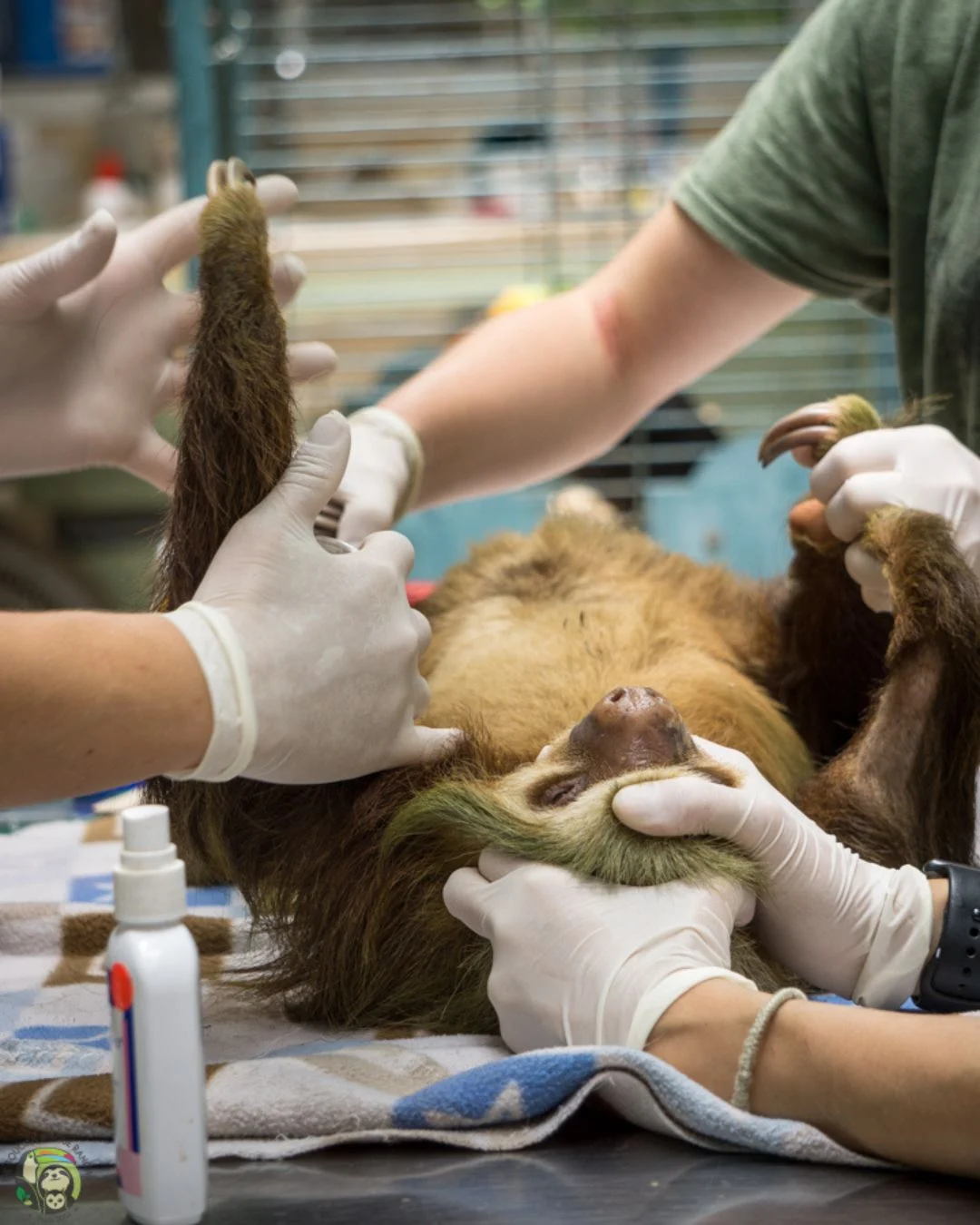
When these animals arrive at rehabilitation facilities, their clinical presentations are harrowing. Veterinarians frequently treat severe electrical burns, compound fractures, missing limbs, and profound psychological distress. For orphaned infants, the loss of maternal care during critical developmental stages requires round-the-clock intensive nursing, substituting specialized formula for natural milk while attempting to replicate the tactile security of a mother’s embrace.
A Day in the Life of a Wildlife Rescue Operation: Toucan Rescue Ranch
Operating at the front lines of this conservation battle is the Toucan Rescue Ranch (TRR), located in San Isidro de Heredia. As one of Costa Rica’s premier wildlife rescue and rehabilitation institutions, TRR admits hundreds of animals annually, striving to heal their wounds, restore their natural behaviors, and—whenever biologically and ecologically feasible—reintroduce them back into protected natural habitats.
However, the path from critical care patient to a successfully released wild animal is arduous, exceptionally labor-intensive, and financially demanding. The operational realities of maintaining a world-class wildlife hospital and sanctuary are staggering. TRR’s monthly operational expenses consistently exceed $60,000 USD, driven by the specialized requirements of veterinary medicine, specialized diets, secure enclosure maintenance, and expert staffing.
The financial strain is acutely visible in the treatment of individual patients. A single sloth victimized by electrocution can incur medical expenses surpassing $600 USD per day. Given that comprehensive hospitalization for such severe trauma frequently extends to 15 days or longer, the initial medical phase alone can easily exceed $2,000 USD per animal. This figure notably excludes the subsequent, months-long rehabilitation phase, during which specialists slowly rebuild the animal’s muscle mass, test its climbing abilities, and assess its readiness for life in the wild. Every successful release is the culmination of weeks or months of unwavering dedication by a multidisciplinary team of wildlife veterinarians, biologists, and specialized animal caretakers who race against time to reverse the damage inflicted by human progress.
Legislative Framework and the Call for Shared Responsibility
Costa Rica has long positioned itself as a global leader in environmental stewardship, backed by robust legislative frameworks. Under the Wildlife Conservation Law (No. 7317), the nation’s fauna is legally recognized as an integral component of the natural heritage of Costa Rica. This legislation provides the foundational legal mechanisms to prosecute wildlife trafficking, penalize habitat destruction, and protect vulnerable species from exploitation.
Despite these progressive legal protections, environmental advocates emphasize that legislation alone is insufficient to halt the decline of urban-adjacent wildlife populations. True conservation requires an active cultural shift and a collective commitment from civil society, private enterprise, and government entities alike.
"The Wildlife Conservation Law recognizes fauna as part of our national heritage, but protecting that heritage requires much more than admiration—it requires action," stated María Vargas, Marketing Supervisor at Toucan Rescue Ranch. "Each day, we work to rescue, rehabilitate, and reintroduce wildlife affected by human impact, alongside driving environmental education to prevent these threats. We invite people to visit our sanctuary, experience this reality firsthand, and become allies in conservation. Every visit, every donation, and every conscious action helps give our wildlife a second chance."
The Broader Implications: Fragmentation and Coexistence
The plight of the sloth serves as a bioindicator for the broader health of Costa Rica’s ecosystems. Habitat fragmentation—driven by agricultural expansion, real estate development, and the unchecked proliferation of linear infrastructure such as roads and electrical grids—isolates animal populations, limits genetic diversity, and forces wildlife into frequent, often fatal, contact with human settlements.
Without proactive mitigation strategies, such as the installation of aerial wildlife bridges (commonly known as "faunaducts") and the insulation of electrical wiring by utility companies, rescue centers will continue to operate as a permanent triage system rather than a temporary bridge to recovery. Experts stress that urban planning in tropical regions must evolve to incorporate wildlife corridors, ensuring that human development can coexist with the indigenous species that define the region’s ecological identity.
Pathways to Mitigation and Public Engagement
As the international community observes International Sloth Day, organizations like Toucan Rescue Ranch are amplifying efforts to educate the public on actionable steps individuals can take to mitigate threats to local wildlife. Conservationists emphasize that public participation is vital, ranging from supporting ethical wildlife tourism to reporting illegal pet trade and habitat encroachment to local authorities.
Visiting accredited sanctuaries provides a twofold benefit: it directly generates the critical revenue required to sustain high-cost medical and rehabilitative operations, while simultaneously fostering a deeper appreciation for the fragility of tropical ecosystems. Educational outreach transforms casual observers into informed advocates who understand that everyday consumer choices, driving habits, and community awareness directly influence the survival of arboreal species.
Ultimately, the survival of Costa Rica’s sloths hangs in a delicate balance. Whether these iconic creatures remain wild inhabitants of lush rainforests or become historical footnotes to human expansion depends heavily on the collective willingness of society to invest time, resources, and structural change into their protection. As rescue teams continue their round-the-clock race against time to save the next injured animal brought through their doors, the broader message remains clear: protecting the sloth is not merely an act of animal welfare, but a fundamental test of humanity’s ability to share the landscape with the natural world.
