
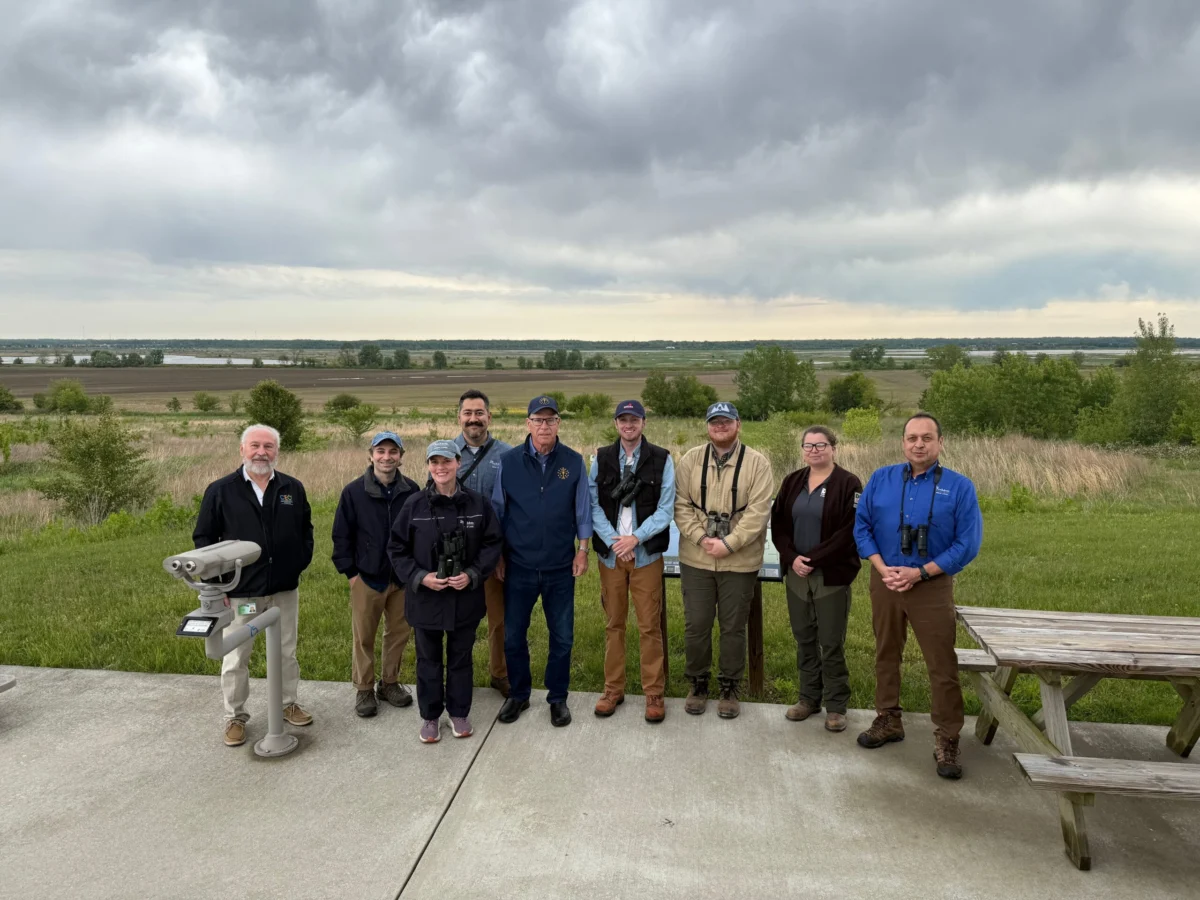
Linton, IN (May 6, 2026) – As millions of birds undertake their perilous annual journey north, marking the apex of spring migration across the Midwest, Indiana Governor Mike Braun convened with prominent conservation organizations at the Goose Pond Fish and Wildlife Area (FWA) in Linton on Monday, May 4. The significant gathering brought together representatives from Audubon Great Lakes, the Sassafras Audubon Society, the Amos Butler Audubon Society, and the Indiana Department of Natural Resources (DNR) to underscore the profound importance of wetland restoration, celebrate the return of diverse avian species to Indiana, and emphasize the critical need to protect the habitats essential for their survival. This timely event occurred just days before World Migratory Bird Day on May 9, a global observance dedicated to raising awareness about migratory birds and the increasing threats they face throughout their epic journeys.
A Vital Sanctuary: Goose Pond FWA’s Transformative Restoration
The Goose Pond Fish and Wildlife Area stands as a beacon of conservation success, widely recognized as one of the largest and most triumphant wetland restoration projects in the United States. Spanning an impressive 8,000 acres, this site has, over more than two decades, been meticulously transformed from agricultural fields back into a vibrant, biodiverse ecosystem. The restoration effort has primarily focused on establishing 5,000 acres of crucial wetlands and reconstructing 1,300 acres of native tallgrass prairies, creating an indispensable haven for a myriad of wildlife. This monumental undertaking has not only rejuvenated the landscape but has also cemented Goose Pond’s status as an Audubon Important Bird Area (IBA), a designation reserved for sites critical for bird conservation.
The area now boasts an extraordinary diversity, providing habitat for over 300 bird species, including numerous rare and endangered varieties. This rich biodiversity makes Goose Pond FWA a premier destination for birdwatchers and a vital stopover point for migratory birds, offering them essential resting, feeding, and breeding grounds. The transformation of this landscape exemplifies what dedicated conservation efforts, strategic partnerships, and sustained investment can achieve in reversing habitat loss and bolstering ecological resilience.
Governor Braun’s Commitment to Conservation
Governor Mike Braun’s presence at Goose Pond underscored his administration’s commitment to environmental stewardship and the preservation of Indiana’s natural heritage. Acknowledging a personal connection to avian conservation, Governor Braun remarked, “As a landlord to a colony of Purple Martins that largely depend on human-provided housing, I appreciate the opportunity to go bird watching alongside Audubon Great Lakes.” He further pledged, “I will continue my commitment to conserving Indiana’s natural heritage to benefit both wildlife and Hoosiers who enjoy our great outdoors.” This statement highlights a dual benefit of conservation: protecting wildlife while simultaneously enhancing recreational opportunities and quality of life for Indiana residents. His previous support for initiatives like the Great Lakes Restoration Initiative (GLRI) during his tenure in the U.S. Senate further demonstrates a consistent dedication to environmental causes, particularly those with broad regional impact.
The Urgency of Avian Conservation: Bending the Bird Curve
The visit to Goose Pond served as a powerful reminder of the broader challenges facing bird populations globally. Michelle Parker, Vice President and Executive Director of Audubon Great Lakes, articulated the pressing issue: “Birds are in decline, and migration is one of the most dangerous times of their lifecycles.” Referencing the critical need to reverse this trend, Parker emphasized, “To reverse this decline, or ‘bend the bird curve,’ we must protect and restore the habitats birds depend on. Places like Goose Pond show us what’s possible when habitats are restored. We’re grateful to Governor Braun for joining us to experience the wonders of spring migration and this critical work.”
Parker’s remarks resonate with findings from the 2025 State of the Birds Report, a comprehensive analysis published by a coalition of leading science and conservation groups. This report revealed an alarming trend: bird populations across most habitats have suffered significant losses since 1970. The data underscores a continental decline of nearly 3 billion birds across North America over the past five decades, representing a loss of nearly 30% of total bird abundance. This staggering decline highlights the urgent necessity for widespread conservation action to mitigate habitat loss, climate change impacts, and other anthropogenic threats that imperil avian species. Wetlands, in particular, are among the most threatened ecosystems globally, making restoration projects like Goose Pond even more vital. Historically, Indiana has lost over 85% of its original wetlands, making every acre restored a significant victory for biodiversity.
The Mechanics of Migration and Threats Faced
Spring migration is an extraordinary natural spectacle, but also a period of immense vulnerability for birds. Millions of individuals traverse thousands of miles, navigating complex routes from their wintering grounds in the south to their breeding grounds in the north. This arduous journey is fraught with dangers, including exhaustion, predation, severe weather events, and collisions with man-made structures. However, the most pervasive threat remains habitat loss and degradation. Migratory birds rely on a network of healthy stopover sites, like Goose Pond, where they can rest and refuel. The destruction or degradation of these critical waypoints can have catastrophic consequences for entire populations.
The specific threats facing migratory birds include:
- Habitat Loss and Fragmentation: Conversion of natural landscapes to agriculture, urban development, and industrial uses eliminates crucial breeding, stopover, and wintering habitats.
- Climate Change: Shifting weather patterns, altered plant phenology (timing of leaf-out, flowering, fruiting), and increased frequency of extreme weather events disrupt migratory cues and food availability.
- Pesticides and Pollution: Contaminants in the environment can directly poison birds or reduce their food sources, impacting reproductive success and survival.
- Collisions: Millions of birds die annually from collisions with windows, communication towers, and other infrastructure, particularly during migration.
- Predation by Domestic Cats: Free-roaming domestic cats are a significant source of bird mortality, especially in developed areas.
Audubon Great Lakes: On-the-Ground Conservation and Monitoring
Audubon Great Lakes plays a pivotal role in active conservation efforts throughout the region. In Indiana, the organization meticulously monitors vulnerable marsh bird populations at 29 distinct sites. This systematic monitoring is crucial for understanding how these sensitive species are responding to various restoration initiatives, providing invaluable data that informs future conservation strategies. The insights gained from these studies are essential for adaptive management and ensuring the effectiveness of conservation investments.
Beyond monitoring, Audubon Great Lakes is actively engaged in direct habitat restoration. In Northwest Indiana, the organization is collaborating closely with local communities to restore 420 acres of high-priority wetlands, including critical areas along the West Branch of the Little Calumet River in Gary. This localized effort is part of a broader, ambitious ten-year goal for Audubon to positively impact 5,750 acres across Northwest Indiana, working in concert with partners and community stakeholders. These efforts are not only about birds but also about improving water quality, enhancing flood resilience, and creating healthier environments for human communities. The involvement of local communities is a cornerstone of these projects, fostering a sense of ownership and long-term stewardship.
The Power of the Great Lakes Restoration Initiative
Much of the extensive conservation work undertaken by organizations like Audubon Great Lakes, and the success stories like Goose Pond FWA, are significantly bolstered by the Great Lakes Restoration Initiative (GLRI). The GLRI is a landmark federal conservation program launched in 2010 to protect and restore the Great Lakes, a freshwater resource vital to over 30 million people. Since its inception, the GLRI has supported more than 8,000 projects across the Great Lakes basin, investing billions of dollars in critical environmental initiatives.
The program’s multifaceted approach addresses key environmental challenges, including:
- Improving Water Quality: Reducing nutrient runoff, harmful algal blooms, and chemical contaminants.
- Restoring Wetlands and Coastal Habitats: Reclaiming degraded ecosystems to support biodiversity and ecological functions.
- Strengthening Coastal Resilience: Protecting communities from the impacts of climate change, such as increased flooding and erosion.
- Protecting Bird and Wildlife Habitat: Creating and enhancing spaces for diverse species.
Through the sustained support of the Great Lakes Restoration Initiative, Audubon and its partners have successfully restored and conserved over 10,000 acres of crucial wetland habitat across the region. These efforts directly support vulnerable marsh birds, contribute to cleaner drinking water sources for millions, and provide vital flood protection for communities situated along the Great Lakes and their tributaries. Michelle Parker specifically acknowledged Governor Braun’s past legislative support, stating, “We thank Governor Braun for supporting the Great Lakes Restoration Initiative during his time in the US Senate.” This bipartisan support for the GLRI highlights its recognized importance as a cornerstone of regional environmental policy.
Broader Impact and Implications
The work at Goose Pond Fish and Wildlife Area and the broader initiatives supported by the GLRI extend far beyond the immediate ecological benefits for birds. The implications are wide-ranging, touching upon economic prosperity, public health, and community well-being.
- Economic Impact: Wetlands like Goose Pond attract ecotourism, particularly birdwatching, which generates significant revenue for local economies. Birdwatching is a growing leisure activity, contributing billions of dollars annually to the U.S. economy through equipment sales, travel, and lodging. The designation of Goose Pond as an IBA, and its reputation as a birding hotspot, draws visitors from across the country and internationally, supporting local businesses in Linton and surrounding communities.
- Ecosystem Services: Healthy wetlands provide invaluable ecosystem services. They act as natural filters, improving water quality by trapping sediments and pollutants. They also serve as critical natural infrastructure for flood control, absorbing excess rainfall and reducing the risk of downstream flooding, thereby protecting human settlements and agricultural lands. These services, often undervalued, represent immense economic savings compared to engineered solutions.
- Climate Resilience: Restored wetlands sequester carbon, contributing to climate change mitigation. Furthermore, by managing stormwater and providing natural buffers, they enhance the resilience of landscapes and communities to the impacts of a changing climate.
- Education and Engagement: Sites like Goose Pond serve as living laboratories, offering unparalleled opportunities for environmental education and community engagement. They inspire a new generation of conservationists and foster a deeper appreciation for the natural world among the public.
- Policy and Partnerships: The success of Goose Pond and the GLRI underscores the effectiveness of collaborative models involving federal, state, and local governments, non-profit organizations, and local communities. Such partnerships are essential for tackling complex environmental challenges that transcend jurisdictional boundaries.
The celebration at Goose Pond Fish and Wildlife Area, ahead of World Migratory Bird Day, served as a powerful testament to what can be achieved through dedicated conservation efforts. It highlighted not only the remarkable recovery of a vital ecosystem but also the ongoing commitment required to protect the delicate balance of nature for the benefit of both wildlife and humanity. The continued investment in projects like Goose Pond and programs like the Great Lakes Restoration Initiative remains paramount in ensuring a sustainable future for Indiana’s natural heritage and the countless migratory birds that depend on its restored landscapes.
