
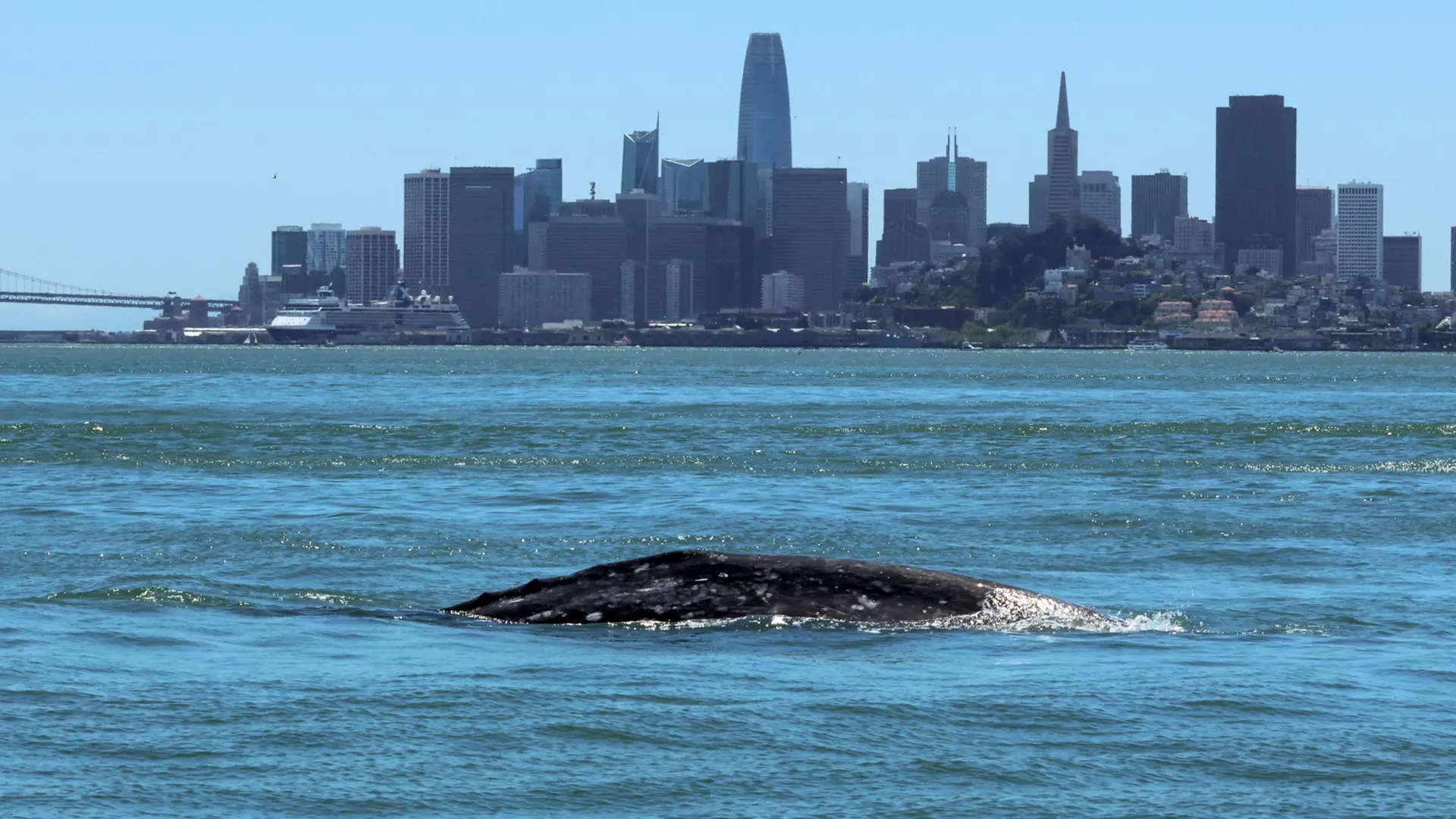
Gray whales, renowned for undertaking one of the longest migrations of any mammal, typically journey thousands of miles between their food-rich Arctic feeding grounds and the warm, sheltered lagoons of Baja California, Mexico, where they breed and calve. However, as the planet’s oceans undergo rapid transformation due to climate change, these majestic cetaceans are exhibiting alarming and unprecedented behaviors, straying from established migratory paths and venturing into unfamiliar, highly dangerous territories. San Francisco Bay, a bustling maritime hub, has emerged as one such unexpected destination, drawing increasing numbers of gray whales seeking sustenance but often finding peril instead. Researchers have documented a disturbing trend: nearly 20% of the gray whales observed entering the Bay do not survive, with a significant proportion succumbing to fatal vessel strikes.
The Eastern North Pacific Gray Whale Population in Crisis
The current plight of gray whales is part of a larger ecological crisis. The Eastern North Pacific (ENP) gray whale population, once a beacon of conservation success after rebounding from near extinction due to commercial whaling, has been experiencing a precipitous decline since 2016. In 2019, the National Oceanic and Atmospheric Administration (NOAA) officially declared an "Unusual Mortality Event" (UME) for the species, encompassing a vast stretch from Mexico through the United States and into Canada. This designation triggers an intensive, coordinated investigation into the causes of elevated strandings and deaths. By 2023, NOAA estimated the population had plummeted by more than half from its 2016 peak of approximately 27,000 individuals, a staggering loss that underscores the severity of the challenges facing these whales. Sightings of calves, crucial indicators of population health and reproductive success, have become increasingly rare, signaling a potential long-term impact on the species’ recovery.
The primary driver behind this population crash is believed to be a profound disruption in their Arctic feeding grounds. Gray whales are benthic feeders, meaning they forage on organisms living on or in the seafloor, primarily amphipods and other invertebrates found in the shallow, productive waters of the Bering and Chukchi Seas. These ecosystems are highly sensitive to changes in sea ice cover and ocean temperatures. Warming Arctic waters are altering the distribution and abundance of these critical food sources, leaving many whales undernourished before or during their arduous migration. Faced with depleted energy reserves, some whales are compelled to deviate from their traditional fasting migration and seek opportunistic feeding grounds, even in areas historically avoided.
San Francisco Bay: A New, Perilous Stopover
San Francisco Bay was not historically part of the gray whale’s regular migration or feeding route. Their appearances within the Bay were sporadic and typically associated with individual whales that had become disoriented or sick. However, this pattern began to shift dramatically around 2018. That year marked a noticeable increase in gray whale sightings within the Bay’s confined waters, coinciding with a concerning rise in local deaths. This behavioral change prompted scientists to launch a dedicated research effort to understand this emergent phenomenon, focusing on these "Bay Grays" and whether they represented returning individuals or desperate, one-time visitors.
Josephine Slaathaug of Sonoma State University, lead author of a seminal article published in Frontiers in Marine Science, highlighted the inherent dangers of the Bay environment for these massive marine mammals. "Gray whales have a low profile to the water when they surface, and this makes them difficult to see in conditions like fog which are common to San Francisco Bay," Slaathaug explained. "Additionally, San Francisco Bay is a highly trafficked waterway, and the Golden Gate Strait serves as a bottleneck through which all traffic and whales must enter and exit." This confluence of factors creates a high-risk environment, turning a potential refuge into a deadly trap.
Unraveling the Mystery of the "Bay Grays": A Collaborative Study
To investigate the presence and fate of gray whales in San Francisco Bay, researchers employed a multi-faceted approach, combining traditional scientific methods with invaluable contributions from citizen science. Between 2018 and 2023, a catalog of individual whales was meticulously built using opportunistic sightings and photographs submitted by the public. This grassroots effort allowed scientists to gather data across a broader spatial and temporal scale than would have been possible with dedicated surveys alone. From 2023 to 2025, more structured surveys were conducted, providing systematic observations to complement the opportunistic data.
Individual identification relied on the unique markings found on each whale’s skin, including barnacle scars, pigmentation patterns, and other natural irregularities that serve as a whale’s "fingerprint." These photographic records were then cross-referenced with necropsy data from stranded whales found deceased in the region. A critical challenge in this process was the potential for identification markings to fade or become obscured after death, which meant that some matches between live sightings and deceased individuals might have been missed, potentially underestimating the true mortality rate.
The study documented a total of 114 individual gray whales entering the Bay during the entire study period. A key finding was the low rate of return visits: only four individuals were observed in more than one year. This suggests that for most whales, the Bay is a one-time, emergency feeding stop rather than a newly established, regular component of their migration. Scientists hypothesize that the Bay acts as a desperate last resort for whales in poor physiological condition. This theory is supported by observations of unusually thin individuals foraging not only in San Francisco Bay but also in other nontraditional habitats along the coast, indicating a broader struggle for survival among the population.
High Mortality: The Twin Threats of Starvation and Vessel Strikes
Despite the Bay potentially serving as an emergency feeding refuge, the grim reality is that a significant number of these whales do not survive their stay. Between 2018 and 2025, a sobering 70 gray whales were found dead in the surrounding region of San Francisco Bay. Post-mortem examinations, or necropsies, revealed the primary threats. Of the 70 deceased whales, 30 were definitively confirmed to have died from trauma consistent with vessel strikes. For the remaining whales where a cause of death could be determined, many displayed clear signs of severe malnutrition and emaciation, pointing to starvation as a major contributing factor.
The researchers were able to link 21 of the 45 identifiable dead whales to individuals previously documented in their live sighting catalog. This direct correlation provided critical evidence of the high mortality risk associated with entering the Bay. Bekah Lane of the Center for Coastal Studies, a co-author of the study, underscored the stark figures: "At least 18% of the individuals identified in San Francisco Bay later died in the area. Our broader analysis of local strandings both inside and outside San Francisco Bay found that over 40% of these whales died of trauma from vessels." These statistics paint a dire picture, confirming San Francisco Bay as an "ecological trap" – an environment that initially appears beneficial but ultimately proves detrimental to the animals that enter it.
The intertwined nature of starvation and vessel strikes creates a particularly lethal synergy. A whale weakened by malnutrition is likely to be less agile, slower to react, and therefore less able to avoid oncoming ships. Their reduced energy reserves also make the already challenging migration even more perilous, pushing them into risky feeding behaviors in dangerous areas.
Urgent Need for Comprehensive Protection Measures
The findings of this study underscore an urgent need for more in-depth research to fully understand the intricate dynamics of why and how gray whales are utilizing San Francisco Bay. The increasing frequency of sightings is alarming; in 2025 alone, 36 whales entered the area, with groups sometimes exceeding 10 individuals. This suggests the behavior is not an isolated incident but a growing pattern. More detailed tracking technologies, such as satellite tags, coupled with additional necropsies, could provide crucial insights. Such data would help determine whether the observed low number of returning whales is primarily due to high mortality rates within the Bay, and whether these deaths are predominantly caused by starvation, vessel strikes, or, more likely, a deadly combination of both. Understanding the specific feeding behaviors and distribution patterns of whales within the Bay is critical for designing effective mitigation strategies.
The scientific community, along with conservation organizations and government agencies like NOAA, is emphasizing the imperative for proactive, preventive steps to protect these vulnerable whales. Potential interventions include:
- Educating Commercial Vessel Operators: Implementing mandatory or highly encouraged training programs for ship captains and crew on whale awareness, identification, and reporting protocols, especially within high-risk areas like the Golden Gate Strait.
- Adjusting Ferry Routes: Collaborating with ferry operators to assess and potentially modify existing routes within the Bay to minimize overlap with known whale aggregation areas, particularly during peak seasons.
- Implementing Speed Restrictions: Establishing mandatory or voluntary speed limits for all vessels in designated high-risk zones. Studies have consistently shown that reducing vessel speed significantly decreases the likelihood and severity of vessel strikes. For example, a 10-knot speed limit in critical habitats has proven effective in reducing strikes on other large whale species.
- Dynamic Management Areas (DMAs): Utilizing real-time whale sighting data (from researchers, public reports, and potentially acoustic monitoring) to establish temporary "dynamic management areas" where speed restrictions or rerouting recommendations are enforced when whales are detected.
- Enhanced Monitoring Technologies: Exploring the deployment of advanced radar, sonar, or thermal imaging systems that could detect whales in challenging visibility conditions, providing early warnings to vessel traffic.
- Public Awareness Campaigns: Launching campaigns to inform recreational boaters, kayakers, and paddleboarders about the presence of whales, safe viewing distances, and the importance of reporting sightings and respecting marine wildlife regulations.
Bekah Lane reiterated the immediate threat: "In San Francisco Bay, the biggest threat to these whales is vessel traffic. Continued monitoring will help illuminate their distribution patterns and behaviors while within the Bay, which can impact risk. Route changes and speed restrictions have been found to significantly reduce vessel strike mortality to large whales, and an assessment of risk can help identify the most effective strategies to protect these animals."
A Population Under Pressure: Broader Implications for Conservation
While researchers acknowledge that there remain gaps in their day-to-day understanding of individual whale movements and behaviors within the vastness of the Bay, the findings provide a crucial and alarming snapshot. This study vividly illustrates how gray whales, a species already under immense pressure from a changing climate, are responding in real-time to rapidly deteriorating environmental conditions. Their desperate ventures into treacherous, unfamiliar waters highlight the profound and cascading impacts of global warming on marine ecosystems and the species dependent upon them.
The gray whale crisis in San Francisco Bay serves as a stark reminder of the urgent need for integrated conservation strategies that address both localized threats, such as vessel traffic, and global challenges, like climate change. The future of the Eastern North Pacific gray whale population hinges not only on their ability to adapt but also on humanity’s capacity to mitigate the threats we impose upon them, both directly and indirectly.
"This study is our best analysis of the data we collected, but it’s important to consider that we do not have the full picture of each whale’s movements on a daily timescale," Slaathaug concluded. "These results are an important piece of the larger puzzle of what is going on in the overall population as they attempt to adapt to climate change in real time." The struggle of the "Bay Grays" is a poignant indicator of a much larger ecological narrative unfolding across the world’s oceans, demanding immediate and concerted action from governments, industries, and individuals alike to safeguard marine biodiversity for future generations.
