
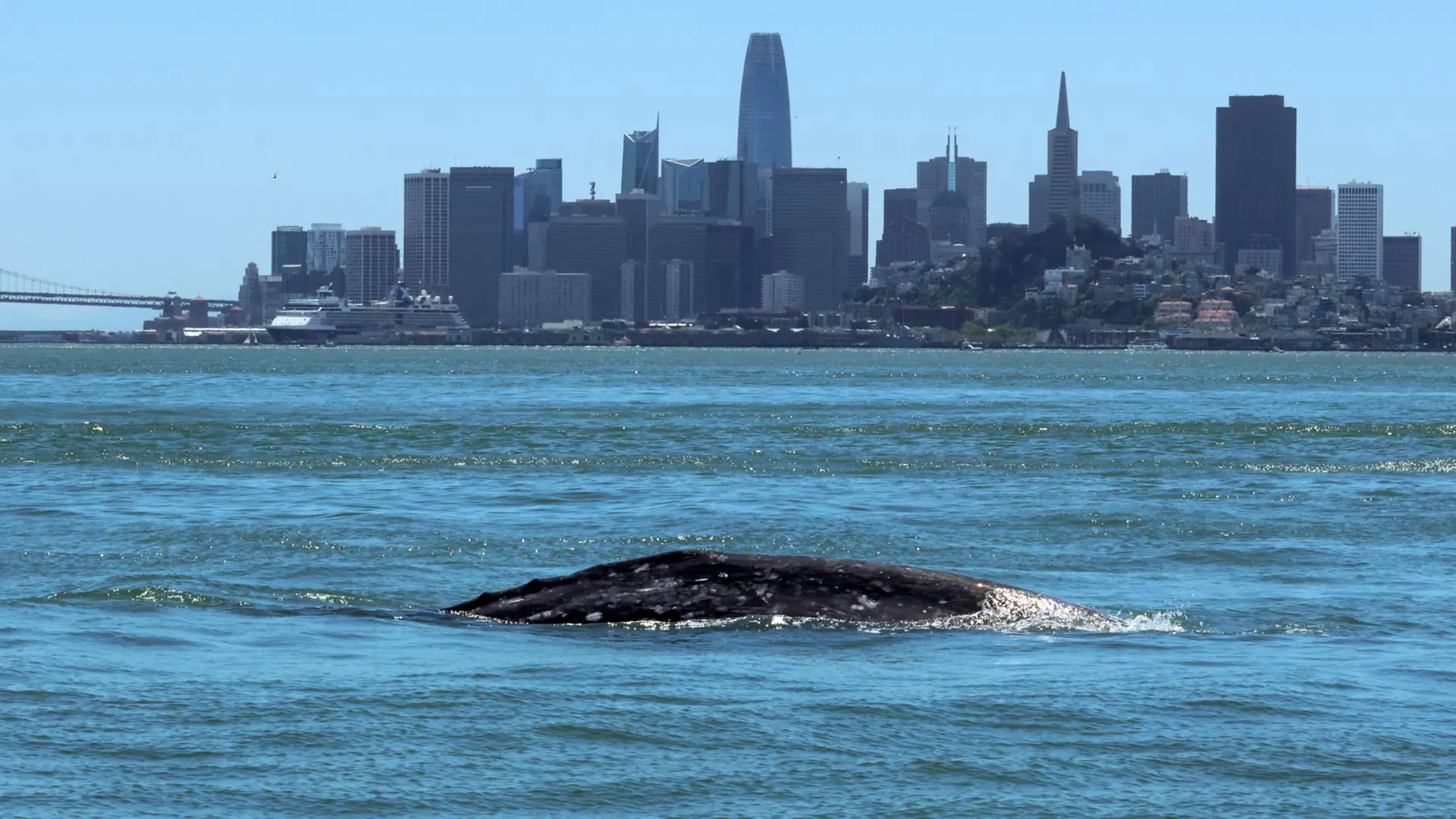
The majestic gray whale (scientific name Eschrichtius robustus) has long been celebrated as a conservation success story, having rebounded from the brink of extinction in the 20th century to be removed from the endangered species list in 1994. Their remarkable journey, often spanning over 10,000 miles round trip, is the longest known migration of any mammal. Historically, their migratory path hugged the Pacific coastline, largely bypassing the confines of San Francisco Bay, a busy commercial and recreational waterway. However, a confluence of environmental pressures, primarily driven by climate change, is forcing these whales into unfamiliar and perilous territories, with grave consequences. Recent research reveals that nearly 20% of the gray whales observed entering San Francisco Bay do not survive, with many succumbing to fatal vessel strikes, highlighting a critical and burgeoning human-wildlife conflict.
A Changing Migration: The Gray Whale’s Plight
Gray whales are typically considered "bottom feeders," relying heavily on the abundance of amphipods, krill, and other benthic organisms found in the cold, nutrient-rich Arctic waters during their summer feeding season. This intensive feeding allows them to build up vast energy reserves to sustain them through their non-feeding migration to and from tropical breeding grounds. This delicate balance, honed over millennia, is now profoundly disrupted. Warming ocean conditions are rapidly altering the productivity of their Arctic feeding grounds, diminishing crucial food sources and leaving many whales emaciated and desperate for sustenance.
This ecological crisis prompted the National Oceanic and Atmospheric Administration (NOAA) to declare an "Unusual Mortality Event" (UME) for gray whales along the Pacific coast of North America in 2019, a designation that remained active until 2023. This UME spanned from Mexico to Alaska, with an unusually high number of dead, stranded, or sick whales observed. The population, which once peaked at an estimated 27,000 individuals in 2016, has since plummeted by more than half, with NOAA’s latest estimates indicating a population size closer to 14,500. Compounding this alarming decline, sightings of calves have become increasingly rare, signaling a potential long-term impact on the species’ reproductive success and overall recovery trajectory.
San Francisco Bay: A Dangerous Refuge
The San Francisco Bay was not historically a recognized part of the gray whale migration route. This began to change noticeably in 2018, when whales started appearing in the Bay with greater frequency, coinciding with a troubling rise in local mortalities. For these struggling whales, the Bay may represent a desperate attempt to find alternative food sources. While the Bay’s waters are not a traditional gray whale feeding ground, anecdotal evidence and direct observation suggest they are attempting to forage there, likely driven by severe hunger.
However, the very nature of San Francisco Bay presents an existential threat. "Gray whales have a low profile to the water when they surface, and this makes them difficult to see in conditions like fog which are common to San Francisco Bay," explained Josephine Slaathaug of Sonoma State University, lead author of a groundbreaking article published in Frontiers in Marine Science. She further elaborated on the unique geographical hazard: "Additionally, San Francisco Bay is a highly trafficked waterway, and the Golden Gate Strait serves as a bottleneck through which all traffic and whales must enter and exit." This narrow, heavily transited strait forces whales and vessels into close proximity, dramatically escalating the risk of collision. The constant movement of container ships, ferries, fishing boats, and recreational vessels creates a gauntlet that weakened whales are ill-equipped to navigate.
Climate Change: The Root Cause
The underlying driver for this perilous shift in behavior is unequivocally climate change. As Arctic waters warm, the delicate balance of the marine ecosystem is disrupted. Sea ice retreat, changes in ocean currents, and altered water temperatures affect the abundance and distribution of the benthic invertebrates that form the cornerstone of the gray whale’s diet. When these primary food sources become scarce, whales are forced to expend more energy searching for food, leading to emaciation and a compromised physiological state.
For a species that typically fasts during its extensive migration, the inability to adequately feed in the Arctic leaves them in a state of chronic energy deficit. This can compel them to seek out opportunistic feeding grounds, even those that are suboptimal or dangerous, such as San Francisco Bay. Scientists have observed unusually thin individuals foraging in other nontraditional habitats along the coast, further supporting the hypothesis that these are "emergency feeding stops" rather than a permanent alteration of their migratory patterns. The consequences of this nutritional stress extend beyond immediate survival; it can impair reproductive success, reduce immune function, and diminish a whale’s ability to navigate and avoid hazards.
Unraveling the Mystery of the "Bay Grays"
To better understand these novel "Bay Grays" and determine if they were returning visitors or one-time arrivals, scientists launched a comprehensive research effort. The study period spanned from 2018 to 2025, utilizing a multi-faceted approach to track individual whales. Researchers built a detailed catalog using opportunistic sightings and photographs generously contributed by the public between 2018 and 2023. This citizen science component proved invaluable in gathering extensive data. Complementing this, more structured surveys were conducted from 2023 to 2025, providing targeted observation.
Identification of individual whales relied on unique markings on their skin, such as barnacle scars, pigmentation patterns, and callosities. These distinctive features act like natural fingerprints, allowing researchers to track individuals over time. These records were then cross-referenced with necropsy data from stranded whales, a crucial step in understanding mortality causes. While this method is robust, researchers acknowledged a limitation: these unique markings can fade after death, meaning some matches between live sightings and deceased individuals may have been missed.
In total, the study documented 114 individual whales within the Bay during the research period. A striking finding emerged: only four of these individuals were observed in more than one year. This strongly suggests that most whales entering the Bay are not returning visitors, but rather individuals making a one-time, desperate foray for food. This reinforces the idea that the Bay serves as an emergency refuge for whales in poor condition, rather than a newly integrated stop on their regular migration.
The Grim Toll: Vessel Strikes and Starvation
Despite their apparent use of the Bay as a potential feeding refuge, the survival rate for these whales is disturbingly low. Between 2018 and 2025, a total of 70 gray whales were found dead in the surrounding region of San Francisco Bay. Of these, a staggering 30 were confirmed to have been struck by vessels, highlighting the direct and lethal impact of human maritime activity. For the remaining whales where a definitive cause of death could be determined, many showed clear signs of severe malnutrition, underscoring the compounding factors of starvation and trauma. Researchers were able to match 21 of the 45 identifiable dead whales to individuals previously documented in their catalog, providing a direct link between Bay entries and subsequent mortality.
Bekah Lane of the Center for Coastal Studies, a co-author of the study, emphasized the gravity of these findings: "At least 18% of the individuals identified in San Francisco Bay later died in the area." She further added a broader perspective on regional mortalities: "Our broader analysis of local strandings both inside and outside San Francisco Bay found that over 40% of these whales died of trauma from vessels." This statistic paints a stark picture of the pervasive threat posed by ship traffic to gray whales along the California coast, particularly for those venturing into high-traffic zones like the Bay. The combination of weakened physical condition due to starvation and the inherent difficulty of spotting these low-profile whales in often foggy or choppy conditions creates a deadly scenario.
Urgent Calls for Action and Mitigation
The scientific community is unequivocally calling for urgent action and further research to better understand the specifics of how and why whales are using San Francisco Bay. The situation appears to be escalating; in 2025 alone, 36 whales entered the area, with observations of groups sometimes exceeding 10 individuals, indicating a growing trend. More detailed tracking, potentially through satellite tagging, and additional necropsies are critical. These would help determine whether the low number of returning whales is primarily due to high mortality rates within the Bay, and whether deaths are predominantly caused by starvation, vessel strikes, or, as is likely, a dangerous combination of both. It is a plausible hypothesis that weakened, malnourished whales are less agile and therefore less able to detect and avoid oncoming ships, increasing their vulnerability to collisions.
Preventive steps are imperative to mitigate this escalating crisis. These could include comprehensive educational campaigns targeting commercial vessel operators, ensuring they are aware of the increased whale presence and the associated risks. Adjusting ferry routes, particularly during peak whale seasons, or implementing dynamic routing based on real-time whale sightings, could significantly reduce encounter probabilities. Perhaps the most impactful measure would be the implementation of mandatory or voluntary speed restrictions in high-risk areas within the Bay and its approaches. Such measures have proven highly effective in reducing vessel strike mortality for large whales in other critical habitats, such as the Santa Barbara Channel and along the East Coast for the critically endangered North Atlantic right whale.
"In San Francisco Bay, the biggest threat to these whales is vessel traffic," reiterated Bekah Lane. "Continued monitoring will help illuminate their distribution patterns and behaviors while within the Bay, which can impact risk. Route changes and speed restrictions have been found to significantly reduce vessel strike mortality to large whales, and an assessment of risk can help identify the most effective strategies to protect these animals." Technological solutions, such as acoustic detection systems that alert vessels to the presence of whales, could also play a vital role in real-time avoidance. Effective implementation will require collaborative efforts from NOAA Fisheries, the U.S. Coast Guard, port authorities, and local maritime industries.
A Sentinel Species: Broader Ecological Implications
Researchers caution that there are still gaps in understanding the day-to-day movements and precise behaviors of these whales within the complex environment of San Francisco Bay. "This study is our best analysis of the data we collected, but it’s important to consider that we do not have the full picture of each whale’s movements on a daily timescale," acknowledged Josephine Slaathaug. However, the findings provide an invaluable and stark snapshot of how gray whales are responding in real-time to rapidly changing environmental conditions driven by climate change.
The gray whale, once a symbol of successful conservation, is now emerging as a sentinel species for broader ocean health. Their struggle reflects the profound and far-reaching impacts of a warming planet on marine ecosystems globally. The increased presence of these large cetaceans in a bustling urban estuary like San Francisco Bay highlights the growing intersection of human activity and wildlife in a world where traditional boundaries are blurring. The crisis facing the "Bay Grays" serves as a powerful reminder of the urgent need for proactive conservation strategies, adaptive management, and international cooperation to safeguard marine biodiversity in the face of unprecedented environmental change. Understanding and mitigating the threats to these magnificent creatures in places like San Francisco Bay is not just about saving a species; it’s about understanding and preserving the health of our planet’s oceans.
