
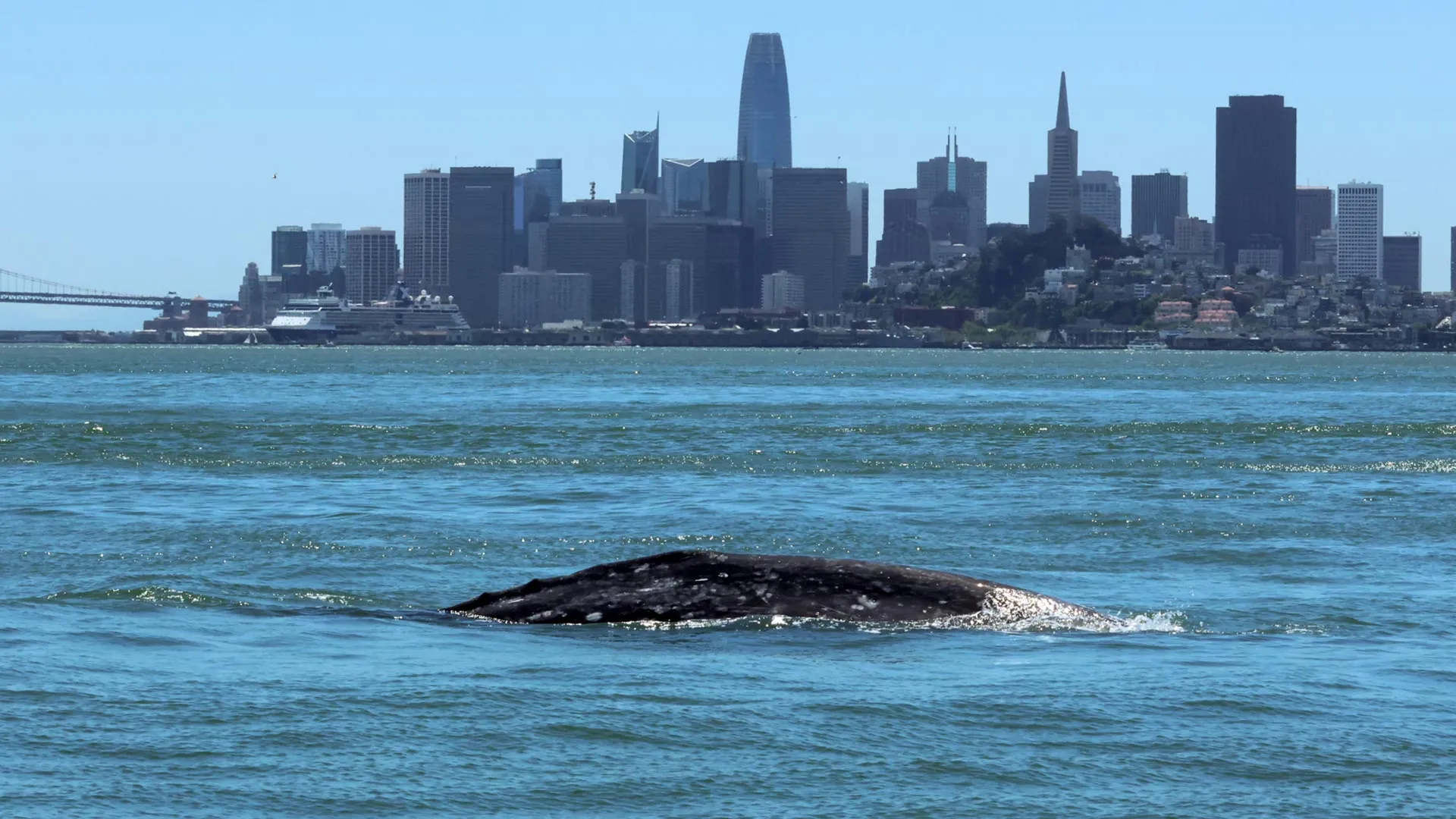
Gray whales, renowned for undertaking one of the longest mammalian migrations on Earth, typically journey annually between their food-rich Arctic feeding grounds and the warm, sheltered lagoons of Baja California, Mexico, where they breed and calve. However, as the planet’s climate undergoes profound changes, ocean conditions are being irrevocably altered, compelling some of these majestic cetaceans to deviate from their age-old migratory patterns and exhibit increasingly unpredictable behaviors. In recent years, a growing number of gray whales have been observed foraging in unexpected and historically unfamiliar locales, most notably within the bustling, heavily trafficked waters of San Francisco Bay. This alarming shift has coincided with a distressing rise in whale mortalities, prompting scientists to launch intensive investigations into this emergent phenomenon. Research has revealed a grim statistic: nearly 20% of the gray whales documented entering San Francisco Bay do not survive their stay, with a significant proportion succumbing to fatal encounters with vessels.
The inherent anatomy and surface behavior of gray whales contribute significantly to their vulnerability in active shipping lanes. "Gray whales have a low profile to the water when they surface, and this makes them difficult to see in conditions like fog which are common to San Francisco Bay," explained Josephine Slaathaug of Sonoma State University, lead author of a seminal article published in Frontiers in Marine Science. She further elaborated on the geographical choke point that exacerbates the danger: "Additionally, San Francisco Bay is a highly trafficked waterway, and the Golden Gate Strait serves as a bottleneck through which all traffic and whales must enter and exit." This confluence of challenging visibility, high vessel density, and a constricted passage creates a deadly gauntlet for these disoriented giants.
Climate Change and a Shifting Ecological Imperative
The traditional life cycle of a gray whale hinges upon an extensive period of intense feeding in the Arctic during the summer months, allowing them to build up substantial blubber reserves. These energy stores are crucial for sustaining them through their thousands-of-miles migration and the non-feeding period spent in tropical breeding grounds. They are not typically known to feed extensively during migration. However, rapidly warming conditions in the Arctic are profoundly disrupting the delicate marine ecosystems that underpin their primary food sources, particularly the amphipods and other benthic organisms that thrive in cold, ice-associated environments. This ecological upheaval is leaving whales increasingly malnourished and vulnerable.
The scale of this crisis is starkly illustrated by recent population trends. According to the National Oceanic and Atmospheric Administration (NOAA), the Eastern North Pacific gray whale population has plummeted by more than half since 2016, a decline so significant that NOAA declared an "Unusual Mortality Event" (UME) for the species in 2019, which remains ongoing. Sightings of calves, crucial indicators of reproductive success and population health, have become alarmingly rare, underscoring the severity of the challenges facing the species. Scientists widely attribute this precipitous decline to a combination of reduced food availability in the Arctic and increased human-caused mortality events, primarily ship strikes and entanglement in fishing gear.
Historically, San Francisco Bay was not considered a part of the gray whale migration route or a feeding habitat. This began to change noticeably around 2018, when researchers and the public observed a marked increase in gray whale presence within the Bay’s waters. This novel behavior was accompanied by a concurrent rise in local whale deaths, prompting a dedicated scientific effort to better understand these "Bay Grays" – whether they were repeat visitors or merely desperate, one-time arrivals seeking sustenance.
Unraveling the Mystery: Tracking "Bay Grays"
To investigate this unprecedented phenomenon, researchers embarked on a multi-year study spanning from 2018 to 2025. Their methodology involved building a comprehensive catalog of individual whales sighted in the Bay. This catalog was meticulously compiled using a combination of opportunistic sightings and photographs generously contributed by the public – an invaluable example of citizen science in action – alongside more structured, dedicated surveys conducted from 2023 onwards. These visual records were then cross-referenced with necropsy data obtained from stranded whales found deceased in the region.
The primary method of identification relied on the unique natural markings, such as barnacle patterns, scars, and pigmentation, visible on each whale’s skin. However, this process presented its own challenges, as these distinct markings can unfortunately fade or become obscured after an animal’s death, potentially leading to missed matches between live sightings and post-mortem examinations. Despite these difficulties, the painstaking effort yielded crucial insights.
In total, 114 individual gray whales were documented within San Francisco Bay during the study period. A key finding emerged from this extensive catalog: a strikingly low number of repeat visitors. Only four individuals were observed in more than one year, strongly suggesting that the vast majority of whales entering the Bay do not return for subsequent visits. This observation led scientists to hypothesize that the Bay is likely serving not as a new, preferred habitat, but rather as an emergency feeding stop for whales already in poor physiological condition. This hypothesis is supported by parallel observations of unusually thin individuals foraging in other nontraditional habitats along the Pacific coast, underscoring a widespread problem of nutritional stress within the population.
A Grim Tally: High Mortality from Ship Strikes and Starvation
Despite their apparent use of San Francisco Bay as a potential refuge for emergency feeding, the stark reality is that many of these whales do not survive their desperate foray into the urbanized estuary. The period between 2018 and 2025 saw a tragic count of 70 gray whales found dead in the surrounding region, encompassing the Bay and adjacent coastal waters. Of these confirmed mortalities, a staggering 30 were definitively attributed to vessel strikes, highlighting the immediate and lethal threat posed by maritime traffic. Among the remaining whales where a cause of death could be ascertained, a significant number exhibited clear signs of severe malnutrition, pointing to starvation as another critical factor. Researchers were able to match 21 of the 45 identifiable dead whales to individuals previously documented in their live-sighting catalog, providing a direct link between Bay presence and subsequent mortality.
Bekah Lane of the Center for Coastal Studies, a co-author of the study, underscored the severity of the situation: "At least 18% of the individuals identified in San Francisco Bay later died in the area. Our broader analysis of local strandings both inside and outside San Francisco Bay found that over 40% of these whales died of trauma from vessels." This data paints a grim picture, suggesting a synergistic effect where whales weakened by malnutrition may be less vigilant or physically capable of avoiding oncoming ships, further increasing their vulnerability to vessel strikes. The sheer volume of commercial and recreational vessel traffic, from cargo ships and tankers navigating the deep-water channels to numerous ferries and private boats, creates an almost inescapable hazard for large, slow-moving marine mammals.
Urgent Need for Protection Measures and Proactive Strategies
The scientific community emphasizes the critical and urgent need for more comprehensive research to fully understand the intricate ‘how’ and ‘why’ behind gray whales’ altered behavior and their increasing reliance on San Francisco Bay. The year 2025 alone saw an alarming influx of 36 whales into the area, with observations sometimes noting groups exceeding 10 individuals, a scale previously unheard of in the Bay. This escalating presence necessitates immediate and sustained action. More detailed, real-time tracking, perhaps through satellite tagging, coupled with additional thorough necropsies, could provide invaluable data. Such efforts would help to conclusively determine whether the low number of returning whales is predominantly due to high mortality rates within the Bay, and whether deaths are primarily caused by starvation, vessel strikes, or, most likely, a complex combination of both factors. Understanding these dynamics is paramount for developing effective conservation strategies.
Preventive measures, drawing on successful precedents in other heavily trafficked marine areas, are crucial for mitigating the immediate risks. These could include multi-faceted approaches such as:
- Educating Commercial Vessel Operators: Implementing mandatory or highly encouraged training programs and informational campaigns for captains and crews operating in and around the Bay. This would raise awareness about whale presence, identification, avoidance techniques, and reporting protocols for sightings and strikes.
- Adjusting Ferry Routes: Collaborating with ferry companies to analyze current routes and identify potential modifications or seasonal adjustments that could reduce overlaps with known whale foraging areas or migration corridors within the Bay.
- Implementing Speed Restrictions: Establishing mandatory or voluntary speed restrictions for all vessels in high-risk areas, particularly within the Golden Gate Strait and other identified whale aggregation zones. Research has consistently shown that reducing vessel speed significantly decreases the likelihood of lethal vessel strikes by allowing whales more time to react and providing vessels more time to maneuver. For instance, studies in areas like the Santa Barbara Channel off Southern California have demonstrated that vessel speed reductions can dramatically lower the risk of fatal collisions with large whales, including blue whales.
Bekah Lane reiterated the primary threat: "In San Francisco Bay, the biggest threat to these whales is vessel traffic. Continued monitoring will help illuminate their distribution patterns and behaviors while within the Bay, which can impact risk. Route changes and speed restrictions have been found to significantly reduce vessel strike mortality to large whales, and an assessment of risk can help identify the most effective strategies to protect these animals." Implementing such measures would require close cooperation among federal and state agencies (such as NOAA, the U.S. Coast Guard, and the California Department of Fish and Wildlife), port authorities, shipping companies, environmental organizations, and the broader public. The economic implications for a major shipping hub like San Francisco Bay would need careful consideration, but the ecological imperative to protect an endangered species is undeniable.
A Population Under Pressure: Broader Implications
Researchers caution that despite the groundbreaking findings of this study, significant gaps remain in the day-to-day understanding of individual whale movements and behaviors within the Bay. The dynamic nature of the marine environment and the challenges of tracking elusive, massive animals mean that the "full picture" is still being assembled. However, the findings represent an exceptionally important snapshot of how gray whales are responding in real-time to the rapidly accelerating changes in their global environment.
Josephine Slaathaug concluded, "This study is our best analysis of the data we collected, but it’s important to consider that we do not have the full picture of each whale’s movements on a daily timescale. These results are an important piece of the larger puzzle of what is going on in the overall population as they attempt to adapt to climate change in real time."
The plight of the "Bay Grays" serves as a poignant and urgent microcosm of a much larger, global ecological crisis. It highlights the direct and cascading impacts of climate change on iconic species and fragile marine ecosystems. The desperate entry of gray whales into San Francisco Bay is not merely a curiosity but a stark indicator of severe nutritional stress driven by Arctic warming. Their subsequent high mortality rate within the Bay underscores the perilous intersection of climate change impacts and human maritime activity. The long-term implications for the Eastern North Pacific gray whale population, already under immense pressure, are grave. The need for comprehensive, collaborative, and proactive conservation strategies, both locally in vital areas like San Francisco Bay and globally through climate action, has never been more critical for the survival of these magnificent ocean wanderers.
