

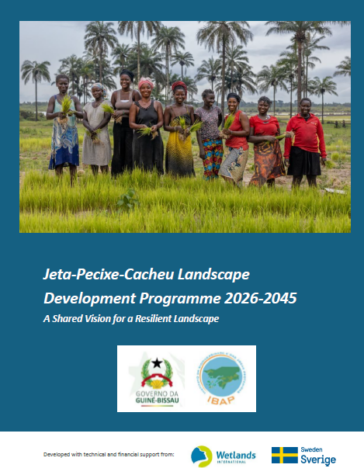
Guinea-Bissau has taken a monumental step toward safeguarding its ecological future with the formal ratification of the Jeta-Pecixe-Cacheu (JPC) Landscape Development Programme 2026–2045. Signed on October 12, 2026, the institutional commitment anchors a two-decade strategic roadmap designed to balance long-term environmental conservation with sustainable regional development. The agreement was executed by key figures in West African environmental governance, including Ms. Aïssa Régala de Barros, Director-General of the Institute for Biodiversity and Protected Areas (IBAP), and Ms. Honorina Vasconcelos, Governor of the Cacheu region, under the strategic leadership of Mr. Ibrahima Thiam, Executive Director of Wetlands International West Africa.
This landmark development is more than a regional initiative; it represents a comprehensive structural framework addressing the intricate challenges of biodiversity loss, climate vulnerability, and socio-economic pressures in one of West Africa’s most ecologically vital estuarine zones. Backed by international development partners and anchored in community-led participation, the 20-year programme is expected to serve as a blueprint for transboundary ecological management across the wider sub-region.
Geographical Significance and Ecological Wealth of the JPC Landscape
Spanning an impressive 446,731 hectares, the Jeta-Pecixe-Cacheu landscape is a mosaic of rich, life-sustaining ecosystems. Home to approximately 245,000 residents, the region is characterized by extensive mangrove forests, intricate tidal estuaries, terrestrial woodlands, and expansive wetlands. These natural habitats form the ecological backbone of Guinea-Bissau, performing critical ecosystem services such as carbon sequestration, coastal protection against storm surges, and the maintenance of essential fish nurseries that sustain local and national economies.

The biodiversity housed within the JPC landscape is of global significance. The region serves as a vital sanctuary for numerous migratory and resident waterbirds, while its warm, protected waters and mangrove creeks provide critical habitats for iconic and threatened species, including the West African manatee (Trichechus senegalensis) and the Atlantic humpback dolphin (Sousa teuszii). For the local human populations—who rely heavily on artisanal fishing, small-scale agriculture, and forestry—the health of these ecosystems is directly tied to food security, economic viability, and cultural identity.
Despite its immense ecological and economic value, the JPC landscape faces a compounding array of contemporary threats. Unregulated resource extraction, shifting land-use patterns, accelerating infrastructural development, and the intensifying pressures of global climate change have begun to degrade the resilience of these fragile habitats. Historically, conservation efforts in the area suffered from administrative fragmentation, uneven institutional capacities, and a reliance on short-term project financing. These limitations often restricted the longevity and overall impact of individual conservation interventions, highlighting an urgent need for a unified, landscape-scale strategy.
Chronology and Participatory Development of the 20-Year Programme
The genesis of the Jeta-Pecixe-Cacheu Landscape Development Programme 2026–2045 stems from years of collaborative planning, stakeholder consultation, and institutional alignment. Developed as a cornerstone of the broader Wetlands for Resilience (W4R) initiative—which receives vital financial and technical support from the Swedish International Development Cooperation Agency (Sida)—the programme is the culmination of inclusive dialogues facilitated by the JPC Landscape Stakeholder Platform.
Rather than being imposed from the top down, the 20-year framework was forged through an extensive participatory process involving a broad spectrum of actors. Public institutions, local community leaders, civil society organizations, academic researchers, and international development partners all contributed to shaping the core pillars of the agreement. This participatory approach ensures that the voices of those who inhabit and depend on the landscape are integrated into decision-making processes from the outset.

The strategic framework of the programme is anchored by five distinct priority areas:
- Governance: Strengthening institutional coordination, legal frameworks, and cross-sectoral collaboration to transcend administrative boundaries.
- Communication and Environmental Education: Raising public awareness and fostering a culture of environmental stewardship among younger generations and local resource users.
- Conservation and Restoration: Actively protecting vulnerable habitats while restoring degraded mangroves, forests, and wetlands.
- Sustainable Livelihoods: Promoting green economies, climate-smart agriculture, and sustainable fisheries that improve community well-being without depleting natural assets.
- Financing: Establishing sustainable, long-term financing mechanisms to reduce dependency on short-term grants and ensure continuous operational capacity.
Official Responses and Institutional Perspectives
The signing ceremony brought together high-ranking officials who underscored the necessity of collaborative governance in addressing twenty-first-century environmental challenges.
Ms. Aïssa Régala de Barros, Director-General of IBAP, emphasized that administrative boundaries should not dictate environmental management. "The future of the Jeta-Pecixe-Cacheu landscape depends on our ability to work together beyond administrative boundaries and individual projects," she stated. "This 20-year programme provides a common vision to coordinate our efforts, strengthen the sustainable management of natural resources and place local communities at the heart of conservation. It is an important step towards ensuring that our ecosystems and the people who depend on them can thrive together."
Echoing this sentiment, Mr. Ibrahima Thiam, Executive Director of Wetlands International West Africa, drew attention to the operational realities of transitioning from planning to execution. He issued an open call to the international community and donor agencies to support the initiative. "Through the JPC Landscape Stakeholders’ Platform, partners are now committed to turn this shared vision into coordinated action for healthy ecosystems, resilient communities and a natural and cultural heritage stewarded for generations to come," Thiam remarked. "With a clear programme and shared priorities in place, we invite donors and development partners to invest in this joint effort and help unlock the resources needed to deliver meaningful, lasting results across the landscape."

Alignment with UNESCO Biosphere Reserve Aspirations
Beyond immediate regional conservation goals, the institutionalization of the JPC Landscape Development Programme serves a critical role in Guinea-Bissau’s broader international conservation ambitions. The agreement directly accelerates ongoing efforts to secure official UNESCO Biosphere Reserve designation for the Jeta-Pecixe-Cacheu landscape.
Biosphere reserves are internationally recognized sites established to promote solutions reconciling the conservation of biodiversity with its sustainable use. By solidifying political commitment, enhancing institutional coordination, and setting clear benchmarks for environmental protection, the new 20-year framework satisfies many of the rigorous criteria required for UNESCO recognition. Achieving this status would place the JPC landscape on the global map, drawing international attention, specialized scientific research, and potential ecotourism opportunities to the region.
Broader Regional Context: The Guinea-Bissau and Senegal Bilateral Agreement
The signing of the JPC programme does not occur in a vacuum; it is part of an expanding wave of transboundary environmental diplomacy in West Africa. Just days prior to the JPC ratification, on October 2, 2026, Guinea-Bissau’s Minister for the Environment and Climate Action joined forces with Senegal’s Minister for the Environment and Ecological Transition to sign a historic cross-border cooperation agreement.
This bilateral pact is specifically aimed at strengthening joint management of the Cacheu-Basse-Casamance cross-border coastal zone. By aligning environmental policies and enforcement mechanisms across their shared international border, Guinea-Bissau and Senegal are actively working toward the creation of a unified cross-border biosphere reserve. This broader regional connectivity is vital, as ecological processes—such as fish migration, avian flyways, and hydrological flows—do not respect human-drawn borders. The synergy between the internal JPC Landscape Development Programme and the bilateral Senegal-Guinea-Bissau agreement demonstrates a cohesive, macro-level approach to preserving West Africa’s Atlantic coastal heritage.
Fact-Based Analysis of Implications and Future Outlook
The launch of the JPC Landscape Development Programme 2026–2045 carries profound implications for conservation science and socio-economic development in West Africa. By committing to a 20-year timeline, the stakeholders have insulated long-term ecological goals from the disruptive cycles of short-term political shifts and funding gaps.
However, analysts note that the ultimate success of the programme will depend on three critical factors: consistent implementation, active community engagement, and the successful mobilization of long-term international financing. While the framework provides an excellent strategic roadmap, translating policy commitments on paper into tangible ecological recovery on the ground requires robust monitoring systems, transparent governance, and equitable benefit-sharing mechanisms for local populations.
If successfully executed, the JPC initiative will not only secure the ecological integrity of Cacheu, Jeta, and Pecixe, but it will also provide a replicable model for integrated landscape management across coastal West Africa. By proving that human well-being and biodiversity conservation can advance hand in hand, Guinea-Bissau is setting a commendable standard for environmental leadership in an era of unprecedented climate uncertainty.
