
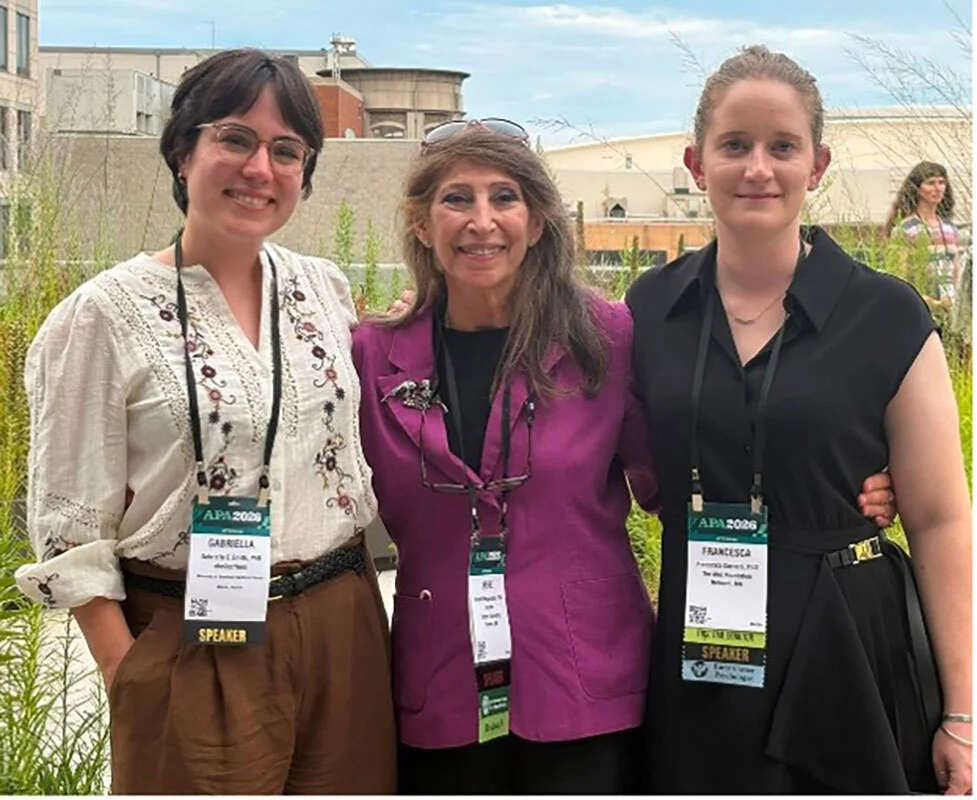
The year 2026 has proven to be a period of profound professional recognition for Dr. Irene Pepperberg, a pioneer in the field of avian cognition. Recently, Dr. Pepperberg was honored with two prestigious lifetime achievement awards: one from the Coller-Dolittle Foundation and another from Division 3 (Experimental Psychology) of the American Psychological Association (APA). In addition to these accolades, she has been elected to a three-year term as a Member-At-Large for the APA’s Division 3. While these honors serve as a capstone to a career spanning nearly five decades, Dr. Pepperberg emphasizes that the research conducted since 1977 is the result of a vast, collaborative network of human researchers and avian subjects, rather than the work of a single scientist.
The Genesis of Avian Cognitive Research
Dr. Pepperberg’s career began in 1977 at Purdue University, a time when the scientific consensus regarding animal intelligence was significantly more restrictive than it is today. Working with borrowed laboratory space and limited initial funding, she initiated the Alex Foundation research program. The early years were defined by skepticism from the scientific community; her initial grant applications were frequently rejected by reviewers who questioned the feasibility of teaching a parrot to communicate using human language.
The methodology adopted by Dr. Pepperberg was rooted in the modeling technique developed by German behavioral biologist Dietmar Todt. This approach involved a social-learning model where the parrot, Alex, observed interactions between trainers to learn the labels for objects and concepts. By demonstrating that an African Grey parrot could categorize materials, colors, and shapes, Pepperberg provided the empirical data necessary to secure foundational support from the National Science Foundation. This early success proved that avian species possessed advanced cognitive capabilities previously thought to be exclusive to primates and cetaceans.
A Chronology of Research Environments
The trajectory of Dr. Pepperberg’s work has been marked by frequent institutional transitions, each contributing to the evolving nature of her research. Following her tenure at Purdue, she moved to Northwestern University, where she continued her investigations into avian linguistics and intelligence. This period was critical for the survival of the research subjects, as it involved complex medical interventions for Alex, including life-saving micro-surgery for aspergillosis, a common fungal infection in birds.
The research then migrated to the University of Arizona, where the scope of the project expanded to include additional parrots such as Kyaaro, Alo, and eventually Griffin. Despite the academic shifts, the methodology remained consistent, focusing on the parrot’s ability to grasp abstract concepts such as "same" versus "different" and numerical reasoning.
In the early 2000s, the lab relocated to the MIT Media Lab and Brandeis University. This era saw the introduction of Arthur (Wart), a parrot whose contributions added depth to the longitudinal data regarding social learning and memory. During this time, the project was bolstered by a significant academic residency at the Radcliffe Institute, providing the necessary stability for data synthesis.
The most recent chapters of the research have taken place at Harvard University’s Department of Psychology and, currently, at Boston University. These transitions were marked by the loss of original subjects—Alex died in 2007 and Arthur passed away shortly before the departure from Brandeis—and the addition of new subjects, such as Athena. The laboratory’s ability to maintain continuity, despite moving through various academic departments and temporary facilities, including a period of home-based research during the COVID-19 pandemic, reflects a remarkable degree of institutional resilience.

The Collaborative Infrastructure of Avian Studies
A core theme of Dr. Pepperberg’s recent reflections is the "army of individuals" required to sustain the research. The laboratory’s success has relied upon a steady pipeline of undergraduate and graduate students who performed the intensive, daily work of training and data collection. Key figures such as Robert Mitchell, Kimberly Goodrich Fisher, Denice Warren, and Pamela Banta Lavenex provided the foundational labor that allowed the science to progress.
Furthermore, the laboratory’s administrative stability was often maintained by dedicated lab managers, such as Arlene Levin Rowe and Suzanne Gray. Their roles were instrumental in coordinating the logistics of daily operations, especially during periods of high-stress transitions between universities. The involvement of veterinary professionals, including Susan Brown and Greg Harrison, underscores the ethical commitment to the welfare of the research subjects, a cornerstone of Dr. Pepperberg’s career.
Implications for Comparative Psychology
The impact of Dr. Pepperberg’s work on the broader field of psychology cannot be overstated. By demonstrating that parrots could engage in complex cognitive tasks—such as numerical sequencing and conceptual categorization—she helped dismantle the "behaviorist" bias that dominated early 20th-century psychology. Her research forced a re-evaluation of the definition of "intelligence" across species, suggesting that the architecture of the avian brain, despite its distinct biological structure, supports complex cognitive functions similar to those of mammals.
The data generated by the Alex Foundation has been cited in hundreds of peer-reviewed journals, contributing to the development of cognitive ethology. The implications of these findings extend to developmental psychology, as the modeling technique used with parrots mirrors the way human children acquire language. Consequently, the work has influenced both the study of animal behavior and the understanding of how language and communication emerge in complex social systems.
Institutional Recognition and Future Outlook
The awards from the Coller-Dolittle Foundation and the APA represent a formal acknowledgement by the scientific community that the "Alex studies" are foundational to modern cognitive science. These honors also serve as an endorsement of the collaborative model of science. As Dr. Pepperberg moves into her role as a Member-At-Large for the APA’s Division 3, she continues to advocate for the importance of long-term longitudinal studies.
The ongoing work at the current Boston University-affiliated laboratory remains focused on the next generation of avian cognition. With the support of contemporary research assistants and a network of academic partners, the research continues to probe the limits of parrot intelligence. The laboratory’s current focus, as in previous decades, remains on the ethical treatment of research subjects and the rigorous documentation of cognitive performance.
A Legacy Defined by Collective Inquiry
Dr. Pepperberg’s reflection on her recent awards serves as a case study in the necessity of interdisciplinary and intergenerational collaboration. By acknowledging the students, donors, and colleagues who supported the lab through its various iterations, she highlights the logistical challenges inherent in high-level scientific research. The survival of the Alex Foundation through nearly 50 years of shifting academic landscapes and personal challenges serves as a template for persistence in scientific inquiry.
As the scientific community looks back on the progress made since 1977, the legacy of this work is clear: the study of avian intelligence has shifted from the fringes of psychology to a central pillar of comparative science. The recognition awarded to Dr. Pepperberg in 2026 is, in essence, an acknowledgment of the collective body of work that has redefined humanity’s understanding of the animal mind. For those who have participated in the research, these awards serve as a testament to the fact that the most significant scientific breakthroughs are rarely the work of a single individual, but rather the result of a persistent, multi-generational commitment to discovery.
