
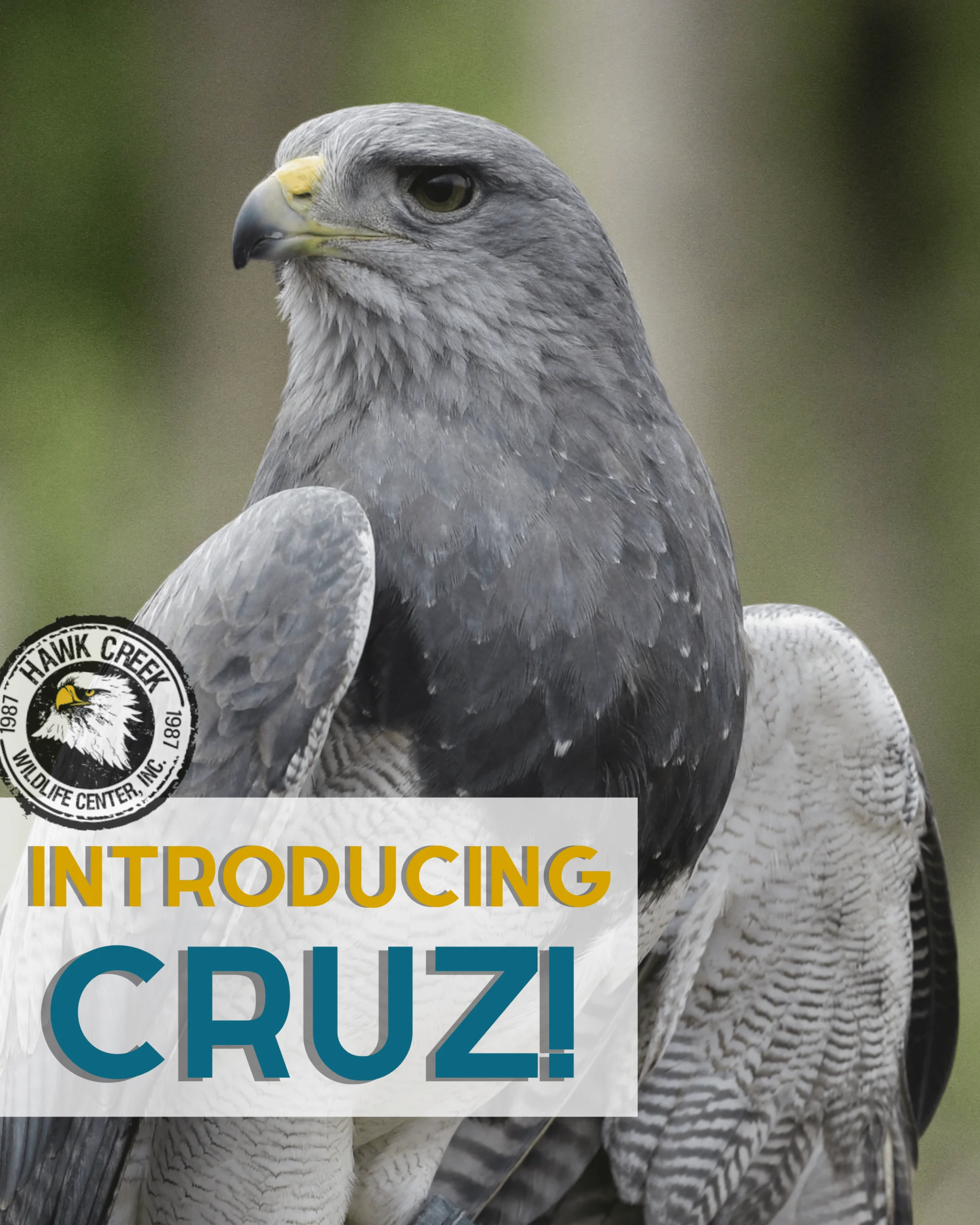
Hawk Creek, a renowned sanctuary dedicated to the education and conservation of birds of prey, has officially introduced its newest resident, a striking Black-Chested Buzzard-eagle. Known by a variety of scientific and regional monikers, including the Chilean Blue Eagle, Patagonian Eagle, and Gray Buzzard Eagle, this magnificent raptor will be affectionately known at Hawk Creek as Cruz. This introduction marks a significant moment for the sanctuary, offering the local community and visitors an unprecedented opportunity to observe and learn about a species rarely encountered in the United States. The arrival of Cruz is a testament to Hawk Creek’s expanding global reach and its commitment to fostering a deeper understanding of avian biodiversity and the critical need for conservation.
A Jewel of South America’s Highlands Finds a New Home
The Black-Chested Buzzard-eagle (Geranoaetus melanoleucus) is a large bird of prey native to the elevated, open habitats of South America, ranging from the Andes Mountains to the Patagonian steppes. These majestic raptors are characterized by their impressive wingspan, typically measuring between 1.4 to 1.8 meters (4.6 to 5.9 feet), and their distinctive plumage. Adult males often display a slate-gray back, a striking black chest, and white underparts, while females are generally larger and may exhibit more subtle variations in coloration. Their keen eyesight and powerful talons make them formidable hunters, primarily preying on small mammals such as degus (Octodon degus), an important native rodent species in their range, and importantly, invasive European hares (Lepus europaeus), which can impact native ecosystems. Their hunting strategy often involves soaring at considerable heights, hence the descriptive moniker "buzzard-eagle," scanning the landscape below for any movement.
The presence of Cruz at Hawk Creek is not an isolated event but rather a carefully orchestrated outcome of a robust international partnership. Hawk Creek collaborates closely with leading eagle conservationists at Sia in Oklahoma. Sia, the Comanche Ethno-Ornithological Initiative, is at the forefront of global eagle conservation, working to protect raptor populations and their habitats across various continents. This collaborative effort allows Hawk Creek to not only host rare and fascinating species but also to actively contribute to and learn from vital conservation programs operating on a global scale. Through this alliance, Hawk Creek has previously introduced other remarkable species that are seldom seen in the U.S., such as Jara, a Short-toed Snake Eagle (Circaetus gallicus), and Onyx, a Verreaux’s Eagle (Aquila verreauxii). These introductions serve a dual purpose: to provide educational opportunities for the public and to raise awareness about the challenges faced by these magnificent birds in their native environments.
A Shared Vision for Avian Conservation
The introduction of Cruz is more than just adding a new exhibit; it represents a tangible outcome of a shared vision between Hawk Creek and Sia. The partnership is built on a mutual dedication to the preservation of raptor species and the ecosystems they inhabit. Sia, with its deep roots in understanding the ecological and cultural significance of birds of prey, brings invaluable expertise to this collaboration. Their work extends beyond mere species protection, encompassing a holistic approach that often integrates traditional ecological knowledge with modern scientific research.
William "Two-Raven" Voelker, a globally recognized eagle conservationist and a prominent figure at Sia, will be a key participant in this initiative. Voelker, also known by his Comanche name Waha Thuweeka, embodies a profound connection to the natural world and a deep understanding of raptor ecology. His involvement underscores the scientific rigor and cultural sensitivity that define Sia’s conservation philosophy. His expertise in ethno-ornithology—the study of the relationship between people and birds—provides a unique lens through which to understand and protect these apex predators. Voelker’s participation is expected to enrich the public’s understanding of not only the biological aspects of eagle conservation but also the cultural importance these birds hold for indigenous communities.
Wild Earth Event: A Hub for Knowledge Exchange and Action
To further amplify the educational impact of Cruz‘s arrival and to foster a broader dialogue on raptor conservation, Hawk Creek is hosting a special event titled "Wild Earth." This event, scheduled for May 13th, will serve as a platform for engaging with the community and for sharing critical insights into the world of eagle conservation. A central feature of the Wild Earth event will be a presentation and discussion led by William "Two-Raven" Voelker. Attendees will have the unique opportunity to hear directly from a leading expert about the ongoing conservation efforts, the specific challenges faced by species like the Black-Chested Buzzard-eagle, and the role that individuals and organizations can play in safeguarding these iconic birds.
The "Wild Earth" event is designed to be more than just an informational session; it aims to inspire action and foster a sense of collective responsibility. By bringing together experts, enthusiasts, and the general public, Hawk Creek and Sia intend to cultivate a more informed and engaged community of conservation advocates. The event will likely delve into topics such as habitat preservation, the impact of climate change on raptor populations, the ethical considerations of ex-situ conservation programs, and the importance of combating illegal wildlife trade. The timing of the event, following Cruz‘s introduction, ensures that the public has a concrete and engaging example to connect with the broader conservation narratives.
Supporting Data and Conservation Context
The Black-Chested Buzzard-eagle, while not currently listed as globally endangered by the IUCN (International Union for Conservation of Nature), faces localized threats throughout its South American range. These threats can include habitat loss due to agricultural expansion and deforestation, direct persecution by humans in some regions due to perceived competition with livestock, and the impact of rodenticides on their prey base. Understanding these localized pressures is crucial for effective conservation. For instance, studies in Argentina have documented the impact of land-use changes on raptor nesting success, highlighting the need for landscape-level conservation strategies that consider the connectivity of habitats.
The partnership between Hawk Creek and Sia is strategically important in this context. By collaborating, they can pool resources, share best practices, and amplify their collective voice in advocating for conservation policies. Sia’s work, for example, often involves community-based conservation initiatives that empower local populations to become stewards of their natural heritage. This approach is vital for the long-term success of any conservation program, as it ensures that the needs and knowledge of the people living alongside these species are integrated into conservation planning.
The introduction of species like Cruz, Jara, and Onyx to North American audiences serves a vital educational purpose. Many people are unaware of the incredible diversity of raptor species that exist beyond their immediate surroundings. By providing close-up encounters and expert-led educational programs, Hawk Creek aims to foster empathy and a sense of global interconnectedness. This can translate into increased public support for conservation efforts, both domestically and internationally, and can inspire future generations of conservationists.
Implications and Broader Impact
The arrival of Cruz and the subsequent "Wild Earth" event signify Hawk Creek’s growing commitment to international conservation and education. This initiative moves beyond local outreach to address the global challenges facing avian wildlife. The partnership with Sia highlights the power of collaboration across organizations with complementary expertise and shared values. The inclusion of ethno-ornithological perspectives, championed by individuals like William "Two-Raven" Voelker, offers a more nuanced and culturally informed approach to conservation, recognizing the intricate relationship between humans and the natural world.
For the community, the opportunity to learn about and connect with a species like the Black-Chested Buzzard-eagle can be transformative. It broadens perspectives on biodiversity, underscores the interconnectedness of ecosystems, and fosters a deeper appreciation for the natural world. By showcasing species that are rarely observed in the U.S., Hawk Creek not only educates but also inspires a sense of wonder and responsibility towards global wildlife. The "Wild Earth" event, in particular, is poised to become a significant moment for knowledge dissemination and for galvanizing public support for critical conservation initiatives. The long-term implications of such programs extend to fostering a more environmentally conscious citizenry, capable of making informed decisions that contribute to the preservation of our planet’s invaluable biodiversity. This proactive approach, bridging continents and cultures, is essential for the continued survival of magnificent raptors like Cruz and the wild places they call home.
