
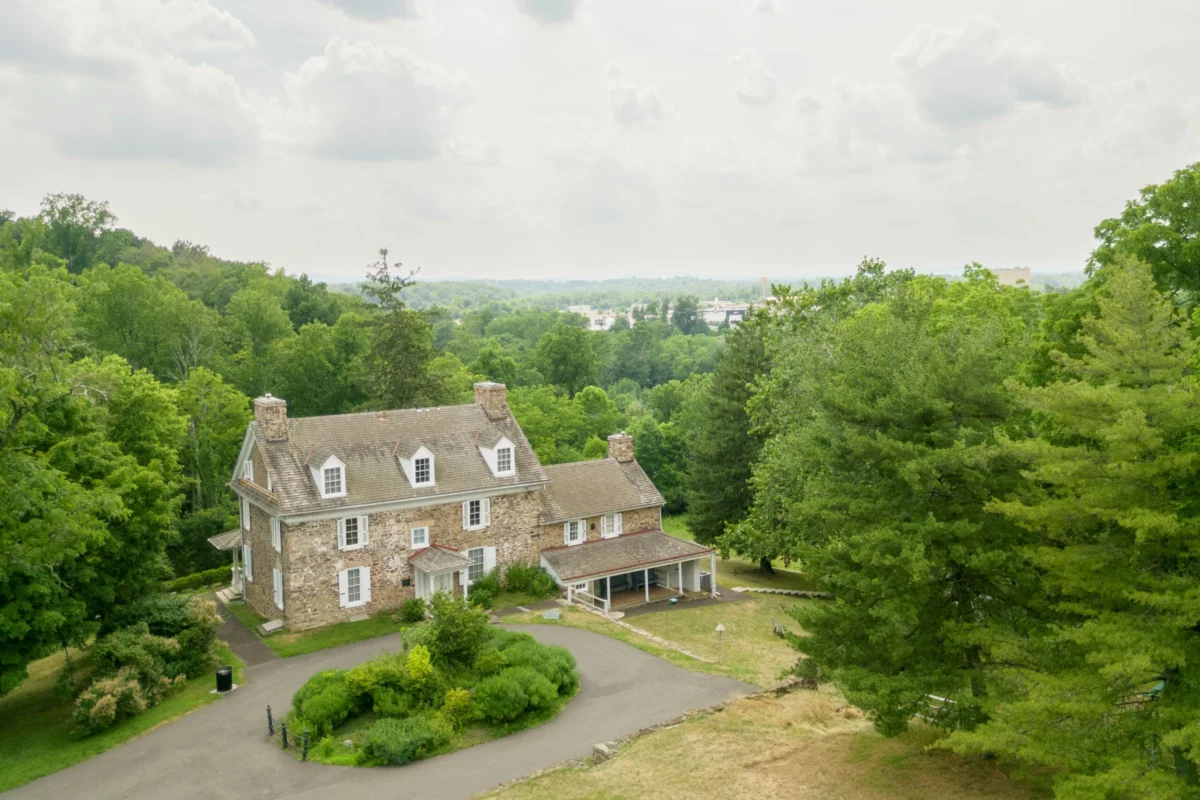
The John James Audubon Center at Mill Grove, the historic Pennsylvania estate where the famed ornithologist and artist John James Audubon honed his revolutionary technique for depicting birds, has received formal recognition from the National Trust for Historic Preservation. This significant designation enrolls Mill Grove as an affiliate member of the prestigious Historic Artists’ Homes & Studios (HAH&S) program, cementing its place among the nation’s most important sites for American art and cultural heritage. The announcement, made by Audubon Mid-Atlantic, highlights the profound historical and artistic significance of the 1762 three-story farmhouse and its surrounding natural landscape, which served as the foundational canvas for Audubon’s monumental work.
This affiliation underscores Mill Grove’s critical role in the trajectory of American art and natural history. It was here, upon his arrival in America in 1803 at the age of 18, that John James Audubon began to develop his distinctive method of drawing birds "from life." Prior to Audubon, many bird illustrations were rendered from taxidermied specimens, resulting in stiff, unnatural poses. Audubon’s innovative approach involved observing birds in their natural habitats, capturing their dynamic movements, vibrant colors, and individual characteristics with an unprecedented level of realism and artistic flair. This period at Mill Grove, though relatively brief, was instrumental in shaping the artistic vision that would culminate in The Birds of America, a seminal work comprising 435 hand-colored, life-size prints of North American birds, published between 1827 and 1838.
A Formative Period: Audubon’s Life at Mill Grove
John James Audubon’s tenure at Mill Grove represents a pivotal chapter in his life and artistic development. Born Jean-Jacques Audubon in Les Cayes, Saint-Domingue (now Haiti) in 1785, he was the illegitimate son of a French plantation owner and a Creole chambermaid. He was raised in France by his father and stepmother, developing an early passion for nature and drawing. His father sent him to America in 1803 to oversee a lead mine on the Mill Grove property, hoping to steer him towards a career in business. However, Audubon’s true calling lay elsewhere.
The 284-acre property, located along the scenic Perkiomen Creek in what is now Audubon, Pennsylvania, offered an idyllic setting for his burgeoning ornithological pursuits. The diverse ecosystems of woodlands, meadows, and waterways provided a rich environment for observing a wide array of bird species. It was during these years that Audubon, largely self-taught, experimented with various drawing techniques, often using charcoal, pastels, and watercolors. He developed a keen eye for detail and a unique method of posing freshly killed birds with wires to capture lifelike positions, a practice that, while controversial by modern standards, was revolutionary for its time and allowed for anatomical accuracy combined with dynamic composition.
While his business ventures often faltered, his artistic and scientific endeavors flourished. He met and married Lucy Bakewell, the daughter of a neighboring landowner, in 1808. Though he left Mill Grove permanently that same year to pursue various mercantile ventures that ultimately failed, the foundation for his life’s work had been firmly laid. The techniques refined and the passion ignited during his Mill Grove years propelled him through decades of arduous travel across the American wilderness, collecting specimens and documenting the continent’s avian fauna.
The Monumental Achievement of The Birds of America
The impact of The Birds of America cannot be overstated. Printed on "double elephant folio" sheets measuring approximately 39.5 by 29.5 inches (100 cm by 75 cm), each plate was hand-colored by skilled artisans. The sheer scale and ambition of the project were unprecedented. Audubon personally financed much of the venture through subscriptions, traveling extensively through Europe to secure patrons. Each complete set, comprising 435 plates bound in four volumes, was incredibly expensive for its time, costing around $1,000 (equivalent to tens of thousands of dollars today).
Only an estimated 175 to 200 complete sets were ever produced, with around 120 known to exist today, making them among the rarest and most valuable books in the world. The work not only provided stunning artistic representations but also contributed significantly to scientific knowledge, documenting species and behaviors previously unrecorded. Audubon’s detailed observations and life-sized depictions brought the wonder of North American birds to a broad audience, fostering an appreciation for wildlife that would later inspire the conservation movement.
The Historic Artists’ Homes & Studios Program
The National Trust for Historic Preservation’s Historic Artists’ Homes & Studios (HAH&S) program, established in 1999, is a distinguished network dedicated to interpreting and preserving the physical spaces where American art was created. Its mission extends beyond mere structural preservation, focusing on the immersive experience of understanding an artist’s creative environment, their daily life, and the inspirations drawn from their surroundings. The program champions the idea that these sites offer unparalleled insight into the artistic process and the cultural context of American visual art heritage.
HAH&S currently encompasses over 50 sites across 24 states, representing a diverse array of artists from various periods and disciplines. These include the homes and studios of painters like Thomas Cole (founder of the Hudson River School), sculptors like Augustus Saint-Gaudens, photographers like Ansel Adams, and modernist icons like Georgia O’Keeffe. Each site offers unique educational programs and interpretive experiences, collectively working to foster innovation in storytelling and to ensure that the legacy of American visual art is understood and appreciated by future generations.
Inclusion in the HAH&S program is a rigorous process, requiring sites to demonstrate significant artistic importance, high levels of historical integrity, public accessibility, and robust interpretive programming. For Mill Grove, this designation recognizes not only the historical authenticity of the 1762 farmhouse but also the profound influence the site had on Audubon’s artistic methodology and the enduring impact of his work on art, science, and conservation.
The National Trust for Historic Preservation: A Legacy of Safeguarding Heritage
The National Trust for Historic Preservation, chartered by Congress in 1949, is a privately funded nonprofit organization dedicated to saving America’s historic places. It works to protect places that tell America’s stories, advocating for preservation, providing grants, and developing innovative programs that foster a deeper connection between people and their shared heritage. The Trust’s efforts span a wide range of preservation activities, from saving individual historic buildings to advocating for federal preservation policies and operating a portfolio of historic sites across the country.
The HAH&S program is one of the Trust’s key initiatives, reflecting its commitment to recognizing and preserving cultural landscapes and the specific environments that shaped American creative genius. By adding the John James Audubon Center at Mill Grove to this esteemed network, the National Trust underscores the site’s importance not just as a historic home but as a crucible of American artistic and scientific innovation.
Chronology of Key Milestones
- 1762: The historic farmhouse at Mill Grove, now central to the John James Audubon Center, is constructed.
- 1785: John James Audubon is born in Saint-Domingue (Haiti).
- 1803: Audubon arrives in America and settles at Mill Grove, beginning his critical period of artistic development.
- 1803-1808: Audubon lives at Mill Grove, refining his "drawing from life" technique and laying the groundwork for The Birds of America.
- 1808: Audubon leaves Mill Grove permanently to pursue other ventures.
- 1827-1838: The Birds of America is published in double elephant folio, solidifying Audubon’s artistic and scientific legacy.
- 1851: John James Audubon dies in New York City.
- 1949: The National Trust for Historic Preservation is chartered by the U.S. Congress.
- 1970: The John James Audubon Center at Mill Grove is officially established by the Montgomery County Commissioners in partnership with the National Audubon Society, opening to the public as a museum and wildlife sanctuary.
- 1999: The Historic Artists’ Homes & Studios program is founded by the National Trust for Historic Preservation.
- [Current Year]: The John James Audubon Center at Mill Grove is designated an affiliate member of the HAH&S program.
Statements and Reactions to the Designation
Officials at Audubon Mid-Atlantic expressed immense pride and gratitude for the national recognition. "This designation by the National Trust for Historic Preservation is a profound honor that validates decades of dedication to preserving Audubon’s legacy and the natural beauty of Mill Grove," stated a spokesperson for Audubon Mid-Atlantic. "It acknowledges the irreplaceable role this site played in shaping one of America’s most iconic artists and scientists. We are thrilled that more people nationwide will now recognize Mill Grove as a cradle of both art and conservation."
Leadership at the John James Audubon Center at Mill Grove emphasized the designation’s potential to elevate the visitor experience and expand educational outreach. "Becoming part of the Historic Artists’ Homes & Studios program will undoubtedly raise our profile, attracting new visitors who seek to connect with the origins of American art and natural history," commented the Center’s director. "It strengthens our ability to tell the story of Audubon’s genius and inspire a new generation to appreciate birds, art, and the importance of environmental stewardship, just as Audubon did over two centuries ago."
A representative from the National Trust for Historic Preservation highlighted Mill Grove’s unique contribution to the HAH&S network. "The John James Audubon Center at Mill Grove perfectly embodies the spirit of artistic innovation and environmental stewardship that our program seeks to celebrate and preserve," said the spokesperson. "Audubon’s time here was transformational, not only for his personal artistic journey but for how we perceive and document the natural world. This site serves as a powerful testament to the intertwined narratives of American art, science, and the enduring call for conservation. We are delighted to welcome Mill Grove to our growing family of culturally significant sites."
The Center Today: A Nexus of Art, Nature, and Education
Today, the John James Audubon Center at Mill Grove serves as a vibrant hub where visitors can immerse themselves in history, art, and nature. The site offers a multifaceted experience that extends beyond the historic farmhouse. Guests can explore miles of accessible walking trails that wind through diverse habitats, offering opportunities for birdwatching and connecting with the same landscape that inspired Audubon. The scenic Perkiomen Creek, a constant presence during Audubon’s time, continues to flow through the property, supporting a rich variety of wildlife.
A state-of-the-art visitor center complements the historic home, featuring immersive indoor and outdoor visual exhibitions. These exhibitions delve into Audubon’s life, his revolutionary artistic process, the scientific significance of his work, and the ongoing efforts in bird conservation. The museum regularly hosts rotating artwork exhibitions, often featuring contemporary wildlife artists, bridging Audubon’s historical legacy with modern artistic interpretations of nature. Educational programs are designed for all ages, from school groups to adult workshops, bringing history and science to life through interactive experiences, bird banding demonstrations, and habitat restoration projects.
A visit to Mill Grove offers a unique opportunity to witness many of the bird species famously depicted in The Birds of America still thriving in their natural environment. This tangible connection between Audubon’s historic artwork and the living, breathing subjects makes a visit to Mill Grove an inspiring and unforgettable experience, reinforcing the enduring relevance of Audubon’s conservation message in the 21st century.
Broader Impact and Implications
The designation of the John James Audubon Center at Mill Grove as an HAH&S affiliate carries significant implications across several domains:
- Enhanced Tourism and Economic Impact: National recognition will likely lead to an increase in visitor numbers, drawing both art enthusiasts and nature lovers from across the country and internationally. This influx of tourism will contribute positively to the local economy, benefiting businesses in Montgomery County, Pennsylvania, and the wider Philadelphia metropolitan area.
- Strengthened Preservation Efforts: Affiliation with the National Trust provides access to a network of preservation professionals, technical assistance, and potential funding opportunities. This support will be crucial for the continued maintenance and interpretation of the historic farmhouse and its grounds, ensuring the site’s integrity for future generations.
- Expanded Educational Outreach: The HAH&S program’s collaborative nature will allow Mill Grove to share best practices with other artist homes and studios, enriching its educational programming. It will also amplify its message about the interdisciplinary importance of art and science, inspiring a broader audience to engage with ornithology and conservation.
- Validation of Interdisciplinary Approach: The recognition reaffirms the unique position of Audubon at the intersection of art and science. His legacy at Mill Grove demonstrates how artistic expression can serve as a powerful tool for scientific documentation and public engagement, a model that remains highly relevant for contemporary environmental communication.
- Role in National Narrative: This designation firmly embeds Mill Grove into the national narrative of American artistic and scientific achievement. It highlights Pennsylvania’s role in fostering foundational moments in American cultural history and strengthens the argument for preserving places that shaped the nation’s creative identity.
- Future Prospects: The increased visibility and prestige associated with HAH&S affiliation open doors for new partnerships, collaborative projects, and potentially greater philanthropic support, enabling the Center to expand its exhibits, research, and conservation initiatives.
In conclusion, the formal recognition of the John James Audubon Center at Mill Grove by the National Trust for Historic Preservation is more than a mere accolade; it is a profound affirmation of a site that represents a nexus of art, science, and environmental consciousness. It celebrates the formative years of a legendary figure and ensures that the very ground where his vision took flight will continue to inspire and educate for generations to come, underscoring the timeless importance of preserving our shared cultural and natural heritage.
