
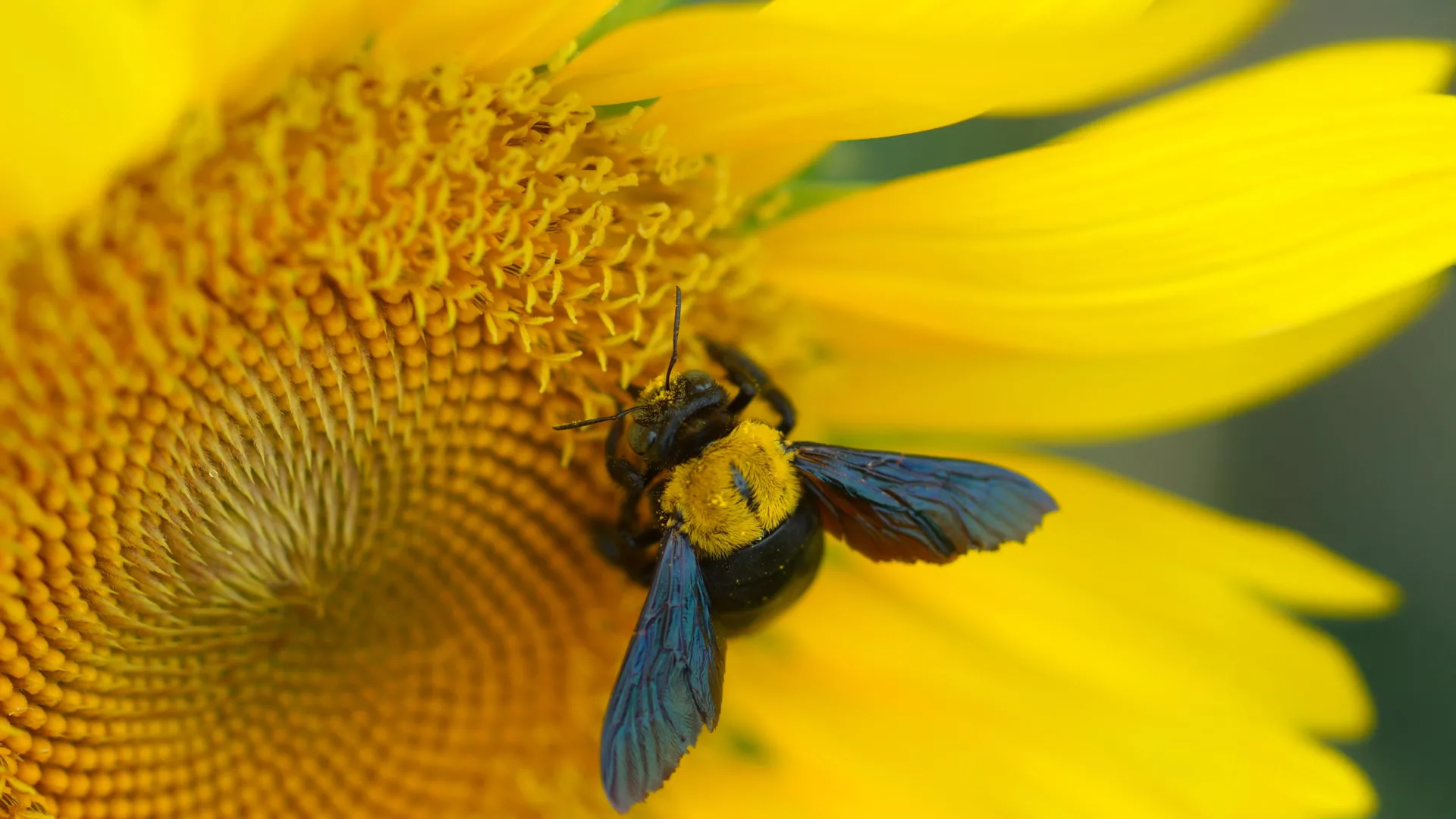
New research suggests that native bee species that build their nests inside plant stems may face the greatest immediate threat from rising temperatures linked to climate change, while bees that nest underground appear better equipped to avoid dangerous heat. This critical distinction, uncovered through an extensive study of Australian native bees, highlights how habitat choices fundamentally influence an insect’s vulnerability to a warming planet and underscores the urgent need for targeted conservation strategies.
The landmark study, published in the prestigious journal Nature Communications, delved into the heat tolerance of 95 native bee species found across the vast expanse of eastern mainland Australia. Researchers sampled populations from the tropical north, where ambient temperatures are consistently high, down to the cooler southern regions, providing a comprehensive geographical and ecological perspective. This broad scope allowed the team to map the evolutionary trajectory of heat tolerance in diverse bee lineages and to assess their current and future vulnerability to an increasingly warm climate, a pressing concern for biodiversity conservation globally.
A collaborative effort brought together a formidable team of scientists from several leading Australian institutions, including Macquarie University, The University of Sydney, La Trobe University, Flinders University, University of Wollongong, Adelaide University, and The University of Queensland. Their interdisciplinary approach combined expertise in ecology, evolutionary biology, and thermal physiology to unravel the complex interplay between species-specific traits and environmental pressures. The research represents a significant step forward in understanding the nuanced impacts of climate change on insect populations, particularly those vital for ecosystem health and agricultural productivity.
The Crucial Link Between Nesting Habits and Thermal Resilience
Australia is a global hotspot for bee diversity, home to an estimated 1,700 native bee species, a staggering number that often goes unnoticed amidst the focus on the introduced European honeybee. These native pollinators exhibit a fascinating array of life histories, with their nesting habits generally falling into three distinct categories, each offering varying degrees of protection from environmental extremes. Some species are subterranean architects, meticulously constructing burrows in the ground. Others opt for existing cavities in wood, such as hollows in living trees or fallen branches, while a third group, the focus of this study’s most concerning findings, utilizes the narrow confines of plant stems or small, pre-existing holes in twigs.
The study’s lead author, Dr. Carmen da Silva, a Research Fellow in the Pollinator Futures Research Centre at Macquarie University in Sydney, articulated the stark difference in thermal exposure. "Bees that nest underground can hide from extreme heat," Dr. da Silva explained. "As a result, they don’t experience temperatures as high as those that live above ground, particularly species that live in thin plant stems that offer very little insulation from the heat outside." This natural insulation provided by soil is a critical buffer, often maintaining significantly more stable and cooler temperatures than the ambient air, especially during intense heatwaves. Soil temperatures typically lag behind air temperatures and exhibit less extreme diurnal fluctuations, offering a crucial thermal refuge.
In stark contrast, stem-nesting species, often inhabiting hollowed-out pithy stems or abandoned insect borings, are highly exposed to the immediate fluctuations of air temperature. These narrow plant stems provide minimal, if any, thermal insulation, meaning the internal nest temperature can rapidly equilibrate with the external environment. "Stem-nesting species appear to have the lowest capacity to escape unfavorable environmental temperatures and are likely to be the most impacted by anthropogenic climate change in the near term," Dr. da Silva warned. This vulnerability stems from a reduced "thermal safety margin" – the difference between a bee’s physiological heat tolerance and the maximum temperatures it experiences in its microhabitat. For stem-nesters, this margin is precariously thin, leaving little room for adaptation as global temperatures continue their upward trend. The findings unequivocally indicate that nesting location is not merely a preference but a major determinant of a bee species’ capacity to cope with rising temperatures.
The Ecological and Economic Imperative of Bee Survival
Protecting bee populations extends far beyond mere biodiversity conservation; it is fundamental to the health of both natural ecosystems and the stability of global agriculture. As Dr. da Silva emphasized, "Bees are critical in ecosystems all over the world because of their role as pollinators, and they’re under threat from warming and drying climates." Their tireless work ensures the reproduction of countless plant species, which in turn form the base of food webs, provide habitat, and maintain ecosystem functions like soil stability and water filtration. Without bees, many native plant communities would face significant declines, leading to cascading effects throughout their respective ecosystems.
The economic implications are equally profound. "Bees sustain native ecosystems and play a crucial role in agricultural crop production," Dr. da Silva highlighted. The global economic value of insect pollination services, predominantly by bees, is estimated to be in the hundreds of billions of dollars annually. In Australia, native bees are vital pollinators for a range of high-value crops, particularly in tropical and subtropical regions. Macadamia nuts, avocados, mangos, lychees, and various berries are among the many agricultural products that rely heavily on the diligent work of native bee species. A decline in these pollinator populations could lead to reduced crop yields, increased production costs (e.g., through manual pollination), and significant economic losses for farmers and the broader agricultural sector. The Intergovernmental Science-Policy Platform on Biodiversity and Ecosystem Services (IPBES) has repeatedly underscored the critical role of pollinators and the threats they face, reinforcing the urgency of research like this.
Tropical Bees: On the Front Lines of Climate Risk
The researchers also identified a concerning geographical pattern: bee species living closer to the equator, particularly those in tropical regions, appeared more vulnerable to climate change, facing the highest overall risk. This finding challenges a common assumption that species in naturally hot environments are inherently better equipped to handle further warming.
Dr. Vanessa Kellermann, a Senior Lecturer in the Department of Ecology, Plant and Animal Sciences at La Trobe University and a senior author of the study, elaborated on this complexity. "Predicting which species will be vulnerable to climate change is one of the biggest challenges in ecology," Dr. Kellermann stated. The study revealed a nuanced reality: "We found bee species with the highest heat tolerance were not necessarily the safest from warming, because many of them already live in extremely hot environments."
This insight is critical. While tropical bees may possess a higher absolute heat tolerance compared to their temperate counterparts, they often exist at the very edge of their physiological limits. Even a seemingly small increase in ambient temperature, or a slight rise in the frequency and intensity of heatwaves, could push them beyond their capacity to survive. In essence, even species "adapted" to high temperatures may have little or no room left to cope with additional warming. This concept, known as being "close to the thermal optimum" or having a "narrow thermal safety margin," means that despite their impressive resilience to current conditions, tropical species are paradoxically more vulnerable to future warming. This vulnerability is compounded by climate models projecting that tropical regions will experience some of the most dramatic shifts in temperature and rainfall patterns, exacerbating the pressure on already stressed ecosystems.
Broader Context of Climate Change and Biodiversity
The findings of this study resonate within a broader global context of escalating climate change impacts on biodiversity. According to the United Nations Intergovernmental Panel on Climate Change (IPCC), global average temperatures have already risen by approximately 1.1 degrees Celsius above pre-industrial levels, with projections indicating further warming. Australia, a continent particularly susceptible to climate extremes, has experienced significant temperature increases, more frequent and intense heatwaves, and altered rainfall patterns. The CSIRO and Bureau of Meteorology’s "State of the Climate" reports consistently highlight these trends, including a significant increase in the number of extreme heat days.
Beyond direct thermal stress, climate change poses multiple indirect threats to bee populations. Altered flowering times (phenological mismatch) can mean bees emerge before their crucial food sources are available. Droughts can reduce floral resources and nesting materials. Increased frequency and intensity of bushfires, a growing concern in Australia, directly destroy habitat and nesting sites, and can drastically alter landscapes, leading to long-term impacts on pollinator communities.
Moreover, bees face a confluence of other anthropogenic pressures. Habitat loss and fragmentation due to urbanization and agricultural expansion reduce available nesting sites and foraging grounds. The widespread use of pesticides, particularly neonicotinoids, has been linked to bee declines globally, impairing their navigation, foraging, and reproductive success. Diseases and the spread of invasive species also add to the complex web of threats confronting these vital insects. Understanding the specific vulnerabilities, such as those related to nesting habits, allows for more precise and effective conservation interventions within this multifaceted crisis.
Implications for Targeted Conservation Strategies
The insights gleaned from this research provide a crucial foundation for developing more effective and targeted conservation strategies for native bees. Recognizing the heightened vulnerability of stem-nesting species means that conservation efforts can be specifically tailored to protect these particular groups.
For government environmental agencies and conservation organizations, this study signals the need for updated guidelines and increased funding for pollinator protection. Conservation plans should prioritize the preservation and restoration of habitats that provide diverse nesting options, with a particular focus on protecting environments crucial for stem-nesting bees. This could involve promoting practices such as leaving dead plant stems standing in gardens and natural areas, managing vegetation in ways that provide appropriate pithy stems, and potentially even carefully designed "bee hotels" (though their hygiene and suitability for native species require careful consideration). Reforestation and revegetation projects should incorporate plant species that offer suitable nesting substrates for a wide range of native bees, including those that favor stems.
From an agricultural perspective, the findings reinforce the importance of sustainable farming practices. Farmers, in collaboration with environmental scientists, could explore integrated pest management strategies that minimize pesticide use, particularly near areas where vulnerable native bee populations are known to nest. Creating and maintaining pollinator-friendly habitats within and around farmlands, such as planting native flower strips and retaining natural vegetation, could provide crucial refugia and foraging resources, helping to buffer against climate change impacts. Agricultural associations might advocate for policies that support these environmentally sound practices, recognizing the long-term benefits to crop productivity and ecosystem resilience.
Furthermore, the study highlights the necessity of comprehensive monitoring programs. Tracking the populations and distribution of stem-nesting bees, especially in tropical regions, will be critical for assessing the effectiveness of conservation interventions and for identifying areas where climate change impacts are most severe. This data can inform land-use planning and help prioritize conservation investments where they are most needed.
Understanding Native Bee Behavior: The Path Forward
Despite the significant findings of this study, the researchers acknowledge that much remains unknown about Australia’s incredibly diverse native bee populations. This knowledge gap underscores the increasing importance of ongoing research. As co-senior author Dr. Ros Gloag, a Senior Lecturer in Evolutionary Biology in the School of Life and Environmental Sciences at the University of Sydney, remarked, "We still know so little about most of Australia’s amazing native bees."
This research serves as a powerful call to action for further investigation. "This study helps us recognise that having a better understanding of native bee behavior is key to identifying the greatest threats to their wild populations," Dr. Gloag added. Future research needs to delve deeper into the specific microclimates experienced by bees in different nesting substrates, the behavioral adaptations they employ to cope with heat (e.g., activity patterns, thermoregulation), and the genetic mechanisms underlying heat tolerance. Detailed studies on the phenology of different bee species and their floral resources are also crucial to anticipate and mitigate phenological mismatches.
Interdisciplinary collaboration, combining field ecology, laboratory physiology, genetics, and climate modeling, will be essential to build a more complete picture of native bee ecology and to predict their responses to future environmental changes with greater accuracy. Public awareness campaigns, drawing on research like this, can also play a vital role in fostering appreciation for native bees and encouraging citizen science initiatives to monitor local populations.
In conclusion, the revelation that stem-nesting native bees face the most immediate and profound threat from rising temperatures due to their exposed nesting habits is a critical finding. It shifts the focus of conservation efforts, urging targeted interventions for these particularly vulnerable species, especially in tropical regions. By understanding the intricate connections between nesting behavior, thermal physiology, and climate change, scientists and policymakers can better equip themselves to protect these indispensable pollinators, safeguarding both natural ecosystems and the agricultural systems that depend on them for a sustainable future. The urgency of this challenge is clear, and the path forward requires continued research, informed policy, and concerted conservation action.
