

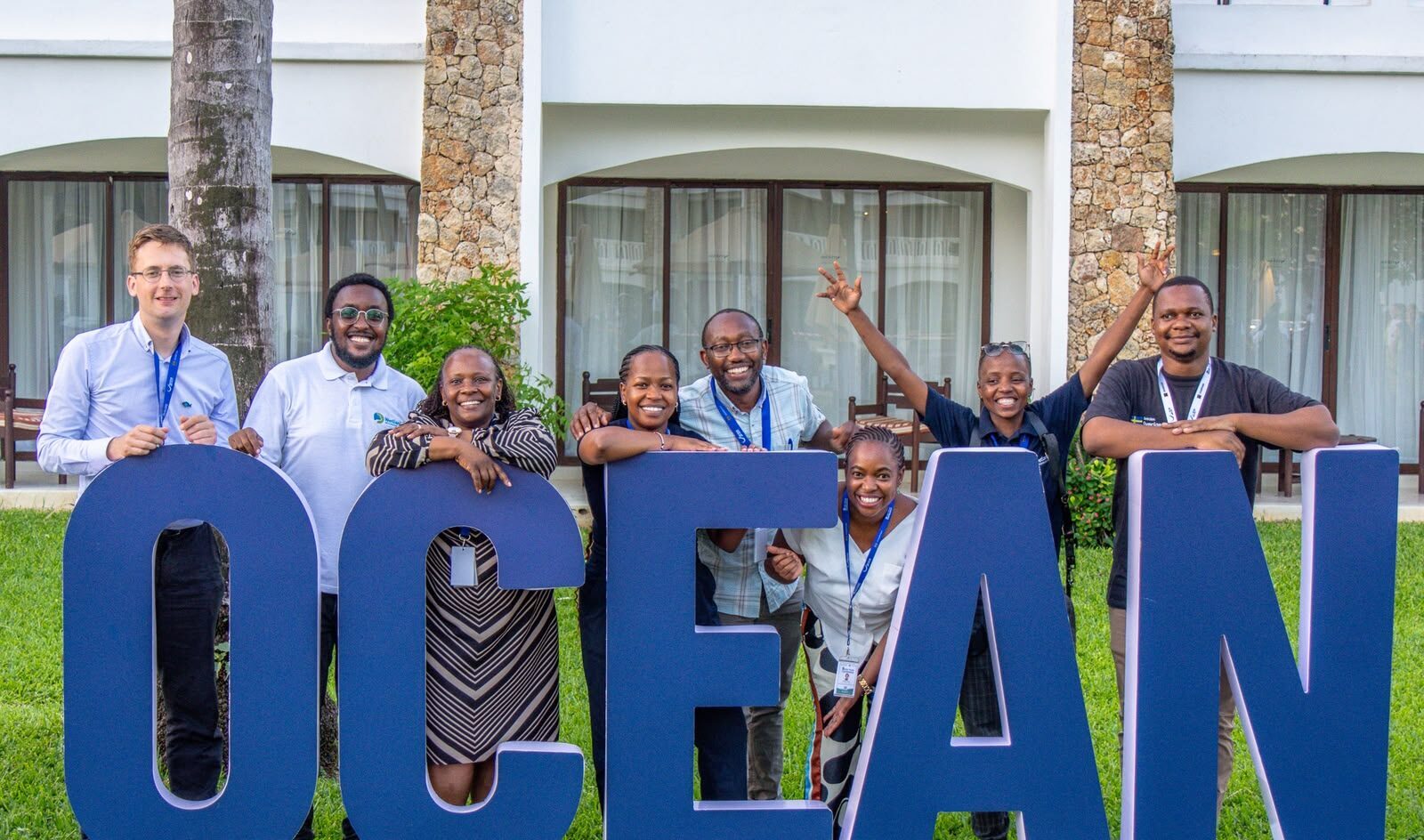
Mombasa, Kenya – June 23, 2026 – Teams from Wetlands International’s East Africa regional office and its Global Office convened in Mombasa, Kenya, to participate in the 11th Our Ocean Conference. Under the overarching theme, "Our Ocean, Our Heritage, Our Future," the delegates engaged with a diverse array of stakeholders, including government representatives, international partners, local communities, and investors, to advocate for the critical role of coastal wetlands in fostering ecological health, human well-being, and climate resilience.
The conference, a pivotal global forum for ocean conservation and sustainable use, provided a crucial platform for Wetlands International to articulate the multifaceted benefits of healthy coastal wetlands. Through a series of dynamic panel discussions, strategic networking events, in-depth partner meetings, and vibrant community-led conversations, the organization underscored how these vital ecosystems act as natural infrastructure, delivering tangible benefits for people, biodiversity, and the global climate.
Highlighting the Indispensable Role of Coastal Wetlands
Wetlands International’s presence at Our Ocean Conference 11 was marked by a dedicated focus on the essential services provided by coastal wetlands. These ecosystems, often overlooked in broader marine conservation discussions, are fundamental to the health and sustainability of our planet. Their contributions span a wide spectrum, from safeguarding coastlines against extreme weather events to supporting thriving fisheries and sequestering vast amounts of carbon.
The organization emphasized that coastal wetlands, including mangroves, salt marshes, and seagrass meadows, are exceptionally effective at mitigating the impacts of climate change. Their dense root systems stabilize shorelines, acting as natural buffers against storm surges, erosion, and sea-level rise – threats that are increasingly amplified by global warming. The Intergovernmental Panel on Climate Change (IPCC) has repeatedly highlighted the protective capacity of these ecosystems, with studies indicating that healthy mangrove forests can reduce wave energy by up to 66% and significantly decrease the impact of tsunamis.
Furthermore, these wetlands are unparalleled carbon sinks. Peatlands, a significant component of many coastal wetland systems, can store up to 30% of the world’s terrestrial carbon, despite covering only 3% of the Earth’s land surface. Coastal wetlands, in particular, exhibit a carbon sequestration rate that can be up to ten times higher than that of tropical forests. This makes their conservation and restoration a critical strategy in the global effort to combat greenhouse gas emissions and limit global temperature rise, aligning directly with the goals of the Paris Agreement.
Beyond their climate mitigation and adaptation functions, coastal wetlands are indispensable nurseries for a vast array of marine life. They provide critical habitat, breeding grounds, and feeding areas for countless fish species, crustaceans, and mollusks, many of which are commercially important. The health of global fisheries is intrinsically linked to the vitality of these coastal ecosystems. According to the Food and Agriculture Organization of the United Nations (FAO), over three billion people rely on fish as a primary source of protein, underscoring the socio-economic significance of wetland conservation.
The conference provided a unique opportunity for Wetlands International to showcase successful case studies and innovative approaches to wetland management and restoration from across East Africa and beyond. These initiatives demonstrate how integrated approaches, combining scientific research, community engagement, and policy advocacy, can lead to tangible improvements in ecosystem health and local livelihoods.
A Chronology of Engagement at Our Ocean Conference 11
The 11th Our Ocean Conference, held in Mombasa from June 20-23, 2026, brought together over 150 countries, international organizations, scientific institutions, and private sector entities. The conference’s agenda was structured around six key themes, reflecting the multifaceted challenges and opportunities facing the world’s oceans: Marine Pollution, Marine Climate Change, Marine Ecosystems, Sustainable Fisheries, Marine Resources, and Marine Governance.
Wetlands International’s participation began with a series of pre-conference workshops and bilateral meetings, aimed at forging new partnerships and strengthening existing collaborations. These initial engagements focused on identifying common goals and exploring synergistic approaches to wetland conservation and sustainable use.
On the opening day of the conference, June 21st, Wetlands International’s delegates actively participated in a series of high-level panel discussions. These sessions provided a platform to present research findings, share policy recommendations, and engage in critical dialogues on ocean governance and the role of nature-based solutions. A notable contribution came from a session focusing on "Blue Carbon and Coastal Resilience," where speakers highlighted the economic and environmental imperatives for investing in coastal wetland restoration projects.
Throughout the conference, Wetlands International organized and co-hosted several side events. These included a workshop on "Community-Based Wetland Management for Climate Adaptation," which showcased successful models of empowering local communities to become stewards of their coastal resources. Another key event was a roundtable discussion on "Financing Nature-Based Solutions for Ocean Health," which brought together investors, policymakers, and conservation practitioners to explore innovative financing mechanisms for wetland conservation and restoration.
Partner meetings were a cornerstone of the organization’s strategy, facilitating direct engagement with governments, NGOs, and private sector actors. These discussions aimed to translate conference commitments into concrete action plans and to secure pledges for future wetland conservation initiatives. The networking events provided invaluable opportunities to connect with potential donors, technology providers, and implementation partners, fostering a collaborative environment conducive to scaling up conservation efforts.
The closing days of the conference saw a surge of commitment-making, with governments and organizations announcing new initiatives and financial pledges for ocean conservation. Wetlands International actively contributed to these commitments by advocating for the inclusion of nature-based solutions, particularly the protection and restoration of coastal wetlands, within national and international ocean strategies. The organization’s presence ensured that the critical role of these ecosystems was prominently featured in the conference’s final declarations and outcomes.
Supporting Data and Scientific Evidence
The arguments presented by Wetlands International at Our Ocean Conference 11 were bolstered by robust scientific data and evidence. The organization highlighted that coastal wetlands are among the most biodiverse and productive ecosystems on Earth, supporting a disproportionately large share of marine life. For instance, mangrove forests are home to an estimated 25% of all marine life at some stage of their life cycle, despite covering less than 0.1% of the Earth’s surface.
Recent scientific reports underscore the alarming rate of wetland degradation globally. The Ramsar Convention on Wetlands estimates that wetlands are disappearing three times faster than forests. This loss has profound implications, not only for biodiversity but also for the climate and human livelihoods. The economic valuation of wetland services, including flood protection, water purification, and fisheries support, runs into billions of dollars annually. A study published in Nature Climate Change in 2024 estimated that the global economic benefits of mangrove protection alone could exceed $1.7 trillion over the next 50 years.
Wetlands International also presented data demonstrating the efficacy of wetland restoration projects. In regions where mangrove restoration has been implemented, communities have reported a significant decrease in coastal flooding incidents and a notable increase in fish catches. For example, a project in a coastal community in Southeast Asia saw a 40% increase in fish biomass within five years of mangrove replanting, directly benefiting local fishing economies.
The organization’s advocacy was further supported by the latest climate science, which projects an acceleration of sea-level rise and an increase in the frequency and intensity of extreme weather events. This makes the protective services of coastal wetlands more crucial than ever. Investing in these natural systems is not merely an environmental imperative but also a sound economic strategy, offering a cost-effective alternative to traditional, hard infrastructure solutions for coastal defense.
Official Responses and Endorsements
The engagement of Wetlands International at Our Ocean Conference 11 garnered significant attention and positive responses from various stakeholders. Government representatives from East African nations, including Kenya, Tanzania, and Mozambique, expressed strong support for the organization’s advocacy. Ministers and delegates acknowledged the vital role of coastal wetlands in their national development strategies, particularly in achieving climate resilience and food security goals.
"We recognize the immense value of our coastal wetlands, not only for biodiversity but as natural defenses against the escalating impacts of climate change," stated a representative from the Kenyan Ministry of Environment, Climate Change and Forestry during a post-conference briefing. "Wetlands International’s work in highlighting these benefits and promoting community involvement is invaluable to our efforts."
International organizations also voiced their support. The United Nations Environment Programme (UNEP) commended Wetlands International for its consistent efforts in raising awareness about the importance of wetlands and for providing practical solutions. A UNEP spokesperson commented, "The focus on nature-based solutions, particularly the restoration and conservation of coastal wetlands, is a key priority for UNEP. We are encouraged by the strong partnership with Wetlands International and look forward to continued collaboration."
Inferred reactions from investors and private sector representatives suggested a growing interest in funding nature-based solutions. Several participants in the "Financing Nature-Based Solutions for Ocean Health" roundtable expressed a desire to explore investment opportunities in wetland conservation and restoration projects, recognizing the long-term economic and social returns. The emphasis on measurable impact and climate benefits, as presented by Wetlands International, resonated strongly with impact investors seeking sustainable and resilient investments.
Broader Impact and Future Implications
The participation of Wetlands International at Our Ocean Conference 11 has significant implications for the future of ocean conservation and sustainable development, particularly in the East African region. By effectively championing the cause of coastal wetlands, the organization has contributed to a broader recognition of these ecosystems as indispensable components of healthy ocean systems.
The conference’s outcome documents are expected to reflect a strengthened commitment to nature-based solutions, with a greater emphasis on the protection and restoration of coastal wetlands. This could translate into increased national and international funding for wetland conservation projects, enhanced policy frameworks supporting wetland management, and a more integrated approach to coastal zone planning that prioritizes ecological health.
For East Africa, this increased focus is particularly crucial. The region’s extensive coastlines are home to vital mangrove forests and other coastal wetlands that are under increasing pressure from coastal development, pollution, and climate change. The momentum generated at Our Ocean Conference 11 could catalyze significant investments in restoring these degraded ecosystems, thereby enhancing coastal protection, supporting local livelihoods through sustainable fisheries, and contributing to regional climate resilience.
The success of Wetlands International in fostering collaborations and inspiring commitments at the conference bodes well for the future. The partnerships forged and the ideas exchanged will likely lead to the implementation of new and innovative projects aimed at safeguarding and restoring coastal wetlands. This, in turn, will contribute to the broader vision of "Our Ocean, Our Heritage, Our Future" by ensuring that these vital ecosystems continue to provide their essential services for generations to come, underpinning both ecological integrity and human prosperity. The organization’s departure from Mombasa is marked by a renewed sense of purpose, fueled by the collective understanding that healthy coastal wetlands are not just a part of the ocean’s heritage, but a critical foundation for its future.
