
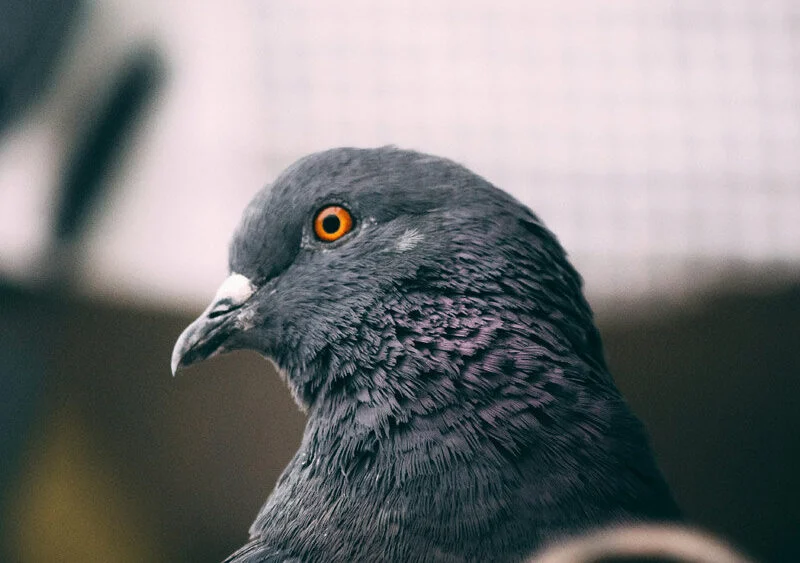
The intricate relationship between avian physiology and aerial navigation has long fascinated biological scientists, but recent advancements in ocular tracking technology have provided an unprecedented window into how pigeons process visual data. A collaborative study led by researchers at the University of British Columbia (UBC) and the University of Alberta has revealed that pigeons utilize highly specific, slow eye movements to manage "optic flow"—the visual stream created by motion across the retina. This discovery not only clarifies how birds maintain flight stability and depth perception but also offers a biological blueprint for the next generation of autonomous drone navigation systems.
The Mechanism of Avian Optic Flow
At the core of the study is the concept of optic flow, a critical component of visual processing for any creature or machine that moves through three-dimensional space. As a pigeon traverses the sky, the landscape below shifts across its field of vision at varying speeds. Managing this influx of visual information is a computationally expensive task for any brain. To prevent sensory overload, the avian brain must filter this data to prioritize movement, obstacle avoidance, and navigational cues.
The study, which examined 16 homing pigeons, utilized a specialized apparatus: a miniaturized, lightweight computer and camera system attached to the birds via a custom-fitted hood. By tracking the exact trajectory of the eyes during flight, researchers Anthony B. Lapsansky, Douglas L. Altshuler, and Douglas R. Wylie were able to map how these birds stabilize their visual field. The findings indicate that pigeons do not merely rely on head stabilization; they actively engage in subtle ocular movements that serve to "smooth out" the visual jitter caused by wing beats and air turbulence.
Chronology of the Research and Methodology
The investigation into avian ocular mechanics began with the recognition that while pigeons are renowned for their homing abilities, the specific neural and physical mechanisms facilitating their precision remained largely theoretical. Between 2022 and early 2024, the research team conducted a series of controlled flight experiments.
- Phase I (Data Acquisition): Researchers selected 16 homing pigeons already conditioned to a specific flight path. This familiarity was essential to ensure the birds were navigating naturally rather than reacting to the stress of a new environment.
- Phase II (Instrumentation): The birds were fitted with lightweight, high-frequency eye-tracking cameras. Unlike previous studies that relied on head-mounted cameras alone, this setup specifically monitored the eyeball relative to the skull, providing a frame-by-frame account of eye rotation.
- Phase III (Analysis): The team differentiated between transit flight and landing sequences. The data revealed a distinct shift in ocular behavior when the birds initiated a landing, moving from a panoramic scanning mode to a convergent, depth-focused mode.
Stereopsis and the Geometry of Landing
A significant portion of the study focused on the phenomenon of stereopsis—the ability to perceive depth based on the slight difference in images received by each eye. Because pigeons have eyes positioned on the sides of their heads, they possess a panoramic field of view that is essential for detecting predators. However, this positioning presents a challenge for judging distance.
The UBC researchers discovered that as a pigeon approaches a landing site, it performs a deliberate movement to shift its eyes inward. This convergence allows the bird to utilize its binocular vision to calculate the distance to the ground with high precision. This is a crucial finding, as it proves that pigeons do not simply rely on the increasing size of an object to gauge proximity; they actively adjust their optical geometry to refine their landing trajectory. For an organism that lands at high speeds, this capability is a prerequisite for survival, preventing injury and ensuring accuracy.
Implications for Autonomous Technology
The translation of biological findings into technological application is perhaps the most immediate impact of this research. Currently, the drone industry faces significant challenges in "visual odometry"—the process of determining position and orientation by analyzing the changes in camera images. Most current drones rely on fixed-position cameras that struggle with motion blur and the rapid influx of visual data during high-speed flight.
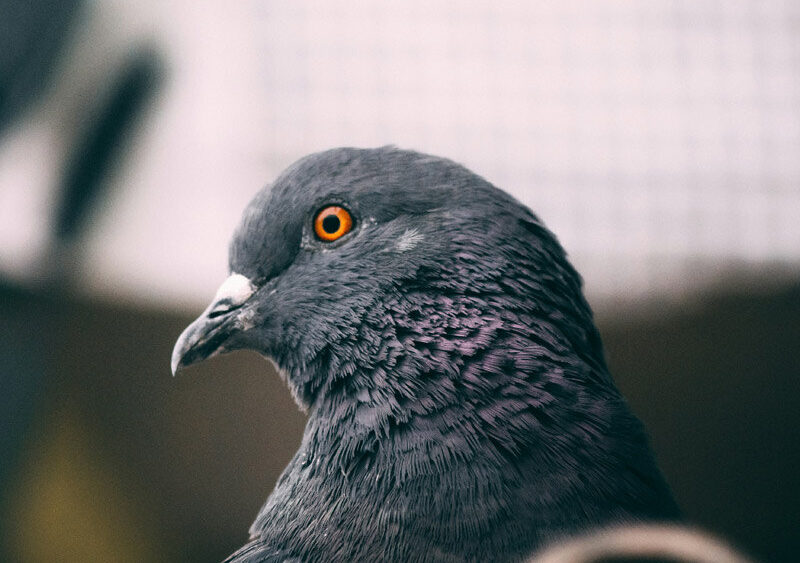
Engineers are now looking at the pigeon’s ocular mechanics as a model for "active vision" systems. By implementing a camera system that mimics the pigeon’s ability to perform slow-gaze adjustments to compensate for rapid body movement, drone developers could significantly enhance the maneuverability of autonomous aerial vehicles.
Key technological implications include:
- Dynamic Stabilization: Replacing static image sensors with active, moving sensors that track environmental features regardless of the drone’s attitude or velocity.
- Enhanced Depth Perception: Incorporating binocular convergence triggers in drone software, allowing for more precise landings in cluttered or unknown environments.
- Reduced Computational Load: By mimicking the pigeon’s filtering method, onboard processors may require less energy to interpret visual data, potentially extending the battery life of small-scale drones.
Broader Biological and Evolutionary Context
The study also underscores the sophisticated evolutionary development of avian neural pathways. The fact that a bird’s brain can integrate complex visual tracking with flight mechanics suggests an evolutionary pressure for high-speed information processing. The research team emphasizes that this is not a static process; rather, it is a dynamic exchange of data where the brain instructs the eyes to move in a way that minimizes the complexity of the incoming information.
In a broader sense, this research bridges the gap between zoology and robotics. It challenges the "human-centric" view of engineering, where cameras are typically fixed or gimbal-mounted in ways that do not account for the biological reality of how living beings navigate. By observing the natural world, scientists are finding that the most efficient solutions to complex navigational problems have often already been solved by millions of years of natural selection.
Future Directions
As the research community continues to analyze the findings published in Current Biology, several questions remain. Researchers are now looking into whether different species of birds with varying flight styles—such as raptors versus songbirds—utilize similar ocular tracking mechanisms. Furthermore, the question of how the avian brain integrates these eye movements with vestibular data (balance and orientation) remains a high-priority area for future studies.
For those interested in the raw data and technical specifications of this research, the abstract provided on Cell.com offers a comprehensive look at the mathematical modeling of the pigeons’ gaze. As technology continues to evolve, the lessons learned from these birds will undoubtedly influence how we build the next generation of intelligent, autonomous systems. The integration of biological observation into mechanical design is not merely a novelty; it is a fundamental shift toward more efficient, responsive, and reliable technology.
In conclusion, the study conducted by Lapsansky, Altshuler, and Wylie serves as a milestone in our understanding of animal cognition and sensory-motor control. It reinforces the importance of interdisciplinary research, proving that a deeper look at the natural world provides not only a better understanding of the creatures around us but also the key to unlocking the limitations of our own technological advancements. Whether in the sky or in the lab, the pigeon’s gaze continues to offer insights that are both profound and highly practical for the future of human innovation.
