
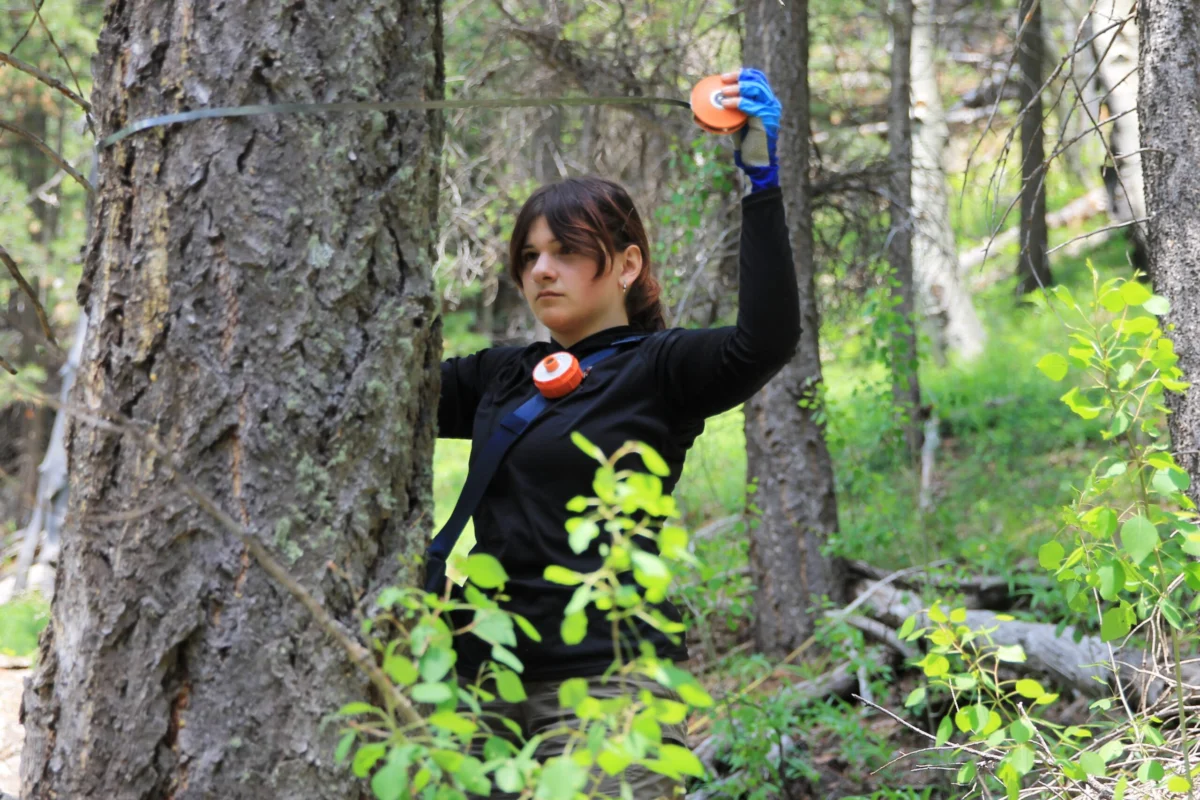
The Appleton-Whittell Research Ranch, a vital sentinel of biodiversity in Arizona’s Sky Island region, continues its commitment to science-driven conservation as it welcomes a new cohort of research fellows dedicated to addressing the complex ecological challenges facing southwestern grasslands. With an unparalleled tapestry of life, this 7,800-acre preserve, managed by the National Audubon Society, grapples with a formidable array of conservation issues that demand innovative, data-driven solutions. The ranch is not merely a sanctuary; it is a living laboratory, safeguarding crucial habitats for a rich diversity of flora and fauna, including a significant number of priority grassland birds and various threatened and endangered species. However, this ecological richness is under constant siege from multifaceted threats such as the relentless march of invasive species, the escalating impacts of a changing climate, and the enduring legacies of past land management practices. Addressing these intricate challenges effectively requires more than just dedicated effort and willing hands; it necessitates a profound understanding derived from rigorous scientific inquiry.
The Urgent Need for Data-Driven Conservation
The southwestern grasslands, characterized by their unique climatic patterns and delicate ecological balance, are among the most imperiled ecosystems globally. These expansive landscapes, once teeming with diverse wildlife, have experienced significant degradation over the past century. At the Research Ranch, the daily reality involves protecting species like the Baird’s Sparrow (Centronyx bairdii), Grasshopper Sparrow (Ammodramus savannarum), and Horned Lark (Eremophila alpestris), all of which are experiencing severe population declines across their ranges, largely due to habitat loss and alteration. The ranch’s habitats are considered "uniquely intact" because they represent some of the last remaining examples of relatively undisturbed Chihuahuan Desert grasslands, providing critical refuge and breeding grounds that have largely vanished elsewhere. Beyond avian life, the ranch supports an array of other sensitive species, including various reptiles, amphibians, and mammals, many of which are endemic to the region and face significant conservation concerns.
However, the sheer scale and complexity of the threats facing these ecosystems often outstrip the available knowledge base. Invasive plant species, such as buffelgrass (Cenchrus ciliaris) and Lehmann lovegrass (Eragrostis lehmanniana), outcompete native vegetation, alter fire regimes, and reduce forage quality for wildlife. Climate change manifests through increased aridity, more frequent and intense droughts, and unpredictable rainfall patterns, stressing water resources and exacerbating wildfire risks. Compounding these issues are the lingering effects of historical overgrazing, which led to soil compaction, erosion, and changes in plant community structure, and past fire suppression policies that allowed woody species to encroach into once open grasslands. While the Research Ranch team, bolstered by dedicated volunteers and the broader conservation community, possesses an unwavering commitment to restoration and protection, a critical knowledge gap often impedes the implementation of the most effective strategies. For many pressing conservation challenges affecting the Research Ranch and other southwestern grasslands, the precise data needed to devise optimal solutions simply do not exist. This underscores the critical importance of foundational research in translating conservation aspirations into tangible, lasting impacts.
The Appleton-Whittell Research Fellowship: A Beacon for Emerging Scientists
Recognizing this fundamental need for scientific insight, the Appleton-Whittell Research Fellowship program stands as a cornerstone of the Research Ranch’s mission. Established with the vision of its founders, Frank and Ariel Appleton, who acquired the land in 1968 with a profound commitment to "leave the land better than they found it," the fellowship embodies a strategic investment in future conservation leadership and knowledge generation. The Appletons’ pioneering spirit transformed the ranch into a hub for ecological study, a legacy that the fellowship proudly upholds. Since its inception, the program has consistently sought to bridge the gap between ecological challenges and scientific solutions by empowering early-career scientists to conduct priority research directly on or near the Research Ranch.
Each year, the fellowship offers a comprehensive support package designed to facilitate impactful fieldwork and scientific dissemination. This includes a substantial cash award to directly support the fellow’s study, covering expenses such as equipment, travel, and research materials. Crucially, fellows receive free overnight stays on the ranch, significantly easing the logistical and financial burdens associated with conducting fieldwork in remote areas. This direct access to the study site allows for more intensive and prolonged data collection, which is often vital for ecological studies. Beyond financial and logistical aid, the program provides invaluable communications opportunities, enabling fellows to effectively relay the importance of their work and its results to the broader Audubon community, scientific peers, and the public. This platform not only amplifies their findings but also cultivates their skills in scientific outreach and advocacy. In return, the Research Ranch benefits immensely, positioning itself at the epicenter of novel, innovative science that is directly applicable and likely to inform conservation work not only within its boundaries but also throughout the entire southwestern region. The cumulative research from past fellows has contributed to best practices in grassland management, habitat restoration techniques, and a deeper understanding of species dynamics, forming a robust scientific foundation for the ranch’s ongoing efforts.
Introducing the 2024 Cohort: Addressing Key Ecological Questions
This year, the Appleton-Whittell Research Fellowship is proud to welcome three exceptional early-career scientists, each embarking on research projects that are acutely critical to the ranch’s conservation objectives and the broader ecological health of southeastern Arizona. Their diverse projects reflect the multifaceted nature of the region’s environmental challenges, promising to yield crucial insights that will inform future management decisions and restoration efforts.
Fellow Profile: Alexia – Unraveling the Intricacies of Ecosystem Health
Alexia, a passionate ecologist, has cultivated a deep appreciation for the Research Ranch’s unique role in protecting habitat for birds and other wildlife through her previous visits and collaborations with fellow researchers. Her current research project aims to investigate the complex interplay between native plant communities and their associated insect populations, particularly focusing on how changes in vegetation structure, influenced by both natural processes and human intervention, impact local pollinator diversity and abundance. Southwestern grasslands rely heavily on native pollinators for the reproduction of countless plant species, which in turn form the base of the food web for birds and other animals. Alexia’s work will employ a combination of detailed botanical surveys, insect trapping, and observational studies across various habitat types within the ranch. By analyzing the correlation between specific plant species, their floral resources, and the presence of specialist and generalist pollinators, she hopes to identify key drivers of pollinator health. This research is critical because declines in pollinator populations, a global phenomenon, have far-reaching implications for ecosystem stability and resilience. Her findings are expected to contribute significantly to the ranch’s mission by informing strategies for habitat restoration that specifically enhance pollinator services, thereby supporting the broader ecology of southeastern Arizona. The Research Ranch team eagerly anticipates her results, which will undoubtedly offer actionable insights for fostering a healthier, more vibrant ecosystem.
Fellow Profile: Cameron – Deciphering the Impacts of Mesquite Removal on Grassland Birds
Cameron’s research tackles one of the most visible and contentious issues in southwestern grassland management: mesquite encroachment. Mesquite trees (primarily Prosopis velutina in this region) are native to Arizona, but their historical ecological role has been dramatically altered. In recent decades, a confluence of factors, including poor land management practices, a systemic lack of natural fire regimes, chronic overgrazing, and a changing climate, have promoted their aggressive encroachment into areas that were once predominantly treeless grasslands. This woody plant invasion fundamentally transforms grassland ecosystems, creating dense thickets that outcompete native grasses and significantly alter habitat structure. As mesquite and other woody species proliferate, priority grassland birds—such as the Baird’s and Grasshopper Sparrows, the Horned Lark, and the Chihuahuan Meadowlark (Icterus cucullatus, which is more typically associated with open woodlands and riparian areas, indicating a potential shift in habitat for this species as well)—are displaced, losing their preferred open-grassland foraging and nesting grounds.
On the surface, removing mesquite might appear to be a straightforward solution for restoring grassland health. Indeed, previous studies have demonstrated that such interventions can improve forage availability for livestock and enhance water infiltration into the soil, crucial benefits in an arid landscape. However, the ecological ramifications of mesquite removal are far from simple or universally beneficial. Cameron’s research aims to delve into the complex secondary impacts of these treatments on bird populations. Specific concerns include soil disturbance caused by heavy machinery, increased erosion in areas where protective vegetation has been removed, potential increases in invasive grass cover in disturbed sites, and the lingering effects of herbicides used for control. Leveraging a significant mesquite removal effort currently underway on the Santa Rita Experimental Range (SRER), which borders and shares similar ecological characteristics with the Research Ranch, Cameron plans to conduct a meticulous, comparative study. He will monitor bird populations and habitat characteristics in treated and untreated areas, carefully assessing the long-term ecological consequences for grassland bird communities.
Cameron is not only deeply passionate about birds but also committed to making birding and biology more accessible, inclusive, and welcoming fields. As an integral part of his research, he will be collaborating with key regional partners, including the Sonoran Joint Venture, the Arizona Game and Fish Department, and the Tucson Bird Alliance. This collaboration is designed to recruit and train a diverse cohort of field technicians, providing invaluable hands-on experience and mentorship. This initiative will not only bolster his research efforts but also foster a new generation of conservation leaders, particularly those from underrepresented backgrounds. The Research Ranch is thrilled to support this dual mission of critical research and community empowerment, eagerly anticipating the arrival of Cameron’s crew and the vital insights his work will provide for sustainable grassland management.
Fellow Profile: Max – Investigating Success Factors for Chiricahua Leopard Frog Recovery
Max’s research addresses the urgent conservation needs of the Chiricahua Leopard Frog (Lithobates chiricahuensis), a species listed as threatened under the Endangered Species Act (ESA) in 2002. This listing reflected a dramatic decline in its populations, primarily driven by severe habitat loss and degradation, the introduction of invasive species like American Bullfrogs (Lithobates catesbeianus) and non-native fish, and the devastating impact of emerging diseases such as chytridiomycosis. Once widespread across the Sky Islands of Arizona and New Mexico, the frog’s historic habitat has largely vanished or been compromised, rendering it heavily reliant on human-made, artificial ponds and wetlands for survival.
These constructed aquatic sites are indispensable for the species’ recovery, serving as critical breeding grounds and source populations from which biologists can harvest eggs and tadpoles for reintroduction programs into restored habitats elsewhere. Despite their crucial role, not all artificial ponds achieve the desired success; some develop into robust, productive populations, while others inexplicably fail to support viable frog communities. The Research Ranch, with its thriving metapopulation of Chiricahua Leopard Frogs spread across at least seven distinct locations on site and additional populations just beyond its borders, provides an unparalleled natural laboratory to investigate this perplexing disparity. The ranch’s diverse network of ponds, varying in age, design, and surrounding habitat, offers a unique opportunity for comparative analysis.
Max, driven by an enthusiastic commitment to ecological restoration and the recovery of imperiled species, plans to conduct a comprehensive study examining the environmental and biological factors that contribute to the success or failure of these crucial breeding sites. His research will likely involve assessing water quality parameters (e.g., pH, dissolved oxygen, nutrient levels), analyzing vegetation structure within and around the ponds, identifying the presence of potential predators or competitors, and evaluating the hydroperiod (the duration of water presence). By meticulously analyzing these variables across the ranch’s successful and less successful sites, Max hopes to identify key ecological characteristics that predict population viability. His work holds significant promise for informing Chiricahua Leopard Frog conservation efforts across southeastern Arizona and beyond, providing actionable guidelines for the design, management, and restoration of aquatic habitats critical for this species. The Research Ranch is ecstatic to see its ponds and wetlands utilized for such vital scientific inquiry and stands ready to implement any suggested improvements that emerge from Max’s findings, further solidifying its role as a stronghold for this imperiled amphibian.
Broader Impact and a Legacy of Stewardship
The founding mission articulated by Frank and Ariel Appleton—to meticulously care for the land and leave it in a better state than they discovered it—remains the guiding principle for all activities at the Research Ranch today. Each year, the Appleton-Whittell Research Fellows play an indispensable role in fulfilling this enduring objective. By meticulously addressing critical knowledge gaps, their work directly enhances the efficacy and precision of conservation interventions, allowing the ranch and its partners to achieve the greatest possible impact. The insights generated by these fellows contribute to a growing body of scientific literature that informs not only local management strategies but also regional and national conservation policy.
The fellowship program, therefore, represents more than just a series of individual research projects; it is a strategic investment in the future of conservation science and practice. It fosters a vibrant community of scholars, practitioners, and passionate advocates, ensuring that the complex ecological challenges of the southwestern grasslands are met with cutting-edge research and innovative solutions. The Research Ranch, through its sustained commitment to scientific inquiry and collaboration, serves as a model for data-driven stewardship in arid and semi-arid regions worldwide, demonstrating how focused research can build resilience in the face of ongoing climate change and biodiversity loss. We extend our deepest gratitude to this latest batch of Fellows and to all those who have contributed their intellect and dedication to the program over the years. Their work is a testament to the power of science in action, ensuring that the legacy of the Appleton-Whittell Research Ranch continues to thrive as a beacon of ecological understanding and preservation. The public is encouraged to join us in celebrating these new recruits and to stay tuned throughout the season for opportunities to learn more about their groundbreaking work and its implications for the future of our precious natural heritage.
