
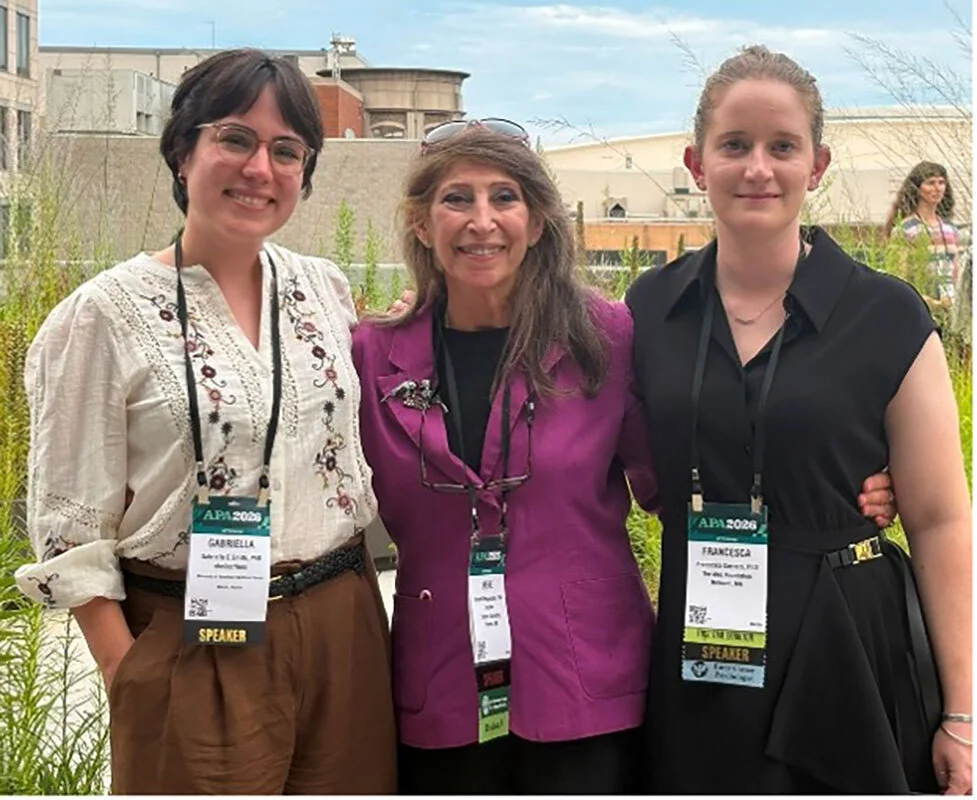
The year 2026 has been marked by significant global instability, yet amidst these challenges, Dr. Irene Pepperberg has achieved a landmark milestone in her distinguished career. Recently, she was honored with two prestigious lifetime achievement awards—one from the Coller-Dolittle Foundation and another from Division 3 (Experimental Psychology) of the American Psychological Association (APA). In addition to these accolades, Dr. Pepperberg has been elected to serve a three-year term as a Member-At-Large for the APA’s Division 3. While these honors are bestowed upon her individually, Dr. Pepperberg emphasizes that they represent the culmination of nearly 50 years of collaborative work involving a vast network of researchers, volunteers, and the avian subjects who redefined the boundaries of animal intelligence.
A Legacy Built on Persistent Inquiry
The history of Dr. Pepperberg’s laboratory is characterized by its resilience against academic skepticism and institutional transition. Her work began in June 1977, long before the scientific community broadly accepted the notion that non-human animals could possess advanced cognitive or linguistic capabilities. Operating initially with minimal funding and borrowed space at Purdue University, Pepperberg’s early research faced significant peer-review hurdles.
The primary challenge during the late 1970s was the prevailing behaviorist paradigm, which largely dismissed the possibility of complex cognition in birds. Pepperberg utilized the modeling technique developed by Dietmar Todt, which facilitated social learning between a human trainer and a bird, allowing the subject to observe the interaction and acquire labels for materials, colors, and shapes. The subsequent validation of these findings—most notably through the groundbreaking research involving her iconic African Grey parrot, Alex—provided the empirical foundation for modern avian cognition studies.
Chronology of Institutional Evolution
The trajectory of the laboratory reflects the volatile nature of academic research, characterized by frequent relocations and the necessity of finding institutions that could support unconventional, longitudinal studies.
- 1977–1980s (Purdue University): The foundational years. Despite skepticism from early grant reviewers, initial studies proved that African Grey parrots could distinguish between various materials and concepts.
- 1980s–1990s (Northwestern University): A period of expansion. During this time, the lab integrated interdisciplinary insights from anthropology and linguistics. This era also marked critical advancements in avian veterinary care, as researchers like Dr. Susan Brown and Dr. Richard Nye provided life-saving interventions for Alex during health crises, such as his struggle with aspergillosis.
- 1990s–2000s (University of Arizona): The lab continued to diversify its research subjects, including the addition of parrots named Kyaaro, Alo, and eventually, Griffin. This period solidified the lab’s methodology in comparative cognition.
- 2000s–2010s (MIT Media Lab, Brandeis, and Harvard): A nomadic phase that required immense logistical coordination. Dr. Pepperberg’s transition to the Harvard Department of Psychology allowed for new collaborations with the Vision Lab and prominent cognitive scientists like Susan Carey. It was here that the research shifted to include new subjects, such as Athena.
- 2020–Present (Boston University and Private Facilities): Following the disruptions caused by the COVID-19 pandemic, the laboratory established a new base in Somerville, Massachusetts. This current iteration, while physically smaller, maintains a rigorous standard of research supported by a dedicated team of research assistants.
The Infrastructure of Discovery
The sustained success of the lab, according to Dr. Pepperberg, is not solely a result of individual scientific curiosity but rather the result of a "human and nonhuman army." The logistical complexity of maintaining a lab for five decades cannot be overstated. From the early student volunteers at Purdue who pioneered data collection methods to the lab managers—such as Arlene Levin Rowe and Suzanne Gray—who navigated the administrative requirements of multiple universities, each participant played a critical role in maintaining the continuity of longitudinal data.
Financial support has remained a recurring challenge throughout the 50-year span. Securing consistent funding from bodies like the National Science Foundation (NSF) and private donors was essential to managing the high costs of avian healthcare and specialized equipment. The personal sacrifices made by this community—including family, friends, and staff who adapted to the demanding schedule of a researcher whose work often required global travel and constant monitoring of her subjects—are cited by Pepperberg as the true foundation of her awards.

Implications for Comparative Psychology
The broader scientific impact of the research conducted by Pepperberg and her team is profound. By demonstrating that African Grey parrots can master concepts such as "zero," numerical competence, and abstract classification, the laboratory shifted the scientific consensus regarding avian intelligence.
Data derived from these studies suggest that the cognitive capacity of parrots is comparable to that of great apes in several domains, particularly in the realm of symbolic communication. This has paved the way for current researchers in the field—including colleagues like Dr. Gabriella Smith and Dr. Francesca Cornero, who participated in the recent APA symposium—to explore deeper questions regarding the evolution of communication and the nature of animal consciousness.
The Current State of the Field
In the wake of her recent honors, Dr. Pepperberg remains focused on the future. The current laboratory in Somerville continues to prioritize the training and well-being of the parrots, ensuring that they remain engaged in meaningful cognitive tasks. The transition to an association with Boston University highlights the ongoing relevance of avian cognition in academic discourse.
The institutional recognition from the American Psychological Association serves as a formal acknowledgment of the paradigm shift initiated in 1977. While the awards bear Dr. Pepperberg’s name, the academic consensus is that the body of work produced by the laboratory serves as a benchmark for how long-term, interdisciplinary, and collaborative research should be structured.
As the scientific community looks back at the 50-year arc of this research, the key takeaway is the necessity of institutional and personal endurance. The ability of the lab to survive shifts in academic priorities, economic downturns, and the loss of its most famous subjects, like Alex and Arthur, demonstrates a commitment that transcends traditional career milestones.
Looking ahead, the next generation of researchers working under the umbrella of avian cognition studies will likely continue to draw upon the methods and the ethical framework established by the Pepperberg lab. By integrating veterinary expertise, linguistic theory, and psychological rigor, the field has evolved from a niche curiosity into a vital area of modern science. Dr. Pepperberg’s recent awards are, in essence, a tribute to the thousands of hours contributed by students, the resilience of the parrots themselves, and the donors who ensured that a small lab in a borrowed room could eventually change the world’s understanding of intelligence.
