
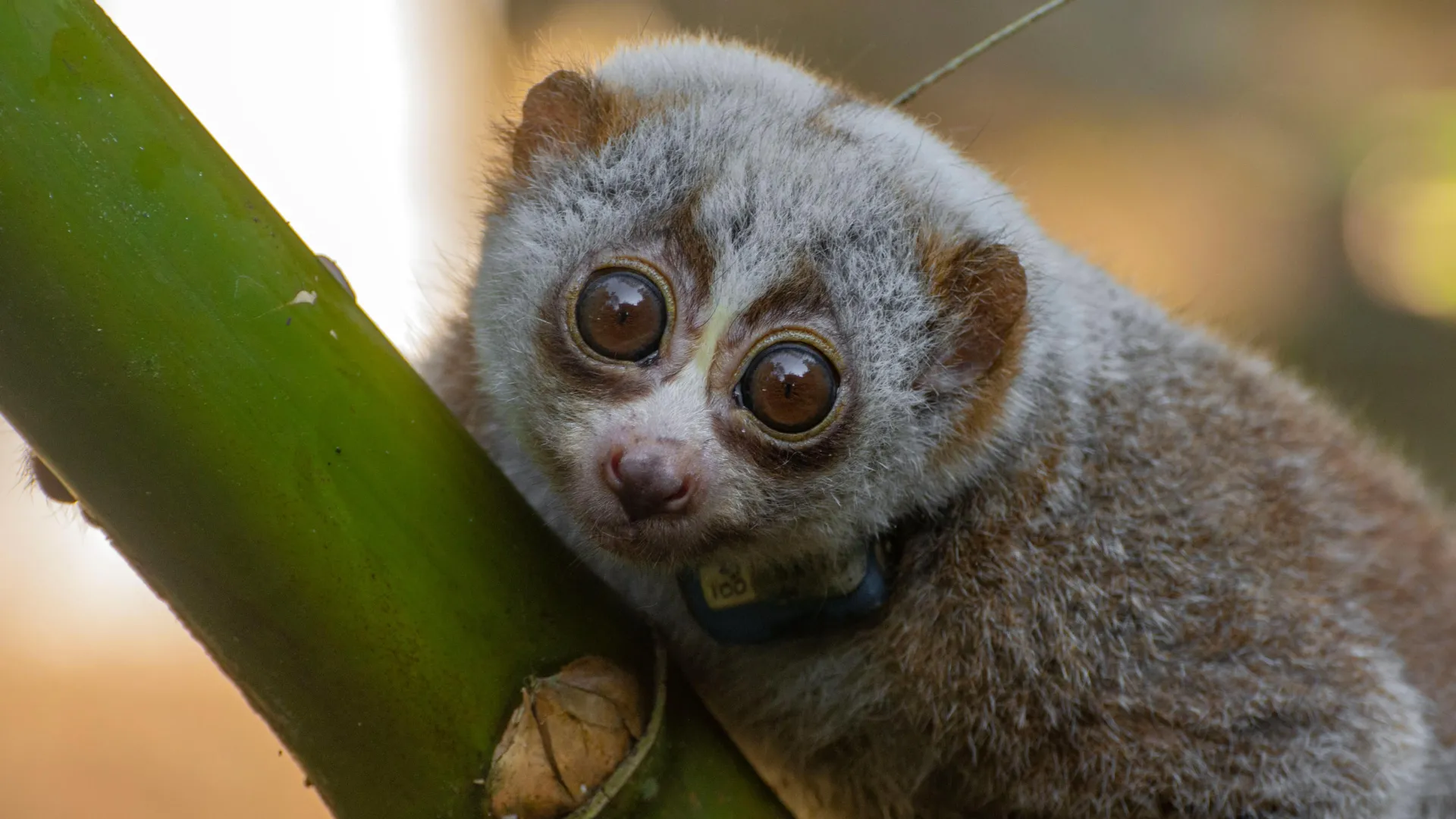
A groundbreaking scientific study has cast a critical light on the common practice of releasing rescued wildlife back into their natural habitats, suggesting that such interventions do not always guarantee success and can, in certain circumstances, expose animals to severe, even fatal, risks. Researchers have coined the term "death trap" to describe situations where previously captive animals, ill-prepared or poorly placed, face insurmountable challenges in the wild.
The Study’s Core Findings and Publication
The pivotal findings, published recently in the esteemed journal Global Ecology and Conservation, detail the precarious fate of Bengal slow lorises (Nycticebus bengalensis) released in Bangladesh. The research, a collaborative effort, was spearheaded by primatologist Professor Anna Nekaris OBE of Anglia Ruskin University, alongside colleagues from the conservation organization Plumploris e.V. and the University of Western Australia. Their meticulous work tracked the post-release movements and survival rates of these enigmatic primates, uncovering a stark reality that challenges conventional assumptions about wildlife rehabilitation.
The Enigma of the Slow Loris: Allure and Peril
Slow lorises, renowned for their strikingly large, dark eyes and seemingly gentle demeanor, possess a captivating charm that has, tragically, made them highly sought-after commodities in the illicit wildlife trade. This unfortunate demand has propelled them to the forefront of the global primate trafficking crisis, ranking them among the most heavily trafficked primates worldwide. Their unique characteristics, including their slow, deliberate movements and nocturnal habits, make them particularly vulnerable to capture.
All eight recognized species of slow loris are afforded significant protection under international law and conservation listings due to their precarious status. The International Union for Conservation of Nature (IUCN) Red List categorizes these species as Critically Endangered, Endangered, or Vulnerable, reflecting severe population declines across their native Southeast Asian ranges. For instance, the Javan slow loris (Nycticebus javanicus) is critically endangered, primarily due to habitat loss and the pet trade, while the Sunda slow loris (Nycticebus coucang) is endangered. This dire conservation status frequently leads to their rescue from illegal trade or exploitative conditions, with subsequent release programs often initiated as a key strategy to bolster dwindling wild populations and contribute to species recovery.
Unveiling the "Death Trap": A Tracking Experiment in Bangladesh
Despite the noble intentions underpinning these conservation efforts, the study’s rigorous methodology exposed a tragic reality. Researchers fitted nine Bengal slow lorises with miniature radio collars, allowing for continuous monitoring of their movements and survival post-release into a national park located in northeastern Bangladesh. This particular park had historically been utilized for similar wildlife release initiatives, making it a seemingly suitable location.
The results, however, were profoundly disconcerting. Only two of the nine animals managed to survive for an extended period after their return to the forest environment. The mortality rate was shockingly high: three lorises perished within a mere 10 days of their release, and an additional four succumbed within six months. This rapid and widespread mortality paints a grim picture of the immediate challenges faced by these animals. Researchers were able to recover four of the seven deceased lorises’ bodies, and forensic examination yielded critical clues: all recovered carcasses bore unequivocal evidence of having been killed by other slow lorises, primarily through venomous bites.
The Primate’s Poison: Territorial Conflicts and Venomous Bites
The findings underscore a crucial, yet often overlooked, aspect of slow loris biology: their intensely territorial nature. Slow lorises are fiercely protective of their home ranges, which they mark with scent glands. Encounters between rival individuals, particularly unfamiliar newcomers, can escalate rapidly into violent confrontations. Furthermore, slow lorises hold a unique and perilous distinction as the world’s only venomous primates. Their venom is produced by glands located on their brachial (upper arm) region, which they lick and mix with saliva, delivering a toxic bite through specialized comb-like teeth. This venom can induce anaphylactic shock in humans and is potent enough to be lethal to other small animals, including rival lorises.
The recovered bodies from the study exhibited clear, traumatic bite wounds concentrated on vulnerable areas such as the head, face, and digits. This pattern of injury is highly indicative of deadly territorial encounters, suggesting that the newly released lorises were unable to establish their own territories or successfully integrate into existing populations, leading to fatal clashes with resident slow lorises.
Captivity’s Shadow: Behavioural Changes and Survival Patterns
The research also delved into the influence of an animal’s time in captivity on its post-release survival. A significant correlation emerged: animals that had endured longer periods of captivity exhibited a markedly shorter survival duration after their release. This suggests that prolonged human care may diminish an animal’s innate survival skills, alter its natural behaviors, or reduce its ability to cope with the rigors of wild existence.
Behavioral observations further supported this hypothesis. The released lorises displayed heightened levels of movement and appeared more alert than their wild counterparts typically do. While increased alertness might seem advantageous, in the context of a prey species, it could also signify chronic stress, maladaptation, or a failure to effectively navigate their new environment. Wild slow lorises are generally cryptic and slow-moving, relying on camouflage and stealth to avoid predators. Erratic or excessive movement could draw unwanted attention or exhaust vital energy reserves.
Interestingly, the two surviving animals in the study demonstrated a distinct behavioral pattern: they traveled across significantly larger areas compared to those that perished. This observation suggests a critical survival strategy: successful integration, or at least survival, may depend on the ability of released lorises to traverse extensive distances, thereby avoiding established territories and minimizing potentially fatal confrontations with resident slow lorises. This highlights the importance of release site selection and the availability of uncolonized or sparsely populated habitat.
Rethinking Wildlife Rescue and Release: A Call for Scientific Rigour
The study’s findings carry profound implications for global wildlife rescue and release programs, particularly for smaller, less charismatic species. While large and iconic animals, such as tigers or elephants, often benefit from intensive post-release monitoring, including satellite tracking and dedicated field teams, many smaller species frequently lack such comprehensive oversight. This disparity means that the true outcomes of countless releases remain largely unknown, potentially masking widespread failures.
The research team unequivocally stresses that successful wildlife releases are not mere acts of benevolence but complex scientific endeavors requiring meticulous planning and execution. Critical prerequisites include a thorough evaluation of the suitability of the proposed release site, encompassing detailed habitat assessments, and a comprehensive evaluation of the physical, behavioral, and genetic condition of each individual animal slated for release. The absence of long-term monitoring for smaller species is a significant gap that needs urgent addressing, as it prevents researchers from understanding the true efficacy of these programs. Furthermore, the development and implementation of species-specific rehabilitation guidelines, tailored to address the unique ecological and behavioral needs of each species, are essential to maximize the chances of success.
Expert Perspectives and Calls for Reform
Professor Anna Nekaris OBE, the senior author of the study, Professor of Ecology, Conservation and Environment at Anglia Ruskin University, and the esteemed head of the Little Fireface Project, articulated the prevailing misconception: "It’s assumed that returning confiscated or rescued animals to the wild is always a positive conservation story. Our research shows that for highly territorial species like slow lorises, releasing them into areas that are already densely populated can be a death trap."
Professor Nekaris further elaborated on the societal pressures driving these releases: "Many rescued endangered species are often released because the public expects it, but for animals such as the Bengal slow loris, this is not always the best course of action. Without fully understanding the animal’s behaviour, its time spent in captivity and the density of resident populations at the release site, reintroductions may do more harm than good." Her statements underscore the ethical imperative for evidence-based conservation decisions, even if they challenge popular sentiment.
Hassan Al-Razi, the lead author of the study and the team leader of Plumploris e.V. Bangladesh, highlighted the specific challenges within his region. "Rescue and release have become an increasingly common practice in Bangladesh. Many wild animals, including slow lorises, are rescued and subsequently released back into the wild." He pointed out a critical systemic flaw: "However, in many cases, these releases are conducted inappropriately. For forest-dwelling species, release sites are often selected based on logistical convenience rather than ecological suitability. As a result, certain forests have effectively become dumping grounds for rescued animals and are no longer appropriate release sites." Al-Razi’s observations suggest a wider problem of inadequate planning and resource allocation in many regional conservation efforts. "Although our research has focused on the Bengal slow loris and demonstrated the consequences of such practices, we believe similar patterns likely affect many other species," he concluded, warning that the problem extends beyond this single primate species.
The Broader Context: Wildlife Trafficking and Conservation Challenges in Bangladesh
Bangladesh, with its rich biodiversity and strategic geographical location, finds itself at a critical juncture in the global fight against wildlife trafficking. The country serves as both a source and a transit point for illegal wildlife trade, with species ranging from pangolins and turtles to various bird species and primates being trafficked through its borders. The illegal pet trade, in particular, places immense pressure on species like the slow loris, which are often poached from forests, subjected to brutal handling, and smuggled across international boundaries.
The rescue and rehabilitation centers in Bangladesh and other trafficking hotspots often operate with limited resources, facing immense pressure to process and release confiscated animals. The underlying assumption is that returning animals to the wild is always the best outcome, driven by a combination of genuine conservation intent, public expectation, and practical constraints such as lack of long-term sanctuary space. This study, however, challenges that assumption, particularly when ecological factors are not adequately considered.
Implications for Conservation Policy and Practice
The findings of this study necessitate a paradigm shift in wildlife release protocols. For species like the slow loris, a multi-faceted approach is urgently required:
- Pre-release Assessment: Each animal must undergo rigorous health checks, behavioral assessments (e.g., assessing foraging skills, predator avoidance, social cues), and potentially even genetic screening to ensure it is fit for the wild and to minimize genetic contamination of wild populations.
- Habitat Suitability Analysis: Release sites must be meticulously chosen based on ecological criteria, including carrying capacity, existing population densities of the target species, availability of resources, and absence of significant threats. Simply choosing a "convenient" forest is no longer acceptable.
- Behavioral Rehabilitation: Captive animals, especially those held for extended periods, may require specialized behavioral training to re-acquire lost skills. This could include exposure to natural food sources, training in predator avoidance, and minimizing human imprinting.
- Phased Release Strategies: Soft release methods, where animals are gradually accustomed to the wild environment within a protected enclosure before full release, could be explored.
- Intensive Post-release Monitoring: Implementing robust and long-term monitoring programs, even for smaller species, is crucial to evaluate success rates, identify challenges, and adapt strategies. This requires significant investment in technology and trained personnel.
- Public Education: A critical component is educating the public about the complexities of wildlife conservation and the potential harm caused by the illegal pet trade. Managing public expectations regarding immediate release outcomes is also vital.
- Policy Reform: Governments and conservation agencies must review and update their national wildlife release guidelines, incorporating the latest scientific understanding and best practices.
Ethical Dilemmas and the Path Forward
The study poses significant ethical dilemmas for conservationists. Is it more humane to release an animal into a potentially lethal environment, or to keep it in permanent captivity, even if it is a safe one? The prevailing sentiment often leans towards freedom, but this research highlights that freedom without adequate preparation and suitable conditions can be a death sentence.
The insights gained from the Bengal slow loris study are likely applicable to numerous other territorial, sensitive, or long-lived species that undergo rehabilitation and release. It underscores the critical importance of a scientific, evidence-based approach to conservation that prioritizes the welfare and long-term survival of individual animals within the broader context of species preservation. Moving forward, the conservation community must embrace these challenging findings, fostering greater collaboration between researchers, rehabilitation centers, and governmental bodies to ensure that future wildlife releases truly contribute to robust, thriving wild populations, rather than inadvertently leading animals into a "death trap." The goal must shift from simply "releasing" to "successfully re-establishing" in the wild, a distinction that demands greater scientific rigor, financial investment, and a deeper understanding of species-specific ecologies.
