
For centuries, Isaac Newton’s third law of motion, the principle stating that "for every action, there is an equal and opposite reaction," has stood as a bedrock of classical physics, underpinning our understanding of virtually every mechanical interaction in the universe. From the simple act of walking to the complex propulsion of rockets, this fundamental law has consistently provided a reliable framework for explaining how forces operate. However, a class of complex systems, ranging from the mesmerizing synchronized flights of bird flocks to the intricate movements of bacterial swarms and even the collective behavior of cells within living tissues, has long presented a puzzling challenge to this foundational principle. These "non-reciprocal" systems, where individual components interact in an imbalanced, one-way fashion, have defied accurate description and simulation using traditional methods, creating a significant theoretical gap in modern physics. Now, a pioneering team of physicists based in Dresden, Germany, has unveiled a revolutionary theoretical framework that finally allows these enigmatic systems to be precisely modeled and understood, effectively bridging a centuries-old divide in scientific thought.
The Enduring Legacy of Newton’s Third Law
First articulated by Sir Isaac Newton in his seminal work, Philosophiæ Naturalis Principia Mathematica, published in 1687, the third law of motion rapidly became one of the three pillars of classical mechanics. It posits that when one object exerts a force on a second object, the second object simultaneously exerts a force equal in magnitude and opposite in direction on the first object. This concept is readily observable in myriad everyday phenomena: when a swimmer pushes water backward, the water pushes the swimmer forward; when a car’s tires push against the road, the road pushes back, propelling the vehicle; and the exhaust gases expelled from a rocket generate an equal and opposite thrust. For over 300 years, this elegant principle has been instrumental in predicting the behavior of everything from celestial bodies to microscopic particles, forming the very essence of what is taught in theoretical mechanics. As research group leader Marín Bukov succinctly explains, "Whatever we normally teach our students in theoretical mechanics, it ultimately rests on the action-reaction principle." The law’s robustness has allowed scientists and engineers to design everything from bridges to spacecraft, making its perceived limitations in certain contexts all the more perplexing.
The Paradox of Collective Motion: When Action Doesn’t Equal Reaction
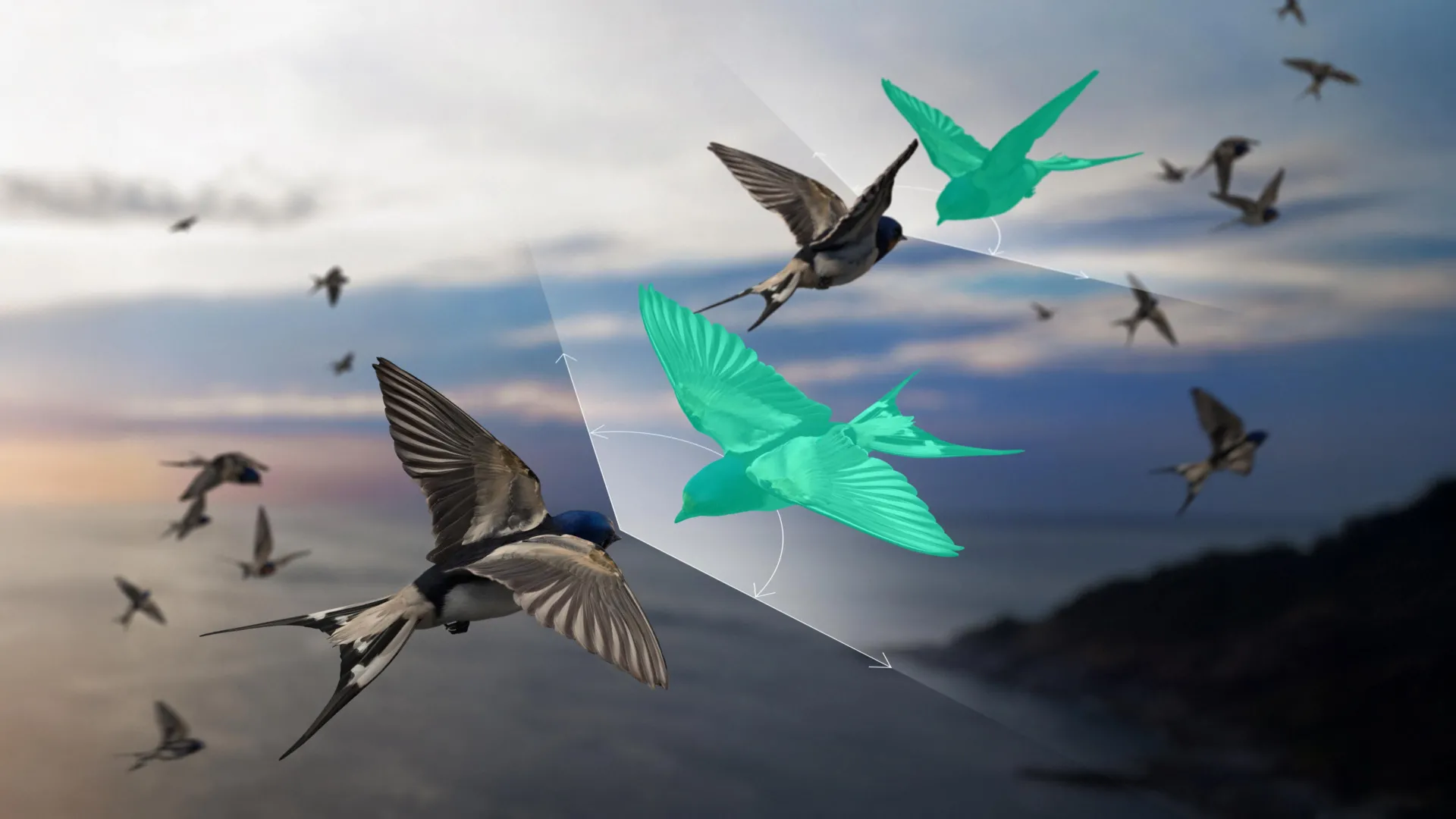
Despite the universal applicability of Newton’s third law, certain natural phenomena have consistently exhibited behaviors that seem to contravene its tenets. Consider a flock of starlings, a breathtaking natural spectacle known as a murmuration. As thousands of birds twist and turn in near-perfect synchronicity, each bird appears to coordinate its movements not with every bird in the flock, but primarily with those immediately beside it or directly ahead. Crucially, they do not seem to align their actions with birds behind them. This selective responsiveness creates an asymmetry in interaction: a bird ahead influences one behind, but the bird behind does not exert an equal and opposite influence on the one ahead.
This peculiar, one-sided interaction is the defining characteristic of what physicists term "non-reciprocal" systems. Such systems are not limited to avian formations. Bacterial swarms, for instance, consisting of millions of microorganisms, exhibit coordinated movement patterns where individual bacteria respond to local chemical gradients or the movements of their immediate neighbors, but not necessarily to the collective dynamics of the entire swarm in a reciprocal manner. Similarly, in dense human crowds, an individual’s movement might be influenced by those pushing from behind or beside, but their own pushing action might not elicit an equal and opposite reaction from the entire crowd or even specific individuals in a perfectly balanced way. Even at a microscopic level, within living tissues, groups of cells can exhibit non-reciprocal interactions, influencing each other’s migration or differentiation in ways that are not easily explained by traditional reciprocal force balance.
The challenge posed by these systems has been profound. Classical theories, built upon the fundamental assumption of reciprocal interactions and the conservation laws (like momentum and energy) that spring from them, have proven inadequate for accurately simulating these collective behaviors. Scientists have struggled to predict how these systems evolve over time, how they maintain their coherence, or how they respond to external stimuli. The inability to model such widespread natural phenomena has been a significant limitation, hindering advancements in fields ranging from biological research to crowd management and the design of advanced robotic systems.
A Decades-Long Scientific Quest for Understanding
The recognition of non-reciprocal interactions as a distinct and challenging problem has gained significant traction in physics and biology over the past few decades. While Newton’s laws provided a near-perfect description of inanimate mechanical systems, the emergence of complex systems science in the late 20th century highlighted the limitations of purely reductionist approaches when dealing with emergent phenomena. Researchers began to observe that simple rules governing individual interactions could lead to incredibly complex and coordinated collective behaviors, often defying easy explanation through traditional physics. The quest to develop a robust theoretical framework for these systems became a priority, driven by the understanding that a deeper insight could unlock secrets in areas from organismal development to the spread of information in social networks.
The computational challenges associated with non-reciprocal systems have been particularly daunting. Simulating millions of interacting agents without the simplifying assumptions of reciprocal forces requires immense computational power and novel algorithmic approaches. Without a proper theoretical underpinning, these simulations often relied on ad-hoc rules or approximations, limiting their predictive power and the fundamental insights they could offer.
The Dresden Breakthrough: Imaginary Birds and Auxiliary Dimensions
The long-standing problem has now found a sophisticated solution, spearheaded by a research team in Dresden, Germany. The pivotal work was led by physicist Roderich Moessner, a Principal Investigator of the Würzburg-Dresden Cluster of Excellence ctd.qmat (Complexity, Topology and Dynamics in Quantum Matter) and director of the Max Planck Institute for the Physics of Complex Systems in Dresden. Working alongside Marín Bukov and biophysicist Ricard Alert, the team developed and rigorously proved a new theory that fundamentally reconfigures how non-reciprocal systems can be analyzed.
Their ingenious approach extends the traditional action-reaction framework rather than discarding it. The core innovation lies in the introduction of what they term "additional artificial variables" or "fictitious partners." In essence, the researchers found a way to mathematically transform the non-reciprocal interactions into reciprocal ones by adding an imaginary component to the system.
"The trick behind the new theory is that it constructs a partner for each component of the system – a fictitious partner that doesn’t exist in nature," explains Ricard Alert. "The original non-reciprocal interactions are replaced by reciprocal interactions with these auxiliary degrees of freedom." This conceptual leap allows scientists to leverage the vast and well-established arsenal of tools from many-body physics – a field that describes the collective behavior of large numbers of interacting particles – which were previously applicable only to reciprocal systems.
To illustrate this profound concept, Alert offers the compelling example of the imaginary bird: "To simulate the birds’ movements precisely, we describe the dynamic system ‘flock of birds’ using established methods – as if it were a reciprocal system, even though it is not. The elegant solution is to artificially place a fictitious bird in front of each real bird, aligned in exactly the opposite direction." These "imaginary partners" are not physical entities but powerful mathematical constructs. They serve as conduits, allowing the one-way influences inherent in non-reciprocal systems to be re-expressed as balanced, two-way interactions within an expanded, albeit artificial, mathematical space. This transformation makes the system amenable to classical analytical techniques and computational simulations that were previously off-limits.
Marín Bukov emphasizes the profound practical implications: "The research team has developed and proven a theory that makes much of what we teach our students applicable to non-reciprocal systems as well. These systems, where Newton’s third law does not apply, can now finally be described exactly and simulated precisely – even using established methods. This is exactly the kind of tool that has been missing in recent years." The elegance of the solution lies in its ability to adapt existing theoretical frameworks rather than requiring an entirely new physics, thereby accelerating its adoption and impact across scientific disciplines.
Far-Reaching Implications Across Scientific Frontiers
The publication of these findings in the prestigious journal Nature Physics marks a significant milestone, promising to unlock new avenues of research and understanding across a broad spectrum of scientific and engineering fields.
Biology and Biophysics: The ability to accurately simulate non-reciprocal interactions will revolutionize our understanding of complex biological phenomena. This includes the intricate dance of cell migration during embryonic development, the formation of tissues and organs, the coordinated action of immune cells fighting pathogens, and the collective behavior of microorganisms in biofilms. Better models could lead to new insights into disease progression, tissue regeneration, and even the fundamental principles governing life itself. For instance, understanding how cells respond non-reciprocally to their neighbors could shed light on cancer metastasis or wound healing.
Crowd Dynamics and Social Sciences: Beyond the microscopic world, the theory holds immense potential for improving models of human crowd behavior. In situations ranging from urban planning and traffic management to emergency evacuations and large-scale public events, understanding how individuals influence each other in non-reciprocal ways is critical. More accurate simulations could lead to safer designs for public spaces, more efficient transportation systems, and better strategies for managing large gatherings, potentially saving lives.
Robotics and Artificial Intelligence: The principles derived from this research could inspire the development of next-generation swarm robotics and multi-agent AI systems. Imagine fleets of drones or autonomous vehicles that coordinate their actions in highly efficient, adaptive ways, even when their individual interactions are not perfectly reciprocal. This could lead to breakthroughs in areas such as environmental monitoring, logistics, search and rescue operations, and automated manufacturing.
Materials Science and Active Matter: The new framework opens up possibilities for designing novel "active materials" – systems composed of many interacting components that consume energy and generate their own motion. Such materials exhibit emergent properties not found in traditional passive materials. Understanding their non-reciprocal dynamics could lead to the creation of self-assembling structures, responsive soft robots, or materials with unprecedented abilities to self-repair or adapt to their environment.
Quantum Physics and Emergent Phenomena: Perhaps one of the most intriguing implications lies in the realm of quantum matter. Roderich Moessner’s own research focus on quantum matter suggests a fascinating frontier. "In Würzburg and Dresden, we study quantum matter whose particles interact under certain conditions in ways that give rise to new phenomena such as magnetism or lossless current transport," Moessner states. "The exciting question now is whether these exceptions to Newton’s law lead to entirely new forms of collective quantum behavior. We still know very little about this – and that is precisely what makes this so fascinating." This suggests a potential paradigm shift in understanding how quantum particles might collectively behave when their interactions are non-reciprocal, potentially leading to the discovery of entirely new states of matter or quantum phenomena.
The development of this theory represents more than just a clever mathematical trick; it signifies a profound advancement in our fundamental understanding of how complex systems operate. By providing a rigorous and generalizable framework, the Dresden team has equipped scientists with a powerful new lens through which to observe, analyze, and ultimately predict the behavior of a vast array of natural and artificial systems that have long eluded precise description. This ability to bridge the gap between classical physics and the complex dynamics of the real world lays crucial groundwork for future discoveries and innovations across the scientific landscape. The era of accurately simulating and understanding non-reciprocal systems has truly begun.
