
Europe’s skies are traversed by millions of migratory waterbirds and game bird species annually, undertaking epic journeys that span dozens of countries. From their breeding grounds in northern Europe to their wintering havens in the Mediterranean and Africa, these birds depend on an unbroken chain of healthy habitats and sustainable management practices. This intricate web of interconnected ecosystems underscores a fundamental truth: successful conservation is inherently a collaborative endeavour. If some nations commit to reducing pressure on their declining populations while others persist with unsustainable practices, recovery efforts across entire flyways are inevitably jeopardized, leading to the potential collapse of vulnerable species. The continent now stands at a pivotal moment, with scientific evidence and policy frameworks in place, but the ultimate success hinges on comprehensive, coordinated implementation across all member states and beyond.
The Bedrock of Conservation: The EU Birds Directive and International Cooperation
The European Union’s commitment to bird conservation is enshrined in one of its oldest and most robust pieces of environmental legislation, the Birds Directive (Directive 2009/147/EC, originally adopted in 1979). This landmark directive mandates the protection, management, and control of all wild bird species naturally occurring in the European territory of the Member States. It recognizes that wild birds, many of which are migratory, constitute a shared heritage and that their conservation is a pan-European responsibility. Article 7 of the Birds Directive specifically addresses hunting, stipulating that hunting of listed species must be sustainable and must not, under any circumstances, jeopardize conservation efforts across their entire geographical range. This legal obligation forms the backbone of contemporary efforts to manage game bird populations, moving away from purely national perspectives to a flyway-level approach.
Historically, many declining bird species have been hunted for centuries, a tradition deeply embedded in the cultural fabric of numerous European communities. However, the primary drivers of precipitous declines observed in recent decades are largely anthropogenic and systemic: pervasive habitat loss, extensive wetland degradation, escalating pollution, the undeniable impacts of climate change, and radical shifts in agricultural practices. While hunting may not always be the initial or sole cause of decline, for populations already depleted and teetering on the brink, even a small additional mortality factor can critically impede recovery. Consequently, reducing avoidable harvest pressure has emerged as an essential short-term measure, providing crucial breathing room for populations while more extensive, long-term habitat restoration efforts take effect.
Establishing a Coordinated Approach: The European Commission’s Task Force
Recognizing the urgent need for a unified and scientifically guided approach, the European Commission established the Task Force on the Recovery of Birds (TFRB). Launched in 2018, the TFRB brings together a diverse array of stakeholders, including representatives from EU countries, leading scientists, conservation organizations, and hunting federations. Its core mission is to coordinate conservation measures for declining migratory game bird species, fostering dialogue and ensuring that decisions are rooted in the best available scientific evidence.
One of the TFRB’s most vital tools is Adaptive Harvest Management (AHM). AHM is a dynamic, iterative process that integrates real-time population monitoring, sophisticated demographic modelling, and comprehensive harvest data. This scientific framework allows experts to rigorously assess whether current hunting pressure is genuinely compatible with population recovery goals. Where models unequivocally demonstrate that populations cannot recover under existing mortality levels, the Task Force is empowered to recommend a range of interventions. These can include significant harvest reductions, temporary hunting moratoria, enhanced monitoring protocols, and targeted habitat restoration measures. The "adaptive" nature of AHM means that management strategies are continuously refined and adjusted based on new data and observed population responses, ensuring flexibility and responsiveness to ecological realities. This robust scientific underpinning is critical for building consensus among diverse stakeholders and ensuring the efficacy of conservation actions.
A Pioneering Success: The European Turtle-dove’s Western Flyway
The European Turtle-dove ( Streptopelia turtur ), a species emblematic of the Mediterranean spring, became the first major test case for adaptive harvest management in Europe. Facing severe population declines, estimated to be over 80% in parts of its range since 1980 due to habitat degradation, agricultural intensification, and unsustainable hunting, the species was classified as Vulnerable on the IUCN Red List. In response, coordinated measures were introduced across its Western flyway, primarily encompassing countries like France, Spain, and Portugal, which implemented a four-year hunting moratorium alongside improved monitoring efforts.
The results, while still requiring sustained effort, have offered a genuine reason for optimism. Recent signs of population stabilization and even localized recovery along parts of its Western flyway demonstrate unequivocally that coordinated flyway management can work when EU countries commit to collaborative action. Conservation organizations like BirdLife International hailed this achievement as a "brighter future" for the species, emphasizing that it serves as a powerful proof of concept for the AHM approach. The implementation of scientific recommendations, even when challenging traditional practices, has shown tangible positive impacts. However, the species remains in a depleted state overall, underscoring that sustained vigilance and continued adherence to conservation strategies are paramount.
Conversely, the situation on the Central-Eastern flyway for the Turtle-dove paints a starkly different and concerning picture. Despite similar scientific recommendations and the evident success demonstrated in the west, most EU countries on this flyway have not fully implemented the advised measures. Unsurprisingly, Turtle-dove populations in these regions have yet to show any significant signs of recovery, highlighting the critical interdependence of flyway nations and the detrimental impact of fragmented or inconsistent conservation efforts. This disparity underscores the ongoing challenge of achieving uniform compliance across the entire migratory range, even when compelling scientific evidence and successful precedents exist.
Urgent Intervention for the Common Pochard
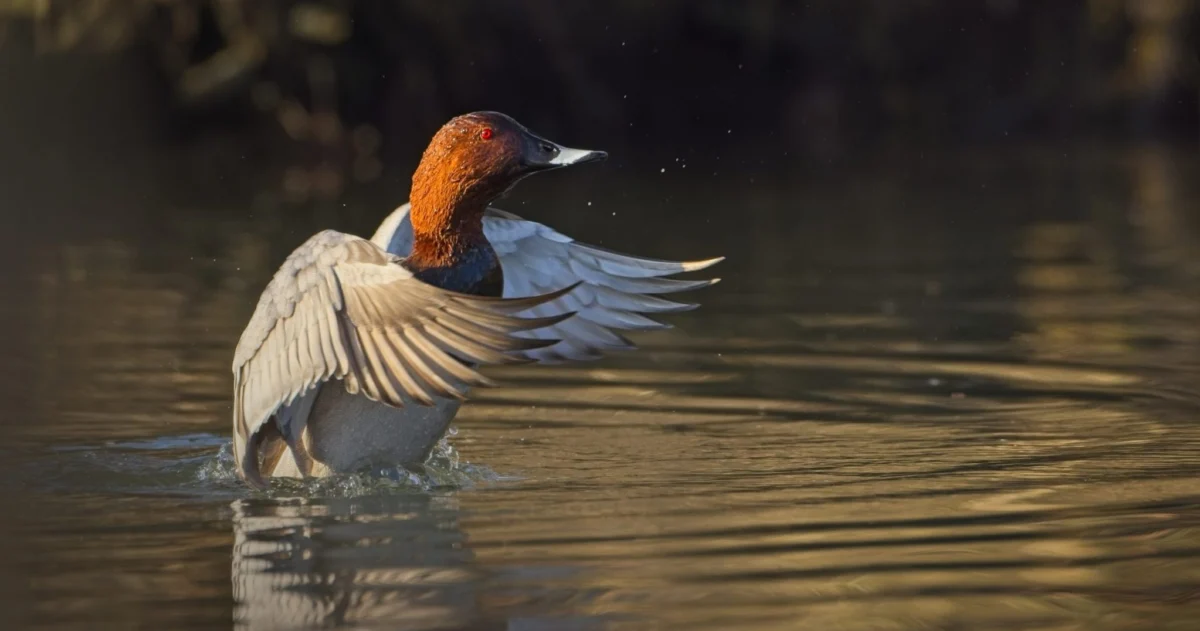
Another species facing an acute crisis is the Common Pochard ( Aythya ferina ), a flagship diving duck of the African-Eurasian Flyway. This species relies heavily on healthy wetlands, marshes, and fishponds across Europe for its survival. Over recent decades, the Common Pochard has suffered major population declines, driven by a familiar litany of threats: extensive habitat loss, pervasive wetland mismanagement, widespread pollution (including lead shot ingestion), the escalating impacts of climate change on both breeding and wintering grounds, and persistent hunting pressure. Scientists have also observed concerning shifts in the population’s sex ratio, with female numbers declining disproportionately. This imbalance is particularly alarming as it directly impacts reproductive capacity and the long-term viability of the population, making recovery significantly more challenging.
In response to this critical situation, experts commissioned by the TFRB recently developed a comprehensive population model for the Common Pochard. Their conclusions were stark: a temporary, EU-wide hunting moratorium could significantly speed up the species’ recovery. This short-term pause is not presented as a standalone solution but rather as a vital interim measure. It is designed to provide depleted populations with the essential breathing room needed to stabilize and begin to grow, while EU countries simultaneously address the wider, systemic drivers of decline. These include large-scale wetland restoration projects, improved habitat management practices, stringent action on pollution sources, and targeted control of invasive predators. The proposed moratorium represents a proactive, science-backed intervention aimed at reversing a dangerous trajectory before it becomes irreversible.
Proactive Steps for Other Key Migratory Species
Building on the successes and lessons learned from the Turtle-dove, the Task Force has proactively commissioned the development of science-backed recommendations for two further vulnerable migratory game species, aiming to prevent further declines and foster recovery.
For the Common Quail ( Coturnix coturnix ), a small, elusive ground-nesting bird whose populations have been impacted by intensive agricultural practices and hunting pressure, the TFRB’s experts recommend either a temporary hunting ban or, as an alternative, a significant reduction of permitted harvest by approximately 75%. The rationale behind this recommendation is to afford juvenile birds safe passage through their crucial first year of life, thereby boosting overall population productivity. Young birds are particularly vulnerable, and reducing mortality during this critical period can have a disproportionately positive effect on population growth.
Similarly, for the Eurasian Wigeon ( Mareca penelope ), a widespread dabbling duck, the recommendations focus on reduced hunting offtake, coupled with vastly improved real-time harvest reporting mechanisms. The current lack of timely and accurate data on hunting bags often hinders effective management. By implementing robust real-time reporting, any future harvests can be genuinely sustainable, ensuring that hunting pressure does not undermine the species’ ability to stabilize and grow its breeding numbers. This highlights the importance of data transparency and accountability in achieving conservation goals.
Conservation in Action: The BirdLife Partnership’s Grassroots Efforts
Across Europe, BirdLife Partners are at the forefront of implementing and advocating for the recovery of migratory bird populations. Their work complements the policy efforts of the EU, providing critical on-the-ground action, monitoring data, and advocacy.
In Bulgaria, the Bulgarian Society for the Protection of Birds (BSPB) is launching a major new LIFE project. This ambitious initiative is specifically focused on the conservation of diving ducks, including the Common Pochard, and the broader restoration of critical wetland habitats along the vital Black Sea–Mediterranean Flyway. The project aims to improve habitat quality, reduce threats like poaching and disturbance, and raise awareness among local communities and stakeholders about the importance of wetland ecosystems.
In Spain, SEO/BirdLife continues its rigorous advocacy for stronger protections for the Common Quail. Simultaneously, the organization is actively monitoring legal proceedings related to the controversial release of non-native Japanese Quails. These releases pose a significant threat to native Common Quail populations through genetic pollution, as hybridization can dilute the genetic integrity of the indigenous species, potentially undermining decades of conservation efforts. SEO/BirdLife’s work exemplifies the multi-faceted nature of conservation, encompassing legal battles, scientific monitoring, and public awareness campaigns.
Across northern Europe, BirdLife Partners are leading extensive monitoring programmes that collect invaluable population data. This long-term, meticulously gathered information is absolutely essential for effective flyway management. It provides the scientific foundation upon which Adaptive Harvest Management models are built, enabling scientists and policymakers to track population trends, identify emerging threats, and assess the efficacy of conservation interventions. Without these dedicated monitoring efforts, evidence-based conservation would be impossible.
The Ultimate Goal: Healthy Wetlands and Thriving Flyways for a Resilient Europe
While temporary hunting restrictions are undeniably important first steps that can alleviate immediate pressure on depleted populations and create essential conditions for recovery, they are not a standalone panacea. The long-term, sustainable solution for Europe’s migratory birds lies in the large-scale restoration of the ecosystems upon which these species fundamentally depend. This includes the revitalization of marshes, grasslands, fishponds, and floodplains – habitats that not only provide critical sustenance and refuge for birds but also deliver a cascade of wider environmental benefits for people across the continent. Healthy wetlands, for instance, are natural carbon sinks, play a crucial role in flood control and water purification, and significantly enhance climate resilience in an era of increasing environmental volatility.
The recent successes, particularly with the European Turtle-dove on its Western flyway, have unequivocally demonstrated that Europe’s migratory birds possess a remarkable capacity for recovery when countries act in concert. The pressing challenge now is to expand and deepen this cooperation. This involves not only the continued application of temporary harvest reductions, guided by robust science, but also a parallel and concerted effort towards the long-term restoration of the vast network of wetlands, grasslands, and floodplains that these magnificent species call home. The necessary tools, scientific expertise, and legal frameworks are already firmly in place within the European Union. What comes next, and whether Europe’s skies will continue to teem with the vibrant spectacle of migratory birds, ultimately depends on the collective political will and the willingness of every country along the flyway to fully embrace and play its indispensable part in this shared ecological responsibility. The future of these iconic species, and indeed the health of Europe’s natural heritage, hangs in the balance.
