
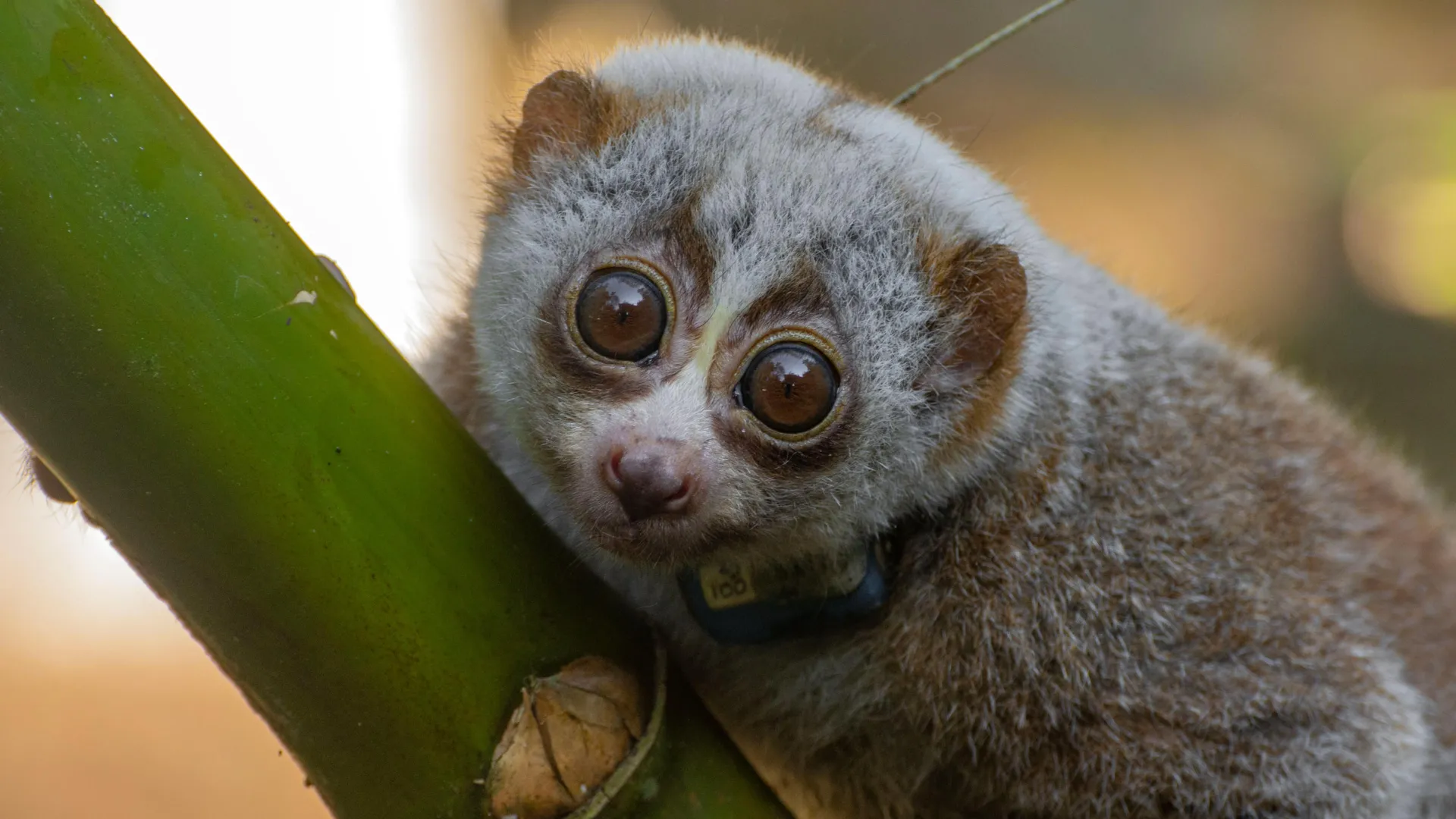
The grim reality of wildlife reintroduction efforts has been brought to light by groundbreaking research focusing on the Bengal slow loris. Published in the esteemed journal Global Ecology and Conservation, the study reveals a sobering outcome for these often-trafficked primates. Conducted by a collaborative team including primatologist Professor Anna Nekaris OBE of Anglia Ruskin University, alongside experts from the conservation group Plumploris e.V. and the University of Western Australia, the investigation meticulously tracked the post-release fate of Bengal slow lorises (Nycticebus bengalensis) in Bangladesh. Their findings challenge conventional assumptions about the efficacy and ethics of releasing rescued animals without comprehensive preparatory measures and post-release monitoring.
The Plight of the Slow Loris: A Global Conservation Challenge
Slow lorises, with their distinctive large, luminous eyes and seemingly gentle facial expressions, possess an unfortunate allure that has propelled them to the forefront of the illegal wildlife trade. This demand has rendered them among the most heavily trafficked primates globally, often snatched from their natural habitats to be sold as exotic pets or used in traditional medicine. The devastating impact of this trade is reflected in their conservation status: all slow loris species are critically listed by the International Union for Conservation of Nature (IUCN) as Critically Endangered, Endangered, or Vulnerable. This perilous status necessitates robust conservation interventions, frequently involving the rescue of confiscated animals from smugglers or illegal markets, followed by their rehabilitation and eventual release back into the wild—a practice intended to bolster dwindling wild populations and secure the species’ future.
The illegal wildlife trade is a multi-billion-dollar global industry, often operating in parallel with other illicit activities like drug and arms trafficking. For slow lorises, demand spans across Asia, Europe, and North America. In Southeast Asia, they are frequently mutilated, with their venomous teeth often painfully clipped or pulled out by traders to make them appear safer for handling by buyers. This cruel practice, combined with unsuitable diets, poor living conditions, and stress during transit, results in high mortality rates even before they reach their intended destination. Rescue centers play a vital role in intercepting these animals, providing veterinary care, and attempting to prepare them for a return to the wild. However, as this new study underscores, the journey back to freedom is fraught with its own set of dangers.
A Chronology of Release and Research
The research team embarked on their study to empirically assess the success rates of slow loris releases, a critical but often under-documented aspect of conservation. Their work centered on nine Bengal slow lorises that had been rescued from the illegal trade. After a period of rehabilitation, these individuals were fitted with specialized radio collars, allowing researchers to track their movements and survival post-release. The chosen release site was a national park in northeastern Bangladesh, an area previously utilized for wildlife releases and considered a suitable habitat.
The releases commenced, and the researchers meticulously monitored the nine individuals. The timeline of their survival painted a stark picture:
- Initial Release: All nine Bengal slow lorises were released into the national park.
- Within 10 Days: A rapid and alarming decline began, with three of the nine animals succumbing to unknown causes.
- Within Six Months: Four more animals perished, bringing the total fatalities to seven.
- Long-term Survival: Only two of the original nine animals managed to survive beyond the six-month monitoring period, a survival rate of less than 25%.
The researchers were able to recover four of the seven deceased animals’ bodies. Forensic examination of these remains revealed a chilling pattern: all four showed irrefutable evidence of having been killed by other slow lorises. This discovery shifted the focus of the investigation from external threats like predation to internal species conflict, fundamentally altering the understanding of post-release challenges for these primates.
Unpacking the "Death Trap": Territoriality and Venomous Conflict
The study’s most profound revelation lies in understanding the complex social and ecological dynamics of slow lorises. Slow lorises are inherently extremely territorial animals, a characteristic that is often underestimated or overlooked in release programs. Each individual or small family group maintains a distinct home range, which they actively defend against intruders. Adding to this formidable defense mechanism, slow lorises are the only venomous primates in the world. Their venom is produced by glands on their brachial (upper arm) region, which they lick to mix with saliva. This toxic cocktail is then delivered through specialized comb-like lower incisor teeth during a bite, capable of causing excruciating pain, tissue necrosis, and in severe cases, anaphylactic shock or even death in both conspecifics and predators.
The recovered bodies of the deceased lorises bore grim testament to this venomous territoriality. Researchers observed obvious bite wounds on the head, face, and digits—critical areas for fighting and defense. These injuries strongly indicated that deadly territorial encounters with resident slow loris populations were the direct cause of their demise. The released animals, likely disoriented and lacking established territories, were perceived as threats by existing wild lorises, leading to fatal confrontations.
Further analysis of the data revealed critical correlations:
- Captivity Duration: Animals that had spent longer periods in captivity tended to survive for fewer days after release. This suggests that extended time away from their natural environment may diminish their innate survival skills, alter their social behaviors, or reduce their physical fitness, making them ill-equipped to navigate the complexities of wild life, including territorial disputes.
- Movement Patterns: The released lorises exhibited higher levels of movement and appeared more alert than wild Bengal slow lorises typically do. This hyper-vigilance and increased travel could be interpreted as a desperate attempt to find an unoccupied territory, constantly on edge and avoiding conflict.
- Survival Strategy: Crucially, the two animals that managed to survive traveled across significantly larger areas compared to those that perished. This pattern strongly implies that survival hinged on successfully dispersing away from established territories and, critically, avoiding direct confrontations with aggressive resident lorises. Those unable to escape the immediate vicinity of existing populations likely faced repeated and ultimately fatal encounters.
Broader Implications for Wildlife Rescue and Reintroduction Practices
The findings of this study extend far beyond the Bengal slow loris, shedding light on systemic issues within broader wildlife rescue and reintroduction initiatives. A significant disparity exists in post-release monitoring: large and charismatic animals, such as big cats (tigers, lions, leopards) or rhinos, often receive intensive, long-term monitoring involving satellite tracking, ground teams, and extensive resources. This is partly due to their public appeal, the high cost of their initial rescue and rehabilitation, and the perceived conservation value. In stark contrast, many smaller species, including primates like slow lorises, amphibians, reptiles, and smaller mammals, are often released with minimal or no post-release tracking. This lack of follow-up means the true outcomes of these releases frequently remain unknown, masking potentially high failure rates and hindering the refinement of best practices.
The study highlights what Professor Anna Nekaris refers to as the "good intentions" trap. "It’s assumed that returning confiscated or rescued animals to the wild is always a positive conservation story," she stated. "Our research shows that for highly territorial species like slow lorises, releasing them into areas that are already densely populated can be a death trap." This assumption, often fueled by public pressure and the desire for feel-good conservation narratives, can inadvertently lead to rushed or inadequately planned releases. The ethical implications are profound: if a release is more likely to result in an animal’s death than its successful reintegration, the moral responsibility of such an action must be critically re-evaluated.
Rethinking Release Protocols: A Call for Scientific Rigor
The researchers unequivocally stress that successful wildlife releases necessitate meticulous planning, robust scientific assessment, and a fundamental shift in current practices. Evaluating the suitability of the release site and the condition of each individual animal is paramount. This includes:
- Detailed Habitat Assessments: Beyond simply identifying an area with the correct vegetation, assessments must consider the ecological carrying capacity of the habitat, the existing density of resident populations of the target species, and the availability of uncontested resources. For territorial species, this means identifying areas with low existing populations or routes for safe dispersal.
- Individual Animal Condition: A thorough evaluation of each animal’s physical health, behavioral competence (e.g., foraging skills, predator avoidance, social cues), and psychological state post-captivity is essential. Rehabilitation programs should be tailored to re-instill or reinforce these critical wild behaviors. The finding that longer captivity periods correlated with lower survival rates underscores the need for rehabilitation programs that actively mitigate the detrimental effects of human care.
- Long-Term Monitoring: The study itself demonstrates the critical importance of post-release monitoring. Without radio collars and dedicated tracking, the fates of these slow lorises would have remained unknown, perpetuating potentially harmful release practices. Long-term monitoring provides invaluable data, allowing conservationists to learn from both successes and failures, adapt strategies, and refine future interventions.
- Species-Tailored Rehabilitation Guidelines: Generic rehabilitation protocols are insufficient. Each species, with its unique ecological niche, behavioral repertoire, and social structure, requires bespoke guidelines that address its specific needs before, during, and after release.
Hassan Al-Razi, lead author and team leader of Plumploris e.V. Bangladesh, underscored the urgent need for reform, particularly in regions like Bangladesh where rescue and release efforts are increasingly common. "Many wild animals, including slow lorises, are rescued and subsequently released back into the wild," he observed. "However, in many cases, these releases are conducted inappropriately. For forest-dwelling species, release sites are often selected based on logistical convenience rather than ecological suitability. As a result, certain forests have effectively become dumping grounds for rescued animals and are no longer appropriate release sites." This critical assessment points to a systemic issue where the practicalities of logistics often override the ecological necessities, leading to tragic outcomes for the animals involved.
Broader Impact and Future Outlook
The implications of this study resonate far beyond the conservation of slow lorises. The principles illuminated by this research—the critical role of territoriality, the impact of captivity, and the necessity of rigorous site assessment and monitoring—are likely applicable to a multitude of other species, particularly those with strong territorial instincts or complex social structures. Conservation organizations, governmental wildlife agencies, and rescue centers worldwide are now faced with the imperative to review their own release protocols in light of these findings.
The study serves as a powerful call to action for evidence-based conservation. It advocates for increased investment in research, better training for wildlife rehabilitation staff, and greater collaboration between scientists, rescue operators, and policymakers. This collaboration is crucial for developing and implementing best practices that prioritize the long-term welfare and survival of individual animals while effectively contributing to species conservation goals.
Ultimately, the goal of wildlife rescue and reintroduction is not merely to return an animal to a forest, but to facilitate its successful reintegration into a functional ecosystem, where it can thrive and contribute to the wild population. As Professor Nekaris aptly summarized, "Without fully understanding the animal’s behaviour, its time spent in captivity and the density of resident populations at the release site, reintroductions may do more harm than good." The Bengal slow loris study serves as a poignant reminder that while compassion is vital, it must always be tempered with scientific rigor and a profound understanding of the complex realities of the wild to ensure that rescue truly leads to freedom, not a "death trap."
