
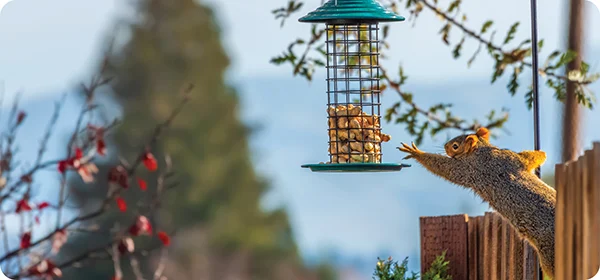
For millions of households across North America, backyard bird feeding serves as a peaceful intersection between urban living and the natural world. However, this tranquil hobby frequently devolves into a logistical challenge as property owners contend with voracious wildlife. Finding reliable food sources is a full-time, high-stakes endeavor for local fauna, and an unprotected backyard feeding station is often perceived as an open-access buffet. While initial encounters with local wildlife are typically welcomed, the rapid consumption of expensive seed, structural damage to equipment, and the displacement of target songbird species eventually test the patience of even the most dedicated nature enthusiasts. Consequently, managing unwanted visitors has become a central focus for suburban ecologists and hardware manufacturers alike.
Understanding the Scope of Backyard Wildlife Conflicts
The conflict between human bird-feeding practices and wildlife foraging is rooted in fundamental ecological pressures. Urbanization and habitat fragmentation have compressed the natural ranges of many mammalian and avian species, compelling them to adapt quickly to human-dominated landscapes. Residential areas offer abundant, calorie-dense resources that significantly outweigh the energetic returns of foraging in diminishing natural forests and grasslands.
According to wildlife management organizations, backyard bird feeding represents a multi-million-dollar industry in the United States and Canada. Millions of citizens invest heavily in premium seeds, suet, nectar, and specialized dispensing equipment. When squirrels, raccoons, and aggressive avian species appropriate these provisions, the financial burden on consumers mounts rapidly. Beyond the economic impact, this dynamic creates ecological imbalances by artificially inflating local populations of adaptable generalist species at the expense of more specialized, delicate songbirds.
The Evolution of Squirrel Deterrence Techniques
Among the myriad creatures that frequent backyard feeding stations, rodents—most notably the Eastern Gray Squirrel and its regional counterparts—present the most persistent challenge. Renowned for exceptional agility, acute problem-solving capabilities, and a remarkable vertical leap, squirrels routinely bypass rudimentary obstacles. Resolving this issue requires a systematic approach based on physics and behavioral modification rather than simple trial and error.
Industry specialists have long advocated for the implementation of stovepipe baffles on pole-mounted systems. These smooth, cylindrical metal barriers, when properly integrated, prevent rodents from gaining traction or climbing past a certain point. Wildlife behaviorists emphasize that placement is critical to the efficacy of these devices. A stovepipe baffle must be positioned a minimum of five feet above the ground to prevent a squirrel from simply jumping from the turf past the obstacle. Furthermore, the entire pole system must be situated at least ten feet away from elevated launch points, such as overhanging tree branches, second-story decks, fences, or garden sheds. This ten-foot perimeter neutralizes the horizontal leaping capacity of most tree-dwelling rodents, effectively transforming standard equipment into a squirrel-proof feeding station.
For properties where hanging feeders from mature trees is the only viable option, alternative engineering solutions are required. Because tree-hung setups are inherently vulnerable to descents from above, arborists and equipment designers recommend standard tube or hopper configurations paired with domed, overhead baffles. These wide inverted bowls or domes are secured directly above the feeder on the suspension wire or chain, blocking any attempt by a squirrel to slide down the hanging apparatus.
An alternative physical defense mechanism gaining popularity among homeowners is the exclusion cage. These heavy-duty wire mesh enclosures are retrofitted around existing tube and hopper feeders. Engineered with precise spacing, the openings permit smaller, desirable songbirds to slip through while completely barring larger rodents and aggressive avian species. This method relies on spatial exclusion, allowing vulnerable species to feed undisturbed while physically blocking bulk consumers.

Managing Avian Competitors and "Nuisance" Birds
While mammals frequently capture the attention of homeowners, avian competition presents an equally complex challenge. In the lexicon of backyard ecology, "nuisance birds" are defined not by inherent malice, but by their behavioral dominance. Species such as European starlings, common grackles, brown-headed cowbirds, and house sparrows frequently congregate in large flocks, rapidly exhausting seed supplies and intimidating smaller, preferred species away from feeding ports.
Mitigating the impact of these competitive flocks requires a multi-pronged strategy that modifies both the physical dispensing equipment and the dietary options provided. Ornithologists and bird-feeding specialists stress that diet selection is one of the most effective tools for population management at the micro-scale.
Standard commercial seed blends often contain high percentages of cracked corn, millet, and milo. While economical, these grains act as a magnet for opportunistic blackbirds, sparrows, and doves. Experts recommend eliminating these specific grains and replacing them with targeted alternatives. Safflower seed, for instance, possesses a hard white hull and a bitter taste profile that most squirrels and blackbirds find unpalatable, yet it is readily consumed by preferred backyard visitors such as cardinals, titmice, chickadees, and grosbeaks. Similarly, utilizing pure, high-grade suet cakes rather than complex rendered blends with added fillers can deter starlings while satisfying the high-energy nutritional needs of insectivorous species like woodpeckers, nuthatches, and wrens.
Technological Innovations in Feeder Design
Beyond dietary adjustments, modern manufacturing has introduced advanced mechanical engineering to the backyard feeding sector. Feeder manufacturers have developed weight-sensitive mechanisms that respond dynamically to the mass of visiting wildlife. These counterbalanced ports can be adjusted to close off access when a heavier animal—whether a squirrel, a grackle, or a pigeon—lands on the perch or tray. Once the heavier animal departs, the ports reopen for lighter songbirds.
Other design innovations focus on physical geometry. Feeders featuring exceptionally short perches, or those designed with no perches at all, naturally favor agile, smaller birds such as goldfinches and titmice, which are capable of clinging directly to vertical wire mesh or hanging upside down to feed. Larger, less dexterous nuisance birds struggle to maintain balance on these minimalist structures, eventually abandoning the station in search of easier foraging grounds.
Expert Insights and Industry Perspectives
Industry leaders emphasize that managing backyard wildlife is not about eliminating animals, but rather about establishing a sustainable balance. Representatives from major specialized nature retail networks note that consumer frustration often stems from viewing wildlife management as a one-time fix rather than an ongoing maintenance routine.
"Finding food is a constant, evolutionary imperative for wild animals," notes a spokesperson for major wildlife retail organizations. "When a backyard offers an unprotected, high-calorie bounty, wildlife will naturally exploit it until physical or environmental boundaries are established. Success in backyard bird feeding relies on understanding animal behavior and proactively implementing structural defenses."

Educational outreach programs, including specialized nature podcasts and in-store consultations with certified feeding specialists, continue to play a crucial role in educating the public. These resources provide consumers with the technical knowledge required to diagnose specific foraging issues on their properties, whether the culprit is a high-jumping rodent or a flock of aggressive blackbirds.
Broader Implications and Environmental Context
The implementation of effective critter solutions carries implications that extend beyond individual property aesthetics and household budgets. Properly managed feeding stations reduce the artificial concentration of wildlife, which in turn lowers the transmission rates of avian diseases such as salmonellosis and mycoplasmal conjunctivitis—pathogens that thrive at overcrowded, unmanaged feeding sites. Furthermore, by protecting native songbird populations from aggressive generalists, homeowners help maintain local biodiversity.
As suburban development continues to encroach upon natural habitats, intersections between human infrastructure and wildlife will remain frequent. By utilizing science-based deterrents, targeted nutrition, and advanced hardware, property owners can cultivate a harmonious backyard environment that successfully supports localized biodiversity while protecting private investments in nature appreciation.
