
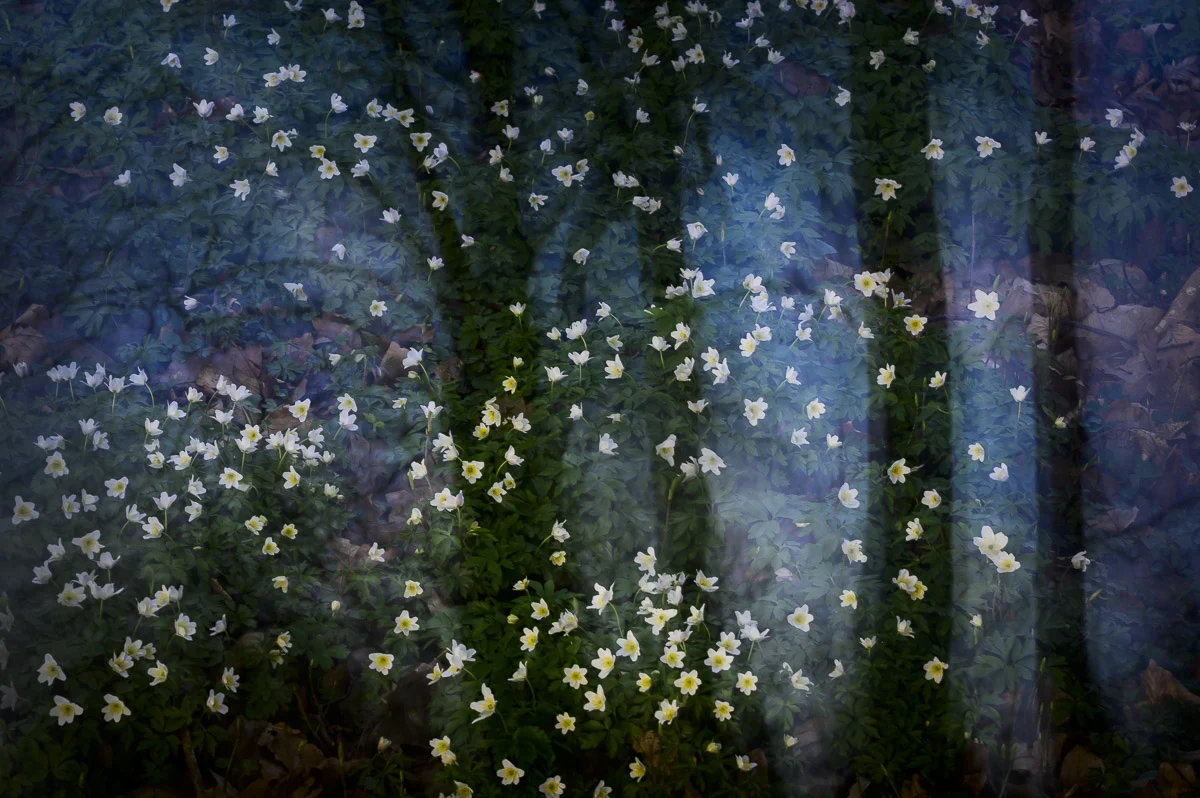
In the realm of nature photography, where the pursuit of compelling imagery often dictates meticulous planning and technical precision, a distinctive methodology is gaining traction, emphasizing responsiveness to the moment over adherence to predefined outcomes. This approach posits that truly impactful photographs emerge not from a rigid checklist of compositional rules or anticipated scenes, but from an interactive process deeply rooted in observation, adaptation, and an openness to chance. Rather than arriving on location with a "target photo" in mind, practitioners of this philosophy advocate for a receptive state, allowing the scene itself to guide the creative journey.
Shifting Paradigms in Nature Photography
Conventional wisdom in photography frequently highlights the finished product: a perfectly composed image, executed with flawless technique and exhibiting pleasing aesthetics. While these qualities are undeniably important, a growing number of photographers argue that the most crucial phase of creation unfolds prior to the shutter release—in the dynamic interplay between the photographer and the environment. This perspective challenges the notion of photography as merely capturing a pre-visualized scene, reframing it as a continuous dialogue with nature.

Many photographers begin their expeditions with detailed plans, informed by previous experiences or desired artistic expressions. However, the unpredictable nature of the outdoors—shifting light, elusive wildlife, sudden weather changes, or unexpected elements within the frame—often renders such plans obsolete. The responsive methodology acknowledges these variables as integral to the creative process, treating them not as obstacles but as prompts for redirection and discovery. For these practitioners, accumulated experience, technical knowledge, and an understanding of composition serve as a toolkit, ready to be deployed as the situation demands, rather than a prescriptive set of instructions. This iterative process, facilitated by modern digital cameras that offer instant feedback, allows photographers to adjust their approach continuously, fostering an organic evolution of the image.
The Interactive Triad: Nature, Perception, and Design
At the heart of this adaptive photographic philosophy lies an interactive triad: Nature, Perception, and Design. This framework provides a systematic way to understand the spontaneous decision-making process in the field.
- Nature: This element represents the raw, unfiltered reality of the environment—the prevailing conditions, the landscape, the flora and fauna, the atmospheric nuances. Nature presents the initial situation, often complex and overwhelming in its detail.
- Perception: This is the photographer’s filter, determining what stands out amidst nature’s vastness. It’s the selective gaze that identifies points of interest, ignores distractions, and assigns significance, thereby reducing complexity and condensing the scene into potential photographic elements. Perception is not static; it constantly shifts, guided by initial observations and the feedback loop from preliminary captures.
- Design: This is the photographer’s active response to the interplay of nature and perception. It encompasses technical choices—composition, lighting, exposure, focus—but these are always in service of the emerging image, not a preconceived one. The acceptance of an open-ended outcome allows chance and serendipity to play a significant role, often leading to compositions that surpass any initial plan. The first photograph taken in a series is rarely the final one; instead, it acts as crucial feedback, returning to influence perception and subsequent design decisions. This continuous loop of observation, capture, review, and adjustment defines the process.
Case Studies in Responsive Photography

To illustrate this triad in action, three distinct photographic scenarios—"Frost Leaf," "Dragonfly in Backlight," and "Slime Moulds"—demonstrate how attention shifts and decisions evolve organically on location. These examples are not staged but represent genuine encounters, highlighting the fluid interaction between the environment, the photographer’s perception, and their technical design choices.
1. Frost Leaf: Unveiling Hidden Structures
The "Frost Leaf" scenario began spontaneously, driven by a sudden drop in temperature. The photographer, without a specific destination, chose a local park pond lined with bald cypress trees. Upon arrival, the scene presented a complex tableau of frozen water, ice patterns, branches, and snow. Amidst this intricate detail, a single leaf, trapped within the icy surface, became the focal point.
Initial attempts to photograph the leaf aimed at capturing the delicate crystal structures of the ice. However, the early images revealed a disconnect; the leaf appeared isolated, lacking integration with its frosty surroundings. This immediate feedback from the camera’s display prompted a shift in perception and design. To better articulate the relationship between the leaf and the ice, the photographer introduced artificial light. A wireless flash unit was placed directly on the ice, providing low, directional illumination. The iterative process began: subtle adjustments in the flash’s position led to significant changes in how light interacted with the surface. Each shot provided new information, refining the understanding of the scene.

Further refinement involved adding an LED light to subtly open up shadows, enhancing depth. It was during this experimental phase that an accidental slip of the flash, redirecting its light more intensely into the ice, yielded an unexpected breakthrough. The display revealed not only a new separation of the leaf from the surface but also the emergence of previously unseen structures beneath the ice. This fortuitous moment transformed the image from a mere depiction of "a leaf on ice" into a complex exploration of light, ice, and organic form as a cohesive system. This case vividly demonstrates how embracing experimentation and allowing for unexpected developments can redefine the photographic narrative. The use of off-camera flash in macro photography, while common, becomes a tool for dynamic interaction rather than static illumination, illustrating the adaptive nature of the design element in the triad.
2. Dragonfly in Backlight: The Dance of Motion and Light
The "Dragonfly in Backlight" episode unfolded at a familiar lake, initially with the expectation of repeating previous photographic successes. However, the prevailing conditions had shifted, compelling the photographer to abandon preconceived notions. The most striking element upon arrival was the reed grass, backlit by the low sun, creating a luminous glow along the stems.
The initial design focus was on isolating this glow, requiring the photographer to maneuver for an angle that would render the background dark, allowing the backlit reeds to dominate the frame. While engaged with the reeds, dragonflies frequently darted through the scene, appearing and vanishing. This dynamic interplay of light, motion, and botanical structure gradually captured the photographer’s attention, shifting the perceptual focus. The design adapted to this new subject: the frame was opened to anticipate the insects’ entry, and a very fast shutter speed was selected to freeze their rapid movement, acknowledging that dragonflies do not "hover politely."

Despite these adjustments, decisive moments were elusive. The photographer switched to continuous shooting and adopted a softened gaze, allowing peripheral vision to register motion more readily than a rigid focus through the viewfinder. Bursts of shots were fired upon sensing movement. Reviewing these images provided critical feedback: the dragonflies were consistently outside the plane of focus. This led to another design modification: switching to manual focus and stopping down the aperture. While sacrificing some background blur, this increased the depth of field, creating a broader zone of sharpness that encompassed both the reeds and the flight path of the dragonflies. This iterative cycle of waiting, shooting, reviewing, and adjusting eventually yielded a single frame out of hundreds that successfully harmonized focus, position, and the ethereal backlight—a testament to persistent adaptation and technical precision in response to an unpredictable subject. This highlights the importance of mastering technical aspects like aperture and shutter speed not as ends in themselves, but as responsive tools.
3. Slime Moulds: Discovering the Microcosm
The "Slime Moulds" encounter began in an autumn woodland, a scene that initially offered no clear, compelling subject. The photographer, nevertheless, continued to shoot, capturing trees, leaves, and mushrooms, using the camera’s display as a continuous feedback mechanism. The early images, however, lacked impact.
It was in reviewing one of these frames that a detail previously unnoticed by the naked eye became apparent: fine, threadlike structures on a fungus—slime moulds. The camera, in this instance, acted as an extension of perception, revealing a hidden world. This discovery prompted an immediate shift in focus. The photographer moved closer, sitting on the forest floor, determined to deliberately frame this tiny microcosm. The sensory experience of the earthy smell further anchored the moment.

As time was spent observing, subtle swellings at the ends of the threads became noticeable, providing a new focal point around which attention tightened. To further articulate this intricate world, an LED light was introduced. The scene immediately transformed as shadows formed, shifted, and reappeared, creating a dynamic interplay of light, blur, and structure. Each adjustment, each frame captured, deepened the photographer’s engagement with this minute environment. This case study underscores how the camera can initiate perception, leading the photographer into unforeseen subjects and demonstrating the profound potential of patient observation and iterative lighting in macro photography. This process mirrors scientific discovery, where initial observation leads to focused investigation and technical refinement.
Implications for Photographic Practice
These three diverse scenarios, while unique in their subjects and conditions, share a fundamental underlying logic: the continuous interplay between shifting attention and evolving decisions. For practitioners of this responsive philosophy, the strength of a photograph does not lie in the rigid application of established rules but in the synergy between seeing and choosing.
Technical competence, far from being a constraint, becomes a liberator. A fluent command of composition, exposure, and lighting allows the photographer to operate instinctively, without conscious deliberation over technicalities. This frees up mental space to fully engage with the unfolding scene, to respond authentically to "what is actually happening." Rules, experience, and technique are thus viewed as essential tools, supporting the creative work, but never defining it. They are deployed when they serve the emerging image and set aside when they become restrictive.

The ongoing dance between nature, perception, and design, often punctuated by moments of serendipitous discovery, remains central to this approach. It encourages photographers to cultivate a heightened sense of presence and adaptability, fostering a deeper connection to their subjects and ultimately leading to more original and resonant photographic outcomes. This methodology represents a powerful counter-narrative to the increasingly prescriptive nature of some photographic instruction, advocating for a return to intuitive, iterative, and deeply personal engagement with the world through the lens. It suggests that the most compelling images are not merely found or created, but rather emerge through a dynamic, open-ended process of discovery.
