
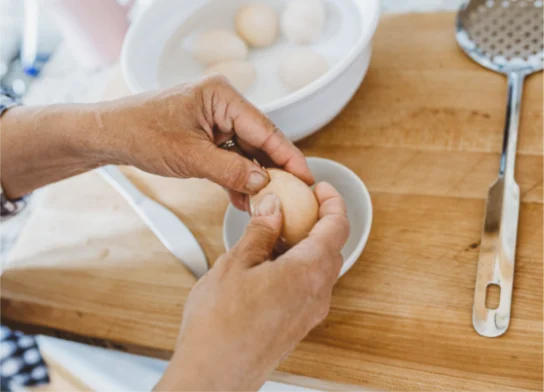
The perennial challenge of peeling a perfectly cooked egg has long frustrated home cooks and professional chefs alike, particularly when dealing with farm-fresh specimens. While the hard-boiled egg remains a nutritional powerhouse and a culinary staple, the mechanical process of removing the shell often results in pitted whites and wasted protein. Recent advancements in culinary techniques and a deeper understanding of avian biology have identified a superior method that eschews traditional boiling in favor of steaming. This shift in methodology addresses the fundamental chemical and physical properties of the egg, providing a consistent solution for even the freshest eggs, which are notoriously difficult to peel.

The Science of Egg Adhesion and the Freshness Paradox
To understand why steaming is more effective than boiling, one must first examine the anatomy of an egg and the changes it undergoes after being laid. An egg consists of the yolk, the albumen (white), and two distinct shell membranes—the inner and outer membranes. In a freshly laid egg, the pH of the albumen is relatively low, typically measuring around 7.6 to 8.5. At this lower pH level, the proteins in the egg white bind more strongly to the inner shell membrane during the cooking process.

As an egg ages, carbon dioxide escapes through the thousands of microscopic pores in the shell, causing the pH of the albumen to rise to approximately 9.2. This increase in alkalinity weakens the bond between the protein and the membrane, which is why older, store-bought eggs are traditionally easier to peel than those collected directly from a coop. Furthermore, as moisture evaporates over time, the air cell at the blunt end of the egg expands, providing a physical space that assists in the peeling process. However, relying on aging eggs presents a culinary trade-off: older eggs lose their structural integrity, resulting in off-center yolks and a less desirable flavor profile. Steaming allows cooks to bypass this waiting period, achieving clean peels with eggs that were laid only hours prior.

A Chronology of Failed Kitchen Conventions
For decades, domestic folklore has suggested various additives to boiling water to facilitate easier peeling. These methods have been tested extensively by culinary researchers with inconsistent results.

- The pH Alteration Method: Adding baking soda to increase the alkalinity of the water or vinegar to soften the shell. While baking soda can theoretically raise the pH, it must penetrate the shell to affect the albumen, often resulting in a sulfurous odor and minimal improvement in peelability.
- The Temperature Shock Method: Starting eggs in cold water versus dropping them into boiling water. Research indicates that "hot-starting" eggs—subjecting them to immediate high heat—is superior to "cold-starting," as the sudden heat shock causes the egg white to contract rapidly away from the membrane.
- Physical Intervention: Poking a pinhole in the blunt end of the egg to release pressure. While this may prevent the shell from cracking during a boil, it does little to prevent the membrane from sticking to the cooked white.
- The Salt Solution: Adding salt to the water is primarily effective for coagulating whites quickly if a shell cracks, but it does not significantly impact the ease of peeling for intact eggs.
Through a process of elimination and practical application, poultry experts and culinary enthusiasts have determined that these traditional interventions are largely secondary to the medium of heat transfer itself.

The Superiority of the Steaming Method
The transition from boiling to steaming represents a fundamental change in thermodynamics. Steam, which exists at the same temperature as boiling water (212°F or 100°C at sea level) or higher depending on pressure, carries more latent heat. When eggs are placed in a steamer basket above boiling water, they are enveloped in a consistent, high-heat environment that is less turbulent than a rolling boil.

The lack of turbulence reduces the risk of the eggs knocking against one another or the sides of the pot, which prevents premature cracking. More importantly, the vaporous nature of steam allows it to penetrate the porous shell more effectively than liquid water. This rapid penetration and intense heat shock the proteins of the albumen, causing them to coagulate and pull away from the membrane almost instantly. The result is a clean separation that persists even after the egg has cooled.

Technical Execution: A Step-by-Step Protocol
To achieve optimal results, the steaming process must be executed with precision, followed by a rapid cooling phase to stabilize the internal structure of the egg.

Equipment and Preparation
The method is versatile and can be adapted to various kitchen tools, including metal steamer baskets, bamboo steamers, or even a standard colander fitted over a large pot. The primary requirement is a vessel that allows steam to circulate freely around the eggs while keeping them elevated above the water line.

The Cooking Process
- Boil the Water: Fill a pot with approximately one to two inches of water and bring it to a vigorous boil.
- Egg Integration: Rinse fresh eggs in warm water to prevent thermal shock from cracking the shells. Place them in a single layer within the steamer attachment.
- Timing: Once the steamer is placed over the boiling water and covered with a tight-fitting lid, the timer should be set based on the desired yolk consistency. Generally, 12 minutes is the standard for a firm, hard-cooked egg, while 6 to 7 minutes produces a soft-boiled "jammy" yolk.
- The Ice Bath: This is a non-negotiable step in the chronology. Prepare a bowl with equal parts cold water and ice. Immediately upon the conclusion of the steaming time, use tongs to transfer the eggs into the ice bath.
Chemical Analysis of the Green Ring Phenomenon
A frequent complaint regarding hard-cooked eggs is the appearance of a thin, grayish-green layer surrounding the yolk. This discoloration is not a sign of spoilage but rather a specific chemical reaction between sulfur and iron.

As the egg is heated, the sulfur-containing amino acids in the albumen break down, releasing hydrogen sulfide gas. This gas migrates toward the cooler center of the egg—the yolk. The yolk contains iron, and when the hydrogen sulfide reacts with the iron at the interface where the two meet, it forms iron sulfide. This reaction is accelerated by overcooking or by cooling the egg too slowly.

Steaming, combined with an immediate ice bath, mitigates this risk. The controlled heat of the steam prevents the outer layers of the egg from reaching excessive temperatures too quickly, while the ice bath creates a rapid temperature drop that halts the migration of hydrogen sulfide gas. This ensures a bright, golden-yellow yolk that is aesthetically pleasing for applications such as deviled eggs or salads.

Expert Perspectives and Industry Trends
Lisa Steele, a fifth-generation poultry expert and author known for her work with Fresh Eggs Daily, has been a vocal advocate for the steaming method. Steele notes that the rise of backyard chicken keeping has created a new generation of consumers who deal exclusively with very fresh eggs. "I often cook eggs that were laid a mere hours prior, and they peel perfectly," Steele observes, emphasizing that the steaming method eliminates the need to "age" eggs for weeks.

The broader culinary industry has also seen a shift toward this technique. High-volume commercial kitchens and "farm-to-table" establishments have adopted steaming—often using industrial combi-ovens—to ensure consistency and reduce labor costs associated with difficult peeling. Furthermore, the popularity of multi-functional pressure cookers, such as the Instant Pot, has introduced a variation of this method to the domestic market. Pressure cooking utilizes pressurized steam to achieve similar, if not faster, results, reinforcing the consensus that steam is the superior medium for egg preparation.

Broader Impact and Implications
The adoption of steaming over boiling has significant implications for food waste and culinary presentation. When eggs are difficult to peel, a significant portion of the albumen is often lost, attached to the discarded shell. In a commercial setting, this represents a loss of yield; in a domestic setting, it represents unnecessary waste.

From an aesthetic standpoint, the integrity of the egg white is paramount for dishes like deviled eggs. A torn or pitted white is often deemed unsuitable for professional presentation. By utilizing steam, chefs ensure a smooth, pristine surface every time, regardless of the egg’s age.

Furthermore, the steaming method is more energy-efficient. Boiling a large pot of water requires more energy and time than heating an inch of water to produce steam. As sustainability becomes a greater focus in both home and professional kitchens, these incremental gains in efficiency contribute to a more mindful approach to food preparation.

Conclusion
The transition from boiling to steaming eggs is supported by both chemical evidence and practical results. By understanding the relationship between albumen pH and membrane adhesion, and by leveraging the thermodynamics of steam, cooks can overcome the traditional hurdles associated with farm-fresh eggs. The elimination of the iron sulfide "green ring" and the preservation of the egg’s structural integrity mark a significant improvement over traditional boiling. As culinary techniques continue to evolve, the move toward steaming represents a logical progression toward efficiency, precision, and quality in the kitchen. For those who prioritize the flavor and nutrition of fresh poultry products, the steamer basket has officially replaced the boiling pot as the essential tool for the perfect hard-cooked egg.
