
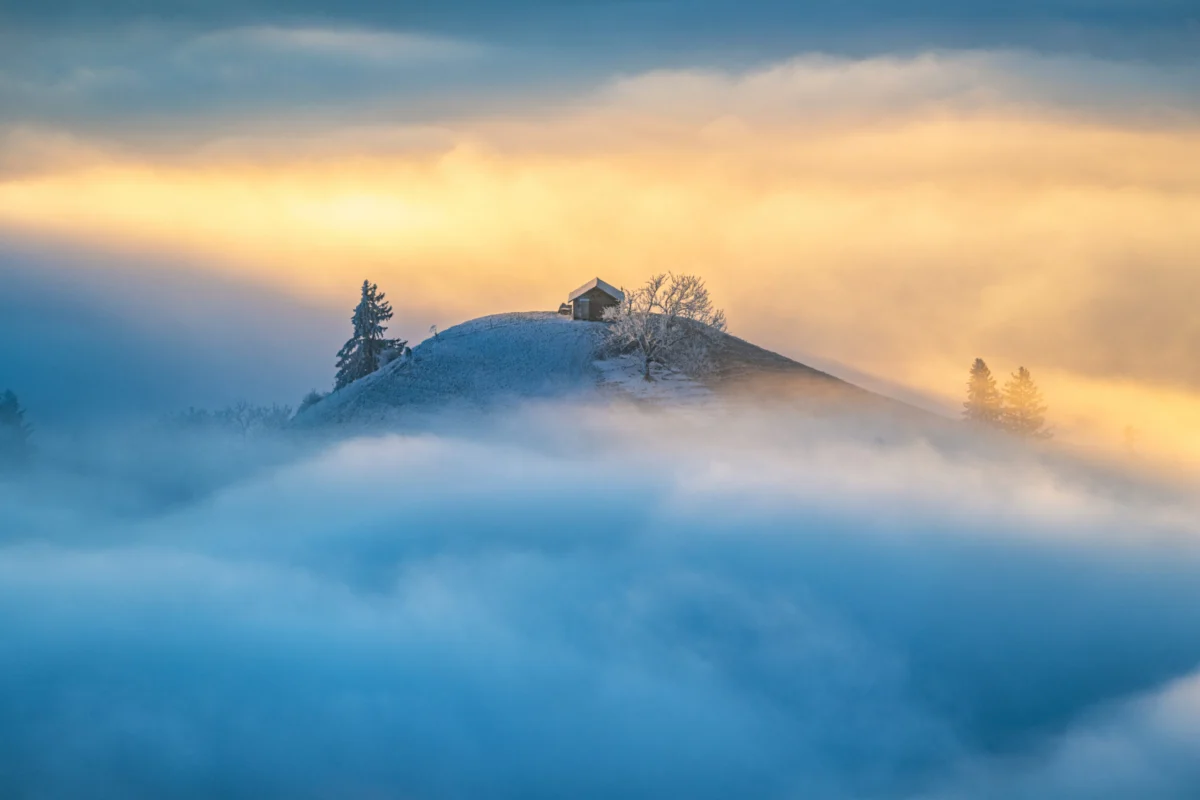
Since embarking on their photographic journey in 2019, one landscape photographer has profoundly reshaped their artistic vision, moving beyond initial conventional approaches to embrace a more holistic and emotionally driven engagement with nature. This evolution, marked by increased technical proficiency and meticulous preparation, primarily reflects a significant shift in the photographer’s perception of the natural world, transforming how they capture its multifaceted beauty.

The Genesis of a New Perspective: Beyond the Golden Hour
The early days of the photographer’s career, beginning in 2019, were characterized by a strong focus on capturing the dramatic light of sunrise and sunset. This period, often referred to as the "golden hour" in photography, is renowned for its soft, warm light that bathes landscapes in vibrant hues, particularly when skies are adorned with clouds and mountain peaks glow crimson. This specific time of day is a perennial favorite among landscape photographers due to its inherent ability to create visually stunning and often easily striking images, a phenomenon attributed to the sun’s low angle filtering light through more atmospheric particles, scattering blue light and allowing warmer tones to dominate. Many aspiring photographers initially gravitate towards this predictable beauty as a cornerstone of their practice.

However, a pivotal shift began to unfold. Over time, the photographer started exploring locations at times far removed from the golden hour, often lingering long after sunrise or arriving well before sunset. This deliberate expansion of photographic hours led to a gradual appreciation of nature in its entirety, rather than solely during its most conventionally dramatic moments. The realization dawned that nature possesses an inherent capacity to evoke diverse emotions at any given moment, requiring only an open mind and a willingness to be inspired by its unpredictable manifestations.
A particularly illustrative incident occurred in 2021, serving as a catalyst for this evolving perspective. After an arduous three-hour hike through challenging terrain in central Switzerland, burdened by approximately 20 kilograms of camera gear, the photographer arrived at a breathtaking vantage point. Despite the harsh midday light, typically avoided by those seeking the softer golden hour glow, the landscape presented an extraordinary spectacle. Fast-moving clouds danced across the sky, alternately obscuring and revealing the majestic mountain, creating dynamic interplay of light and shadow. The immediate surge of emotion and the rapid creation of compelling images, even under unconventional lighting conditions, solidified the photographer’s belief that true inspiration from nature transcends specific times of day or idealized light. This experience underscored the power of raw, unscripted natural events to deliver profound artistic moments.

Mastering Composition: Guiding the Viewer’s Eye
A fundamental element in landscape photography, composition, has also seen a nuanced development in the photographer’s practice, remaining deeply rooted in the inspiration offered by the natural environment itself. The photographer frequently gravitates towards natural elements that serve as leading lines, subtly drawing the viewer’s gaze toward the primary subject of the photograph. This technique, a cornerstone of effective visual storytelling, leverages natural pathways such as winding streams, rivers that appear to trace a course towards a distant mountain, or even the intricate patterns of tree branches, flower arrangements, or uniquely shaped rocks. These organic leading lines effectively create depth and direction, inviting the viewer into the scene.

Beyond leading lines, the photographer often seeks out natural frames or compelling foreground elements to enhance the visual narrative. Natural frames, such as a cave opening, an arch of trees, or rock formations, can provide a sense of enclosure and draw focus to the main subject. Interesting foregrounds, meanwhile, act as an entry point, guiding the eye from the immediate proximity into the broader landscape.
A common trend, particularly prevalent on social media platforms, involves the extensive use of flowers in the foreground. While not entirely against this practice, the photographer emphasizes a critical distinction: flowers should enhance, not overpower, the main subject. The objective is to maintain a harmonious balance where the foreground complements the central theme rather than stealing attention. This measured approach ensures that the photograph’s narrative remains cohesive.

Indeed, the spectrum of natural elements that can serve as effective foregrounds or frames is vast. This includes the intricate patterns left on the ground after a snowfall, delicate ice formations sculpted by low temperatures, captivating air bubbles trapped within a frozen lake, the gnarled elegance of an unusually shaped tree trunk framing a vista, the dramatic entrance of a cave, rocks with distinctive colors or intriguing geological forms, and diverse plant life with their unique branch structures. The key lies in careful observation and an understanding of how these elements contribute to the overall visual impact and emotional resonance of the image.
The Art of Light and Shadow: Embracing Contrasts

Light, an indispensable component of photography, is considered supremely important in the photographer’s evolving landscape work. Reinforcing the departure from golden hour exclusivity, the photographer stresses that powerful images can emerge from any time of day, provided the scene evokes a strong emotional response. This emotion, felt by the photographer, is what they strive to convey to the audience. This philosophy aligns with a broader movement in contemporary landscape photography that values authentic expression over adherence to rigid aesthetic conventions.
The interplay of light and shadow is central to this expressive approach. Instances such as thick fog abruptly clearing to allow sunlight to pierce through a dense forest, or a sudden shaft of light illuminating a mountain face, are regarded as truly unique and spectacular moments. These transient phenomena create dramatic contrasts that make the subject stand out with exceptional clarity and impact. The deliberate pursuit of such light-shadow contrasts is a hallmark of the photographer’s style, used to imbue images with greater depth and highlight the inherent drama of the natural world.

Beyond tonal contrasts, chromatic contrasts also play a significant role. The photographer particularly favors complementary colors, which, when juxtaposed, create a vibrant and striking visual tension that enhances the scene’s dynamism. Examples include the fiery oranges and reds of a sunset against deep blues, or the lush greens of foliage against warm ochre earth tones. However, the subtle beauty of analogous colors – hues adjacent on the color wheel – is also highly valued. These combinations, with their varying shades and intensities, offer a different kind of harmony and depth, allowing for more nuanced and evocative compositions. The constant exploration and application of these diverse forms of contrast are recognized as defining characteristics of the photographer’s unique photographic style and their approach to post-processing. This profound appreciation for contrasts is seen as the primary mechanism through which their images achieve their distinctive depth and emotional intensity.
The Charm of Perspectives and Details: Telephoto and Drone Photography

In recent years, the photographer’s practice has seen a significant embrace of details and varied perspectives within the landscape. This evolution is directly reflected in the increased use of telephoto lenses and drones, tools that offer capabilities distinct from traditional wide-angle landscape photography. The underlying motivation remains consistent: photography must evoke and convey the emotional experience of the moment, and a shift in perspective can dramatically amplify this impact.
A landscape viewed from an elevated position, such as that offered by a drone, presents an entirely different panorama than what is perceivable from the ground. This aerial vantage point reveals patterns, textures, and relationships between elements that are often invisible or unappreciated at eye level. The interplay of light, shadows, tones, and shapes from above can profoundly alter the viewer’s perception and emotional engagement with the scene, offering a fresh, often abstract, interpretation of familiar terrain. Drone photography has revolutionized landscape imaging, providing unprecedented access to viewpoints that challenge conventional compositional norms and offer new avenues for artistic expression.

Similarly, the telephoto lens has become an invaluable instrument for isolating distant details that would otherwise be lost within a broader, wide-angle landscape. While wide-angle lenses excel at capturing expansive scenes and creating a sense of immersion, they can often render distant subjects too small to be fully appreciated. A telephoto lens allows the photographer to compress perspective, highlight specific features, and draw attention to intricate elements that might contribute significantly to the scene’s emotional weight or narrative. This focused approach enables the photographer to craft compelling compositions around seemingly minor elements, transforming them into powerful subjects in their own right. Both telephoto and drone photography serve as extensions of the photographer’s quest to explore and convey the full emotional spectrum of nature, moving beyond conventional framing to reveal hidden depths and alternative narratives.
The Philosophy of Nature Photography: Contemplation and Respect

For this photographer, landscapes are unequivocally more than mere picturesque postcards; each image is conceived as a narrative, a vessel for an atmosphere, skillfully playing with light, colors, and depth to create a coherent visual story. The process is characterized by an unwavering attention to composition, meticulously balancing vast expanses with the quietest, most intricate details. This philosophy resonates with the broader artistic principle that photography, particularly nature photography, serves not just as documentation but as an interpretation of reality, imbued with the artist’s subjective experience.
The role of post-processing in this artistic endeavor is carefully calibrated. It is viewed as a tool for enhancement, not distortion. Post-processing, therefore, must be measured, never overly invasive, and always serve to strengthen the image’s inherent power without compromising the authenticity of the captured reality. This approach reflects a growing debate within photography circles regarding the ethical boundaries of manipulation, with many advocating for a subtle hand that preserves the integrity of the scene.

The core tenets of the photographer’s philosophy revolve around deep observation and an open mind. Often, simply observing nature intently is sufficient to unlock its secrets. At other times, however, patience becomes the paramount virtue; waiting for hours for a subtle shift in light, a momentary break in the clouds, or a passing ray of sunshine that transforms the entire atmosphere, is integral to capturing those elusive, truly magical moments. This patient approach underscores a profound respect for nature’s rhythms and unpredictability.
Ultimately, at the heart of this entire photographic practice lies an unwavering commitment to contemplation and respect for nature. These are deemed the only indispensable rules. The photographer emphatically concludes by reiterating the critical importance of allowing nature itself to inspire, rather than becoming constrained by the preconceived notions or styles of others. Every day, every fleeting moment, and every location possesses the potential to offer something uniquely profound, provided one cultivates the ability to truly observe and connect with the natural world. This ethos promotes a deeply personal and authentic engagement with photography, encouraging practitioners to forge their own path based on their direct experiences with the environment.
