
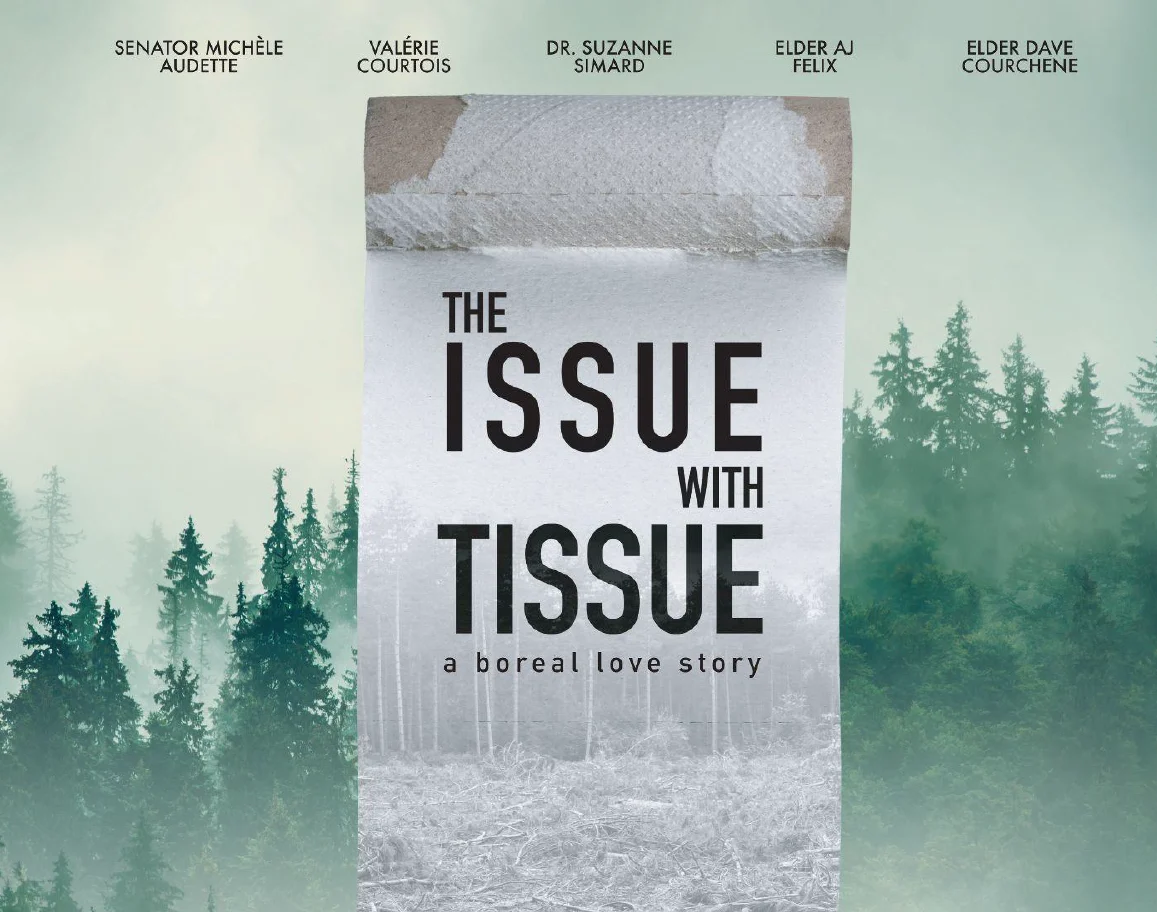
Montreal-born filmmaker and award-winning actor Michael Zelniker has spent over three decades navigating the complexities of the entertainment industry, but his latest project marks a profound pivot toward environmental advocacy. His recent documentary series, The Issue with Tissue — a boreal love story, serves as a cinematic investigation into the ecological state of Canada’s Boreal Forest, a landscape often described as the "lungs of the planet." The production, which spans a feature-length film and a comprehensive six-part docuseries, seeks to illuminate the disconnect between consumer habits and the destruction of one of the world’s most critical biomes.
The Catalyst for Conservation
Zelniker’s journey began with a realization rooted in his childhood. Growing up in Montreal, he spent his formative summers in the southern stretches of the Boreal region. However, it was not until his transition into full-time climate advocacy—marked by his 2018 induction into the Climate Reality Project’s Leadership Corps and his subsequent tenure as co-chair of the Los Angeles chapter—that he grasped the magnitude of the industrial threats facing this landscape.
The filmmaker was struck by the irony of the modern consumer economy: the widespread practice of clear-cutting old-growth Boreal forests to manufacture disposable tissue products, such as toilet paper and paper towels. For Zelniker, this represented an "obscene" misuse of a carbon-sequestering resource. This realization served as the primary motivation for his 12,000-mile, 42-day cross-country odyssey, during which he interviewed over 50 First Nations Elders, environmental scientists, and grassroots activists to capture the human and biological cost of industrial extraction.
Ecological Significance of the Boreal Forest
The Boreal Forest is not merely a collection of trees; it is a global ecological engine. Spanning millions of square kilometers, the forest serves as a massive terrestrial carbon sink, sequestering significantly more carbon in its soils and peatlands than the atmosphere can absorb. According to data from the Boreal Songbird Initiative and Audubon, the region is essential to the survival of North American avian populations.
Each year, approximately two billion birds nest in the Boreal, and by the end of the breeding season, that number swells to nearly five billion as they begin their southward migration. These forests provide the necessary habitat for iconic species, including woodland caribou, wolverines, and various bear populations. Furthermore, the forest remains the ancestral home to over 600 First Nations communities, whose traditional knowledge and stewardship practices have maintained the health of these lands for millennia.
Bridging Science and Storytelling
A critical component of the production process involved Zelniker’s collaboration with Dr. Jeff Wells, the Vice President of Boreal Conservation at the National Audubon Society. Their partnership began when Zelniker reached out to Wells after encountering his work via the Boreal Songbird Initiative.
Dr. Wells provided the documentary with scientific grounding, connecting the filmmaker with a network of Indigenous leaders and researchers who are currently at the forefront of conservation efforts. This relationship proved transformative for the director; Zelniker notes that the experience not only enriched the documentary’s narrative but also turned him into an avid birder, underscoring the project’s goal of fostering a personal connection between the public and the natural world.
Chronology of the Project
The development of The Issue with Tissue followed a rigorous research and production schedule:
- 2018: Michael Zelniker joins the Climate Reality Project, shifting his professional focus toward environmental education and advocacy.
- 2019–2021: Early research phase. Zelniker identifies the correlation between industrial logging and consumer paper products, leading to the identification of key scientific partners, including Dr. Jeff Wells.
- 2022: The primary filming phase. Zelniker conducts a 12,000-mile journey across Canada, engaging with First Nations communities and ecological experts.
- 2023: Completion of the feature-length documentary film. The project begins an international festival circuit, receiving critical acclaim and nominations for Best Documentary Feature.
- 2024: The expansion of the project into a 6-part docuseries, designed to provide a deeper exploration of the landscape and the socio-political dynamics of its protection.
Impact and Implications
The environmental implications of the issues discussed in the series are significant. Canada’s Boreal Forest is currently facing pressures from industrial logging, mining, and oil and gas extraction. Environmental policy analysts suggest that the cumulative impact of these activities threatens to destabilize local climate regulation and biodiversity.
By framing the Boreal as a "love story," Zelniker attempts to move the conversation away from dry statistics and toward emotional resonance. The film highlights the perspectives of Indigenous leaders like Elder Dave Porter of the Kaska First Nation, who emphasizes that the health of the forest is inextricably linked to the health of the global climate. The series challenges viewers to reconsider their reliance on virgin-fiber tissue products and encourages support for companies that prioritize recycled materials and sustainable forestry practices.
Professional and Academic Reception
The documentary has gained traction within academic and environmental circles, having been screened at various universities and climate-focused film festivals. Critics have noted the series’ "stunning candor and intimacy," particularly in its depiction of the relationship between the land and its traditional inhabitants. The move to distribute the series via major streaming platforms—including Amazon, Apple TV, and Vimeo—reflects a broader trend of filmmakers using digital media to bypass traditional gatekeepers and reach a global audience with urgent ecological messaging.
Moving Forward: The Role of the Citizen
The partnership between filmmakers and organizations like the National Audubon Society highlights a growing movement toward interdisciplinary advocacy. For members of the public, the implication of the documentary is clear: consumer choices have a direct line to forest preservation. The series encourages viewers to adopt the "birder" perspective—not necessarily to become an expert in ornithology, but to develop an observational awareness of the natural world and the interconnectedness of biological systems.
As the series continues to reach new audiences, the focus remains on the efficacy of policy changes regarding logging regulations in Canada. Whether this cultural project will lead to tangible legislative shifts remains to be seen, but the documentary has undeniably succeeded in bringing the "Issue with Tissue" into the mainstream conversation. Through the lens of a 12,000-mile journey, the series serves as a testament to the resilience of the Boreal Forest and the enduring commitment of those who seek to defend it against the encroaching threats of industrial consumption.
The six-part series is currently available for viewing on several digital platforms, including Amazon, Apple TV, and Vimeo, providing audiences with an in-depth, multi-episode look at the critical, often invisible, battle for the future of the northern wilderness.
